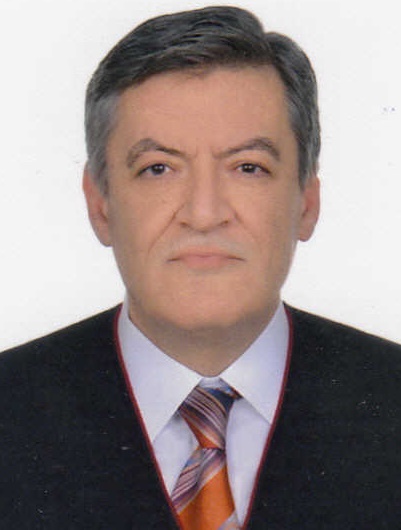
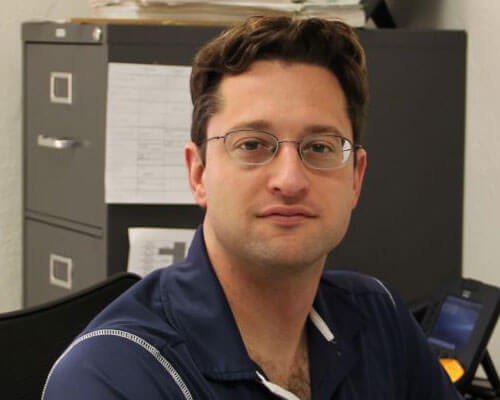
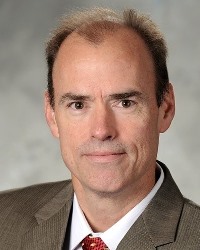
Håkan Pettersson is a Professor at the Academy of Information Technology , Halmstad University. His research focuses on advanced nanotechnology and optoelectronics, particularly in quantum heterostructures and infrared detection. Email: hakan.pettersson@hh.se Research Interests: His work spans semiconductor nanowires, quantum disc photodetectors, and hybrid nanocomposites. Key areas include photogating mechanisms, spectral tunability, and high-performance optoelectronic integration. Publications Trends: Recent articles highlight innovations in InP/InAsP nanowire arrays , quantum disc photodetectors , and applications in neuromorphic computing and energy storage .
Professor Cesur Baransel is a faculty member in the Computer Engineering Department at Gaziantep University's Faculty of Engineering in Turkey. With expertise spanning computer science, machine learning, artificial intelligence, and image processing, he has established himself as a prominent researcher with contributions across multiple disciplines. Education: Doctorate (1990-1994): Department of Computing Science, University of Alberta, Canada Degree (1985-1988): Department of Computer Science Engineering (Computer Hardware), Hacettepe University, Turkey Licence (1981-1985): Department of Computer Science Engineering, Hacettepe University, Turkey Professor Baransel's research spans multiple domains with particular emphasis on parallel computing algorithms, network protocols, and more recently, applications of machine learning in bioinformatics and decision science. His early work focused on efficient routing algorithms and parallel matrix multiplication for high-performance computing architectures, especially torus networks. Over time, his research has expanded to include information-theoretic approaches in genetics, drug-target interaction prediction using autoencoders, and neutrosophic decision-making frameworks for drone selection. His publications demonstrate a remarkable evolution from fundamental computer architecture research to increasingly interdisciplinary applications across healthcare, finance, and industrial engineering. Professional Experience and Projects: Professor at Gaziantep University (2018-present) Extensive industry experience including positions at Saltus Yazılım, Likom PD, and Netaş from 1986-2009 Three major research projects completed: Optical Ore Sorting System, Computerized Jacquard Control System, and Mass Balancing Software for Cement Factories Author of five books and book chapters covering mathematical methods in engineering, parallel computing, and software architectures
Adonis Bogris serves as an Assistant Professor in the Department of Informatics at the Technological Educational Institute of Athens, Greece. Additionally, he has been a researcher at the Optical Communications Laboratory of the National and Kapodistrian University of Athens (NKUA) since 2000, contributing to local and European projects. He earned his B.S. in Informatics, M.Sc. in Telecommunications, and Ph.D. from NKUA in 1997, 1999, and 2005, respectively. His academic journey is marked by: Bachelor of Science in Informatics from NKUA (1997) Master of Science in Telecommunications from NKUA (1999) Doctor of Philosophy from NKUA (2005) with a dissertation on all-optical processing using fiber-based devices Dr. Bogris's research spans optical communications and networking, with a focus on high-speed all-optical transmission systems, nonlinear effects in optical fibers and photonic waveguides, all-optical signal processing and networking, and physical layer cryptography. His scholarly contributions include over 80 publications with more than 200 citations. He serves as a reviewer for IEEE, Elsevier, and Optical Society of America journals and has participated in the Technical Committee of IEEE LEOS Winter Topical Meetings. Information regarding his student advising and research grants is not provided in the available sources. He is affiliated with the Optical Communications Laboratory at NKUA, where he has been a researcher since 2000, participating in local and European projects focused on optical communications.
Richard Lombardini is an Assistant Professor of Physics at St. Mary's University in San Antonio, Texas, a position he has held since August 2013. Previously, he served as Assistant Professor and Chair of the Physics Department at Greenville College from 2009 to 2013, and completed a postdoctoral fellowship in computational chemistry and physics at Rice University under Bruce Johnson from 2006 to 2009. His academic credentials include: Ph.D. in Physics, Texas Tech University, 2006 B.S. in Mathematics and Chemistry, Texas Tech University, 1999 Lombardini's research spans theoretical and computational physics with emphasis on quantum mechanics. His work includes wavelet-based methods for quantum dynamics, quantum trajectory formulations for spin-1/2 systems, nanophotonics, and quantum dot spectroscopy. Recent publications (2023-2024) focus on interacting quantum trajectories and superconducting resonator modeling, while his emerging interest in Quantum Field Theory aims to develop undergraduate pedagogical approaches. Publication analysis reveals an evolution from foundational wavelet applications in quantum chemistry (2006-2010) toward current work on quantum trajectories and superconducting device physics. This trajectory demonstrates consistent innovation in computational algorithms for quantum systems, with increasing interdisciplinary collaboration spanning physics, chemistry, and engineering. No scientific awards were documented in the source material. Lombardini actively mentors undergraduate researchers across diverse theoretical and computational projects, explicitly welcoming work "of all shapes and sizes." His postdoctoral fellowship at Rice University indicates prior grant support, and his ongoing publication record suggests sustained research funding for computational physics initiatives. As a computational physicist, Lombardini maintains a research group focused on high-performance numerical simulations of quantum systems, with recent work involving collaborative development of the ARTEMIS framework for superconducting device modeling.
John R. Barry is a Professor at the School of Electrical and Computer Engineering, Georgia Institute of Technology. He holds a Ph.D. in Electrical Engineering from UC Berkeley (1992) and previously worked at Bell Communications Research, IBM, Hughes Aircraft, and General Dynamics. His research spans communication theory , wireless systems , optical communications , and magnetic recording , with a focus on modulation, coding, synchronization, and equalization . Education : B.S., State University of New York at Buffalo (1986) M.S., University of California at Berkeley (1987) Ph.D., University of California at Berkeley (1992) His recent journal and conference publications address multi-cell MIMO , polar codes for recording , two-dimensional magnetic recording , and joint radar-communication systems . Articles span IEEE Transactions on Magnetics , IEEE Transactions on Communications , and Globecom conferences, covering topics like timing recovery at low SNR , iterative equalization , and space-time coding . Scientific Awards : David J. Griep Memorial Prize (1992) Eliahu Jury Award (1993) NSF Research Initiation Award (1993) IBM Faculty Development Award (1993) Senior Member, IEEE He has advised 15 Ph.D. students and 2 M.S. students, including Hyuncheol Park , Chen-Chu Yeh , and Elnaz Sadeghian , all pursuing careers in academia and industry. His lab has received grants for iterative timing recovery , multi-input multi-output (MIMO) systems , and optical wireless communication . Professor Barry's research group has contributed to patents in timing recovery and MIMO detection, with applications in wireless and optical systems. He served as Guest Editor for the IEEE Journal on Selected Areas in Communications and Technical Program Chair for IEEE Globecom 2013 .
Kiyoto Takahata is an Associate Professor at the Faculty of Science and Engineering, Graduate School of Information, Production and Systems. His research focuses on silicon photonics, optical semiconductor devices, and high-speed optoelectronic integration. Primary research areas include silicon photonics, microwave photonics, and optical interconnection Specializes in electro-absorption modulator integrated distributed feedback lasers Developed membrane lasers and modulators on silicon platforms Recent publications highlight advancements in high-bandwidth photonic devices, with a focus on integrated optics for 100Gb/s+ data transmission. His work includes: Microring resonators for photonic computing MMI couplers for all-optical logic Membrane laser-modulator integration on Si Dispersion-tolerant modulation techniques He has contributed to: Flip-chip interconnection methods Low-voltage operation of optoelectronic devices Multi-lane photonic modules
Paolo Medini is an Associate Professor at Umeå University, affiliated with the Department of Medical and Translational Biology and the Center for Transdisciplinary AI. His research focuses on cortical microcircuits, sensory processing, and brain recovery mechanisms. Neuroscience Neurophysiology Cortical Plasticity Optogenetics His lab investigates how sensory information is processed by distinct cell types in cortical circuits and how these circuits adapt after brain lesions or sensory deprivations. Research spans both adaptive and maladaptive plasticity, aiming to differentiate molecular mechanisms for targeted interventions. Recent publications highlight applications of all-optical interrogation strategies and multisensory integration in the neocortex. Paolo Medini's group employs advanced techniques such as in vivo patch clamp recordings, two-photon calcium imaging, and optogenetics. They use genetically modified strains to study cell-type-specific responses and circuit reorganization post-lesion. Their work is critical for developing therapies in neurodegenerative diseases and cortical repair. Environmental enrichment for brain recovery (Nature Neuroscience) Cortical microcircuit organization (Neuron) Post-stroke plasticity (Journal of Physiology)
Xu Yi is an Assistant Professor in the Department of Electrical and Computer Engineering at the University of Virginia School of Engineering and Applied Science. His research focuses on experimental atomic, molecular, and optical physics with applications in photonics and quantum technologies. Academic Rank: Assistant Professor Department: Electrical and Computer Engineering Research Focus: Microcombs, Soliton Physics, mmWave Generation Professor Yi's work explores the intersection of integrated photonics and quantum optics, particularly through silicon nitride (SiN) and lithium niobate microcavities. His recent research emphasizes the development of photonic chip-based systems for optical frequency division, low-noise microwave generation, and quantum state engineering. His publications reveal a strong trend toward advancing soliton microcomb technologies for practical applications in mmWave generation, spectroscopy, and quantum information processing. Key innovations include heterogeneous integration of photodiodes with soliton microcavities and the creation of squeezed quantum microcombs on chip-scale platforms. Contact: xy3m@virginia.edu
Dr. Urs Aeberhard is a Lecturer at the Department of Information Technology and Electrical Engineering at ETH Zurich and a Senior R&D Scientist at Fluxim AG . He earned his Master and PhD in Theoretical Physics from ETH Zurich in 2004 and 2008 respectively, with thesis work on quantum-kinetic theory of quantum well solar cells conducted at the Condensed Matter Theory Group at Paul Scherrer Institut and ETH Zurich . He previously held a postdoctoral researcher position at the Institute of Photovoltaics , Forschungszentrum Jülich from 2009-2012 and was a visiting research scholar at the National Renewable Energy Lab in 2013 . From 2013-2018 , he worked as a tenured staff scientist at IEK-5 Photovoltaik , Forschungszentrum Jülich , where he founded and led the Multiscale Simulation research group. His research focuses on quantum transport formalisms (particularly NEGF ) for photovoltaic device simulation , including charge carrier generation , recombination in nanostructures , and advanced solar cell concepts such as hot-carrier cells , multi-junction architectures , and photon recycling . He has contributed extensively to multiscale modeling of quantum well , wire , and dot solar cells , and his work spans quantum kinetic theory , optoelectronic device simulation , and computational investigation of defect-mediated recombination and non-equilibrium processes in semiconductor nanostructures . His recent publications emphasize hot-carrier filtering in InAs-InP nanowires , terawatt-scale photovoltaic optics , reverse-bias breakdown in all-perovskite tandem modules , and photon recycling effects in ultra-thin and perovskite-based solar cells. He has presented extensively at international conferences on topics including quantum transport with light-matter interaction , multi-scale simulation of non-idealities in tandem photovoltaics , and computational characterization of passivated contacts in silicon solar cells . Dr. Aeberhard is the developer of PVnegf , a tool for non-equilibrium Green's function simulation of quantum photovoltaic devices , which provides first-principles analysis of electronic structure , photocarrier transport , and optical processes in nanoscale solar cells . The framework enables microscopic simulation of quantum wells , wires , and dots for advanced photovoltaic applications .
Hermann Dürr is a Professor in the Department of Physics and Astronomy at Uppsala University, Sweden, affiliated with the FREIA facility. His research employs ultrashort (10 -15 sec) laser, x-ray, and electron spectroscopies to probe condensed matter systems, with emphasis on speed limits for magnetic/electronic switching in information technology materials. His primary research interests include: Ultrafast non-equilibrium and metastable states in condensed matter All-optical magnetic switching in ferrimagnets Insulator-metal transitions in correlated electron systems Ultrafast charge separation in photovoltaics Femtosecond soft x-ray and EUV spectroscopy techniques Relativistic electron pulses for structural dynamics Analysis of his 2024-2025 publications reveals dominant themes in ultrafast magnetism, particularly element-specific dynamics in FePt and Co/Pd systems using free electron lasers. Key methodologies include circularly polarized x-rays, spin-resolved spectroscopy, and nanoscale imaging of magnetic domain manipulation, with strong focus on non-thermal metastable states relevant to next-generation information storage. Professor Dürr maintains active collaborations with external research groups and industry partners to access advanced materials. His work is conducted through Uppsala University's FREIA facility, leveraging high-harmonic generation sources and free electron laser infrastructure for cutting-edge ultrafast experiments across condensed matter physics.
Dr Shahana Bano is a Lecturer in the School of Computing, Engineering & Technology at Robert Gordon University, specializing in interdisciplinary applications of Artificial Intelligence. Her research spans biomedical imaging, environmental monitoring, infrastructure analytics, and socio-technical systems through the Machine Vision Research Group and Cybersecurity Research Group. Her educational background includes a PhD in Computer Science and Engineering, M.Tech in Computer Science and Engineering, MSc in Information Systems, and BCA - all completed full-time. Her research philosophy centers on convergence, bringing together diverse data types, technologies, and disciplines to create impactful, adaptive systems that bridge academic innovation with societal relevance. Dr Bano's research interests focus on Computer Vision, Image Analysis, Machine Learning, Data Analytics, Internet of Things, Text to Speech Systems, and Social Media Threat Intelligence. Her recent work demonstrates strong application of these interests to medical diagnostics (CAR-T cell classification), environmental monitoring (geothermal reservoir modeling), infrastructure analytics (pipeline defect detection), and social systems (hate detection in football communities). Her publication record shows consistent output with 32 research outputs from 2015-2025, demonstrating increasing focus on medical and environmental applications of AI in recent years. The work spans theoretical computer vision advancements to practical implementations addressing UN Sustainable Development Goals. Associate Fellow (AFHEA) 2023 from Advance HE Dr Bano actively supervises PhD students and mentors interns on diverse projects. Current PhD supervision includes research on morphological classification of CAR-T cell images for leukemia diagnosis and acoustic emission-based pipeline defect detection. She also guides students on projects involving AR-based navigation, NDVI vegetation mapping, hate detection in football communities, multimodal sensor fusion, and airport runway object detection. Her lab resources are supported through university research groups and collaborations focused on machine vision and cybersecurity applications.
Doris Chow is an active Assistant Professor of Psychology at St. Thomas University (STU), where she has served on faculty since 2022. Her research laboratory focuses on multisensory perception and cognition, investigating how humans integrate sensory information across the lifespan through experimental studies with human participants. She teaches core psychology courses including Introduction to Psychology, Perception, and Visual Perception, while mentoring undergraduate researchers in experimental design and scientific communication. Her educational background spans a Bachelor of Social Sciences and Master of Philosophy from the University of Hong Kong, followed by a Ph.D. in Developmental and Brain Sciences from the University of Massachusetts Boston and postdoctoral training at the University of British Columbia Vancouver. Dr. Chow's research examines the neural mechanisms of multisensory integration, with emphasis on how perceptual abilities evolve from infancy through adulthood and the consequences when these processes malfunction. Her work bridges experimental psychology, vision science, and developmental neuroscience through controlled laboratory experiments. Current research trends in her publications reveal consistent focus on cross-modal interactions (particularly audio-visual and audio-tactile), developmental trajectories of perception, and the neural underpinnings of sensory integration. Recent work increasingly incorporates infant studies and computational approaches to understanding perceptual organization. Scientific recognition includes: NSERC Discovery Grant (awarded summer 2024) Harrison McCain Foundation research funding Dr. Chow maintains an active mentoring program where students develop research skills through honors theses and NSERC-funded projects. Her lab has produced multiple conference presentations at venues like Vision Sciences Society and Science Atlantic, with recent graduates accepted into competitive graduate programs including the Max Planck School of Cognition. She collaborates with community partners such as the Museum of Science in Boston (2014-2018) and continues this outreach approach at STU. The Multisensory Perception and Cognition Laboratory involves undergraduate researchers in all stages of experimental work, from participant recruitment to data analysis. Current projects examine haptic exploration strategies, sound-shape correspondences, and optic flow perception, with strong emphasis on developing students' academic writing and technical skills for research careers.