معرفی
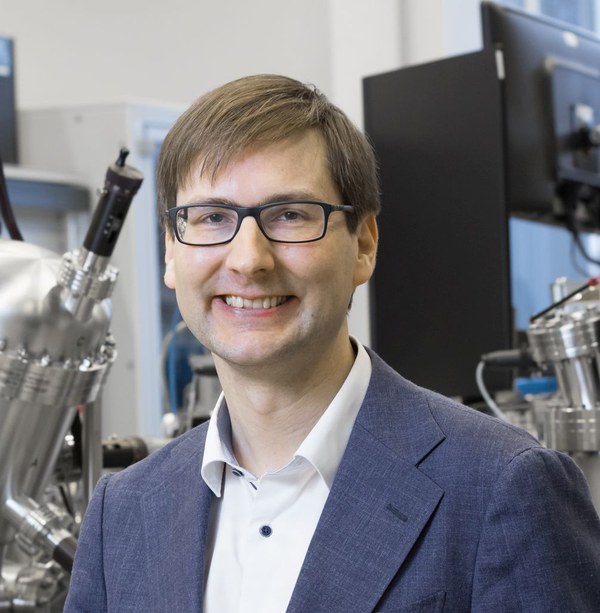
Dr. Urs Aeberhard is a Lecturer at the Department of Information Technology and Electrical Engineering at ETH Zurich and a Senior R&D Scientist at Fluxim AG. He earned his Master and PhD in Theoretical Physics from ETH Zurich in 2004 and 2008 respectively, with thesis work on quantum-kinetic theory of quantum well solar cells conducted at the Condensed Matter Theory Group at Paul Scherrer Institut and ETH Zurich.
He previously held a postdoctoral researcher position at the Institute of Photovoltaics, Forschungszentrum Jülich from 2009-2012 and was a visiting research scholar at the National Renewable Energy Lab in 2013. From 2013-2018, he worked as a tenured staff scientist at IEK-5 Photovoltaik, Forschungszentrum Jülich, where he founded and led the Multiscale Simulation research group.
His research focuses on quantum transport formalisms (particularly NEGF) for photovoltaic device simulation, including charge carrier generation, recombination in nanostructures, and advanced solar cell concepts such as hot-carrier cells, multi-junction architectures, and photon recycling. He has contributed extensively to multiscale modeling of quantum well, wire, and dot solar cells, and his work spans quantum kinetic theory, optoelectronic device simulation, and computational investigation of defect-mediated recombination and non-equilibrium processes in semiconductor nanostructures.
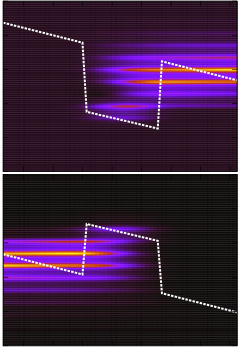
His recent publications emphasize hot-carrier filtering in InAs-InP nanowires, terawatt-scale photovoltaic optics, reverse-bias breakdown in all-perovskite tandem modules, and photon recycling effects in ultra-thin and perovskite-based solar cells. He has presented extensively at international conferences on topics including quantum transport with light-matter interaction, multi-scale simulation of non-idealities in tandem photovoltaics, and computational characterization of passivated contacts in silicon solar cells.
Dr. Aeberhard is the developer of PVnegf, a tool for non-equilibrium Green's function simulation of quantum photovoltaic devices, which provides first-principles analysis of electronic structure, photocarrier transport, and optical processes in nanoscale solar cells. The framework enables microscopic simulation of quantum wells, wires, and dots for advanced photovoltaic applications.