Taylor Annabell is a postdoctoral researcher at Utrecht University School of Law, affiliated with the Molengraaff Institute for Private Law and the Governing the Digital Society focus area. She contributes to the ERC Starting Grant HUMANads project, collaborating across legal, computer science, and media studies disciplines to examine platform governance and creator economies. PhD from King’s College London MSc in Communication Studies from Auckland University of Technology Former Research Associate at University of Leeds and Sheffield Research Themes : Her work interrogates platform society , focusing on: Platform governance mechanisms Influencer monetization practices Digital memory work through Spotify/Instagram User-agent interactions with algorithmic systems Legal frameworks for platform accountability Discursive constructions in digital spaces Recent Publications : 2025 articles span TikTok monetization ethics, influencer labor rights, memory assemblages, and DSA compliance challenges. Earlier works (2019-2023) analyze postcolonial commemoration, pandemic memory practices, and digital cultural identity. Methodological Expertise : Employs ethnography, narrative inquiry, scroll-back methodology, and policy analysis. Collaborates with multidisciplinary teams across Europe, including ERC-funded researchers and EU Commission consultants.
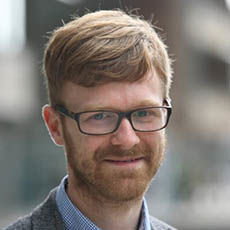
Dr Robert Cluley is an Associate Professor in the Department of Marketing at Birmingham Business School, University of Birmingham. He has previously held academic positions at the University of Leicester and the University of Nottingham, where he was promoted to Associate Professor and held leadership roles including Director of Postgraduate Studies and membership on the School Management Group. He is a leading scholar in the organization of marketing, the role of technology in marketing practice, and the application of critical and psychoanalytic theory to consumer behavior. His research integrates ethnography, advanced statistical analysis, and anthropological methods to explore how marketers and consumers engage with new technologies and data systems. PhD in Marketing and Organizations, University of Leicester, 2010 MSc in Management Research, University of Leicester, 2008 MA in Critical Theory, University of Nottingham, 2003 BSc (Hons) in Management, Lancaster University, 2002 His research interests focus on marketing organization, marketing analytics, consumer behavior, and the ethical implications of data-driven marketing. He is particularly interested in how new technologies reshape marketing labor, consumer insight, and organizational performance. His recent publications reflect a strong trend toward ethnographic and critical studies of marketing practice, especially in the areas of data science, facial coding, market research ethics, and the application of social theory. He frequently publishes in high-impact journals such as Marketing Theory , Human Relations , and Regulation & Governance . He is currently writing a book titled Marketing Science Fictions based on an ethnographic study of a marketing analytics firm. He is also involved in collaborative research on decarbonizing supply chains and the use of social theory in marketing with Dr Stephen Dunne and Prof Will Green. Founding member, NLAB – Nottingham’s Centre for Business Analytics Founding Executive Board Member, Nottingham Energy Institute Active contributor to interdisciplinary research on ethics, technology, and sustainability in marketing He has supervised and mentored students in critical marketing, organizational studies, and consumer research. His work is supported by grants and collaborations across the UK and internationally, particularly in the areas of responsible technology and sustainable marketing practices.
William J. Turkel is a Professor of History at The University of Western Ontario, Canada, and a member of the Royal Society of Canada's College of New Scholars. His research focuses on computational history, science and technology studies, and disability studies. He holds a PhD from MIT (2004) and leads the History Department's Fab Lab, equipped with advanced fabrication tools. Turkel's work includes reverse-engineering historical technologies, digital exhibit design, and mentoring over 20 students. He has authored books like Spark from the Deep and The Archive of Place , and his open-source textbook Digital Research Methods with Mathematica is widely used. Awards include the Western Award for Technology-Enhanced Teaching (2021) and SSHRC funding for NiCHE (2004–14). Education: PhD, MIT (2004) Research Interests: Computational methods, big history, modular synthesis, disability studies, and astrobiology. His lab explores tangible computing, 3D printing, and historical experimentation. Articles Overview: Recent work spans digital humanities tool development, historical computing analysis, and music-pattern recognition via machine learning. Key themes include bridging computational methods with historical inquiry. Awards: Royal Society membership (2018), Western University award (2021), and SSHRC leadership (2004–14). Advising & Grants: Supervised over 20 students and postdocs, including Devon Elliott and Ian Milligan. Collaborates with Tim Hitchcock, Edward Jones-Imhotep, and others on projects like MK ULTRA analysis and exoskeleton patent studies. Labs/Teams: The History Department Fab Lab includes 3D printers, CNC tools, and electronics prototyping. His lab designs interactive exhibits and tangible artifacts to explore historical phenomena.
Magdalena Olszanowski is a Polish-born writer, artist, and educator based in Montreal. She holds a PhD in Communication Studies from Concordia University, where she currently serves as faculty, and also teaches at Dawson College. Her academic career bridges creative practice and scholarly inquiry, focusing on the intersections of feminist theory, digital culture, and embodied experience. Her research interests center on feminist art practices, digital self-representation, and the early web. She investigates how women and marginalized communities use digital platforms for self-expression and community building, with particular attention to Instagram's role in feminist exchange. Her work also explores the connections between motherhood, embodiment, and creative practice, examining how caregiving shapes artistic production and theoretical frameworks. Additional areas of interest include censorship in digital spaces, women in electronic dance music culture, and the politics of self-imaging online. Through her publications spanning from 2013-2024, Olszanowski has established herself as a significant voice in feminist digital studies. Her research reveals consistent themes of resistance, community building, and the reclamation of digital spaces for marginalized voices. She examines how platforms that appear neutral often reinforce existing power structures, while simultaneously documenting how users develop creative tactics to circumvent these limitations. Her more recent work increasingly engages with ecological concerns and the relationship between land, embodiment, and digital practice. Magdalena maintains an active creative practice alongside her academic work through her Substack publication "Near to The Wild Heart," where she writes at the intersection of philosophy, motherhood, art, and desire. This platform allows her to explore personal experiences of embodiment and care while connecting them to broader theoretical frameworks.
Katherine D. Johnston is an Assistant Professor in the Department of English and the Program in Writing and Rhetoric at Stony Brook University. She holds a Ph.D. in Literature from the University of California, Riverside with an emphasis on media and cultural studies. Her research focuses on 20th-21st century American literature, surveillance studies, and critical data studies, particularly exploring how algorithmic data profiling shapes contemporary storytelling. She authored Profiles and Plotlines: Data Surveillance in Twentieth Century Literature , analyzing how data-driven narratives reflect societal counting economies. Her teaching spans American literature, surveillance studies, writing pedagogy, and Big Data rhetoric. Education: Ph.D. in Literature (UC Riverside, emphasis Media/Cultural Studies) Her interdisciplinary research bridges literary analysis with sociopolitical critique, examining themes like racialized surveillance in Claudia Rankine’s Citizen , digital identity economics in image culture, and postcolonial trauma in indigenous narratives. Courses taught include seminars on surveillance studies, composition, and the rhetoric of emerging technologies. Her work appears in American Literature , Twentieth Century Literature , and American Indian Culture and Research Journal .
Cameron Edmond is a Lecturer in Game Development (Teaching and Leadership) at the School of Computing, Macquarie University. Specializing in intersections between game design, digital humanities, and creative pedagogy, his work explores how game mechanics can enhance educational and artistic practices. He actively engages with topics such as machine writing, AI-driven creativity, and the application of game jams in learning environments. Research interests include game-based learning methodologies, computational poetics, and the ethical implications of AI in creative fields. His contributions bridge technical and humanistic disciplines, focusing on innovative tools for storytelling and education. Edmond’s publications span conferences like DiGRA Australia and academic chapters exploring creative coding, narrative visualization, and the demoscene’s influence on digital creativity. His work emphasizes collaborative, constraint-based approaches to both artistic and educational outcomes.
Örjan Sandred is a Professor of Composition at the University of Manitoba's Desautels Faculty of Music, where he founded Studio FLAT for computer music research and production. He teaches composition, computer-assisted composition, and electro-acoustic music while maintaining an active international composition career. Diplomi i Komposition, Royal College of Music Stockholm MFA, Royal College of Music Stockholm Additional studies at McGill University and IRCAM (Paris) His research focuses on Computer-Assisted Composition with emphasis on rule-based systems, live electronics integration, and artificial intelligence applications. Sandred developed the Cluster Engine constraint-solving system for music composition, exploring how computers can process musical ideas through formalized rules. His work bridges acoustic instruments with digital technologies, creating innovative performance systems where musicians interact with responsive computer environments. His recent compositions demonstrate evolving trends in interactive performance systems (Tilting Points, Sketches of Shifting Landscapes), climate change expression (Footprints), and pandemic-era multimedia installations (Sonic Trails: Lockdown). These works consistently integrate live electronics with acoustic instruments through sophisticated Max/MSP patches. Scientific awards include: Guggenheim Fellowship (2022) Fellow of the Royal Society of Canada (2023) DAAD Visiting Professorship at Hochschule für Musik Detmold (2016) Manitoba Arts Council support for major commissions Sandred maintains significant international collaborations with performers and institutions worldwide. His compositions receive regular premieres across Europe, North America, and Asia through commissions from organizations like the Swedish Concert Institute and Théâtre du Châtelet in Paris. He directs Studio FLAT as a hub for computer music research while developing educational resources including his book The Musical Fundamentals of Computer Assisted Composition . Current projects include an installation collaboration with the Royal Winnipeg Ballet and conductors from Sweden/Canada, plus ongoing development of the Cluster Engine system within Max environment through MOZlib.
Robert Snarrenberg is an Associate Professor of Music Theory and Composition at Washington University, where he served as Department Chair from 2000-2005. He holds a BM from Covenant College (1979), MM from University of Cincinnati College-Conservatory of Music (1985), and PhD from University of Michigan (1991). His research focuses on Schenkerian analysis, Brahms studies, and computational musicology. Education: Bachelor of Music, Covenant College (1979) Master of Music, University of Cincinnati (1985) PhD in Music Theory, University of Michigan (1991) Snarrenberg's work bridges historical analysis and modern computational methods. His award-winning book Schenker's Interpretive Practice (1997) examines Schenker's analytical rhetoric, supported by a NEH fellowship. Current projects involve Python-based tools like WesterParse for counterpoint analysis. His Brahms studies explore textual-musical relationships in German Lieder, while his Schenker translations clarify foundational theoretical texts. Publications span computational musicology, Schenker interpretation, and Brahms's compositional techniques. Recent work applies machine learning to tonal analysis, reflecting his dual interest in historical and digital methodologies. Awards: Young Scholar Award (Society for Music Theory, 1998) NEH Fellowship (1995) Jacob K. Javits Fellowship (1987–89) Teaching focuses on counterpoint, tonal analysis, and German art song. He advises graduate research on Schenkerian theory and computational musicology. Ongoing projects include translating Schenker's Der Tonwille and developing AI tools for music analysis.
Krzysztof Komendarek-Tymendorf is an Associate Professor of Viola and Chamber Music at the Stanisław Moniuszko Academy of Music in Gdańsk and the Feliks Nowowiejski Academy of Music in Bydgoszcz. He holds a PhD and habilitation, specializing in viola performance and contemporary music interpretation. His academic career began at age 24 after winning assistant professor competitions. He has performed globally with major orchestras like the National Philharmonic, Gdańsk Baltic Opera, and international festivals including Berliner Philharmonie and Vienna Konzerthaus. He completed postgraduate studies in Culture Management and MBA at Adam Mickiewicz University. Notable awards include the Bronze Medal for Merit to Culture (Gloria Artis), Opus Klassik nomination, and Fryderyk Award recognition. His discography includes acclaimed albums like ReVIOLAtion (NAXOS) and Quantum of Silence (ODRADEK). As an educator, he teaches at three institutions and mentors over 40 students, many of whom hold positions in leading orchestras and music schools. He actively engages in masterclasses across Europe and North America, and leads initiatives like the EURO Chamber Music Festival. His research focuses on Baroque to contemporary viola repertoire, with publications in the Journal of the American Viola Society.
Brittany J. Green is a North Carolina-based composer, performer, and educator currently teaching composition and music theory at East Carolina University while completing her Ph.D. in Music Composition as a Deans Graduate Fellow at Duke University. Her interdisciplinary artistic practice spans acoustic and electroacoustic composition, electronic performance, spoken word, and multimedia installation, creating collaborative musical spaces that explore the intersection of sound, video, movement, and text. Green's research interests center on the application of Black feminist theory to musical composition, particularly examining how systems can be constructed, displaced, and ruptured through sound. Her work frequently employs sonification techniques and algorithmic processes, as demonstrated in pieces like "r_upTure" which uses Python programming to create musical systems that disrupt themselves. She also investigates Julius Eastman's work through queer theory methodologies and explores sound as a site of strategic opacity in the Black Church tradition. Her compositional output reveals a consistent exploration of identity, community, and systemic structures, with a notable shift toward electronic and interdisciplinary work during the pandemic. Green's pieces often incorporate live electronics, field recordings, and collaborative elements with poets, dancers, and visual artists, reflecting her belief that meaningful musical creation requires both deep listening and community engagement. American Academy of Arts and Letters Charles Ives Scholarship ASCAP Foundation Morton Gould Award New Music USA Creator Development Grant Alarm Will Sound Matt Marks Impact Fund As an educator, Green emphasizes the importance of being a good listener and building community as foundational skills for musical careers. Her upcoming projects include the Saykaly Garbulinska Composer Residency with Lexington Philharmonic, a collaboration with the New York Philharmonic, and "Letters to America" at Carnegie Hall featuring GRAMMY-award winning soprano Karen Slack. She is particularly passionate about addressing systemic issues in the field, advocating for more holistic funding models that provide composers with health insurance and creative freedom beyond thematic constraints.
Dr Christopher Till is a Reader in Sociology at Leeds Beckett University , based in the School of Humanities and Social Sciences and affiliated with the Centre for Applied Social Research . He teaches core and specialist modules on social theory, technologies, and health, and is actively involved in supervising PhD students in related areas. Education: BA Sociology – Nottingham Trent University MA Social Research – University of Leeds PhD Sociology – University of Leeds Research Interests: Dr Till’s research is unified by a theoretical interest in how technologies frame social life and intersect with political economy. His work spans the datafication of health and exercise through self-tracking technologies (e.g., Fitbit, Spotify), the financialization of wellness, corporate wellness programs, and the sociotechnical dimensions of misinformation and disinformation. He is currently leading a British Academy/Leverhulme-funded project exploring the use of image, audio, and video in vegan activism on Instagram and TikTok. Research Trends: His recent publications reflect a consistent engagement with the political economy of digital platforms, the commodification of health and exercise, and the role of social media in shaping public discourse. There is a clear trajectory toward understanding how digital infrastructures mediate behavior, identity, and power. Grants & Projects: British Academy/Leverhulme Small Research Grant – Vegan activism and social media CrossFit community research with Sociology group Health inequalities study with School of Sport and University of Leeds School of Medicine Collaborations: Dr Till collaborates extensively within and beyond Leeds Beckett University, including interdisciplinary work with colleagues in sport science and medicine. He emphasizes collaborative pedagogy and research, fostering co-learning environments with students and peers.
Maxwell Foxman is an Assistant Professor of Media Studies and Game Studies at the University of Oregon's School of Journalism and Communication. His research focuses on the intersection of games, play, and non-game contexts including journalism, politics, and social media. Foxman examines how games and play interact with media professions across several overlapping realms: immersive media (Virtual Reality/Augmented Reality/XR), Game Journalism, Esports, and Game Production. University of Oregon, School of Journalism and Communication Ph.D. in Communications from Columbia University (2018) Co-director of the Esports and Games Research (EGR) Lab $1.5 million NSF grant recipient for virtual meetings research Co-author of 'Mainstreaming and Game Journalism' (MIT Press, 2023) Foxman's educational background includes a Ph.D. in Communications from Columbia University (2018), where his dissertation was titled 'Playing with Virtual Reality: Early Adopters of Commercial Immersive Technology.' He also holds an M.Phil. in Communications from Columbia (2015), an M.A. in Media, Culture and Communication from NYU (2012), and a B.A. in American Studies, Music, and Creative Writing from Columbia University (2007). His research interests span Game Studies, Game Journalism, Esports, Virtual Reality, Augmented Reality, Immersive Media, and Gamification. Foxman's work explores how games and playful elements are integrated into mainstream media and society, with particular attention to how play shapes digital media adoption and influences non-game contexts like journalism and politics. His recent work has examined early adopters of VR technology, game journalism's evolution, and the mainstreaming of games as a cultural medium. Foxman's 15 most recent publications reveal a consistent focus on how play intersects with digital media and culture. His research trajectory shows movement from examining specific game applications (like Foursquare and MTV's Fantasy Election) to broader investigations of how game mechanics shape workplace interactions. The articles collectively demonstrate expertise in virtual reality adoption, game journalism history, esports culture, and the application of play theory to non-game contexts. $1.5 million NSF grant for virtual meetings equity research Co-director of the Esports and Games Research Lab Collaborations with researchers at Michigan State, Wisconsin, and Singapore institutions Featured in major media outlets including Washington Post, USA Today, and Polygon Foxman actively collaborates with graduate students and faculty across disciplines. His current NSF-funded project involves multiple institutions studying how videoconferencing affects workplace equity. As co-director of the Esports and Games Research Lab, he oversees research on collegiate esports ecosystems, diversity in gaming, and professionalization pathways. Foxman also previously worked as an adjunct professor at Marymount Manhattan College and NYU before joining the University of Oregon faculty. Foxman's research has practical implications for understanding how play and games are becoming integrated into everyday digital life. From newsrooms to workplaces to social interactions, his work helps explain how game mechanics shape non-game contexts and how these integrations affect individuals and society. His current focus on Zoom fatigue and virtual meeting equity addresses pressing concerns about how digital technologies reproduce and amplify social inequalities.
Michael Brown is a Lecturer in Childcare affiliated with the University of Derby's Provost Learning and Teaching research institute. His work focuses on creativity development in education, interdisciplinary artistic processes, and the intersection of technology with music and human experience. He has contributed to over 20 publications since 2012, exploring topics ranging from creative pedagogy in the Fourth Industrial Revolution to innovative soundscapes using tissue-conducted audio interfaces. His research emphasizes the application of artistic methodologies to project management and education, with notable projects including 'Feel it in my bones' (2017) and 'The business of invention' (2013). Brown collaborates extensively with institutions like the West East Institute and KIE Conference Publications, focusing on creativity dynamics across domains. Despite no listed awards, his work has been cited in multiple academic platforms. His research outputs demonstrate a consistent exploration of creative constraints, multimodal composition, and technology-enhanced learning environments, with over 2,000 total views across platforms.
Assoc. Prof. Dr. Eva Zangerle is an Associate Professor at the Department of Computer Science, University of Innsbruck. Her research focuses on Recommender Systems, Music Information Retrieval, and Natural Language Processing. She leads projects on hypergraph-based recommendation, emotion-driven music systems, and NLP tasks like authorship analysis. Notable contributions include the PAN workshop series, the EMMA emotion database, and studies on algorithm fairness. Her work integrates machine learning with interdisciplinary applications, such as analyzing lyrical complexity trends and detecting generative AI content. She organizes international workshops like PERSPECTIVES on Recommender Systems Evaluation and contributes to initiatives like the MediaEval challenges. Her research bridges technical innovation with societal impact, addressing ethical AI and user-centric evaluation methodologies. Eva Zangerle is affiliated with the DBIS group and actively publishes in top-tier conferences/journals. Her lab develops open-source tools for music recommendation and text analysis, emphasizing reproducibility and real-world applicability.
Marko Tkalcic is a Professor affiliated with the University of Primorska, Slovenia, with a former affiliation at the Free University of Bolzano/Bozen, Italy. His research focuses on recommender systems, user modeling, and affective computing, particularly in the context of music, multimedia, and human-computer interaction. He has contributed to over 118 publications since 2008, spanning journals, conferences, and workshops. His work emphasizes ethical AI, transparency in adaptive systems, and the integration of psychological theories into computational models. Key research areas include hybrid music recommendation systems, emotion and personality-driven recommendations, and the societal impact of AI. Tkalcic has organized and chaired multiple workshops, including HUMANIZE (Transparency in Adaptive Systems) and EMPIRE (Emotions and Personality in Personalized Systems). His recent studies explore eudaimonic/hedonic characteristics in media content and the prediction of user preferences using machine learning. He collaborates extensively with institutions like the University of Trento, TU Wien, and Tilburg University, reflecting his global academic network. Tkalcic’s publications address challenges in algorithmic fairness, user-centric design, and interdisciplinary applications of recommendation technologies. His work bridges computational methods with cognitive and social sciences, aiming to enhance human-centered digital experiences.