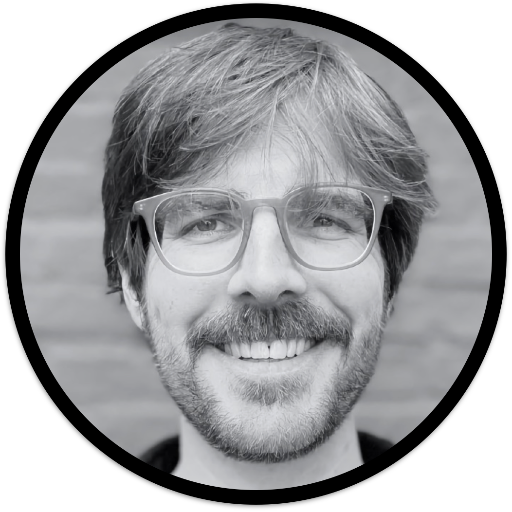
Muhammad El-Hindi is a researcher at the Technical University of Darmstadt , focusing on database systems , blockchain technology , and secure data management . His work bridges theoretical innovation with practical applications in cloud computing, trusted execution environments, and decentralized systems.
Jonas van Ouwerkerk is a Researcher at the Chair for Electrochemical Energy Conversion and Storage Systems within the College of Engineering at RWTH Aachen University . He leads the Section Battery Grid Integration and Storage System Analysis , focusing on large-scale battery systems for energy trading and grid stability. Current research areas include Battery Storage Systems , Renewable Energy Integration , and Data-Driven Energy Modeling Key projects involve the CARL Center and 5 MW Battery Storage initiatives Recent publications highlight his work on optimizing battery operations, analyzing renewable investments for prosumers, and modeling grid-scale storage systems. He contributes to open-source energy system modeling frameworks and comparative studies of power system models. While no explicit scientific awards are documented in the provided texts, his leadership in battery integration projects underscores his significance in energy storage research.
Professor Heinrich Kuhn serves as Professor of Business Administration, Supply Chain Management & Operations at the Ingolstadt School of Management, Catholic University of Eichstätt-Ingolstadt. His extensive research focuses on planning and control of production systems, flexible production planning, JIT and flow production systems analysis, maintenance, and queueing theory. With a prolific publication record spanning decades, he has established himself as a leading scholar in operations research and supply chain management. His research interests encompass Supply Chain Management, Operations Research, Production Planning, Retail Logistics, Queueing Theory, and Inventory Management. Professor Kuhn has developed innovative approaches for optimizing retail fulfillment processes, managing assortment planning, improving inventory accuracy, and addressing complex production planning challenges. His work bridges theoretical operations research with practical applications in retail and manufacturing industries, with particular emphasis on omnichannel retailing, grocery operations, and sustainable logistics solutions. His research demonstrates consistent evolution from foundational production planning systems to addressing contemporary challenges in digitalized retail environments. Professor Kuhn's recent publications (2021-2024) reveal a strong focus on retail logistics challenges, particularly in grocery retailing during the pandemic, drone delivery systems, vehicle routing optimization, and inventory management. His research shows a clear progression toward addressing digital transformation in retail, sustainable practices, and the integration of physical and online retail channels. The work demonstrates sophisticated methodological approaches including advanced optimization algorithms, simulation modeling, and empirical analysis of retail operations. Throughout his career, Professor Kuhn has maintained extensive collaborations with researchers including A. Holzapfel, A. Hübner, M. Sternbeck, and others. His research provides valuable decision support tools for retail operations, supply chain design, and production planning, with practical applications across multiple industries. His work continues to influence both academic discourse and industry practices in supply chain management and operations research.
Dr. Carsten Orwat is a senior researcher at the Institute for Technology Assessment and Systems Analysis (ITAS) , part of the Karlsruhe Institute of Technology (KIT) , Germany. Since 2000, he has led interdisciplinary projects on technology assessment, focusing on digital technologies and societal change . Current research: Systemic risks of AI, algorithmic discrimination, digital governance Key projects: "Systemic Risks of Artificial Intelligence", "Governance of and through Algorithms", "Assessing Big Data" Published over 30 works across AI ethics, pervasive computing, and digital rights Research Interests : Orwat's work bridges technical and societal dimensions of emerging technologies, emphasizing: Ethical implications of algorithmic systems Policy frameworks for AI governance Human dignity in digital environments Big data's societal impacts Recent Publications (2024) : His latest contributions analyze systemic risks in AI, normative challenges in regulation, and algorithmic discrimination through a human dignity lens. Collaborations include researchers from law, computer science, and policy domains. Contact Details : Office: Karlstraße 11, 76133 Karlsruhe, Germany Email: orwat@kit.edu Phone: +49 721 608-26116
Prof. Dr. rer. pol. Hermann Locarek-Junge is a full professor at the Department of Economics , University of Technology Dresden , Germany. His academic work focuses on business administration , with specializations in finance and financial services , risk management , and neural networks in finance . He has led research on electronic banking , market risk estimation , and financial technology . Department: Economics University: University of Technology Dresden Research Themes: Finance, financial technology, risk management, electronic banking His publications span financial mathematics , portfolio risk analysis , and digital transformation in banking . Key topics include value-at-risk modeling, neural networks for market risk, and direct banking trends. He has collaborated with researchers like Ralf Prinzler , Mario Straßberger , and Manfred Schwaiger on credit risk, customer retention, and nonlinear loss functions in portfolios. Recent work (1997-2002) explores crisis communication , volatility hedging , and dynamic limit setting in financial markets. He has edited volumes on information society challenges for data analysis and co-authored interactive learning programs in business administration. His research bridges quantitative finance and information systems in banking.
Irena Okhrin is a Junior Professor at the European University Viadrina Frankfurt (Oder) in the Department of Economics and Business Administration. Her primary focus is on Information & Operations Management, with particular emphasis on logistics and mobile business applications. Dr. Okhrin's research interests center around several key areas: Modeling of Logistic Processes in M-Business Transport Problems with Real-Time Information Exchange Use of Mobile Technologies in Supply Chain Management Her scholarly work demonstrates a consistent focus on the intersection of logistics, mobile technologies, and supply chain management. Over the period 2005-2009, she has published numerous papers examining vehicle routing problems with real-time constraints, inventory management in mobile business environments, and various aspects of supply chain management enhanced by mobile technologies. Her research often employs optimization techniques and explores practical implementations of mobile business concepts in logistics companies. Dr. Okhrin has received recognition for her contributions to the field through publications in reputable journals and conference proceedings, though specific awards are not mentioned in the available information. She has collaborated extensively with K. Richter on many research projects, indicating a productive academic partnership. While specific information about her teaching responsibilities and graduate students is not provided in the available materials, her position as Junior Professor suggests involvement in both undergraduate and graduate education.
Dr. Thomas Jurczyk is a Research Software Engineer at the CRC 1475 "Metaphors of Religion" at Ruhr-Universität Bochum, where he conducts computer-driven analyses of the A01 tafsir corpus and develops web applications. He holds a PhD in Religious Studies from Ruhr-Universität Bochum (2020), an MA in History and Religious Studies (2014), and a BA in Computer Science from FernUniversität Hagen (2024). His interdisciplinary background bridges humanities scholarship with computational expertise. PhD, Ruhr-Universität Bochum (2020): "The Notion of surb in Ancient Armenian Texts from the Fifth Century CE" (summa cum laude) MA, History and Religious Studies, Ruhr-Universität Bochum (2014): Grade 1.0 BA, Computer Science, FernUniversität Hagen (2024): Grade 1.6 BA, History and Religious Studies, Ruhr-Universität Bochum (2011): Grade 1.0 Dr. Jurczyk's research sits at the intersection of digital methods and religious studies, with particular focus on computational approaches to ancient religious texts, an/iconism, and the application of data science in humanities research. His work demonstrates how quantitative methods can illuminate patterns in religious discourse, textual traditions, and visual culture that might otherwise remain obscured in traditional qualitative analysis. He has developed expertise in Python programming, text mining, and digital publishing workflows. His scholarly output reveals a consistent trajectory of applying computational methods to religious studies questions, moving from specific case studies of ancient texts to broader methodological reflections on data science in the humanities. Recent publications show increasing sophistication in text mining techniques applied to religious corpora, particularly Qur'anic commentaries. Preis an Studierende (Award for best MA dissertation), Ruhr-Universität Bochum (2014) International Realisation Budget Grant (7,500 €) from Research School PLUS Dr. Jurczyk has served as Managing Editor of Entangled Religions and Editor of Philosophy and the Mind Sciences, demonstrating his commitment to scholarly communication. He has taught Python and data science classes at the University of Tübingen and developed automated publishing workflows like the Magic Manuscript Maker. His technical skills span Python, Go, Java, Docker, and web development, making him a valuable bridge between humanities scholarship and computational approaches. He is actively involved in the Digital Humanities community through membership in the Netzwerk Digital Humanities at Ruhr-Universität Bochum, the DHd AG "Digitales Publizieren," and CRETA "Centrum für Reflektierte Textanalyse." His work on the Religion Classification Web interface/API demonstrates practical applications of his research interests.
Professor Jörg Hähner holds the Chair of Organic Computing at the University of Augsburg's Faculty of Applied Computer Science within the Institute of Computer Science. He leads a research team focused on evolutionary computation, self-organizing systems, and intelligent computing approaches. His educational background includes computer science studies at TU Darmstadt. His academic career progression shows steady advancement in the field of organic and self-organizing computing systems. Prof. Hähner's research spans multiple interconnected domains in computational intelligence. His primary focus is on Organic Computing, which involves developing systems that can adapt and self-organize in complex environments. Within this framework, he has made significant contributions to Evolutionary Algorithms, particularly Cartesian Genetic Programming and Learning Classifier Systems. His work explores how these techniques can be applied to real-world problems such as predictive maintenance, energy systems optimization, and industrial automation. The research demonstrates a strong emphasis on both theoretical foundations and practical applications of self-adaptive systems. An analysis of his recent publications reveals a strong concentration on evolutionary computation techniques, particularly Cartesian Genetic Programming variants and Learning Classifier Systems. His research group has been actively developing frameworks like CRust_GP and GRAHF to advance modular construction of evolutionary algorithms. There's a clear trend toward applying these techniques to industrial problems including predictive maintenance, resource allocation in networks, and energy management systems. The publications show consistent exploration of fundamental questions about algorithm behavior while maintaining strong connections to practical applications. Prof. Hähner leads an active research group with numerous PhD students and collaborators, including Karen Poloczek, Henning Cui, Victor Gerling, Dr. Michael Heider, Marco Hüller, Neele Kemper, Helena Stegherr, Jonathan Wurth, and Roman Sraj. His team regularly publishes in top-tier conferences and journals in evolutionary computation, intelligent systems, and industrial applications. The Organic Computing research group maintains a strong presence in both theoretical and applied research, with projects spanning from foundational algorithm development to industrial applications in manufacturing, energy systems, and network optimization. The group's work demonstrates a cohesive research vision centered on creating adaptive, self-organizing computational systems that can operate effectively in complex real-world environments.
Professor Florian Toepfl holds the Chair of Political Communication with a Focus on Eastern Europe and the Post-Soviet Region at the University of Passau since 2020. As Principal Investigator of the ERC Consolidator Project RUSINFORM , he investigates Russia’s digital informational influence abroad through computational methods. Current research: Russian informational influence in Germany Historical focus: Media-authoritarianism relations in post-Soviet states Key methodological approaches: Qualitative, quantitative, computational social science His 15 most recent publications (2011-2025) analyze: Digital propaganda via Yandex and VK Comment section dynamics in authoritarian systems Pandemic-related conspiracy theories Transnational news environment negotiations Political astroturfing mechanisms Recognized with prestigious ERC Consolidator and Emmy Noether grants, his work bridges comparative media systems, digital authoritarianism, and computational communication research.
Prof. Dr.-Ing. Achim Kampker is a faculty member at RWTH Aachen University , serving as the Chair of Production Engineering of E-Mobility Components and Head of Battery Technology & Life Cycle . He is affiliated with the Production Engineering Laboratory (PEM) at Bohr 12, Aachen (52072). Kampker specializes in production engineering, battery technology, and electric mobility, with a focus on sustainable manufacturing systems, fuel cell applications, and life cycle assessment of energy storage solutions. His work integrates Industry 4.0 principles into factory planning and production data science. His research themes include: Battery manufacturing optimization, recycling, and supply chain resilience Electric motor design and thermal management systems Simulation-based process control and defect detection in production Data-driven approaches to second-life battery applications Recent publications analyze fuel cell truck economics, solid-state battery modeling, sodium-ion recycling challenges, and AI applications in battery production. He has contributed to standardization efforts in battery manufacturing and explores dynamic capability frameworks for electric mobility solutions. Contact: a.kampker@pem.rwth-aachen.de
Professor Peter Roßbach is an academic at the Frankfurt School of Finance & Management , specializing in General Business Administration with emphasis on Applied Business Informatics and Information Technology. His career spans over three decades in academia and banking IT research. Diploma in Economics from Philipps University Marburg (1985) Doctorate in Business Administration (1990) Habilitation in Business Informatics (1998) His research focuses on Database Technologies , Machine Learning , IT Security , and Blockchain , with over 30 publications addressing financial technology, cybersecurity, and data analytics. Recent work explores algorithmic interpretability, blockchain security, and human factors in cybersecurity. Key publication trends include: Machine Learning applications in banking (2017-2020) Blockchain implications for financial systems (2016-2018) IT Security in online banking (2012-2015) Crowdfunding and fintech innovations (2013) Regulatory compliance in banking (2014) Roßbach is actively involved in academic societies: Deutscher Hochschulverband , VHB , and WKWI . He teaches courses in Digital Business Security , Analytics , and Business Modeling , with office hours available by appointment.
Prof. Dr. Uwe Schmidt is a Director at the Albrecht Daniel Thaer Institute of Agricultural and Horticultural Sciences within the Faculty of Life Sciences at Humboldt University , specializing in Biosystems Engineering . His work focuses on optimizing controlled environment agriculture systems through advanced climate modeling and resource-efficient practices. Research Highlights: Hydroponic/aquaponic systems, nutrient optimization, greenhouse climate control, and urban agriculture sustainability Technological Innovations: Electrolytic disinfection, LED lighting efficiency, and nutrient mixing algorithms Global Impact: Studies on urban farming in Berlin and Mexico City Scientific Trends: Recent publications emphasize circular agriculture systems, resource recovery from plant residues, and sensor-driven optimization of plant-climate interactions. His work bridges agricultural engineering with environmental sustainability through interdisciplinary approaches.
Prof. Dr. Susanne Krasmann is a Professor of Sociology at the University of Hamburg's Faculty of Economics and Social Sciences. Her research bridges sociology, law, and architectural studies, focusing on security, vulnerability, and poststructuralist theory. Institutional Affiliation: University of Hamburg, Faculty of Economics and Social Sciences Research Interests: She investigates the sociology of security, uncertainty, and vulnerability, with a focus on architecture in the Anthropocene. Her work explores the interplay between law, knowledge, and political power through poststructuralist frameworks. Projects: Current projects include Caring for the Future (DFG 2022-2024) and AI and Human Meaning in Law (BMBF 2022-2026). She leads the Democratizing Security graduate program. Publications: Her recent articles address urban destruction in Ukraine, predictive policing, and the epistemology of algorithms. These works span critical security, cultural sociology, and the Anthropocene. Awards: Fellow of DFG (1999–2001) Straus Institute Fellowship, NYU (2010–2011) Visiting Fellowships at UC Berkeley (2017) and University of Melbourne (2018) Collaborations: She frequently collaborates with Christine Hentschel, León von der Burg, and Thomas Lemke. Her research assistants include Nina Reedy, Dr. Stephanie Schmidt, and León von der Burg.
Mathias Denecke is a Postdoctoral Researcher at the Institute for Media Studies at Ruhr University Bochum since March 2022 and an associated member of the Collaborative Research Center 'Virtual Lifeworlds' since February 2024. His academic trajectory includes doctoral research at Leuphana University Lüneburg's Centre for Digital Cultures (2014-2018) and prior work as a Research Associate on media streaming cultures at the University of Hamburg (2018-2022). His educational background features a completed doctorate in 2021 with the project 'Electricity metaphors in digital cultures,' an MA in Literature, Art and Media Studies from the University of Konstanz (2011-2014), and a BA in the same field with a minor in Political Science (2008-2011), including an Erasmus semester in Vilnius. Denecke's research centers on the intersection of digital cultures and material infrastructures, with particular focus on metaphors in theory formation, logistical systems, digitally mediated work, and age-appropriate assistance technologies. His work critically examines how conceptual frameworks like 'flow' and 'circulation' shape our understanding of digital phenomena while investigating the hidden labor within platform economies and care infrastructures. He approaches these topics through media theory, cultural studies, and political economy perspectives, often employing historical and comparative methods. His publications reveal a consistent trajectory exploring the metaphors that structure digital culture, evolving from early work on streaming and data flows to more recent investigations of logistical capitalism, care work in technical environments, and the material conditions of digital labor. Denecke frequently collaborates with other scholars while maintaining a distinctive focus on the epistemological dimensions of digital infrastructure and the social implications of emerging technologies. Denecke teaches courses including 'Data Bodies. People in Computing Environments,' 'Digital Media and Health,' 'Care Work' (at MA level), and 'Artificial Intelligence and Human Work' (at BA level), reflecting his research interests in the relationship between humans and computational systems. His teaching appears to integrate theoretical frameworks with contemporary case studies from platform economies and assistive technologies. As part of the Collaborative Research Center 'Virtual Lifeworlds,' Denecke contributes to interdisciplinary research examining the evolving relationship between digital technologies and human experience, particularly investigating how infrastructures shape everyday life and social relations in increasingly digitized environments.
Dr. Yves Bühler is a leading researcher at the Swiss Federal Institute for Forest, Snow and Landscape Research (WSL) , heading the Alpine Remote Sensing group within the Alpine Environment and Natural Hazards unit. His work focuses on remote sensing applications for snow and avalanche research, rock-ice avalanches, and alpine mass movement monitoring using drones, SAR satellites, and machine learning. Education: PhD in Remote Sensing (University of Zurich, 2005-2009), High-School Teaching Certification (MAS SHE, 2003-2005). Key projects: Large-scale avalanche mapping in India, drone-based snow depth monitoring, and thermomechanical modeling for hazard indication. Research Trends : Recent publications highlight advancements in machine learning for avalanche segmentation , multi-sensor displacement monitoring , and climate change integration into hazard models . His work bridges geomechanics , remote sensing technology , and operational risk mitigation across Switzerland, Himalayas, and international collaborations. Scientific Contributions : He has received a Research Fellowship at the University of Otago and led leadership programs at FHNW. His team developed RAMMS::LSHIM for large-scale hazard mapping and pioneered low-cost lidar for avalanche monitoring.