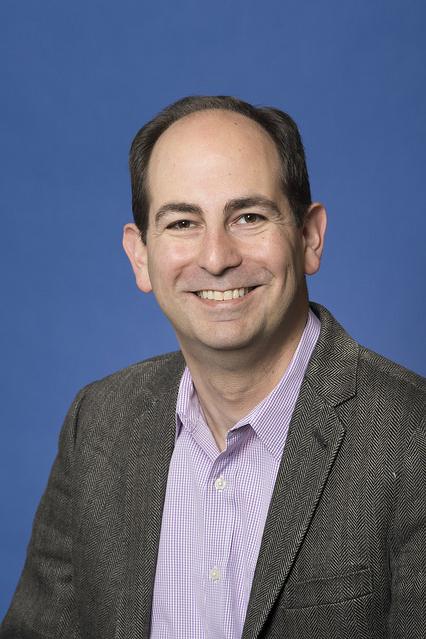
Yonatan Lupu is an Associate Professor of Political Science and International Affairs at George Washington University. He holds a Ph.D. in Political Science from the University of California-San Diego (2012) and a J.D. from Georgetown University (2002). His office is located in Monroe Hall, Room 417, Washington, DC. His research explores human rights, political violence, international law and institutions, conflict dynamics, courts, and networked behavior in digital spaces. He employs experimental methods, computational modeling, and network analysis to examine how offline events influence online behavior, the spread of extremism, and the effectiveness of international legal frameworks. Lupu's recent publications focus on digital authoritarianism, online hate networks, COVID-19 misinformation, and the intersection of technology with human rights. His work demonstrates consistent innovation in applying computational methods to political phenomena and conflict analysis. He teaches courses including Introduction to International Relations , Constitutional Law , Public International Law , and specialized seminars on conflict and commerce.
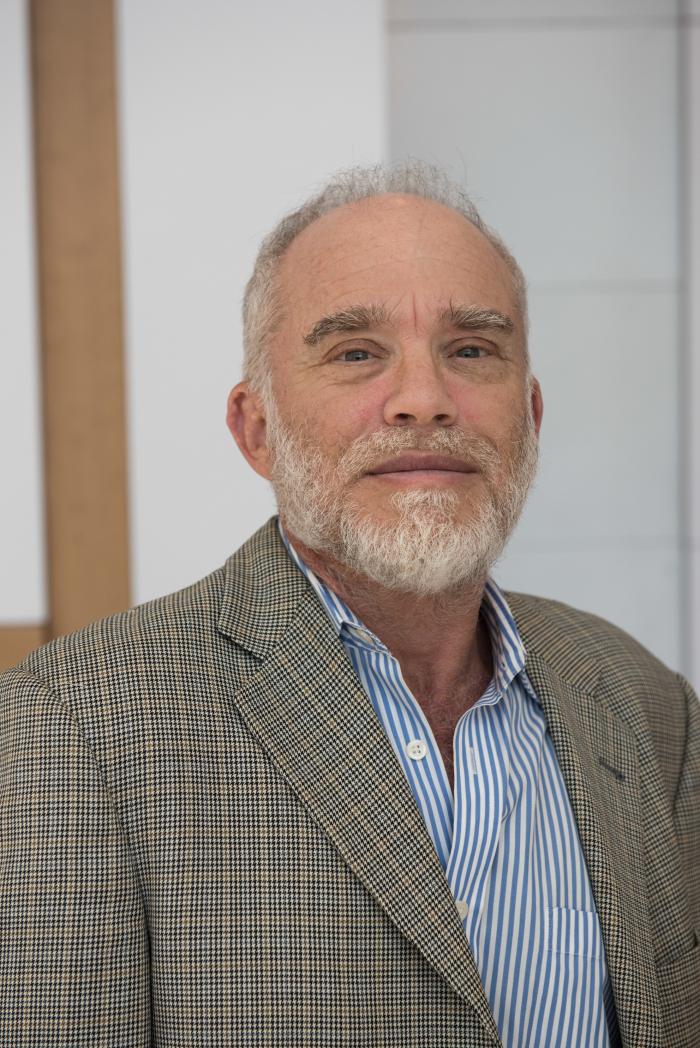
Robert J. Weiner is Professor of International Business, Public Policy and Public Administration, and International Affairs at George Washington University School of Business. He serves as Director of the Master of Science in International Business (MSIB) program and Faculty Director of the Center for International Business Education and Research (CIBER). He holds affiliate appointments at the Elliott School of International Affairs' Institute for International Economic Policy, Institute for Middle East Studies, Institute for Security and Conflict Studies, and Sigur Center for Asian Studies. His educational background includes a Ph.D. (1986), M.A. (1982), and B.A. (1979) from Harvard University. Prior to academia, he worked as an energy and environment consultant at ICF Inc. Professor Weiner's research centers on energy security and petroleum markets, with specific focus areas including: Resource nationalism and political risk in energy sectors Oil market turbulence and speculation dynamics State-owned enterprises and sovereign wealth funds Corruption in energy trade (notably UN Oil-for-Food Program) US-China competition for oil resources Foreign investment in petroleum industries His publication portfolio spans top journals including Journal of International Business Studies, Strategic Management Journal, and Accounting, Organizations and Society. His scientific recognition includes: Tucker and Dean's Scholarships for research excellence Gilbert White Fellowship at Resources for the Future Research awards from NSF, Québec government, and Columbia Center Professor Weiner maintains significant policy engagement through congressional testimony (U.S. House Small Business Subcommittee 2011, UK Treasury Select Committee 2008), UN advisory roles (UNCTAD Eminent Person on Commodities 2003), and extensive consulting for major oil companies (Amoco, Mobil, Phillips, Texaco), exchanges (NYMEX, IPE), and international institutions (World Bank, U.S. DOE). He has directed the International Business Department (2001-2005, 2013-2016) and Elliott School's MA in International Trade and Investment Policy (2016-2018). His institutional leadership extends to CIBER (Center for International Business Education and Research) and multiple Elliott School research institutes, where he contributes to energy policy analysis and international business education through study abroad programs and executive education initiatives.
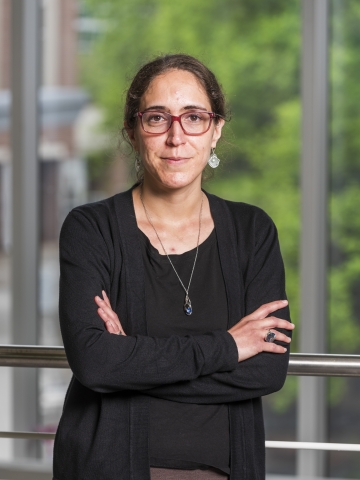
Leila Rafi is an adjunct professor at Toronto Metropolitan University’s Alexander Lincoln School of Law, where she teaches an introductory securities regulations course. She previously taught at Queen’s University Faculty of Law and the University of Windsor and Western Ontario law schools. Adjunct Professor, Toronto Metropolitan University (current) Former adjunct faculty, Queen’s University, University of Windsor, University of Western Ontario Her research and professional focus includes securities law, corporate governance, investment funds, and psychedelics industry regulation. She has advised on major M&A transactions, regulatory compliance, and legislative modernization projects. Recent publications and speaking engagements highlight her expertise in capital market trends, regulatory technology, and ESG reporting. She has received numerous awards, including recognition in Best Lawyers in Canada (2022–2025), Lexpert directories, and Canadian Lawyer’s Top 25 Most Influential Lawyers (2022). 2025: Recognized in Lexpert Special Edition on Finance and M&A Guide 2024: Lexpert “Consistently Recommended Lawyer” 2023: Lexpert “Leading Finance and M&A Lawyer” 2022: Canadian Lawyer’s Top 25 Most Influential Lawyers Leila mentors through the University of Toronto Women’s Association and serves on the Board of Directors for VersaFi (formerly Women in Capital Markets) and GEM (Girls E-Mentorship). She was called to the Ontario bar in 2006 and holds a JD from the University of Western Ontario (2005) and a BA from the University of British Columbia (2001).
Daniele Fusi is a Lecturer at the Department of Humanities, Ca' Foscari University of Venice, with a focus on Digital Humanities and Computational Philology. He teaches courses on XML databases and digital/public humanities, bridging classical studies with modern technology. University: Ca' Foscari University of Venice Department: Department of Humanities His research spans digital edition frameworks, metrical analysis, and XML markup for classical texts. Recent works explore AI applications in textual dynamics and forensic linguistic tools for legal corpora, demonstrating interdisciplinary approaches between humanities and computer science. Notable projects include: EpiSearch for ancient inscriptions Chiron framework for metrical analysis AttiChiari digital corpus He actively publishes in journals like Journal of Data Mining and Digital Humanities and Rivista di Cultura Classica e Medioevale , with over 20 years of contributions to digital philology, epigraphic databases, and computational linguistics.
Simone Browne is Associate Professor in the Department of African and African Diaspora Studies at the University of Texas at Austin and Research Director of Critical Surveillance Inquiry (CSI) with Good Systems, a research collaborative examining the social and ethical implications of surveillance technologies. She holds a Ph.D. in Sociology and Equity Studies in Education from the University of Toronto. Her research focuses on surveillance studies through the lens of Black studies, examining how contemporary surveillance technologies are informed by the historical practices of racial formation and policing of Black life. Browne's work spans historical analysis of slavery-era surveillance practices to contemporary algorithmic bias and AI ethics, with a particular emphasis on how Black communities experience and resist surveillance. Browne's publications reveal a consistent focus on the intersection of race, technology, and power. Her work traces historical continuities between practices like slave branding and modern biometric identification systems, while also examining contemporary manifestations in airport security, facial recognition technology, and algorithmic decision-making. Her research demonstrates how surveillance has long been racialized, with Black bodies serving as sites for the development and testing of surveillance technologies. 2016 Lora Romero First Book Publication Prize by the American Studies Association 2016 Surveillance Studies Book Prize by the Surveillance Studies Network 2015 Donald McGannon Award for Social and Ethical Relevance in Communications Technology Research 2021 Matakyev Research Fellow at the Center for Imagination in the Borderlands Gerald LeBoff Visiting Scholar at New York University Browne actively engages with multiple research communities, serving on the Academic Council of AI NOW Institute, Executive Board of HASTAC, Board Member of The Dark Laboratory, and Community Advisory Board of the US Covid Atlas Project. Her teaching includes courses on Race/Gender/Surveillance and Surveillance: An Introduction, reflecting her interdisciplinary approach that bridges African diaspora studies, sociology, and technology studies. As Research Director of Critical Surveillance Inquiry, Browne leads collaborative efforts with scholars, organizations, and communities to develop frameworks for understanding and addressing algorithmic harm. She is currently working on her second book manuscript, which examines artistic interventions in the surveillance of Black life across multiple domains including policing, privacy, smart dust, COINTELPRO, encryption, electronic waste, and artificial intelligence.
Lynn Kamerlin is a Professor at the Georgia Institute of Technology and co-leads the Kamerlin Laboratory, which operates across Georgia Tech and Lund University. Her work integrates computational chemistry and biophysics to address fundamental questions in enzyme evolution, catalysis, and protein design. Education MNatSc in Chemistry, University of Birmingham (UK) PhD in Chemistry, University of Birmingham (UK) Her research spans computational biophysics , focusing on mechanistic biochemistry , protein evolution , and enzyme engineering . Key methodologies include machine learning , molecular dynamics simulations , EVB/QM/MM modeling , and natural language models for protein structure prediction. Recent publications highlight trends in AI-driven enzyme design , conformational dynamics , and mechanistic studies of phosphoryl transfer reactions . Tools like WatCon and Q-RepEx demonstrate her commitment to method development in computational biology. Scientific Awards Georgia Research Alliance Eminent Scholar (2022-Present) Wallenberg Scholar (2020-2024) ERC Starting Grant (2012-2017) Wallenberg Academy Fellowship (2014-2019, prolonged 2019-2024) Young Academy of Europe Chair (2014-2015) Fellow of the Royal Society of Chemistry (2017) Her lab collaborates with experimental groups worldwide, leveraging enhanced sampling techniques and structural bioinformatics to engineer enzymes with tailored properties. Grants from the Swedish Research Council and European Research Council underpin her research on enzyme evolution and catalytic mechanisms. Current projects include computational design of thermostable enzymes , allosteric modulators for biomedical targets, and modular protein scaffolds . The lab also investigates non-canonical amino acid incorporation and FAIR data principles in biomolecular simulations.
Janis Witte serves as a Research Associate at the Chair of Business Administration, specializing in Marketing, within the Faculty of Business Administration and Economics at Heinrich Heine University Düsseldorf. Employed since December 2020, he contributes to the faculty's reputation for diverse specializations and innovative teaching that blends traditional lectures with digital elements and practical tutorials. Education: Dual Bachelor of Business Administration with Marketing focus (2015-2018) at Hochschule Osnabrück, featuring integrated vocational training in trade marketing at a consumer goods company. Master of Technology-oriented Management (2018-2020) at Technische Universität Braunschweig, specializing in Marketing, Service Management, and Law, with concurrent roles as student assistant at a service management chair and working student at Volkswagen Financial Services AG. His research centers on ethical challenges in digital environments, particularly analyzing dark patterns and user manipulation techniques in online interfaces. Current projects investigate how deceptive design practices influence consumer behavior, measure perceived manipulation, and explore trust dynamics in human-AI systems. This work bridges marketing theory with practical implications for digital ethics and regulatory compliance. Publication trends from 2022-2024 reveal escalating focus on dark patterns' societal impact, evolving from foundational definitions to empirical consequence analysis and human oversight in algorithmic systems. His interdisciplinary output spans marketing, information systems, and consumer psychology venues, demonstrating methodological rigor in measuring manipulation effects while addressing urgent digital marketplace concerns. As part of Prof. Peter Kenning's research team, Witte leverages Düsseldorf's strategic location near major corporations and cultural institutions. The faculty's extensive doctoral community fosters cross-disciplinary collaboration, enriching his work on digital consumer behavior through connections with economics, computer science, and business ethics scholars.
Mehtaab Sawhney is a Clay Research Fellow and a tenure-track assistant professor at Columbia University specializing in combinatorics, probability, analytic number theory, and theoretical computer science. His academic journey began at the University of Pennsylvania where he enrolled in a Bachelor of Engineering in Computer Science (2016-2017), then continued at MIT where he earned a Bachelor of Science in Mathematics with Minor in Computer Science (2017-2020), followed by a Doctor of Philosophy in Mathematics (2020-2024) under the advisorship of Yufei Zhao. His research spans probabilistic combinatorics, random matrix theory, additive number theory, and theoretical computer science. Sawhney's work bridges theoretical mathematics with computational applications, focusing on random structures, additive combinatorics, and spectral properties of discrete objects. His publications demonstrate a strong interdisciplinary approach that connects number theory with probabilistic methods to solve complex combinatorial problems. The analysis of his publication record reveals a consistent focus on foundational mathematical structures with applications across multiple domains. His work on random graphs, additive bases, and arithmetic progressions has established him as a leading researcher in modern combinatorics, often collaborating with prominent mathematicians including Ashwin Sah, Yufei Zhao, and Vishesh Jain. His research output shows remarkable depth and breadth, with contributions to both pure mathematics and theoretical computer science. 2024 Clay Research Fellow 2021 Frank and Brennie Morgan Prize for Outstanding Research in Mathematics by an Undergraduate Student (joint with Ashwin Sah) Churchill Scholar 2020 Best Student Paper STOC 2021 (Joint with Ryan Alweiss, Yang Liu) Best Student Paper ITCS 2022 (Joint with Yang Liu, Ashwin Sah) 2023 Hartley Rogers Jr. Prize 2022 Charles W. and Jennifer C. Johnson Prize (joint with Ashwin Sah) NSF Graduate Fellowship Sawhney has established a robust research program with significant contributions across multiple mathematical disciplines. His frequent collaborations with top researchers worldwide indicate an active and influential research network. While specific advisees aren't listed in available information, his extensive publication record with numerous co-authors suggests active mentorship of junior researchers through collaborative projects.
Maurice S. Fabien is an Assistant Professor in the Department of Mathematics at the University of Wisconsin-Madison and a SIAM-MGB Early Career Fellow. In 2025, he will join MIT's Schwarzman College of Computing as an MLK Assistant Professor while on leave from UW-Madison. His research focuses on computational mathematics with specialization in partial differential equations, high-performance computing, and numerical methods including discontinuous Galerkin formulations and multigrid solvers. Research interests span: Development of structure-preserving discretizations for hyperbolic systems GPU-accelerated computational algorithms Hybridizable discontinuous Galerkin (HDG) frameworks Multiscale modeling in porous media and biomechanics Numerical analysis of nonlinear PDEs Publications demonstrate strong focus on: High-order methods for conservation laws Efficient solvers for elliptic/parabolic systems Applications in fluid dynamics and materials science GPU-based performance optimization Error analysis of energy-stable schemes Awards & Honors: SIAM-MGB Early Career Fellowship (2025) Research Team: Austin Anyanwu (Undergraduate) - Finite precision arithmetic Alexis Liu (Alumni) - GPU-accelerated elliptic solvers Patrick Li (Undergraduate) - GPU-based mesh refinement Neer Mehta (Alumni) - Adaptive mesh refinement algorithms Significant involvement since 2007 in STEM diversity initiatives focused on recruitment/retention of underrepresented groups in academia.
David José Soto Díaz is a Professor in the Department of Public Law at the Faculty of Law, University of A Coruña (UDC). His academic focus centers on procedural law, particularly criminal procedural law, with growing expertise in digital law and artificial intelligence applications in legal contexts. He maintains an active research profile with an ORCID identifier 0000-0002-5078-4291 and is affiliated with the research group "Criminology, Legal Psychology and Criminal Justice in the 21st Century". Dr. Soto Díaz's research spans criminal procedural law, digital law, artificial intelligence in legal contexts, criminology, and legal psychology. His work explores the intersection of technology and law, particularly in digital legal proceedings and AI applications in justice systems. He has investigated how emerging technologies impact traditional legal frameworks and procedural justice, with publications addressing evidence in criminal proceedings, alternative dispute resolution, and the implications of digital transformation for legal practice. His publication record demonstrates consistent scholarly output from 2013-2023, with increasing attention to digital law and AI in recent years. His work appears in journals like Anuario da Facultade de Dereito da Universidade da Coruña , REVISTA VASCA DE DERECHO PROCESAL Y ARBITRAJE , and Ars Iuris Salmanticensis , alongside numerous book chapters and conference communications. His research shows a clear trajectory from traditional procedural law toward contemporary challenges at the intersection of law and technology. Dr. Soto Díaz has directed numerous bachelor's and master's theses since 2013 covering diverse legal topics including constitutional law, criminal procedure, private contracting, and European Union law. His thesis supervision addresses contemporary legal challenges such as human trafficking, gender violence, immigration issues, and the legal implications of AI. He has participated in multiple research projects funded by the Ministry of Education, University and Vocational Training, the Ministry of Science and Innovation, and regional Galician authorities, with project durations spanning from 2015-2026. He is actively involved with the "Criminology, Legal Psychology and Criminal Justice in the 21st Century" research group and has collaborated with the "Grupo de Investigación sobre Criminoloxía, Psicoloxía Xurídica e Xustiza Penal no século XXI, Ecrim." His work connects legal theory with practical applications in contemporary justice systems, as evidenced by his conference presentations at universities across Spain, Portugal, Italy, and the Netherlands.
Dr. Mine Dogan serves as Assistant Professor of Environmental Geophysics in the Department of Geological and Environmental Sciences at Western Michigan University, with her office located in 1121 Rood Hall (Kalamazoo, MI). She holds a Ph.D. from Michigan State University (2013) and previously held research positions at Clemson University's Department of Environmental Engineering and Earth Sciences. Education: Ph.D., Michigan State University, 2013 Her research integrates geophysics, hydrology, and environmental engineering to investigate subsurface processes using advanced methodologies including drone-based electromagnetic surveys, time-lapse monitoring, and 4D X-ray computed tomography. Key focus areas include tree root hydrology, contaminant transport in groundwater, permafrost characterization, and macropore flow dynamics in heterogeneous soils. Analysis of her recent publications (2018-2024) reveals strong emphasis on unmanned aerial systems for geophysical data acquisition, visualization of fluid transport mechanisms in porous media, and forensic/environmental applications of electromagnetic methods. Recurring themes include the role of biological structures in hydrological processes and innovative approaches to subsurface imaging. Scientific Awards: No awards documented in source material While her advising activities and grant funding remain unspecified in available information, her publication record demonstrates active collaboration across geophysics, hydrology, and environmental engineering disciplines. Laboratory facilities and research team structures are not detailed in the provided texts.
Professor Michael Winikoff is a prominent academic at Victoria University of Wellington's School of Information Management, where he joined in June 2019 and served as Head of School from early 2021 to early 2025. Previously, he was Head of Department at University of Otago's Department of Information Science (February 2011 to December 2016) and Associate Professor at RMIT University's School of Computer Science and IT. His career spans over two decades of research in autonomous systems and agent-oriented software engineering. His educational background includes a PhD from the University of Melbourne (1994-1997). His research focuses on improving software creation methodologies, particularly for intelligent agents that exhibit robust and flexible behavior. He is best known for developing the Prometheus methodology for agent-based systems design. More recently, his work has expanded to address societal consequences of autonomous systems and trust issues, with significant contributions to explainable AI (XAI). His publication record demonstrates consistent contributions to autonomous systems research, with recent work focusing on explainability frameworks, trust calibration, and certification of reliable autonomous systems. His 15 most recent publications (2018-2025) show a clear evolution from technical agent design toward broader societal implications, particularly the intersection of technical design and human trust in autonomous systems. The publications span journals like Artificial Intelligence and IEEE Internet Computing, as well as major conferences including AAMAS. Past President of International Foundation for Autonomous Agents and Multiagent Systems (IFAAMAS) Co-Editor-in-Chief of Journal of Autonomous Agents and Multi-Agent Systems (JAAMAS) Chair of ICORE rankings management committee Editor-in-Chief for International Journal of Agent-Oriented Software Engineering (IJAOSE) Vice President of Computing Research and Education Association of Australasia (CORE) Professor Winikoff has led significant research projects funded by the Australian Research Council, including work on adaptive personae for interactive toys, service-oriented negotiation in multi-agent systems, and advanced software engineering for intelligent agent systems. His current research continues this trajectory, focusing on making autonomous systems more explainable and trustworthy through engineering approaches that consider both technical and human factors. He maintains active collaborations across institutions, with recent work involving researchers from RMIT University and other international partners.
Dr. GOH Khim Yong is an Associate Professor and Head of the Department of Information Systems and Analytics at the National University of Singapore (NUS School of Computing). He holds a Ph.D. in Business Administration (University of Chicago), M.Sc. and B.Sc. in Computer & Information Sciences (NUS). His research focuses on digital media marketing, social/mobile platforms, AI pricing strategies, and econometric methods. He advises major firms like Alibaba, Lazada, and Johnson & Johnson across industries such as e-commerce, healthcare, and retailing. Educations: Ph.D., Business Administration, University of Chicago (2005) M.Sc., Computer & Information Sciences, NUS (1998) B.Sc., Computer & Information Sciences, NUS (1997, First-Class Honours) His research explores digital transformation, AI-driven pricing, live-streaming commerce, and consumer behavior in platform ecosystems. Notable projects include studying AI pricing agents' impact on e-commerce sales and analyzing live-streaming dynamics' socio-economic effects. He has published in top journals like Management Science and Information Systems Research , and his work frequently addresses practical industry challenges. Recipient of prestigious awards including the International Conference on Information Systems Best Paper Award (2022) and AIS Distinguished Member (2021). He teaches courses in econometrics and data analytics across NUS and the University of Chicago. His former Ph.D. students hold faculty positions at institutions like Tsinghua University and the Chinese University of Hong Kong (Shenzhen).
Prof. Mehdi Dastani is a Professor and chair of the Intelligent Systems group within the Department of Information and Computing Sciences at Utrecht University's Faculty of Science. He leads the Master's program in Artificial Intelligence and focuses on formal and computational models in AI, particularly multi-agent systems. His research integrates insights from philosophy, psychology, and law to develop autonomous agents that reason about social and cognitive concepts like norms, emotions, and responsibility. Dastani has held academic roles at Utrecht University since 2001, including postdoctoral research and faculty positions. Education: M.Sc. Computer Science (University of Amsterdam, 1991), M.Sc. Philosophy (University of Amsterdam, 1992), Ph.D. in Humanities (University of Amsterdam, 1998). His work spans theoretical and applied projects, including grants for initiatives like Golden Agents (simulating Golden Age creative industries) and traffic control systems using virtual organizations. He is actively involved in academic committees, editorial boards, and organizing international conferences like AAMAS and PRIMA. Research Interests: Multi-Agent Programming, Normative Systems, Autonomous Agents, Cognitive Robotics, and Human-Centered AI. His projects address challenges like norm enforcement, decision-making in complex systems, and ethical AI integration with societal needs. Advising & Grants: Supervised numerous PhD students (e.g., Birna van Riemsdijk, Bas Testerink) and secured grants for projects such as 'Controllable AI: Human-Centered Approach'. His work includes collaborations on urban governance, autonomous driving, and AI tools for literacy support in children. Labs & Teams: Leads the Intelligent Systems group, contributing to agent-based simulations, ethical AI frameworks, and interdisciplinary collaborations with social scientists and urban planners.
Christopher S. Yoo is the Imasogie Professor of Law and Technology, Professor of Communication, and Professor of Computer and Information Science at the University of Pennsylvania. He serves as Founding Director of the Center for Technology, Innovation & Competition (CTIC) and has held influential roles in U.S. and international regulatory bodies, including the FCC’s Broadband Deployment Advisory Committee and UN initiatives. His work bridges law, technology, and policy with a focus on antitrust, cybersecurity, and internet governance. His expertise spans regulatory policy for digital platforms, cross-jurisdictional antitrust comparisons, and privacy/security in emerging technologies like autonomous vehicles. Yoo has authored over 100 scholarly works and five books, including *The Dynamic Internet* and *Networks in Telecommunications: Economics and Law*. He frequently advises governments and international organizations on telecommunications, competition law, and data privacy. Research interests include: Global antitrust dynamics and platform regulation Internet architecture and governance challenges Privacy frameworks for medical devices and autonomous systems Strategies for universal internet access His recent articles analyze spectrum allocation, AI regulation, and cross-border policy harmonization. He has pioneered interdisciplinary programs merging legal and engineering education to address modern tech challenges. Leadership roles include advisory positions for the American Law Institute’s Data Privacy Project and UN initiatives addressing global connectivity gaps. Yoo’s work emphasizes integrating technical expertise into legal frameworks to address 21st-century technological complexities.