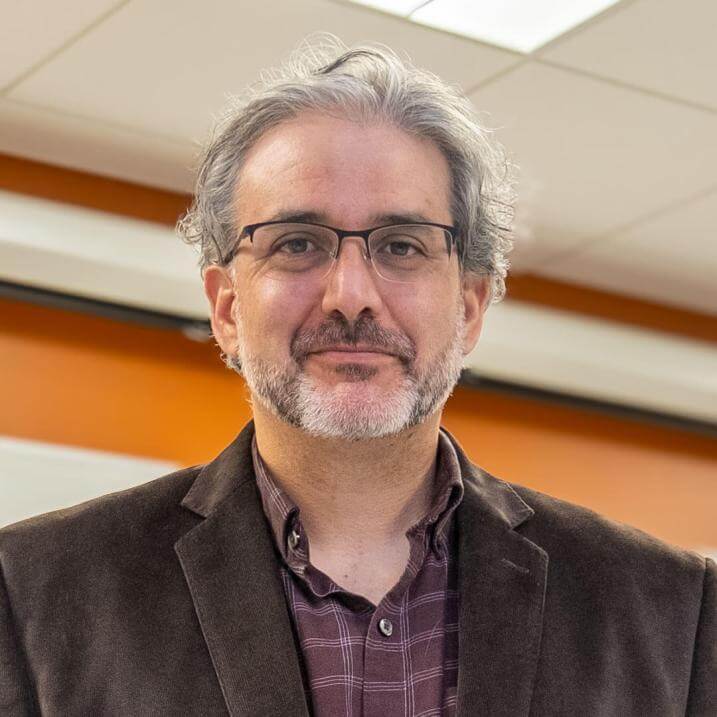
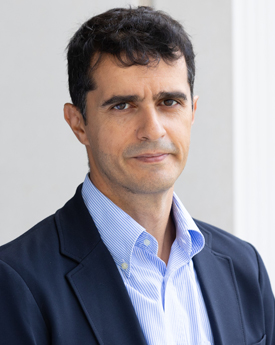
Regula Hänggli Fricker is a Full Professor at the Department of Communication and Media Sciences, Faculty of Economics and Social Sciences and Management, University of Fribourg, Switzerland. She previously held positions at the Amsterdam School of Communication Research (ASCoR) and has been a visiting researcher at ETH Zurich (TdLab and COSS initiative), Northwestern University, and the University of Bergen. Her research focuses on Political communication Comparative perspectives on institutional reforms Digital democracy Public debate and opinion formation Media dialogue in political contexts Analysis of her 15 most recent publications reveals trends in participatory budgeting, digital governance, media framing of religious/political topics, and computational social science applications. These works span disciplines like political science, computer science, and media studies, with subfields including AI debates, voting system design, religious representation, and polarization dynamics. Her academic credentials include a PhD from the University of Zurich and a Master's in Political Science (major) and Economics (minor) from the University of Bern. Collaborations with Evangelos Pournaras, Dirk Helbing, and others highlight interdisciplinary projects in smart city ethics and democratic innovation.
Bernhard von Stengel is a Professor of Mathematics at the Department of Mathematics, London School of Economics and Political Science . His work bridges game theory, computational complexity , and mathematical economics , with a focus on equilibrium computation and algorithmic aspects. Developed Game Theory Explorer , open-source software for analyzing strategic and extensive-form games. Organized major workshops like What is Strategic Information? (2024) and Game Theory and Machine Learning (2023). Authored the textbook Game Theory Basics (Cambridge University Press, 2021). His research spans zero-sum games , correlated equilibrium , inspection games , and communication over noisy channels . Recent work includes characterizing the Condorcet dimension of metric spaces (2024) and stable-set bounds for Nash equilibria in bimatrix games. He has collaborated with institutions like the Game Theory Society and contributed to public discourse via talks on algorithms' societal impact (2021) and game theory in politics (2020).
Koroush Shirvan is the Atlantic Richfield Career Development Professor in Energy Studies and a tenured faculty member in MIT's Department of Nuclear Science and Engineering within the School of Engineering. Joined in July 2017, he directs the Reactor Technology Course for Utility Executives and leads the Fission Materials in Extreme Environments Lab. His work bridges nuclear engineering with practical industrial applications for decarbonization. His research focuses on reactor design economics, materials testing under irradiation, nuclear safety, and boiling heat transfer. He accelerates innovations in nuclear fuels, small modular reactors, and space propulsion through multi-scale physics integration. Current projects include accident-tolerant fuels, high-temperature materials for microreactors, and AI-driven optimization of reactor systems. His approach combines experimental irradiation testing at MITR with advanced computational modeling. Recent publications reveal strong trends toward economic nuclear deployment via advanced fuel technologies and small modular reactors. AI/ML applications dominate optimization research, particularly for core reload and uncertainty quantification. Materials science under extreme conditions remains central, with growing emphasis on space nuclear applications and horizontal reactor configurations for cost reduction. His scientific recognition includes: Nuclear News 40 under 40 (2024) American Nuclear Society Landis Young Member Engineering Achievement Award (2023) American Nuclear Society Reactor Technology Award (2022) Teaching responsibilities span Sustainable Energy (22.811/081), Graduate Reactor Physics, and Nuclear Design courses. Research grants support experimental programs at MIT Reactor Lab and computational frameworks for reactor-to-repository analysis. He mentors students through senior design projects and graduate research in nuclear fuel cycles. He directs the Fission Materials in Extreme Environments Lab and co-leads MIT's Space Nuclear initiative with AeroAstro. The team conducts irradiation experiments using MITR's high-temperature hydrogen flow capabilities and advanced diagnostics for post-irradiation examination. Current thrusts include nuclear thermal rocket materials testing and fission surface power development for lunar/Mars missions.
Fred Feinberg is the Joseph and Sally Handleman Professor of Marketing and Professor of Statistics (by courtesy) at the University of Michigan, where he is also an Affiliated Faculty member of the Center for the Study of Complex Systems. His work integrates advanced Bayesian methods with large-scale marketing data to illuminate how people make choices under uncertainty. Education Ph.D., Sloan School of Management, Massachusetts Institute of Technology (1989) Doctoral program in Mathematics, Cornell University (1983–84) S.B. Mathematics & S.B. Philosophy, Massachusetts Institute of Technology (1983) Research Focus Feinberg’s scholarship centers on discrete choice models that leverage real-world decisions to infer latent attributes such as demographics, product appeal, and socioeconomic status. Methodologically, he employs Hierarchical Bayes (HB) models and cutting-edge MCMC algorithms to handle massive data sets, while theoretically he advances dyadic utility theory and optimal search under uncertainty. Applications span click-through behavior, menu-based choice, online dating preferences, spatial marketing, and consumer reactions to intangible or aesthetic product features. Recent empirical studies explore the wearout versus weariness effects of online advertising, the impact of data breaches on consumer behavior, and dynamic pricing for digital media subscriptions. Across these projects, Feinberg couples rigorous statistical innovation with actionable managerial insights, bridging marketing science, operations, and engineering. Scientific Awards & Leadership Joseph and Sally Handleman Endowed Professorship Past President, INFORMS Society for Marketing Science Departmental Editor, Production and Operations Management Former Co-Editor, Marketing Science Co-author (with T. Kinnear & J. Taylor) of the textbook Modern Marketing Research: Concepts, Methods, and Cases Grants & Collaborations While explicit grant lists are not provided, Feinberg’s prolific publication record in top-tier journals (e.g., Journal of Marketing Research , Marketing Science , Management Science ) and editorial board service imply sustained external funding and interdisciplinary partnerships, particularly with operations, engineering, and computer-science groups. Laboratories & Teams Feinberg is formally affiliated with the Center for the Study of Complex Systems (CSCS) at the University of Michigan, where he collaborates on network-based choice frameworks and large-scale behavioral data analytics. He maintains active ties to the Ross Marketing faculty and the Department of Statistics, fostering joint workshops and doctoral training initiatives.
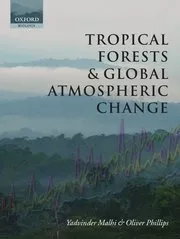
Professor Yadvinder Malhi is a leading ecosystem scientist at the University of Oxford , holding the Professor of Ecosystem Science chair at the Environmental Change Institute (ECI) within the School of Geography and the Environment. He also serves as Jackson Senior Research Fellow at Oriel College , Director of the Leverhulme Centre for Nature Recovery , and President of the British Ecological Society . Active researcher in tropical and temperate forest dynamics Advises UK and Scottish governments on nature restoration Global research across Amazon, Andes, Africa, and UK Research Focus: Malhi investigates how terrestrial ecosystems respond to global atmospheric changes, with emphasis on tropical forests , climate change adaptation , and nature-based solutions . His work integrates field physiology, remote sensing, and ecosystem modeling, notably through the GEM and RAINFOR networks. Recent Trends: Recent publications highlight cross-disciplinary approaches combining terrestrial laser scanning , trait-based ecology , and social-ecological analysis . Research spans from Arctic tundra to tropical coral reefs , with growing emphasis on UK nature recovery and global carbon cycling . Scientific Recognition: 2025: Ramon Margalef Prize in Ecology 2023: Fellow of the Royal Society (FRS) 2022: British Ecological Society President-Elect Academic Leadership: As Programme Leader of the Ecosystems & Biodiversity Research group and member of the ECI , Malhi mentors 24 graduate students while directing large-scale initiatives like the Wytham Woods monitoring station. His lab develops innovative tools for ecosystem assessment through projects like GEM Field Manual and TLS2trees algorithms.
Ben Marder is a Personal Chair in Digital Marketing and Consumer Behaviour at the University of Edinburgh School of Business , where he specializes in the unintended consequences of digital technologies on consumer behavior and service ecosystems. He serves as Director of Research Degrees and teaches Introduction to Business Research online. Education PhD in Marketing/Information Systems (2013), University of Bath MSc in Marketing (Distinction, 2008), University of Leicester BSc in Financial Economics (First Class, 2007), University of Leicester His research bridges social psychological theory with digital marketing, focusing on: Social media surveillance and self-presentation Instagrammability and visual culture AI ethics and human factors Influencer marketing dynamics Augmented/Virtual Reality applications Online reviews and service recovery His recent work explores vertical video formats (TikTok), emoji/GIF communication , and virtual item consumption in gaming/Metaverse environments. He advocates for student and academic wellbeing and has contributed to public discourse via LinkedIn and media outlets like BBC and The New York Times . Ben's 92+ research outputs emphasize mixed-method approaches, prioritizing quantitative experiments . Key trends include: Behavioral impacts of social media surveillance Psychological drivers of digital consumption Algorithmic trust and service innovation Scientific Awards Best Paper Prize (2018) Literati Prize - Commendable contribution (2018) Most Read Article (2025) Ben supervises quantitative research projects and collaborates on digital marketing trends with journals like Journal of Retailing and Journal of Service Research . He has led projects on social media's impact on service workers, consumer self-awareness, and Facebook post engagement metrics.
Charity Nyelele is an Assistant Professor in the Environmental Sciences department at the University of Virginia. Her research bridges human well-being and environmental systems, focusing on biodiversity, climate change, and ecosystem services through the lens of environmental justice and equity. Specializes in urban forestry and socio-ecological synthesis Active in climate justice, carbon sequestration, and stormwater management Nyelele's recent work integrates machine learning and social media data to map recreational ecosystem services and optimize tree planting frameworks. She has developed multi-objective decision support tools to address urban ecosystem service trade-offs and leads research in fire-driven ecosystem restoration across Western US forests. She teaches courses on Environmental and Climate Justice , Management of Forest Ecosystems , and co-instructs Politics, Science, and Values . Contact: hbt3mb@virginia.edu
Summary Luis A. Duffaut Espinosa is an Assistant Professor in the Department of Electrical and Biomedical Engineering at the University of Vermont (UVM), affiliated with the College of Engineering and Mathematical Sciences. His research focuses on control theory, estimation, robotics, and nonlinear systems with applications in autonomy, quantum control, and environmental monitoring. He holds a Ph.D. in Electrical and Computer Engineering from Old Dominion University (2009) and has held academic positions at George Mason University and postdoctoral roles at Johns Hopkins University and the University of New South Wales. Education: Ph.D. in Electrical and Computer Engineering (2009), Old Dominion University M.S. in Mathematics (2005), Pontificia Universidad Católica del Perú B.S. in Physics (2003), Universidad Nacional de Ingeniería, Peru Research Interests: His work emphasizes data-driven control and estimation methodologies, including model-free approaches for power systems, environmental monitoring, and quantum control. Current projects include real-time data assimilation in harsh environments, resilient robotics in GPS-denied conditions, and SAR with small satellites. He co-directs the Autonomous and Intelligent Systems Research Laboratory (AIRLab) and is part of the CREATE center. Recognition: 2024 NSF CAREER Award for work on safety-aware data-driven control frameworks Teaching & Advising: He teaches courses in estimation theory, control systems, and signal processing. Advises a team of graduate and undergraduate students focusing on autonomy, robotics, and control systems. Notable students include Danial Waleed (Ph.D. 2024), Jacob Friz-Trillo (M.S. 2025), and Farnaz Boudaghi (Ph.D. candidate). Labs & Collaborations: AIRLab: Focuses on data-driven control for autonomy in robotics and engineered systems CREATE: Research on resilient energy and autonomous technologies
Dr. Thomas Lancaster is a Principal Teaching Fellow in the Department of Computing at Imperial College London, part of the Faculty of Engineering. He specializes in academic integrity, generative AI's impact on education, and combating contract cheating. His roles include Associate Dean at Staffordshire University and leadership positions at Coventry University and Birmingham City University. His research spans ethical AI use, plagiarism detection, and educational policy. He has authored numerous articles on cheating prevention and technology's role in academic integrity. His Orcid identifier is 0000-0002-1534-7547, and he can be reached at t.lancaster@imperial.ac.uk. Research Interests: Lancaster focuses on the intersection of technology and academic ethics, including generative AI's implications for student work, digital watermarking, and social media's role in enabling cheating. He advocates for staff-student partnerships to strengthen integrity frameworks and has pioneered methodologies for detecting source code plagiarism from online repositories. Publications: His recent work highlights global comparisons of cheating industries, the evolution of AI-driven cheating threats, and policy development to address historical misconduct. He emphasizes practical solutions for institutions, such as leveraging AI tools ethically and enhancing detection systems. Professional Contributions: As a leader in computing education, Lancaster has improved placement-year support for students and developed strategies to address transnational education challenges. His work on the SEEPAI project in Southeast Europe underscores his global impact.
Naranker Dulay is a Professor in the Department of Computing at Imperial College London, part of the Faculty of Engineering. He holds affiliations with the Centre for Cryptocurrency Research and Engineering, Centre for Smart Connected Futures, and the Distributed Software Engineering group. His research focuses on Distributed Computing, Applied Economics, Policy and Administration Law, Computer Software, and Information Systems. His work explores blockchain technologies, smart contracts, consensus algorithms, and distributed systems. Recent research includes optimizing post-trade processing using distributed ledgers and developing adaptive protocols for dispute resolution in smart contracts. He is also involved in cybersecurity and privacy-preserving technologies for data management. Key contributions include frameworks like Chainlog for logic-based smart contracts and FADE for self-destructing data. His articles span over a decade, emphasizing blockchain scalability, energy-efficient neural networks, and decentralized macro-programming in wireless sensor networks. Dr. Dulay collaborates across interdisciplinary domains, blending technical innovation with socio-technical challenges. His affiliations reflect a commitment to advancing smart connected futures through cutting-edge research.
Felipe Thomaz is an Associate Professor of Marketing at Saïd Business School, University of Oxford, and Deputy Director of the Oxford Future of Marketing Initiative. He holds a PhD in Marketing from the University of Pittsburgh and previously taught at the University of South Carolina. His research focuses on marketing strategy, AI ethics, illicit markets, and ESG integration, with notable contributions to frameworks like Ad Net Zero for net-zero advertising emissions. He collaborates with UN agencies, NGOs, and tech companies to address global sustainability goals and wildlife trafficking networks. Education: PhD in Marketing (University of Pittsburgh), MSc in Marketing & Finance (University of Pittsburgh), BSc in Animal Sciences (University of Florida). Research interests include digital marketing channels, brand performance via social networks, AI-driven marketing strategies, and conservation science linked to wildlife trade. His work bridges academia and industry, resulting in spinouts and IP transfers from Saïd Business School. Key projects include: Ad Net Zero: Global standard for reducing advertising emissions UN collaboration on wildlife trafficking through dark web analysis UNESCO partnerships on eliminating stereotypes in advertising His interdisciplinary approach spans marketing, mathematics, and conservation science, with publications in top journals like Journal of Marketing and Conservation Science and Practice .
Professor Efthymios Pavlidis is a faculty member in the Department of Economics at Lancaster University Management School (LUMS). He holds the rank of Professor and specializes in macroeconomics, international finance, and time series econometrics. His research focuses on housing market dynamics through collaborations like the International Housing Observatory (with the Federal Reserve Bank of Dallas) and the UK Housing Observatory. He is a Fellow of the Higher Education Academy, reflecting his commitment to academic excellence in teaching and research. His research interests include speculative bubble detection, real estate price forecasting, and testing parity conditions in financial markets. Pavlidis actively supervises PhD students in applied time series econometrics, emphasizing practical applications in financial markets and housing economics. He is involved in numerous academic activities, including organizing conferences and workshops such as the Dynare Conference and the Lancaster Economics Seminar. Key contributions include developing econometric methods for detecting market exuberance and analyzing real exchange rates. His work bridges theoretical econometrics with practical policy implications, particularly in housing and energy markets. Pavlidis collaborates internationally, evidenced by his participation in global academic networks and institutions like the European Economic Association and the Royal Economic Society. His teaching includes the course ECON222 Intermediate Macroeconomics I, and he maintains an office in the Management School (B015), with weekly office hours on Tuesdays. A comprehensive overview of his research and projects is available at his personal webpage: https://sites.google.com/view/etpavlidis/ .
Sigrid Källblad Nordin is an Associate Professor at KTH Royal Institute of Technology, affiliated with the Department of Mathematics (Division of Probability, Mathematical Physics, and Statistics). Her research focuses on Mathematical Finance, Probability Theory, and Stochastic Analysis, with an emphasis on measure-valued processes, martingale optimal transport, and model uncertainty. She holds a DPhil from the University of Oxford (2014). Her work bridges theoretical advancements in stochastic control, optimization, and financial applications. Recent research includes Bayesian optimal adaptive control, robust option pricing, and dynamically consistent investment strategies under uncertainty. She teaches courses such as Financial Mathematics and Financial Derivatives, and supervises PhD students Linn Engström and Chaorui Wang. Publications span journals like Annals of Applied Probability , Finance and Stochastics , and SIAM Journal on Control and Optimization , reflecting contributions to optimal transport, stochastic processes, and financial modeling. She is currently hiring a new PhD student and welcomes inquiries about master thesis supervision.
C. Lanier Benkard is the Gregor G Peterson Professor of Economics at the Graduate School of Business, Stanford University. He is a prominent researcher in industrial organization, game theory, and econometrics, focusing on dynamic models of market competition and structural estimation. Research Interests: His work spans Dynamic games and equilibrium modeling Hedonic pricing and demand estimation Econometric tools for imperfect competition Computational methods for large-scale industries Publication Trends: His research emphasizes oblivious equilibrium approximations, strategic interactions in concentrated industries, and empirical analysis of markets with heterogeneous consumers. He frequently collaborates with scholars like Gabriel Weintraub and Patrick Bajari. Tools & Extensions: He has developed computational resources, including C++ and Matlab code, to analyze oblivious equilibrium. Current work includes extensions to Markov Perfect Industry Dynamics and aggregate shock modeling.
Li Song is a Professor and holds the Lesch Centennial Chair & Lloyd G. and Joyce Austin Presidential Professor at the University of Oklahoma's Aerospace & Mechanical Engineering Department. He leads the Building Energy Efficiency Lab and serves as AME Associate Director for Research. His expertise spans building energy systems, HVAC optimization, and fault detection technologies. Education: Ph.D. (Thermal/Fluid Science, 2004) from University of Nebraska-Lincoln; M.S. (Thermal/Fluid Science, 1996) from Harbin Institute of Technology; B.S. (Thermal Energy Systems, 1993) from Shengyang University of Civil Engineering and Architecture. Research focuses on energy-efficient HVAC systems, fault detection algorithms, and building performance analytics. Notable contributions include the ULEM-FDD system for high-performance buildings and virtual sensor technologies for airflow/water flow measurement. Awards include the ConocoPhillips Energy Prize (2011 finalist) and Bes-Tech Innovation Award (2006). Publications emphasize HVAC control strategies, energy modeling, and IoT-enabled diagnostics. Courses taught include Thermodynamics, Energy Efficient Building Systems Design, and HVAC Systems Engineering.