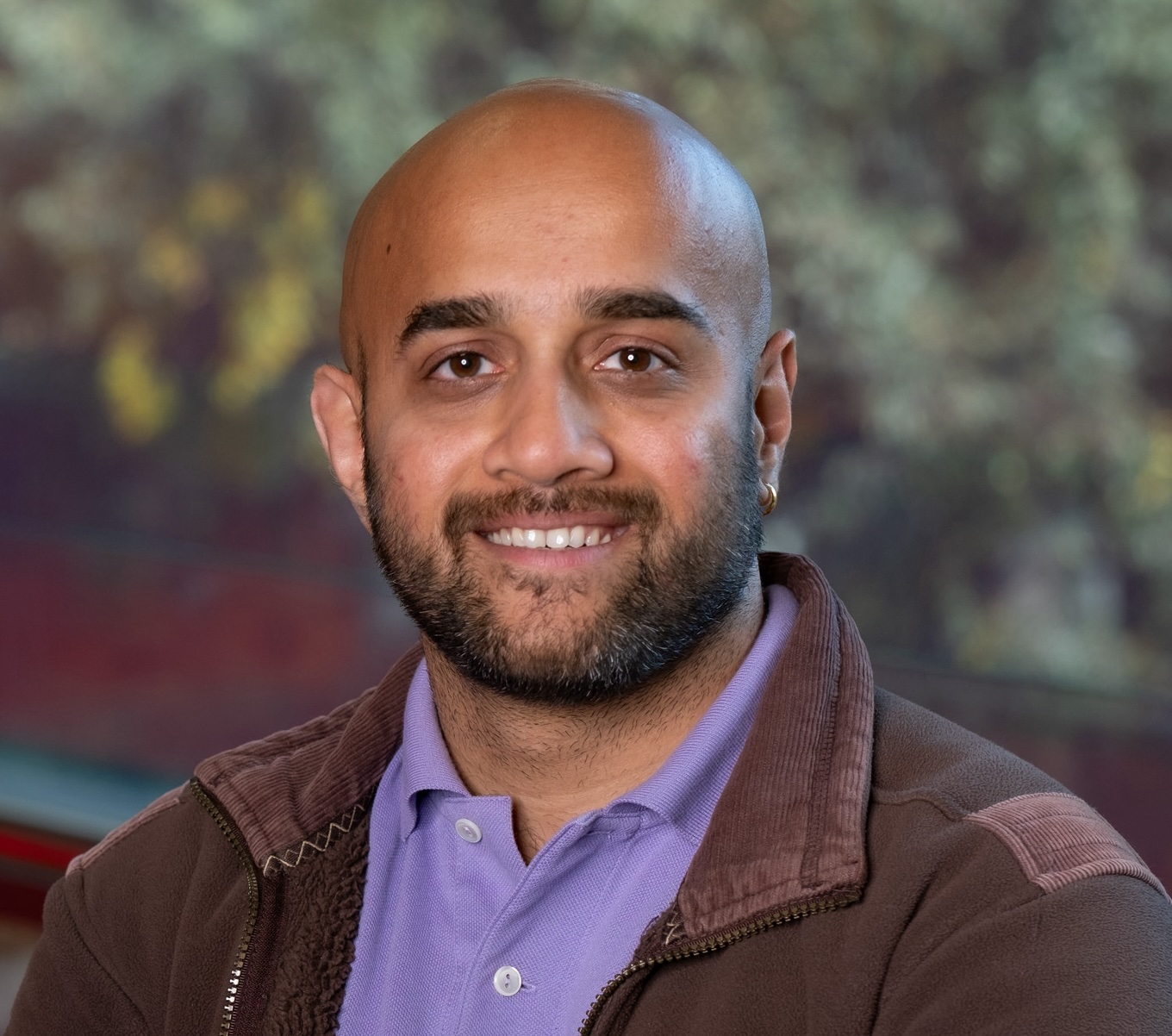
Marcus Smith is an Associate Professor in Law at the Charles Sturt University , where he teaches LAW222 Technology Law and directs the Bachelor of Laws program. He holds advanced degrees from the Australian National University (PhD, LLM) and the University of Cambridge (MPhil). His research spans technology law and regulation , focusing on genomic data governance biometric identification AI ethics blockchain policy cybersecurity surveillance law He leads the Contemporary Threats to Australian Security research group and serves as Chief Investigator on an NHMRC-funded project (MRF2015531) addressing genomic dataset governance. His recent work analyzes algorithmic bias in facial recognition AI in healthcare blockchain's regulatory challenges post-pandemic cybercrime surveillance ethics data security frameworks He actively supervises PhD and honours students in technology law and contributes to law reform through submissions to international bodies like the UN Human Rights Council .
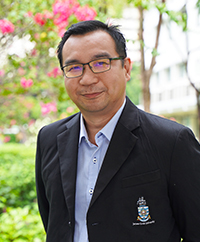
Associate Professor Joyce Nip is a member of the University of Sydney's Discipline of Media and Communications and Department of Chinese Studies. Her research focuses on media dynamics in Chinese societies, particularly the political and social implications of digital platforms like social media. She has held visiting roles at the University of Hong Kong and the University of Maryland, and received the 2020 Taiwan Fellowship. Education and Professional Background: Joyce has over 20 years of experience in journalism, teaching, and research. She was a Fulbright Scholar at the University of Maryland (2004–2005) and has held academic roles in Hong Kong before joining the University of Sydney in 2010. Research Interests: Her work spans journalism studies, civic media use, and diasporic Chinese communities. Current projects include studies on online public opinion in Greater China and China’s external news communication strategies. Grants and Awards: Joyce has secured grants from the Chiang Ching-Kuo Foundation for projects on Chinese social media and public opinion. Her 2020 Taiwan Fellowship reflects her expertise in cross-strait communication. Teaching and Supervision: She teaches courses on Chinese media in global contexts and supervises research on topics like Taiwanese public communication and diasporic media. Past students include Liang Xia (PhD) and Weiwei Xu (PhD). Labs and Collaborations: Joyce contributes to the Sydney Southeast Asia Centre and serves on editorial boards for Asian Journal of Communication , Digital Journalism , and Journalism Practice .
Dr. Aditya Joshi is a Senior Lecturer in the School of Computer Science & Engineering at the University of New South Wales (UNSW). He specializes in Natural Language Processing (NLP), with a focus on sarcasm detection, dialectal NLP, and ethical AI applications in public health and cybersecurity. He joined UNSW in 2023 following industry roles at SEEK, Notiv, and Fractal Analytics, where he developed NLP systems for recommendation engines and meeting analytics. His research has garnered over 3,000 citations (h-index 26) and secured $3.1M in grants, including Defence Trailblazer and Google exploreCSR awards. Education: Joint PhD (2018) from IIT Bombay (India) and Monash University (Australia); MTech in CSE (2011) from IIT Bombay. Research Interests: Making NLP models robust for non-native English speakers and the LGBTI+ community, algorithmic enhancements to transformers, and applications in public health, cybersecurity, and societal issues. His work spans epidemic intelligence (collaborations with EPIWATCH and IFCYBER), cybersecurity tools like AuditNet, and inclusive AI initiatives such as queer-inclusive workshops funded by Google. He designed UNSW's new NLP course (COMP6713) and co-authored a Wiley textbook on NLP. Notable grants include the A$1.4M 'Comprehensive Defence Data Platform' (Lead CI) and A$92K Google exploreCSR grant for benchmarking dialectal sentiment. His awards include the Best PhD Thesis from IITB-Monash and Best Paper accolades at FAccT 2023 and MoMM 2020. He supervises projects on kernel-based attention reformulation, prompt-based sarcasm detection, and multilingual small-scale LLMs. His service roles include Executive Committee Member at ALTA and arXiv moderator for computational linguistics.
Professor Khin Than Win is a leading academic in health informatics and digital health at the University of Wollongong (UOW), holding appointments as Professor in the School of Computing and Information Technology, Head of Postgraduate Studies, and Deputy Head (Research). She also serves as Academic Program Director for UOW's Master of Health Informatics and Graduate Certificate in Health Analytics programs. Her research focuses on applying information technology to healthcare, particularly in behavior change support systems, persuasive technology, and ethical AI applications. She has supervised over 20 PhD students and holds leadership roles including Deputy Chair of UOW's Health and Medical Research Ethics Committee, and membership in international committees like the Persuasive Technology Steering Committee. Education: MBBS from Rangoon University, Master's and PhD in IT from Assumption University (Bangkok) and UOW (Australia) Research Interests: Health data analytics, AI in healthcare, privacy/security of health systems Leadership: Program/General Chair roles at ACIS and Persuasive Technology conferences Awards: Best Paper Awards (2023, 2018) Her extensive funding portfolio includes ARC grants and NHMRC projects, totaling over 24 funded initiatives. Current research explores blockchain in medical passports, AI ethics, and culturally tailored health interventions.
Professor Hala Zreiqat AM is a leading biomedical engineer at The University of Sydney , serving as the Director of the ARC Training Centre for Innovative BioEngineering . A Fellow of all major Australian academies (AAS, ATSE, FAHMS, FRSN), she develops 3D printed bioceramics for bone regeneration while championing diversity through initiatives like the IDEAL Society and BIOTech Futures mentorship program. Her work bridges academia, clinical practice, and industry in musculoskeletal research . Research Focus: Her lab creates synthetic bone scaffolds that mimic natural bone architecture, strength, and porosity, enabling non-rejected bone regeneration via patient-matched implants. Key applications include orthopaedic, dental, and maxillofacial repair , with over $18M in competitive funding and multiple patents. Current projects explore AI-driven scaffold performance prediction and anti-senescence strategies for aging-related bone loss. Scientific Trends: Recent publications highlight 3D printed nanovoxelated ceramics , antisenescence biomaterials , and multifunctional theranostic platforms . Her team integrates machine learning for scaffold design, atom probe tomography for interface analysis, and two-photon imaging for cellular monitoring in 3D environments. 2021-2022 Fulbright Senior Scholar 2018 NSW Premier's Woman of the Year 2019 Eureka Prize for Innovative Use of Technology Fellow of Australian Academy of Science (2021) Over $18M in research funding Teaching & Leadership: She designed core courses like Tissue Engineering and Nanomaterials in Medicine , mentoring 158 students in 2020 alone. As Chair of CAAR (2020-2023), she strengthens Australia-Arab collaborations. Her lab trains early-career researchers , with alumni now in academia and industry.
Dr Luke Hespanhol is a Senior Lecturer in Design and Computation at the University of Sydney's School of Architecture, Design and Planning. He is affiliated with the Sydney Southeast Asia Centre and Sydney Nano Institute, and previously served as a guest researcher at Aarhus University's Department of Aesthetics and Communication. His work focuses on interactive media installations that foster reflection on human-environment relationships, blending urban design, technology, and social engagement. He holds a PhD in interactive media architecture from the University of Sydney's Design Lab, with research exploring user-centred hybrid urban environments. His doctoral work laid the foundation for his current interests in digital placemaking, urban informatics, and smart cities. Research Interests: - Designing technology-infused public spaces - Media architecture as a tool for inclusive urban development - Ethical implications of AI and blockchain in cultural contexts - Temporal and spatial dimensions of urban interaction design - HCI methodologies for multiperspectival cultural heritage interpretation - Antifragile city frameworks integrating citizen participation His recent publications highlight trends in reimagining urban futures through speculative design, ethical AI systems, and autonomous vehicle interaction paradigms. While no specific scientific awards are listed, his work often addresses critical societal issues like decolonization in technology and climate-resilient infrastructure. Grants and Collaborations: - 2025: 'Waste to Resilience: Sanitation Against Stunting and Climate Vulnerability in Informal Coastal Areas' (Sydney Southeast Asia Centre) - 2022: 'The Metaverse as Vehicle for Aboriginal Digital Inclusion, Wellness and Self-Determination' (Facebook Research) Dr Hespanhol is actively involved in the Media Architecture Institute and contributes to cross-disciplinary initiatives uniting technology, art, and urban planning. His research emphasizes co-creation processes with communities to ensure equitable technological integration in urban systems.
Professor Jean Burgess is a leading scholar in digital media studies, holding positions as Distinguished Professor of Digital Media at Queensland University of Technology (QUT) and Associate Director of the ARC Centre of Excellence for Automated Decision-Making and Society (ADM+S). She is affiliated with the Digital Media Research Centre (DMRC) and School of Communication at QUT. Her work focuses on the social implications of digital platforms, algorithmic culture, and innovative digital methods. Education: PhD (Queensland University of Technology) M.Phil (University of Queensland) B. Arts (Hons) and B. Mus (Hons) (University of Queensland) Research Interests: Burgess explores digital media technologies' societal impacts, platform governance, and algorithmic systems. Her recent work includes studies on GenAI, Instagram's visual culture, and automated decision-making. She co-authored Everyday Data Cultures (2022) and contributes to platforms like The Conversation. Awards: Fellow, Australian Academy of the Humanities Member, ARC College of Experts Recipient of the Vice-Chancellor’s Award for Excellence Grants & Projects: Key projects include the ARC-funded ADM+S Centre, research on Instagram’s machine vision, and studies on algorithmic transparency in advertising. She collaborates with industries like Australia Post and the Australian Centre for the Moving Image. Labs/Teams: Leads the DMRC and ADM+S QUT node, fostering interdisciplinary research on digital media's role in society.
Dr. Zara Ersozlu is a Senior Lecturer in Mathematics Education within the School of Education at the University of Newcastle, Australia. With a distinguished international career spanning multiple continents, she has held academic positions at prestigious institutions including North Carolina State University (USA), Gazi and Gaziosmanpasa Universities (Turkey), National Taiwan Normal University (Taiwan), The University of Western Australia, Murdoch University, and Deakin University. Her academic journey includes tenured positions as an Associate Professor and leadership roles as Department Head and Chair in teacher education disciplines. Currently, she teaches undergraduate and postgraduate courses in mathematics education, including Effective Pedagogies in Primary Mathematics, K-6 Mathematics, K-6 Numeracy, and Digitally Supported Learning. Dr. Ersozlu earned her Doctor of Philosophy from Firat University in Turkey and her Master of Art from Sakarya University. Her extensive academic preparation is complemented by five years of practical teaching experience in public schools prior to entering academia. This blend of theoretical knowledge and practical classroom experience informs her approach to teacher education and educational research. At the broadest level, Dr. Ersozlu's research investigates solutions to real-life problems impacting people's well-being, success, and capacity to achieve. Her scholarly work spans primary and secondary mathematics education, the psychology of mathematics (including metacognition, self-regulation, and anxiety), cross-cultural educational studies, teacher education, virtual simulated learning environments, and educational assessment. She has increasingly focused on the transformative potential of AI and machine learning in education, exploring how these technologies alter teaching, learning, and research processes. Her methodological expertise encompasses both quantitative and qualitative approaches, allowing her to effectively analyze both small and large educational datasets. Analysis of Dr. Ersozlu's recent publications reveals a strong emphasis on mathematics anxiety, teacher education, and the integration of technology in learning environments. Her work demonstrates a consistent focus on practical applications of educational research to address real-world challenges in mathematics education. The interdisciplinary nature of her research connects educational psychology, technology integration, and cross-cultural perspectives, with particular attention to how these elements intersect in teacher preparation and student learning outcomes. 2023 ATEA Research Recognition Award from the Australian Teacher Education Association 2021 Fellow of the Higher Education Academy (Advance HE, UK) 2010 Fellowship Program for Postdoctoral Researchers from the Council of Higher Education of Turkey Dr. Ersozlu is deeply committed to mentoring the next generation of scholars, currently supervising four PhD students and having successfully guided ten students to completion. Her grant portfolio includes significant funding for projects such as Best Practice Guidelines for RPL in Initial Teacher Education Programs ($60,000), Exploring the Reciprocal Relationship Between Mathematics Anxiety and Mathematical Resilience ($2,599), and multiple conference travel awards. She serves as an Associate Editor for several prominent journals including the International Electronic Journal of Mathematics Education and as Editor for Interdisciplinary STEM Education. Her editorial work reflects her standing as a respected voice in mathematics education research. Dr. Ersozlu's academic leadership extends to her role in developing innovative teaching approaches that integrate virtual simulation technology and learning analytics. Her work with TeachLivE™, a mixed-reality classroom simulation platform, demonstrates her commitment to creating authentic learning experiences for teacher education students. Through these initiatives, she bridges the gap between educational theory and classroom practice, preparing future educators to effectively implement evidence-based teaching strategies in diverse learning environments.
Associate Professor Steven Lu is a faculty member at the University of Sydney Business School, serving as Deputy Head of Discipline (Education). He holds a PhD in Marketing from the University of Toronto, an MA in Economics from York University, and a BA from Nankai University. His research focuses on quantitative modeling, machine learning, and big data analytics applied to digital economy challenges such as digital retailing, search advertising, and blockchain. He co-directs the Consumer Insights Research Group and is affiliated with the Sydney Institute of Agriculture. Dr. Lu has published in top journals including Marketing Science , Production and Operations Management , and Journal of Retailing . His awards include the CNS Vithala Rao Award, ANZMAC Best Paper Awards (2022-2024), and the 2021 Vice Chancellor's Teaching Award. He teaches courses on machine learning in marketing, marketing research, and new product development. He leads research grants such as 'The Era of Mobile Payment' (2021) and 'Digital Transformation of Food Sensory Quality' (2017). His advising focuses on topics like neural recommender systems, e-coupon effectiveness, and heterogeneous treatment effects analysis.
Associate Professor Sam Kirshner is a faculty member at the University of New South Wales within the School of Information Systems and Technology Management . His research focuses on behavioral decision making , algorithmic impact on operations , and artificial intelligence applications in business contexts. PhD in Management Science from Queen’s University, Canada Teaching expertise in data visualization, predictive analytics, and AI ethics Co-author of Business Analytics: A Management Approach Member of the Ethical AI Advisory His research explores how psychological distance and construal level theory influence decisions in supply chains, technology management, and consumer behavior. Recent work examines ChatGPT's decision biases , algorithm aversion , and sustainable operations under financial constraints. Key publication trends show focus areas: AI ethics and human-AI collaboration Behavioral supply chain analysis Temporal/spatial psychological distance effects CO2 forecasting with sparse data Consumer behavior in digital platforms Virtual reality and cognitive processing Supervision roles include mentoring 2 PhD students and 6 honors students, contributing to the next generation of scholars in business analytics and technology management.
Wenjia Tang is a Post-Doctoral Research Fellow in the Department of Media and Communications at the University of Sydney's Faculty of Arts and Social Sciences, contributing to Professor Terry Flew's ARC Laureate project "Mediated Trust". Her work examines digital platforms, media policies, and transnational media dynamics with emphasis on U.S.-China comparative frameworks. Her educational background includes: BA from Sichuan University MA from University College London (UCL) PhD from the University of Sydney Dr. Tang's research spans platform regulation, streaming media business models, and transnational technology policy, with specialized focus on cultural creation in social media, recommendation algorithms, and geopolitical implications of AI, virtual reality, and metaverse technologies. She analyzes how digital platforms navigate regulatory environments while shaping global content ecosystems. Her 2023-2025 publications reveal consistent thematic focus on Chinese digital platforms' global expansion strategies (WeTV, Tencent Video), regulatory challenges in emerging technologies (NFTs, metaverse), and data sovereignty frameworks. This body of work demonstrates methodological emphasis on comparative analysis between Western and Chinese tech ecosystems, particularly regarding content localization, policy adaptation, and geopolitical tensions in digital markets. Currently working on the ARC Laureate "Mediated Trust" project investigating digital media trust mechanisms, Dr. Tang has no documented graduate student supervision. Her research directly informs policy discussions through submissions like the News Media Assistance Program response. She operates within the Mediated Trust research team, an ARC-funded initiative examining trust architectures in algorithmic media environments, with particular attention to cross-cultural regulatory approaches.
Dr. Tan Kim Lim is a Senior Lecturer at the James Cook University (Singapore Campus), specializing in organizational psychology and consumer behavior. He holds a PhD from Curtin University (2016–2019), an MBA from the University of Melbourne (2004–2006), and a Bachelor of Business from Monash University (1999–2002). His research focuses on the future of work, employee attitudes, technology adoption in hospitality/tourism, and consumer behavior analysis. He employs advanced methodologies like PLS-SEM and has published over 47 articles in top journals like the European Business Review and Asia Pacific Journal of Marketing and Logistics . Dr. Lim has held roles including Assistant Professor at BNU-HKBU United International College (2020–2022) and Post-doctoral researcher at the Human Capital Leadership Institute (2019–2021). He currently serves on editorial boards of the Journal of Responsible Tourism Management and Journal of Global Responsibilities , and is a member of the Singapore Human Resource Institute and Society of Industrial-Organizational Psychology. His applied research spans commissioned projects for governments and private entities, including studies on waste classification behavior, country music festivals, and AI adoption in social services. Awards include the JCUS Early Career Researcher Award (2023) and Emerald Literati Reviewer Award (2022). Dr. Lim also actively speaks at regional conferences on topics like AI in networking and post-pandemic workplace trends. His current research interests include STARA (Smart Technologies, AI, Robotics, Algorithms) impacts on work, meaningful work dynamics, and tourism behavior analysis. He supervises PhD students exploring AI in social services, indigenous tourism, and workplace technology adoption.
Mark Andrejevic is a Professor in the School of Media, Film, and Journalism at Monash University. He specializes in the socio-cultural implications of digital surveillance, data mining, and automated decision-making. His research spans Big Data ethics, privacy regulation, and the impact of technology on democracy. He leads major projects like the ARC Centre of Excellence for Automated Decision-Making and Society, focusing on AI’s societal implications. Andrejevic has been awarded Fellow of the Australian Academy of Humanities and the Nancy Baym Book Award. His work intersects with UN Sustainable Development Goals addressing justice and innovation. Research interests include automated surveillance systems, digital privacy policies, and the ethical governance of emerging technologies. He collaborates on projects such as facial recognition technology ethics and pandemic-era surveillance practices. His recent publications analyze platform accountability, algorithmic bias, and the societal effects of workplace monitoring technologies. He actively contributes to public discourse via media engagements and policy-focused talks on topics like facial recognition in education and pandemic-era data collection. Projects: ARC QEII Fellowship ($390k, 2010–2014), Australian Public Attitudes to AI, and facial recognition ethics studies. Grants: Over $390k from ARC for privacy research, plus ongoing funding through collaborative initiatives. Awards: Australian Academy of Humanities Fellowship (2020), Nancy Baym Book Award (2014). He supervises graduate students in Digital Media, Surveillance Studies, and Critical Theory. His interdisciplinary work bridges academia, policy, and industry to address technology’s societal challenges while advocating for democratic values.
Olga Kokshagina serves as an Associate Professor in Innovation & Entrepreneurship at The University of Sydney, with adjunct research appointments at Monash University's Emerging Technology Lab and the UNU Hub - Learning Planet Institute. She is also an active member of the French Digital Council. Her research program investigates technology-mediated collaboration in complex innovation systems, focusing on healthcare transformation, deep tech commercialization, and co-design methodologies. Kokshagina has led high-impact projects with global institutions including the World Health Organization, OECD, STMicroelectronics, Vall d’Hebron Hospital, and Roche, demonstrating strong translational research capabilities. Her scholarly work centers on value-based healthcare innovation, digital platform governance, and AI-enhanced collaborative systems. She examines how organizational capabilities evolve during technological transitions, particularly in healthcare ecosystems, and investigates regulatory frameworks for algorithmic control in digital markets. Kokshagina's research bridges theoretical innovation management with practical applications, evidenced by her co-founding of Ninti—an initiative advancing women's health in workplace environments—and her Open Covid-19 crowdsourcing campaign that mobilized global expertise during the pandemic. Analysis of her 2021-2025 publications reveals a cohesive trajectory examining innovation in socio-technical systems. Key themes include value digitalization in healthcare, mission-oriented interdisciplinary collaboration, and the impact of big data on technology management. Her work consistently addresses grand challenges through mixed-methods approaches, spanning conceptual frameworks in journals like Research Policy to applied studies in Technovation and R&D Management, with increasing focus on quantum readiness and AI-augmented learning systems. No scientific awards are documented in the provided materials. Kokshagina currently holds a 2025 research grant for "Co-designing societal readiness and scenario building for quantum" through the University of Sydney Nano Institute/Catalyst program. While no student supervision activities are mentioned, her collaborative projects involve multi-institutional teams across industry, government, and academic sectors. Kokshagina maintains active roles within the University of Sydney Nano Institute and contributes to international policy discourse through the French Digital Council. Her Ninti initiative exemplifies her commitment to human-centered innovation, while ongoing collaborations with healthcare providers like Roche and Vall d’Hebron Hospital demonstrate sustained engagement with real-world implementation challenges in value-based care systems.
Sarah Bankins is an Associate Professor at Macquarie University's Department of Management. Her research focuses on AI's impact on work, organizational ethics, and human resource management. She holds editorial roles at The Australian Journal of Management and Group and Organization Management . Before academia, she worked in public sector HR and management consulting. Education: PhD from Queensland University of Technology, B. Business/B. Economics from University of Queensland, and a Graduate Certificate in Tertiary Teaching from University of Newcastle. Research Interests: AI ethics, future of work, workplace technology, and interdisciplinary collaboration with fields like computer science and philosophy. Recent articles explore AI's role in decision-making, workplace trust, and educational ethics. Key projects include studies on mining sector mental health and ethical AI applications. Awards include teaching excellence (2013) and research supervision (2017).