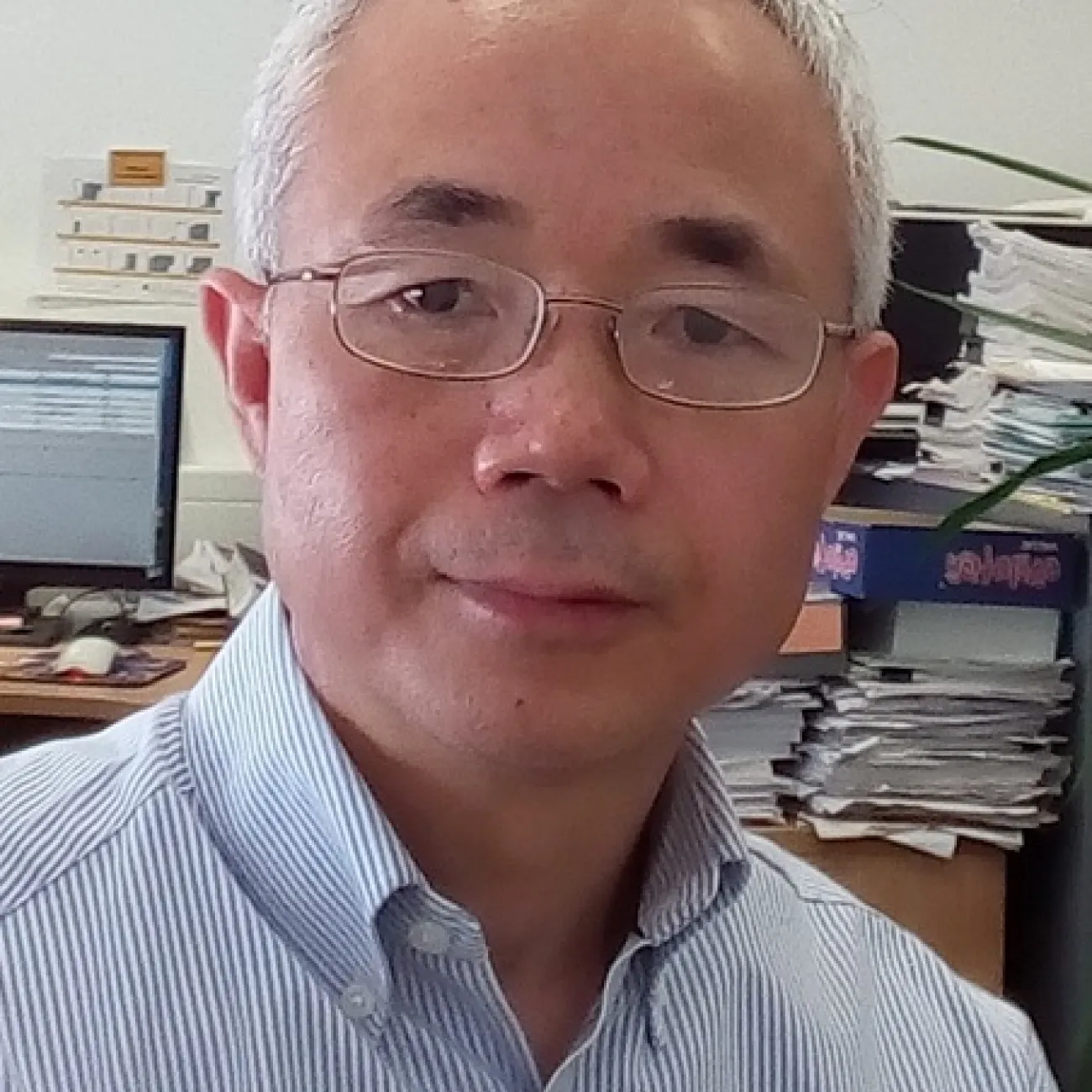
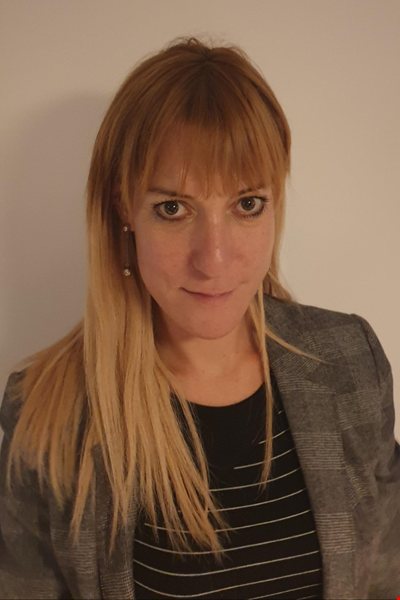
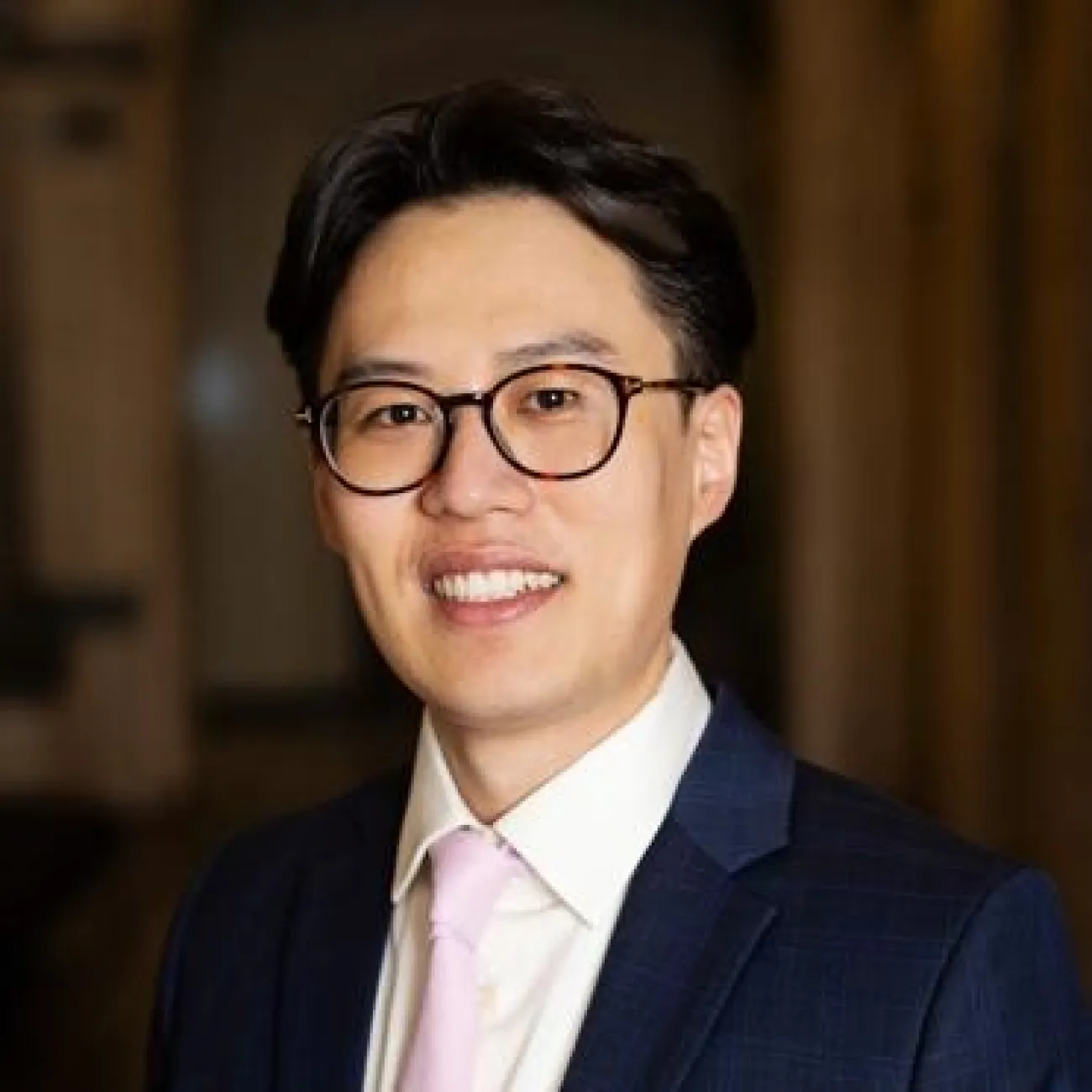
Lie-Liang Yang is a Professor of Wireless Communications at the University of Southampton's School of Electronics and Computer Science. With a career spanning over two decades at the institution, he has held roles from Postdoctoral Fellow to his current professorship. His research focuses on wireless communications, networks, signal processing, and emerging areas like molecular and nano communications. BEng (Shanghai Tiedao University, 1988) MEng (Beijing Jiaotong University, 1991) PhD (Beijing Jiaotong University, 1997) Postgraduate Certificate in Education (University of Southampton, 2005) His work spans advanced modulation techniques (e.g., OTFS, index modulation), reconfigurable intelligent surfaces, terahertz communication, and integrated sensing-communication systems. Recent publications emphasize next-generation wireless technologies, including 5G/6G, mmWave systems, and orbital angular momentum applications. Active projects include Beyond The Generations and Pervasive Wireless Intelligence , sponsored by EPSRC and Huawei. He has also contributed to editorial roles in IEEE Transactions on Vehicular Technology , IEEE Access , and special issues for IEEE Journal on Selected Areas in Communications and others. Scientific accolades: Fellow of the IEEE (USA) Fellow of the IET (UK) IEEE Vehicular Technology Society Distinguished Lecturer He supervises multiple PhD students in the School of Electronics and Computer Science, including Yi Zhao , Hugo Zakaria Jose Hawkins , and Zhou Lu . His research group integrates wireless communications with interdisciplinary applications in nanotechnology and machine-type communications.
Dr Evina Katsou is a Visiting Professor in the Department of Mechanical and Aerospace Engineering within the College of Engineering, Design and Physical Sciences at Brunel University London. She serves as Course Director for the Water Engineering MSc program and leads the Water & Environmental Engineering research group with 20 researchers. Dr Katsou's educational background includes a PhD in 'Wastewater Treatment with the Use of Membranes' (2008-2011), an MSc in Water Resources Science & Technology (2006-2008), and an MEng in Chemical Engineering (2000-2005), all from the National Technical University of Athens (NTUA), Greece. Her research program focuses on three interconnected areas: (1) Sustainable resource recovery from wastewater and safe reuse; (2) Data analytics, knowledge discovery and process modelling; and (3) Circularity & sustainability measurement and assessment. Dr Katsou has developed innovative approaches for biological nutrient removal from wastewater, including partial nitrification/denitrification and complete autotrophic nitrogen removal processes. Her work integrates advanced data analytics methods such as multivariate statistics, clustering techniques, machine learning algorithms, and artificial neural networks to identify complex relationships between process variables, particularly for measuring GHG emissions in water treatment systems. Dr Katsou has authored 98 journal publications (h-index: 27) and 12 book chapters with over 100 presentations, and holds a patent on biopolymers recovery. Her recent publications demonstrate a strong focus on circular economy applications in water systems, nature-based solutions for urban environments, and resource recovery technologies. The research trends show increasing integration of data-driven decision support systems with environmental sustainability metrics, particularly in the water-energy-food nexus domain. Chartered Chemical Engineer (Greece) HEA Fellow (FHEA) of the Higher Education Academy Mentor in the APEX (Academic Practice & Professional Excellence Framework) scheme Member of management group of the Royal Academy of Engineering (RAE) Visiting Professors Scheme Co-leader of Circular Economy VLT in Water Europe Leader of SMART WATER Working Group in ICT4Water Cluster-EC Member of ISO standards drafting team on Circular Economy Dr Katsou has successfully supervised 16 PhD students to completion and currently supervises several ongoing doctoral projects. She has secured substantial research funding as Principal Investigator on 11 national and international projects including RESILEX Horizon Europe, SYMBIOREM Horizon Europe, BORECER Horizon Europe, HYDROUSA H2020, and WATER-MINING H2020. Her industrial consulting portfolio includes significant contracts with leading UK water industry partners such as Affinity Water, Arup, Severn Trent, and Anglian Water, with projects ranging from carbon footprint assessment to corrosion mitigation and process optimization. She leads the Transformation Tools group of the Cost Action on Circular Cities, co-leads the Circular Water VLT of Water Europe, and co-leads the SMART-WATER group of the ICT4Water Cluster-EC. Dr Katsou is also a member of the drafting team for new ISO standards on Circular Economy (Measuring and Assessing Circularity - ISO5902).
Stephen Hoskins is Professor of Fine Print and Founder of the Centre for Fine Print Research (CFPR) at the University of the West of England, Bristol, based at the Bower Ashton Campus within the College of Arts, Creative Industries and Education. His academic career spans decades of pioneering work bridging traditional printmaking techniques with cutting-edge digital technologies. Hoskins' research philosophy centers on the physical artifact, primarily predicated in print, with a focus on the relationship between technology and making from a practitioner perspective. His primary research areas include the potential of 3D printing and related digital technologies for the arts, and the tactile surface of printed artifacts and its consequences for digital technology. He has developed a unique position of understanding digital and new media technologies while always relating them to physical output and creativity. His publications reveal a consistent focus on the intersection of historical printmaking techniques with contemporary digital fabrication methods, particularly exploring the tactile qualities of printed surfaces, ceramic applications of 3D printing, and the sustainability of art-making practices. The research trajectory shows increasing sophistication in merging 19th century photomechanical processes with 21st century digital technologies. Hoskins has maintained an exceptional record of industry collaboration, working with major partners including Hewlett Packard (for whom he held a sponsored Professorial Chair from 2004 to 2014), Renishaw PLC, Burleigh Pottery, Denby Pottery, Dycem, and Viridis3D. His approach emphasizes interdisciplinary understanding and practical application of research findings. As a practicing printmaker and author of three books including '3D Printing for Artists, Designers and Makers' (Bloomsbury), 'Water based Screenprinting,' and 'Inks,' plus over 40 peer-reviewed papers and three patents, Hoskins has established himself as a leading authority in the field of fine print research and digital fabrication for artists.
Maximilian Kasy serves as Professor of Economics at the University of Oxford's Department of Economics, actively contributing to research and teaching within econometrics and applied microeconomics frameworks. His research spans machine learning theory, algorithmic decision-making social impacts, publication bias mechanisms, adaptive experimental design, statistical decision theory, empirical Bayes methods, causal identification, and economic inequality with optimal taxation applications. This interdisciplinary work bridges economics, statistics, and machine learning to address methodological challenges in empirical research and policy evaluation, emphasizing social accountability in algorithmic systems and research transparency. Recent publications demonstrate expertise in adaptive experimental frameworks for policy optimization and novel methodologies for detecting and correcting publication bias, reflecting his commitment to improving empirical rigor and social relevance in economic research. Scientific recognition includes: Sloan Foundation grant (2022) Professor Kasy mentors students through Oxford's Summer School courses and coordinates the interdisciplinary Machine Learning and Economics Group, fostering collaboration across methodological domains. His research groups specifically focus on Econometrics and Applied Microeconomics, with significant engagement in UK and European contexts addressing Labour, Technology, and Inequality challenges.
Dr. Abdelrahman Abuarqoub is a Senior Lecturer in Computer Security at the Cardiff School of Technologies , Cardiff Metropolitan University . He holds a PhD in Computer Science (2014) from Manchester Metropolitan University and an MSc (Distinction) in Data Telecommunications and Networks (2011) from the University of Salford . Research focuses on Computer Security , IoT Networks , and Lightweight Encryption Active member of IEEE TSUSC , MTAP-Springer , and other technical program committees Published extensively in IEEE , Springer , and ACM venues
Dr. Bassam Al-Shargabi serves as a Senior Lecturer in Software Engineering at Cardiff School of Technologies, Cardiff Metropolitan University. His academic credentials include a PhD in Computer Information Systems (2009) and an MSc in Computer Information Systems from AABFS (2004). His research focuses on critical intersections of technology and security: Lightweight encryption methods for resource-constrained IoT healthcare devices Innovative DNA-based cryptographic techniques Blockchain technology applications in auditing systems E-learning platform adoption in educational contexts Dr. Al-Shargabi's scholarly contributions demonstrate a consistent trajectory in developing secure, efficient solutions for emerging technological challenges, particularly in healthcare environments. His work bridges theoretical computer science with practical implementations to address real-world security concerns in increasingly connected systems. He actively participates in the academic community as a guest editor and technical program committee member for international conferences and leading journals. His publications appear in prestigious venues from major publishers including Elsevier, IEEE, Springer, and ACM, reflecting the quality and relevance of his research contributions.
Dr. Wanpeng Li is a Lecturer in Cyber Security within the Department of Computer Science at the University of Liverpool. Prior to this role, he held lecturer positions at the University of Aberdeen and Manchester Metropolitan University, and worked as a postdoctoral researcher at City, University of London. His research focuses on critical areas in cyber security including web security, identity management, authentication mechanisms, and malware detection using machine learning. Research Trends: His recent publications span both cyber security and mathematical modeling domains. Key security themes include automated vulnerability detection, federated learning attacks, and privacy-preserving protocols for vehicular networks and IIoT systems. Parallel studies in grey system models explore energy consumption forecasting and environmental impact analysis using fractional calculus and neural network integrations. Advising: Dr. Li actively accepts PhD students in cyber security-related fields.
Professor Ying Xie is a leading academic at Cranfield University's School of Management, holding the position of Professor of Supply Chain Analytics. Her work bridges engineering, data science, and business management across diverse sectors including maritime logistics, healthcare, and disaster response. Her educational background includes a BEng, MSc, and PhD in Management Science from Coventry University. Key research interests focus on supply chain digitalization and decarbonization , renewable energy supply chain configuration , and AI applications in operational resilience . Her work consistently integrates machine learning with real-world business challenges, particularly in port management and sustainability. Recent publications reveal strong trends in maritime decarbonization (25%), AI-driven supply chain optimization (30%), and healthcare systems resilience (20%). Her research increasingly addresses climate adaptation through circular economy models and clean energy transitions. Principal Fellow of the Higher Education Academy (HEA) Expert reviewer for UKRI MRC, British Academy, and EU Horizon Professor Xie has supervised numerous PhD completions and secured two dedicated scholarships for port management and digital twin research. Her £20m+ grant portfolio includes major projects with EPSRC (£7.6m Net Zero Aviation CDT), Innovate UK (£174k Sustainability Platform), and EU Horizon (£5m MEDiate disaster management). She actively collaborates with the Port of Dover, Ocado Technology, and NHS England. She leads the Co-Innovation Group in the UK National Clean Maritime Research Hub and directs academic activities for the EPSRC Centre for Doctoral Training in Net Zero Aviation, shaping national maritime strategy through the Department for Transport's 'UK Ports the Future' report.
Hai Zhang is a Senior Lecturer in Finance at the Strathclyde Business School, University of Strathclyde, where he joined in March 2017 as a Strathclyde Chancellor's Fellow. His research focuses on financing innovation in incomplete financial markets, particularly in alleviating severe financing constraints due to asymmetric information. Education: PhD in The Financing Innovation in Entrepreneurship and Hedge Funds, Adam Smith Business School, University of Glasgow (2013-2016), awarded February 28, 2017. Research Interests: Dr. Zhang specializes in Hedge Funds , Financial Innovation , and Real Options with applications in Asset Pricing and SME Financing . His work bridges theoretical models with practical market mechanisms to address information asymmetry in capital allocation. Recent Research Trends: His 2024-2025 publications analyze SME financing under market frictions and convertible bond dynamics, revealing critical links between capital structure decisions and debt overhang in volatile markets. These studies advance corporate finance theory while offering actionable frameworks for financial engineering. Scientific Awards: Adam Smith Business School Prize for PhD excellence 2017 (awarded February 1, 2018) Outstanding reviewer for International Review of Economics and Finance (January 2018) Advising and Grants: Dr. Zhang supervises PhD students in hedge funds innovation and FinTech, with three students completed to date. His grant portfolio includes ESRC-funded doctoral research (2013-2016) and the current £150k project "Research on investment and financing of small and medium-sized enterprises based on enterprise asset securitization" (2021-2024) as Co-investigator. Professional Engagement: He serves as regular referee for 7 finance journals including Journal of Business Venturing and Quantitative Finance, and presented at the 2024 EFMA annual conference on algorithmic trading applications.
Leni Le Goff is a Lecturer at the School of Computing, Engineering and the Built Environment , Edinburgh Napier University. Her research bridges robotics , evolutionary computation , and environmental sustainability . Key research interests include: Evolutionary design of robot morphologies and controllers Integration of individual and cultural learning in artificial evolution Application of autonomous systems for terrestrial biodiversity monitoring Optimization frameworks for robotic policy search Manufacturability constraints in morpho-evolution Transdisciplinary collaboration between ecologists and roboticists Recent publications highlight her work on: Developing generalized early stopping criteria for policy search Mapping fitness landscapes in morpho-evolution Assessing robotic solutions for ecological surveying Overcoming hierarchical optimization challenges in coevolution Creating biodegradable and deployable robotic systems Evaluating manufacturability trade-offs in evolved robot designs Active in the Autonomous Robot Evolution (ARE) project, she collaborates with leading researchers like Prof Emma Hart and Prof Karen Diele. Her work receives funding from EPSRC and the Carnegie Trust , focusing on real-world deployment challenges and computational efficiency improvements.
Jia Hu is an Associate Professor in Computer Science at the University of Exeter. He holds a PhD in Computer Science from the University of Bradford (2010), and M.Eng/B.Eng degrees in Electronic Engineering from Huazhong University of Science and Technology. His research specializes in edge-cloud computing, federated learning, and AI-driven optimization for networks and IoT systems. Research Interests: Hu's work spans resource optimization, applied machine learning (particularly in distributed settings), network security, blockchain integration, and intelligent systems for electric vehicles and Industry 4.0. His recent projects focus on federated edge AI, 6G-enabled industrial IoT, and real-time federated learning via hardware-algorithm co-design. Publications: His 150+ papers emphasize federated learning, edge computing, and reinforcement learning applications. Recent works (2020–2025) show a strong trend toward optimizing AI at the network edge, with themes like digital twins, blockchain security, and EV-integrated systems dominating. Awards & Recognition: Best Paper Awards: IEEE SOSE'16, IUCC'14 Outstanding Service & Leadership Awards for IEEE conferences Top 4% contributor to EPSRC Peer Review Fellow of the Higher Education Academy (HEA) Grants & Projects: Secured €4.7M+ funding from EU Horizon, EPSRC, and Royal Society for projects including: SAILING (Secure AI for Smart Internet-of-Energy, €3.6M) REFINE (Real-time Air Quality Monitoring with UAVs, €897K) SustainAIRA6G (Energy-Efficient AI for 6G Networks, £118K) Advising: Supervised 12 PhD students to completion; currently mentoring 7 students in federated learning, edge computing, and AIoT.
Dr. Jiaxin Ling serves as a Research Fellow in Digital Twin and AR/VR for Heritage Buildings at The Bartlett School of Sustainable Construction, University College London. His work bridges digital innovation with sustainable construction practices, focusing on heritage preservation in complex urban environments. Academic background includes: PhD in Civil Engineering, Tongji University (2018-2024), recognized as an Outstanding Graduate of Shanghai Bachelor's in Civil Engineering, Wuhan University (2014-2018) His research spans Digital Twin for tunnels/buildings, Building Information Modeling (BIM) , and AI/ML applications in construction engineering. He pioneers AR/VR solutions for fire safety, tunnel lighting optimization, and intelligent infrastructure, directly supporting UN Sustainable Development Goals 11 (Sustainable Cities) and 9 (Industry Innovation). Analysis of recent publications reveals a cohesive trajectory in applying digital twin technology to solve critical challenges in tunnel safety, energy efficiency, and real-time construction monitoring through hybrid knowledge-data approaches. Key recognition: Outstanding Graduate of Shanghai (top doctoral honor) Dr. Ling contributes to major research initiatives funded by the European Union Horizon Programme and National Natural Science Foundation of China (NSFC) , collaborating across international teams to advance sustainable construction methodologies. His work operates within UCL's interdisciplinary research ecosystem, focusing on heritage building preservation through cutting-edge digital workflows and sensor-integrated monitoring systems.
Claudio Gaz is a Senior Lecturer in Mechatronics, Control, and Autonomous Systems at the Department of Mechanical Engineering, Faculty of Engineering, Computing and the Environment, Kingston University London. He holds a PhD in Automation and Operational Research (2016) and a Master's in Control Engineering with top marks (2011) from Sapienza Università di Roma, and was awarded the French national qualification as maître de conférences (class 61) in 2019. His research spans control systems, robotics, and mathematical modeling, with a focus on industrial manipulators (e.g., KUKA LWR, Universal Robots UR10) and biological processes like glucose homeostasis. Recent work involves dynamic parameter identification for collaborative robots and sensorless force feedback in medical robotics. He has collaborated with institutions such as Sapienza Università di Roma, CNR-IASI (Italian National Research Council), and Airbus Group. His scientific awards include: Fellowship of the Higher Education Academy (FHEA) . Gaz has contributed to journals and conferences in robotics, control theory, and biomedical modeling, with a strong emphasis on real-time adaptive algorithms and safety in physical human-robot interaction.
Professor Danny Campbell is affiliated with the University of Stirling in the Department of Economics. His research focuses on discrete choice experiments, environmental valuation, health economics, and consumer behavior. Research Themes: Cultural Heritage, Environmental Change, Global Food Security, Health & Behaviour Current research explores spatial heterogeneity in willingness-to-pay, attribute non-attendance in decision-making, and policy applications of choice modeling. Recent publications analyze wine attribute valuation, aquatic food demand in China, and environmental economics tools. He has contributed to methodological advancements in discrete choice experiments, including satisficing behavior, position bias, and spatial error modeling. Contact: danny.campbell@stir.ac.uk
Dr Hongyu Zhang is a Lecturer in Optimization for Machine Learning and AI at the School of Mathematical Sciences, University of Southampton. His expertise spans operational research and energy systems optimization, with a focus on stochastic programming and quantum computing applications. PhD Operational Research, NTNU MSc Operational Research with Data Science, University of Edinburgh BSc Mathematics and Applied Mathematics, Huaqiao University His research develops optimization models and algorithms for large-scale energy system planning, integrating machine learning, artificial intelligence, and quantum computing tools to address complexities in energy transition and policy-making. Key areas include multi-timescale uncertainty analysis, decomposition methods, and offshore energy hub modelling. Recent publications show strong trends in energy systems optimization (7 papers), algorithm development for stochastic programming (4 papers), and quantum computing applications (2 papers). His work addresses European energy security, hydrogen infrastructure development, and carbon capture technologies. Currently accepting PhD applications, Dr Zhang contributes to academic supervision and teaches optimization methods at the university. He is affiliated with the Operational Research group and CORMSIS center.