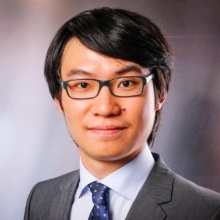
Shuang Liu is a Researcher at the Institute of Computer Architecture and Computer Engineering, University of Stuttgart. Their work focuses on embedded systems, networks-on-chip (NoC), and chip design methodologies. They specialize in deadlock-free routing, fault-tolerant computing, and application-specific system synthesis using advanced techniques like integer linear programming. Research interests include optimizing NoC architectures for chiplet-based systems, co-design of floorplanning and routing topologies, and energy-efficient signal processing in medical electronics. Their recent work emphasizes formal verification methods and performance optimization in hardware-software co-design. Publications span topics such as deadlock prevention in NoC, ILP-based routing synthesis, and trade-offs in hearing aid ASIP design. Office hours are Monday 2–3 p.m. in Room 1.001, Pfaffenwaldring 5b, Stuttgart.
Dr. Mahendra Singh is a Researcher and Data Scientist in the Department of Energy Technologies and Energy Systems , currently affiliated with Fraunhofer ISI . He holds a joint doctorate from the Grenoble Institute of Technology, France, and the European Institute of Innovation & Technology (EIT). His research focuses on energy management, smart buildings, innovation clusters, and data-driven business models in the energy sector. Key projects include the Thai-German Cooperation on Energy, Mobility and Climate (TGC EMC) ; ENTEC Energy Transition Expert Network ; and Common European Energy Data Space . He has contributed to studies on energy transition policies, digitalization of energy flexibility, and cleantech startup ecosystems. His work integrates data analysis and diagnostic tools for building systems, with notable contributions to fault detection in smart buildings and energy consumption analysis of consumer electronics. Over 20+ peer-reviewed publications reflect his expertise in energy systems, sustainability, and innovation strategies. Mahendra’s academic trajectory includes a postdoc at the Maersk Mc-Kinney Moller Institute (Denmark) and collaborations across Europe and Asia. He advises on EU-funded initiatives and industry partnerships, emphasizing actionable insights for energy transition challenges.
Dr. Zheng Chen is the Bill D. Cook Associate Professor of Mechanical & Aerospace Engineering at the University of Houston, affiliated with the Cullen College of Engineering. He holds a PhD from Michigan State University (2009) and postdoctoral training from the University of Virginia (2009-2012). His research focuses on bio-inspired robotics, electroactive polymers, and energy systems, with notable projects including NASA-funded inflatable space systems (IDEAS2 Center) and robotic inspection systems for offshore oil infrastructure. He has secured over $6 million in funding as PI or Co-PI, including an NSF CAREER Award (2017) and a 2023 teaching excellence award. His lab, Bio-inspired Robotics and Controls, develops advanced actuators for prosthetics, underwater vehicles, and harsh environment applications. Key contributions include robotic fish for CO2 leak detection, dielectric elastomer-based actuators, and buoyancy control systems using reversible fuel cells. He advises multiple graduate students and teaches courses on dynamics, control theory, and robotics. Education Postdoc, Mechanical & Aerospace Engineering, University of Virginia (2009-2012) PhD, Electrical Engineering, Michigan State University (2009) M.E., Control Science and Engineering, Zhejiang University (2002) B.E., Electrical Engineering, Zhejiang University (1999) Research Highlights Dr. Chen's work bridges smart materials and robotics, emphasizing soft actuators for biomedical applications and underwater systems. Recent innovations include: Dielectric elastomer-based prosthetic fingers and orthotic devices Bio-inspired robotic fish for environmental monitoring and pipeline inspection Hybrid buoyancy control using reversible PEM fuel cells Autonomous subsea robotics for hazardous environments Grants & Collaborations Major projects include: $4.9M NASA IDEAS2 Center (Co-PI, 2024-2029) $960K BSEE-funded robotic pipeline inspection (PI, 2023-2026) $500K NSF CAREER Award for prosthetic actuators (2017-2022) Labs & Teams Director of the Bio-inspired Robotics and Controls Lab, collaborating with industry partners like Baker Hughes and academic teams on NSF/AFRL projects. Active in IEEE, ASME, and conference organizing roles (e.g., ACC, ICRA).
Tze Meng Low is an Associate Research Professor in the Department of Electrical and Computer Engineering at Carnegie Mellon University (CMU), part of the College of Engineering. His research focuses on high-performance algorithms, formal methods, and hardware-software co-design, with an emphasis on achieving performance portability across architectures. He holds a Ph.D. and M.S. in Computer Science and dual B.A./B.S. degrees in Economics and Computer Science from the University of Texas at Austin. His research interests span parallel computing, graph algorithms, machine learning, and cyber-physical systems. He has contributed to projects like the DARPA BRASS initiative, collaborating on adaptive software systems for resource-challenged environments. His work also involves developing tools such as SMaLL and qLD, which address challenges in machine learning library instantiation and genomic analysis. Low has received the Dean’s Early Career Fellowship (2022) and led the $2.7M DARPA-funded BRASS project (2016–2020), supported by SpiralGen, Inc. and academic collaborators. His contributions include code generation frameworks like SPIRAL and advancements in linear algebra-based graph algorithms, emphasizing analytical models and automated code optimization. His research bridges theoretical formal methods with practical implementations, aiming to enhance software reliability and scalability in emerging domains. Collaborations include work on fault-tolerant coded computing and high-assurance systems for cyber-physical applications.
Akshitha Sriraman is an Assistant Professor in the Department of Electrical and Computer Engineering and Computer Science at Carnegie Mellon University. She holds a PhD in Computer Science from the University of Michigan (2021) and an M.S. in Embedded Systems from the University of Pennsylvania (2015). Her research focuses on bridging computer architecture and systems software to design efficient, sustainable, and equitable data center systems, emphasizing hardware-software co-design. Her work has been deployed in real hyperscale data centers, influencing Intel’s Alder Lake CPU architectures and Infrastructure Processing Unit designs. Recipient of the NSF CAREER Award (2024), Intel Rising Star Award (2023), and multiple dissertation prizes. Advances include reducing global carbon emissions via server design and introducing equity as a first-order design concern in web systems. Advises PhD and Master’s students on topics like sustainable computing, equitable systems, and hardware optimization. Key contributions span energy-efficient data center architectures, bias-free scheduling systems, and cloud GPU power management. She leads a research group prioritizing socially responsible computing and has received grants from NSF, AWS, and industry partnerships.
Eric Kerrigan is a Professor of Control and Optimization at Imperial College London's Department of Electrical and Electronic Engineering, part of the Faculty of Engineering. He holds a joint appointment in the Department of Aeronautics. His research focuses on Model Predictive Control (MPC), numerical optimization techniques, and their applications in aerospace, renewable energy, and information systems. Key projects include developing real-time optimization algorithms for embedded systems, co-design frameworks for closed-loop systems, and drag reduction in aerodynamics. He has supervised over 30 PhD students and post-doctoral researchers, many of whom have secured academic positions. Education: PhD in Control Engineering from the University of Cambridge and BSc in Electrical Engineering from the University of Cape Town. Research interests emphasize robust control methods, dynamic optimization, and interdisciplinary applications. Notable contributions include the ICLOCS (Imperial College Optimal Control Software) toolbox and frameworks for energy-efficient UAV communication networks. His work is funded by EPSRC, the European Commission, and industry partners like Siemens and ESA. Funding and collaborations include grants from the Royal Academy of Engineering and Royal Society, with consulting roles in industrial control systems. Editorial roles include Associate Editor for IEEE Transactions on Automatic Control and former Senior Editor for IEEE Transactions on Control Systems Technology . Labs and affiliations include the Control and Power Research Group, Energy Futures Lab, and Space Lab at Imperial College.
Alan Hu is a Professor in the Department of Computer Science at the University of British Columbia (UBC), part of the Faculty of Science. His research focuses on formal verification, algorithms, computer architecture, and electronic design automation. He teaches courses such as Intermediate Algorithm Design and Analysis (CPSC 320) and Introduction to Formal Verification and Analysis (CPSC 513). Dr. Hu has received notable awards, including the IEEE Council on Electronic Design Automation Outstanding Service Award and the IBM Faculty Award. His work emphasizes scalable verification techniques, SAT-based algorithms, and optimization in cloud computing and hardware systems. His research spans formal methods for hardware/software systems, including verification of embedded software, cache coherence, and network function virtualization. Notable contributions include advancements in SAT modulo theories, data race detection in heterogeneous systems, and cloud resource allocation frameworks like Cospot. Dr. Hu has been actively involved in teaching and curriculum development, consistently offering courses on algorithms, formal verification, and software design since 2000. His publications reflect a blend of theoretical foundations and practical applications in electronic design, cloud infrastructure, and verification tools. His scientific achievements include innovations in post-silicon validation, emulation-based coverage reduction, and formal analysis for debug trace optimization. He also contributes to the academic community through conference organization and editorial roles in formal verification and computer-aided design.
Dr. Michael C. Lu is currently the Dean of the School of Public Health at the University of California, Berkeley. Previously, he served as Director of the federal Maternal and Child Health Bureau under the Obama Administration, where he received the U.S. Department of Health and Human Services’ Hubert H. Humphrey Service to America Award in 2013. His academic career includes roles as a professor of obstetrics-gynecology and public health at UCLA, with research focused on racial-ethnic disparities in birth outcomes. As an obstetrician, he attended over 1,000 births and was repeatedly named a Best Doctor in America since 2005. He has contributed to National Academy of Medicine committees and co-authored the report Vibrant and Healthy Kids: Aligning Science, Practice, and Policy to Advance Health Equity . His education includes degrees from Stanford University, UC Berkeley, and UCSF. Research interests emphasize improving maternal and child health equity through life-course perspectives and advancing medical imaging technologies. He has pioneered innovations in MRI motion sensing, wireless implant communication, and computational imaging algorithms. His work bridges clinical practice, public health policy, and biomedical engineering. Awards include teaching recognition and federal service accolades. He collaborates on interdisciplinary teams to address global health challenges, leveraging both clinical expertise and technological advancements. Publications span maternal health equity frameworks and cutting-edge MRI methodologies, reflecting his dual focus on societal health disparities and medical technology. Current efforts at UC Berkeley aim to integrate public health strategies with emerging imaging and data science tools. Despite no listed advisees, his mentorship is evident through residency program leadership and training grants in maternal and child health.
Prof. Kenneth Paterson is a Full Professor at ETH Zürich's Department of Computer Science, leading the Applied Cryptography Group. He has held academic positions at Royal Holloway, University of London, and Hewlett-Packard Laboratories. His research focuses on cryptographic protocol analysis, provably secure solutions, and real-world system vulnerabilities. Key contributions include the Lucky 13 TLS attack, analyses of Telegram and OpenPGP, and work on cryptographic transition strategies. He has been recognized with awards such as the Google Distinguished Paper Award, IACR Fellowship, and ETH Golden Owl Teaching Award. His leadership roles include Department Head at ETH Zurich and Programme Chair for EUROCRYPT 2011. Paterson actively engages in standardization efforts through IRTF's CFRG and co-founded the Real World Cryptography workshop series. Education: B.Sc. (Mathematics, University of Glasgow, 1990), Ph.D. (Mathematics, University of London, 1993). Career highlights include EPSRC Leadership Fellowship (2010–2015) and IACR Distinguished Lecture at EUROCRYPT 2025. Research Interests: Cryptography, Information Security, Applied Cryptographic Protocols, TLS Analysis, Post-Quantum Cryptography, and Privacy-Preserving Technologies. Notable projects include cryptographic analysis of TLS, SSH, and cloud storage systems. Awards and Recognition: Google Distinguished Paper Award (2012) Applied Networking Research Prize (2013) IACR Fellow (2017) ETH Golden Owl Teaching Award (2022) Multiple Best Paper Awards at ACM CCS, CHES, and IEEE Security & Privacy Advising and Grants: Supervised students like Francesca Falzon and led projects funded by EPSRC, IRTF, and industry collaborations. Contributions to cryptographic agility and transition strategies for Internet protocols. Labs/Teams: Founder and Head of ETH Zurich's Applied Cryptography Group, associated with the Institute for Information Security. Collaborates with industry on cryptographic protocol development and security audits.
Professor Jingbo Wang is a faculty member at The University of Western Australia (UWA), serving as Head of the Physics Department and Director of QUISA (Research Hub for Quantum Information, Simulation, and Algorithms). She leads research in quantum walks, quantum simulation, and quantum algorithms. Her affiliations include the Australian Institute of Physics (Chair of WA Branch) and the ARC College of Experts. She holds a PhD from the University of Adelaide. Education: PhD in Physics and Mathematical Physics from the University of Adelaide. Previous affiliations include Murdoch University and UWA. Research focuses on quantum walks, quantum algorithms for optimization, machine learning, and network analysis. Key contributions include quantum compilers, efficient quantum circuits, and applications in complex systems. Her work bridges theory and experimental implementation, with collaborations in photonic quantum processors and quantum machine learning. Recent articles explore quantum computing applications in finance, biology, and physics. Awards include the Vice-Chancellor’s Research Mentorship Award (2022) and Australian Institute of Physics Fellowship (2021). Advising and grants involve leadership in quantum computing initiatives, including the UWA-Pawsey Educational Quantum Computing Centre. Her team develops algorithms for real-world problems like portfolio optimization and metabolic pathway analysis. She co-authored books on computational quantum mechanics and quantum walks. Labs/teams: QUISA Research Hub, UPQCC, and collaborations with institutions like CSIRO and Pawsey Supercomputing Centre.
Steve Homer is a Professor of Computer Science at Boston University, affiliated with the Department of Computer Science within the College of Arts & Sciences. He has been on the faculty since 1982 and has held various administrative roles, including department chairman. He co-founded the Center for Reliable Information Systems and Cyber Security in 2002. He was a Fulbright Scholar in Heidelberg (1988-89) and a Visiting Research Professor at Oxford (1996). His research focuses on complexity theory, quantum computation, security, parallel algorithms, and computational learning theory. Education: PhD in Mathematics, Massachusetts Institute of Technology (1978) Research Interests: Homer’s work spans complexity theory (including quantum complexity), security mechanisms, parallel and randomized algorithms, mathematical logic, and learning theory. His contributions address foundational questions in theoretical computer science, with applications to quantum computing and algorithm design. Publications: Over 70 research papers highlight his exploration of quantum algorithms, computational complexity boundaries, and algorithmic efficiency. Recent themes include quantum circuit limitations, historical foundations of complexity theory, and parallel approximation algorithms. Awards: Fulbright Scholar (Heidelberg, 1988-89) Computational Science Undergraduate Teaching Award (Department of Energy, 1994) Grants & Advising: Homer has led projects funded by the Department of Energy and other agencies. Though no specific student names are listed, his advising contributions are reflected in his extensive collaborative research. Labs & Teams: Co-founder and director of the Center for Reliable Information Systems and Cyber Security, focusing on cybersecurity and trustworthy computing systems.
Rich West is a Professor in the Department of Computer Science at Boston University, with a secondary affiliation in Electrical and Computer Engineering. He joined BU in 2000 after earning his PhD from Georgia Tech. His research focuses on real-time and embedded systems, operating systems, and resource management, leading the development of the Quest real-time OS and its separation kernel, Quest-V. His work emphasizes safety, predictability, and efficiency in systems like IoT devices and automotive/avionics applications. Education: PhD, Computer Science, Georgia Institute of Technology (2000) MS, Computer Science, Georgia Institute of Technology (1998) MEng, Microelectronics and Software Engineering, University of Newcastle-upon-Tyne (1991) Research Interests: Rich's work spans real-time operating systems, embedded systems design, multicore resource management, kernel architecture, hardware-software co-design, and secure separation kernels. He emphasizes practical applications, such as autonomous drones, automotive systems, and IoT devices. His lab develops systems like Quest-V for predictable execution and FlyOS for drone avionics. Awards and Recognition: Outstanding Paper Award at ECRTS 2020 Best Student Paper Award at RTAS 2017 Nominated for Best Paper Award at EMSOFT 2021 Best Paper Award at RTAS 2022 (FlyOS) Advising and Labs: He advises numerous PhD/MSc students on real-time systems, embedded computing, and safety-critical software. His lab collaborates on projects like the Quest OS, ModelMap automotive frameworks, and drone control systems (FlyOS). He also leads the BOSS, RTCC, and iBench research groups.
Dr. Alex K. Jones is a Professor in the Department of Physics & Astronomy at the University of Pittsburgh, with a secondary appointment. His research focuses on quantum computing architectures, sustainable computing, and emerging memory technologies. He leads projects funded by NSF, DARPA, NSA, ARO, and industry, emphasizing energy-efficient computing systems and fault-tolerant designs. Dr. Jones' work spans quantum system co-design (e.g., superconducting qubit architectures), nanoscale magnetic memories (racetrack/STT-MRAM), and carbon lifecycle modeling for computing systems. He has pioneered concepts like GreenChip sustainability tools and CORUSCANT processing-in-memory frameworks. His IEEE Fellowship and Best Paper Award (IGSC 2018) highlight his impactful contributions. Key Research Areas: Quantum Computing, Non-Volatile Memories, Sustainable Computing, Fault Tolerance Funding Agencies: NSF, DARPA, NSA, ARO, Industry Collaborations Major Projects: Quantum circuit decomposition, racetrack memory applications, carbon modeling for datacenters His 200+ publications include seminal works on fault tolerance in domain-wall memories, energy-efficient architectures, and cross-disciplinary innovations at the intersection of physics and computer engineering. Current efforts explore carbon depreciation models and real-time accelerator customization for edge computing.
Anirudh Sivaraman is an Assistant Professor of Computer Science at New York University's Courant Institute, specializing in computer networks and programmability. He holds a PhD from MIT (2017) and a BTech from IIT Madras (2010). His research focuses on enabling ubiquitous network programmability through hardware-software systems, including compilers, runtimes, and applications like distributed consensus and financial exchanges. Education: Ph.D. in Computer Science, MIT (2012–2017) S.M. in Computer Science, MIT (2010–2012) B.Tech in CSE, IIT Madras (2006–2010) Research Interests: Network programmability (e.g., P4, Barefoot Networks) High-speed packet processing and compiler optimization Distributed systems and consensus protocols Cybersecurity in programmable networks Cloud computing and microservice autoscaling Notable Articles Trends: Focus on programmable networks (P4, NIC design) Hardware-software co-design for performance Security and isolation in multi-tenant environments Compiler-based solutions for bug detection Awards: ACM SIGCOMM Doctoral Dissertation (2017), SIGCOMM Best Paper (2017), and multiple teaching awards. Advising & Grants: PI on grants totaling $900K+ (Google, Amazon, NSF). Advises 8+ PhD/Master’s students. Serves on committees for SIGCOMM, NSDI, and HotNets. Labs/Teams: Technical advisor at Clockwork. Co-organizes workshops on programmable networks and P4 standards.
Masoumeh Ebrahimi is an Associate Professor at KTH Royal Institute of Technology, Division of Electronics and Embedded Systems, and holds an Adjunct Professor position at the University of Turku, Finland. She leads research in hardware acceleration, neural architecture search, and fault-tolerant systems. Her work bridges machine learning, embedded systems, and network-on-chip (NoC) design. Research Interests: Hardware-Accelerated Machine Learning 6G Network Architectures Fault-Tolerant Computing High-Performance GPU Systems Network-on-Chip (NoC) Design Federated Learning Key Projects: Co-supervisor of Hui Chen’s postdoc project Generalizing hardware acceleration for nonlinear functions . Active in Digital Futures, a cross-disciplinary center focusing on societal challenges using digital tech. Collaborates on edge computing, 6G networks, and resilient embedded systems. Labs & Teams: Core member of KTH’s Digital Futures initiative, advancing AI accelerators and next-gen communication systems. Engaged in EU-funded projects on NoC reliability and federated learning frameworks.