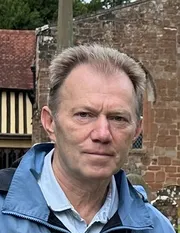
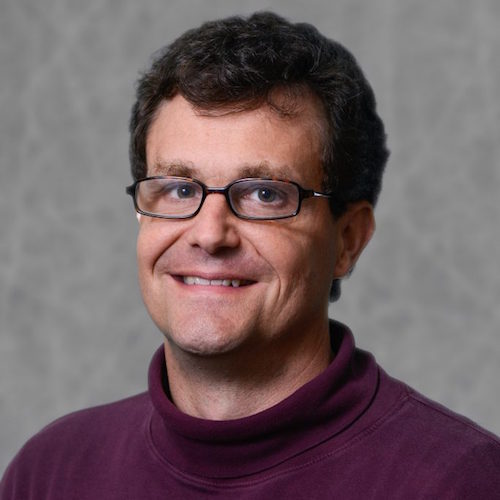
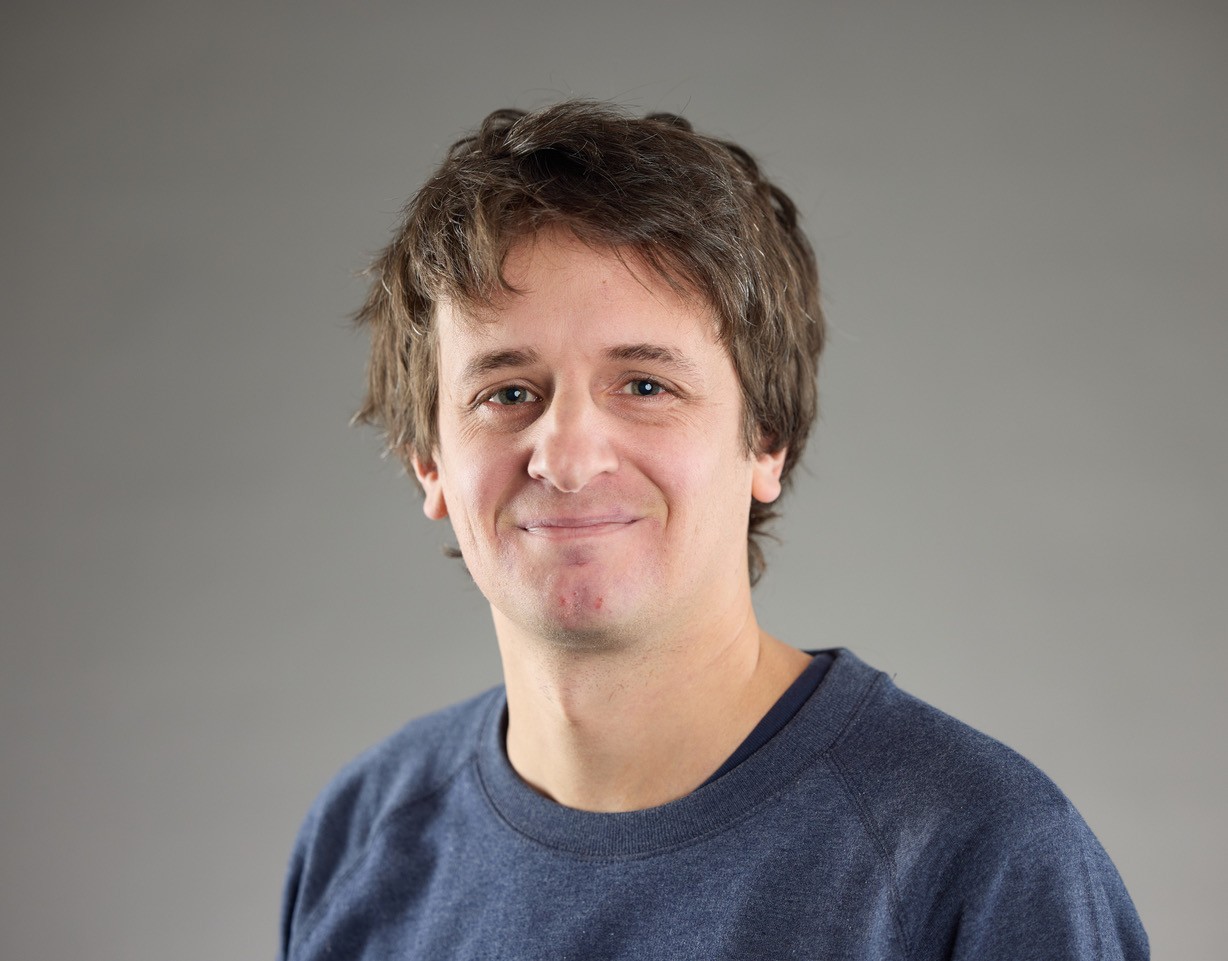
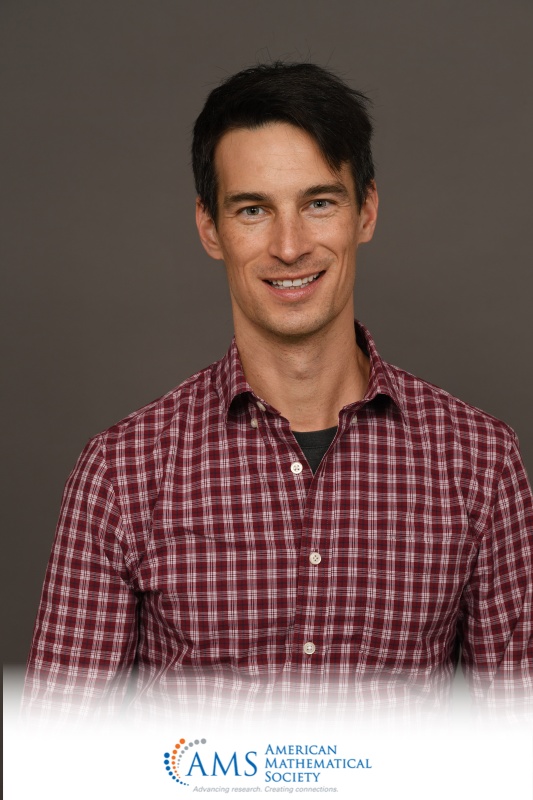
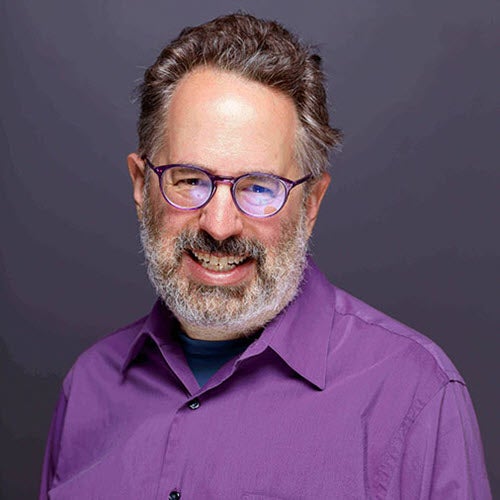
Jianqi Liu is a Hans Rademacher Research Fellow in the Department of Mathematics at the University of Pennsylvania, affiliated with the School of Arts and Sciences. His research focuses on vertex operator algebras (VOAs) and 2D conformal field theory (CFT), with an emphasis on algebraic structures such as fusion rules, Zhu’s algebras, Borel-type subalgebras, and connections to the classical Yang-Baxter equation. He also explores geometric aspects of VOAs and their physical interpretations. He earned his Ph.D. in Mathematics from the University of California, Santa Cruz (2018–2023), under the supervision of Chongying Dong. Prior to his current role, he held teaching roles at both UPenn and UCSC, instructing courses ranging from advanced linear algebra to complex analysis and number theory. His research publications address topics such as twisted conformal blocks, Rota-Baxter operators, and the interplay between algebraic structures and integrable systems. Liu collaborates with researchers like Angela Gibney and Daniel Krashen, focusing on advancing theoretical frameworks in mathematical physics and algebraic geometry.
Vadim Lozin is a Professor of Mathematics at the University of Warwick, affiliated with the Department of Mathematics within the School of Mathematics. His research interests span graph theory, combinatorics, and discrete mathematics, focusing on areas such as clique-width, Ramsey numbers, and structural graph theory. He has held visiting positions at institutions including the Université Paris-Dauphine, EPFL, and KAUST. Lozin has received several accolades, including the Best Paper Award for 'Linear Ramsey numbers' in 2018 and a 2024 award at the International Symposium on Algorithms and Computation. His work involves collaborations with global researchers and contributions to conferences like IWOCA and WG. Lozin serves on editorial boards for journals such as Discrete Applied Mathematics and Electronic Notes in Discrete Mathematics . His research explores foundational problems in graph theory, with applications in algorithm design and complexity analysis. Lozin’s publications include studies on union-closed sets, functional graph properties, and algorithmic approaches to graph parameters. He has also contributed to books like Words and Graphs , bridging formal language theory with graph structures. His grants focus on clique-width and stability in graphs, reflecting his commitment to advancing theoretical and applied discrete mathematics.
Kazushi Ueda is an Associate Professor at the Graduate School of Mathematical Sciences, The University of Tokyo, where he has been since April 2015. His research spans algebraic geometry, symplectic geometry, and mathematical physics, with a focus on homological mirror symmetry and its applications to moduli spaces, Calabi-Yau manifolds, and singularities. He previously held academic positions at Osaka University from 2006 to 2015, including roles as Assistant Professor and Associate Professor. Ueda has also had visiting appointments at institutions such as the University of Oxford, Max Planck Institute for Mathematics, and Korea Institute for Advanced Study. Bachelor of Science, Kyoto University (1997-2001) Master of Science, Kyoto University (2001-2003) Doctor of Science, Kyoto University (2003-2006) Ueda's research explores the deep interplay between complex and symplectic geometry through mirror symmetry, particularly in the context of Calabi-Yau varieties, toric degenerations, and dimer models. His work addresses derived categories, stability conditions, and moduli problems, with recent contributions to noncommutative algebraic geometry and applications in mathematical physics. He has collaborated extensively with researchers like Akira Ishii, Masahiro Futaki, and Shinnosuke Okawa. His publications highlight homological mirror symmetry for K3 surfaces, Grassmannians, and singularities, as well as studies on modular forms, cluster transformations, and the Grothendieck ring. Ueda is a member of the Mathematical Society of Japan and has contributed to educational programs, including graduate lectures on mirror symmetry and symplectic geometry.
Giorgis Petridis is an Associate Professor at the University of Georgia, specializing in arithmetic combinatorics, a field rooted in combinatorial number theory with modern extensions into discrete analysis and finite field geometry. Born in Athens, Greece, he earned his PhD from the University of Cambridge under Tim Gowers and held a Visiting Assistant Professor position at the University of Rochester. He serves as an editor for Combinatorial Theory and is affiliated with the Number Theory and Arithmetic Geometry group, particularly its additive combinatorics and discrete analysis subgroup. Doctor of Philosophy (2011), University of Cambridge Certificate of Advanced Studies in Mathematics (2002), St John’s College, Cambridge BA (Hons) in Mathematics (2001), St John’s College, Cambridge His research focuses on additive combinatorics, exploring sumset estimates, polynomial configurations in prime lattices, and geometric incidence problems over finite fields. He investigates combinatorial geometry, including pinned distance problems and bisector arrangements, while also contributing to exponential sum bounds and expander graph theory. His work bridges theoretical mathematics with applications in pseudorandomness and discrete geometry. Recent publications highlight trends in finite field analysis, with 6 of 15 articles addressing arithmetic structures in prime-order fields. Key keywords include Combinatorics , Number Theory , and Finite Fields , with sub-fields spanning polynomial configurations, energy bounds, and geometric combinatorics. Scientific awards include the Creative Research Medal (2024) from the University of Georgia for mid-career research impact. Grants from the Simons Foundation (MPS-TSM-00007816) and multiple NSF DMS Awards (2054214, 1723016, 1500984, 1804049) support his work on discrete analysis and conferences. He co-advises five PhD students and has supervised multiple Master’s theses on topics like point-plane incidences and additive energy. Outreach includes leading high school math teams, organizing discrete analysis sessions, and contributing to public science communication guides.
Jan de Gier is a Professor at the School of Mathematics and Statistics, The University of Melbourne . He is also the Founding Director of MATRIX , Australia’s residential research institute in the mathematical sciences, and a former Deputy Director and Chief Investigator in the Australian Research Council Centre of Excellence for Mathematical and Statistical Frontiers (ACEMS) . Additionally, he co-founded the Australian and New Zealand Association for Mathematical Physics (ANZAMP) in 2011 and served as its inaugural Chair. His research focuses on solvable lattice models at the intersection of mathematical physics and statistical mechanics . Key areas include the application of quantum integrability , algebraic structures like the Yang-Baxter equation, Hecke algebras, and quantum groups, as well as analytical methods such as complex analysis and elliptic curves. His work bridges pure and applied mathematics through connections between enumerative combinatorics , representation theory , and real-world phenomena like traffic flow modeling via exclusion processes . The 15 most recent articles reflect his expertise in integrable systems , non-equilibrium statistical mechanics , and algebraic combinatorics . Topics span Macdonald polynomials , stochastic duality , quantum spin chains , and traffic modeling , with methodologies involving matrix product forms , exact solutions , and critical phenomena analysis. He has contributed to editorial efforts through the AustMS Gazette and MATRIX Annals, and has been involved in public science communication via opinion pieces on mathematics funding and applications. His work emphasizes the importance of fundamental research in driving technological innovation, as highlighted in media articles discussing pi calculation , zero-knowledge proofs , and mathematics education .
Nathan Reading is a Professor in the Department of Mathematics at North Carolina State University (NCSU). He holds a Ph.D. in Mathematics from the University of Minnesota (2002) and a B.S. in Physics from Stanford University (1995). His research focuses on algebraic and geometric combinatorics, particularly in Coxeter groups, cluster algebras, and lattice-theoretic approaches. He has been actively involved in organizing the Triangle Lectures in Combinatorics, a biannual research conference. His research interests include noncrossing partitions, cluster scattering diagrams, and the lattice theory of torsion classes. Recent work explores connections between Coxeter groups and combinatorial structures on surfaces. Reading has authored numerous papers on topics such as semidistributive lattices, scattering diagrams, and Cambrian frameworks. He teaches advanced combinatorics courses (e.g., MA 724: Combinatorics II) and has advised graduate students. His work has been supported by grants from the National Science Foundation (NSF), including DMS-1500949. Reading maintains an active presence in the mathematics community through publications, conference organization, and pedagogical contributions.
Markus Hausmann is a Professor of Topology at the University of Bonn since 2023. His research focuses on equivariant homotopy theory , with groundbreaking work on bordism theory and symmetry of spaces, including a 2022 publication in the Annals of Mathematics . He received the prestigious Minkowski Medal 2025 from the German Mathematical Society (DMV) for his outstanding contributions to mathematics. Current affiliation: University of Bonn (2023–present) Former roles: University Lecturer at Stockholm University (2021–2023), Postdoc at University of Copenhagen and Bonn Education: Mathematics studies at University of Bonn with a semester abroad at MIT His ERC Starting Grant 'BorSym' explores bordism of symmetries using algebraic methods, funded for five years. His work intersects topology , algebraic structures , and equivariant cohomology , with recent publications addressing symmetric spectra, global group laws, and subgroup lattices. The Minkowski Medal recognizes his international acclaim as a young mathematician. Scientific Awards : Minkowski Medal 2025 (DMV) Markus Hausmann's research bridges equivariant homotopy theory with applications to derived orbifolds and global symmetries , advancing foundational understanding in these areas.
Alexey Bufetov is a Professor at Leipzig University, holding an ERC Starting Grant for his research in Integrable Probability (2022-2027). Previously, he served as a W2-Professor ("Bonn Junior Fellow") at the Hausdorff Center for Mathematics (2018-2021) and as a CLE Moore Instructor at Massachusetts Institute of Technology (2015-2018). His research centers on Probability Theory , with deep connections to Mathematical Physics and Combinatorics . Key areas include integrable probability, stochastic particle systems (ASEP/TASEP), random tilings, Schur generating functions, and representation-theoretic aspects of probability. His work often bridges abstract mathematical structures with physical models from statistical mechanics. Bufetov's recent publications reveal a strong focus on integrable systems and asymptotic analysis , particularly exploring connections between Mallows measures, vertex models, and random matrix theory. His 2025 work on Aztec diamond domino tilings exemplifies his signature approach combining combinatorial structures with probabilistic methods. His primary recognition is the ERC Starting Grant "Integrable Probability" (2022-2027), supporting his cutting-edge research program. Bufetov has maintained a prolific collaborative network, frequently publishing with leading researchers including Alexei Borodin, Vadim Gorin, Leonid Petrov, and Kailun Chen. His work appears in top journals such as Advances in Mathematics , Duke Mathematical Journal , and Communications in Mathematical Physics .
Laurens Lootens is a Researcher in the Department of Applied Mathematics and Theoretical Physics (DAMTP) at the University of Cambridge. His work focuses on theoretical physics, particularly in quantum lattice models, topological phases of matter, and mathematical structures underlying quantum systems. He is affiliated with the High Energy Physics research group within DAMTP. His research interests include dualities in quantum systems, matrix product operator symmetries, conformal field theories, and tensor network methods. Lootens explores topics such as entanglement in many-body systems, symmetry-protected topological phases, and the interplay between algebraic structures and physical phenomena. Publications highlight his contributions to understanding lattice representations of dualities, topological sectors in quantum models, and critical lattice models for conformal field theories. His work bridges theoretical frameworks with computational methods, advancing both fundamental physics and quantum information science.
Benjamin Steinberg is a Professor in the Mathematics Department at the City College of New York (CCNY) and the CUNY Graduate Center. He holds a Ph.D. from the University of California, Berkeley (1998) under John Rhodes and has held positions at the University of Porto (Portugal) and Carleton University (Canada). His research focuses on algebra, including semigroups, geometric group theory, algebraic combinatorics, representation theory, and automata theory, with notable work on etale groupoids, inverse semigroups, and ring theory. He is the author of several books, including *The q-theory of Finite Semigroups* and *Representation Theory of Finite Monoids*. Steinberg serves as Managing Editor of the *International Journal of Algebra and Computation* and has organized conferences such as the International Conference on Semigroups and Groups in Honor of John Rhodes. Research interests include the interplay between algebraic structures and their applications, such as in automata theory and Markov chains. His work bridges pure mathematics with combinatorial and geometric approaches, often involving categorical and topological methods. Recent articles explore topics like Nekrashevych algebras, twisted Steinberg algebras, and Lyndon's identity theorem for monoids. He has contributed to the study of profinite groups and their connections to symbolic dynamics. Steinberg’s editorial roles and conference organization reflect his leadership in the mathematical community. Despite his defunct blog, his academic contributions remain prolific, with ongoing editorial work and research in algebraic combinatorics and representation theory.
Venkatesan Guruswami is a Chancellor's Professor in the Department of EECS and a Senior Scientist at the Simons Institute for the Theory of Computing at UC Berkeley . He also holds a Professor position in the Department of Mathematics . His academic journey began with a B.Tech in Computer Science from the Indian Institute of Technology, Madras (1997) , followed by a Ph.D. in Computer Science from the Massachusetts Institute of Technology (2001) . After a Miller Research Fellowship at UC Berkeley (2001–02), he held faculty roles at the University of Washington and Carnegie Mellon University before returning to UC Berkeley in January 2022. Education : B.Tech, IIT Madras (1997) Ph.D., MIT (2001) Professional Affiliations : Chancellor's Professor, UC Berkeley (EECS) Senior Scientist & Interim Director, Simons Institute Professor, UC Berkeley (Mathematics) Guruswami's research spans multiple domains within Theoretical Computer Science , focusing on Error-Correcting Codes , Approximation Algorithms , Randomness in Computing , Probabilistically Checkable Proofs , and Computational Complexity . His groundbreaking work in List Decoding has enabled codes with minimal redundancy for correcting worst-case errors, while recent advancements include Polar Codes , Deletion-Correcting Codes , and Constraint Satisfaction Problems . He has also contributed to Quantum Coding Theory , Locally Recoverable Codes , and Approximation Hardness in various computational contexts. His publications reflect a deep engagement with interdisciplinary topics. Key trends include: Quantum Information Theory : Quantum LDPC codes, transversal gates, and quantum storage. Algebraic Coding : Reed-Solomon codes, AG codes, and polynomial-based constructions. Computational Complexity : Hardness of approximation, CSPs, and parameterized intractability. Data Transmission : Polar codes, deletion channels, and feedback mechanisms. Algorithmic Techniques : Spectral methods, semirandom models, and Lasserre hierarchy applications. Guruswami has received numerous accolades, including the Simons Investigator Award , Presburger Award , Packard Fellowship , Sloan Research Fellowship , ACM Doctoral Dissertation Award , and the IEEE Information Theory Society Paper Award . He is an ACM Fellow (2017) and IEEE Fellow (2019) , with recent honors like the Guggenheim Fellowship (2023) and AMS Fellow (2023) . As an advisor, he has mentored over 25 PhD and postdoctoral researchers , including Atri Rudra , Prasad Raghavendra , and Peter Manohar , whose work has won awards like the Edmund M. Clarke Doctoral Dissertation Award and CRA Outstanding Undergraduate Researcher Award . His research is supported by grants from the National Science Foundation , Packard Foundation , and Sloan Foundation . He also serves as Editor-in-Chief of the Journal of the ACM and holds leadership roles in IEEE and arXiv moderation. Guruswami is actively involved in Simons Institute programs and co-organized workshops on Coded Computation and Information Theory . His work bridges theoretical advancements with practical applications in Cloud Storage , Quantum Computing , and Group Testing , including pandemic-era contributions like AC-DC: Amplification Curve Diagnostics for SARS-CoV-2 .
Nathan Kaplan is a Professor in the Department of Mathematics at the University of California, Irvine, where he conducts research in number theory, algebraic geometry, and combinatorics. His work spans rational points on varieties over finite fields, arithmetic statistics, coding theory, and the study of numerical semigroups. He is actively involved in the mathematical community, organizing seminars and conferences including the UC Irvine Number Theory Seminar and the Southern California Number Theory Day. Dr. Kaplan received his PhD from Harvard University in 2013 under the direction of Noam Elkies. Following his doctorate, he was a postdoctoral researcher at Yale University from 2013-2015 before joining the faculty at UC Irvine. His research interests focus on the intersection of number theory and algebraic geometry, with particular attention to problems involving rational points on varieties over finite fields, arithmetic statistics, and coding theory. He has made significant contributions to the study of numerical semigroups, cokernels of random p-adic and integer matrices, and quadratic forms and lattices. His work often bridges theoretical mathematics with applications in coding theory and cryptography. Analysis of his recent publications shows a strong trend toward combinatorial aspects of number theory, particularly in the study of numerical semigroups and their properties. He frequently collaborates with researchers across institutions, with recent work spanning algebraic geometry, combinatorics, and coding theory. His publications demonstrate expertise in both theoretical developments and computational aspects of number theory. Dr. Kaplan is deeply committed to undergraduate research and mentoring. He has experience as a mentor for undergraduate research projects through programs including SUMRY (a research program for Yale undergraduates), the University of Minnesota-Duluth REU program, and the Trinity University REU program. He actively encourages undergraduates to apply for summer research opportunities and has organized numerous outreach activities. He is an organizer of the UC Irvine Number Theory Seminar and the Southern California Number Theory Day conference series. In 2018, he co-organized the Conference on Open Questions in Cryptography and Number Theory in honor of Alice Silverberg's 60th Birthday. Dr. Kaplan has given numerous talks at mathematical venues including the Museum of Mathematics' Math Encounters series, where he presented "Error-Correcting Codes: The Mathematics of Communication" in July 2022. He has also spoken at the Yale Undergraduate Math Society, the UCI Math Circle, and various other outreach events.
David E Speyer is a Professor in the Department of Mathematics at the University of Michigan . His research focuses on algebraic problems with combinatorial flavors , particularly in tropical geometry , cluster algebras , and geometry of Lie groups . He has supervised multiple PhD students, including Shelby Cox, Will Dana, and John Wiltshire-Gordon, and collaborated on projects with undergraduates like Grant Barkley and Benjamin Branman. Education: PhD in Mathematics from UC Berkeley under Bernd Sturmfels; undergraduate at Harvard. Research: Key areas include tropical geometry , cluster algebras , and flag manifolds . His work often bridges combinatorics, algebraic geometry, and representation theory. Publications: Over 40 papers, including breakthroughs in cluster algebras , affine weak order , and braid variety cluster structures . Awards: Clay Research Fellow (2005-2010). Teaching: Coordinates courses like Math 593 (graduate algebra) and Math 214 , with a focus on inquiry-based learning .
David Fisher is the Milton B. Porter Professor of Mathematics at Rice University, specializing in geometric rigidity theory, dynamical systems, and geometric group theory. His research explores lattice actions, superrigidity, quasi-isometric embeddings, and the Zimmer program, with collaborations spanning institutions like the University of Chicago and Stanford University. B.S., Columbia University Ph.D., University of Chicago (1999) His work focuses on the interplay between group actions, Lie groups, and topology. Key contributions include advancements in Zimmer's conjecture, rigidity of warped cones, and quasi-isometric rigidity of solvable groups. His publications highlight collaborations with leading mathematicians such as Alex Eskin, Gregory Margulis, and Shmuel Weinberger. Fisher’s research intersects coarse geometry, harmonic maps, and measure rigidity, often addressing fundamental questions in non-uniform lattices and affine actions. He maintains active engagement in the mathematical community through publications and academic leadership.
Arun Ram is a Professor and Chair of Pure Mathematics at the School of Mathematics and Statistics . His work bridges representation theory, algebraic combinatorics, and mathematical physics, with a focus on Hecke algebras, Macdonald polynomials, and symmetry in algebraic structures. Education: PhD, University of California - San Diego Bachelors Degree, Massachusetts Institute of Technology His research explores the interplay of representation theory with combinatorial models and geometric configurations, including applications to network analysis and number systems. Key contributions include advancements in understanding Macdonald polynomial expansions, Clebsch-Gordan coefficients, and Monk rules. His projects, such as Tantalizer Algebras and Macdonald Polynomials: Combinatorics and Representations , highlight collaborations and grants in algebraic research. While no explicit scientific awards are listed, his 66+ scholarly works and 2007-2016 research contracts demonstrate sustained academic impact.