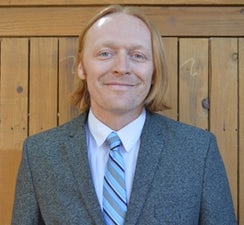
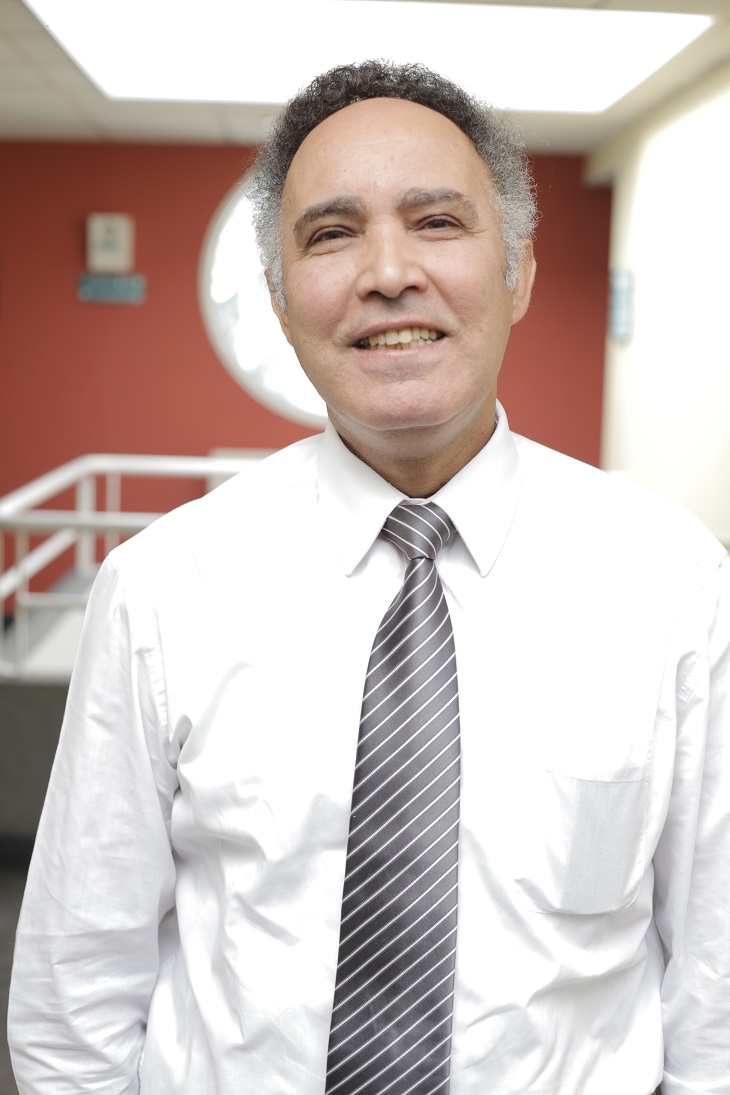
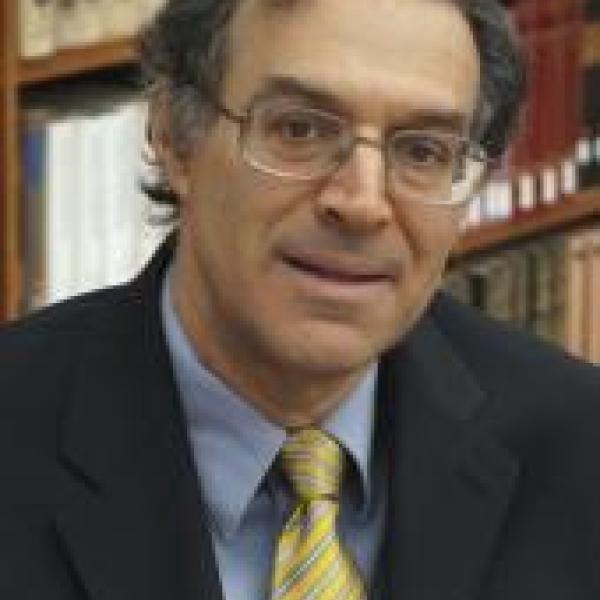
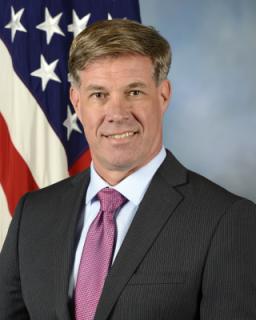
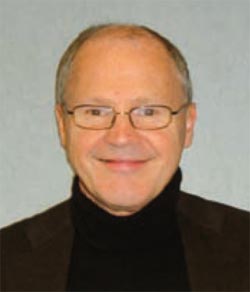
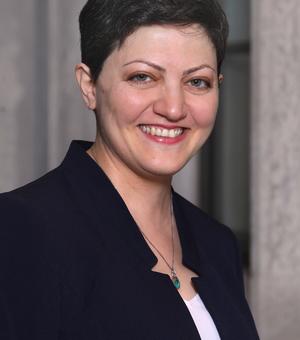
Jacob Eyferth is an Associate Professor at the University of Chicago, jointly appointed in the Department of East Asian Languages and Civilizations, the Department of History, and the College. His research focuses on the social and cultural history of twentieth-century China, particularly rural communities, gender dynamics, and the intersection of technology and everyday life. Key research themes include the impact of industrialization, collectivization, and revolution on non-elite populations, with an emphasis on rural women's labor and cultural resistance. His current project explores cotton production, clothing, and gender during China's socialist era. Eating Rice from Bamboo Roots (2009) How China Works (2006) Rural Development in Transitional China (2004) He received the 2011 Joseph Levenson Prize for his first book. Eyferth has taught courses on topics such as class inequality, everyday life under socialism, and revolutionary China, and has held postdoctoral fellowships at Oxford, Harvard, and Rutgers.
Sigrid Schmalzer is a Professor of History at the University of Massachusetts Amherst, specializing in the history of science and modern China. She holds a Ph.D. in History and Science Studies from the University of California, San Diego (2004). Her research bridges the social, cultural, and political dimensions of science in China, with a focus on the intersections of agriculture, activism, and revolutionary movements. Schmalzer is the author of *Red Revolution, Green Revolution: Scientific Farming in Socialist China* (2016), winner of the Joseph Levenson Book Prize, and *The People's Peking Man: Popular Science and Human Identity in Twentieth-Century China* (2008), recipient of the Allan Sharlin Award. Her current projects include a book on agricultural heritage in the People’s Republic of China and leadership roles in organizations like the Critical China Scholars and Science for the People. She co-edits the *Activist Studies of Science and Technology* series for UMass Press, emphasizing socially engaged scholarship. Schmalzer also serves as Co-President of the MSP faculty union at UMass Amherst. Research interests span the history of science activism, transnational movements, and the legacy of Maoist science. Notable awards include the Freeman Book Award (2018) for her children’s book *Moth and Wasp, Soil and Ocean*, which integrates science education with historical narratives. Her work often critiques capitalist and authoritarian structures while advocating for science as a tool for justice and sustainability. Recent publications explore themes like agroecology, science policy, and the global dimensions of China’s scientific history. She teaches courses on modern China, science in society, and radical science movements, blending interdisciplinary approaches to engage students in critical analysis of historical and contemporary issues.
Michael Kremer is a University Professor in Economics at the University of Chicago, holding positions in the Kenneth C. Griffin Department of Economics, the College, and the Harris School of Public Policy. He is the 2019 Nobel Laureate in Economic Sciences for pioneering experimental methods to address global poverty. Kremer earned his Ph.D. from Harvard University in 1992 and has been affiliated with the University of Chicago since 2020. His research focuses on development economics, field experiments, and policies impacting education, health, water, and agriculture in developing countries. He directs the Development Innovation Lab and leads the Development Economics Center at Chicago, emphasizing evidence-based solutions to poverty. Kremer’s work combines rigorous academic inquiry with practical policy applications, bridging theoretical economics and real-world interventions. Awarded the MacArthur Fellowship in 1997 and a Fellow of the American Academy of Arts and Sciences since 2003, Kremer’s contributions have shaped modern development economics. He has collaborated extensively with institutions worldwide, advocating for randomized controlled trials (RCTs) to evaluate social programs. His interdisciplinary approach integrates insights from economics, public policy, and experimental methods, fostering global partnerships to combat poverty effectively.
Ben Nobbs-Thiessen is an Assistant Professor of History and Chair of Mennonite Studies at the University of Winnipeg. He holds a PhD from Emory University (2016), with prior roles as a research associate at Arizona State University (2016–18) and a teaching fellow at Washington State University (2018–2020). His research focuses on Mennonite migrations across the Americas, environmental change, and indigenous-settler relations. He teaches courses on Latin American Mennonites and Mennonite Studies II. His research combines archival work, field studies, and oral histories from Bolivia, Paraguay, Mexico, Canada, and the U.S. His 2020 book Landscape of Migration examines Bolivia’s lowland colonization and its intersection with Mennonite and indigenous communities. Current projects include a century-long study of Mexico-Canada Mennonite migrations linked to water scarcity and neoliberal reforms. His publications span journals like Journal of Latin American Studies and Agricultural History , addressing topics like frontier development, foodways, and border conflicts. His transnational approach bridges environmental, migration, and colonial histories. He contributes to interdisciplinary initiatives such as the Newberry Consortium in American Indian Studies and the Centre for Rupert's Land Studies.
Alexis Peri is an Associate Professor of History at Boston University, specializing in modern Russian and Soviet history, with a focus on war, gender, and private life. Her work bridges cultural history, environmental history, and transnational studies. She holds a B.A., M.A., and Ph.D. from the University of California, Berkeley. Her research explores Soviet beauty pageants, US-Soviet women’s correspondence, and environmental dimensions of the Crimean War (co-authored with Catherine Ashcraft). Major publications include The War Within: Diaries from the Siege of Leningrad (2017) and Dear Unknown Friend: the Remarkable Correspondence between American and Soviet Women (2024). Dr. Peri has received the 2018 Pushkin House Book Prize, 2019 Gitner Teaching Prize, and 2024 Metcalf Award. Her research has been supported by the Fulbright Program, Kennan Institute, and others. She teaches undergraduate courses on Russian/Soviet history and directs multiple collaborative research projects.
Eric Van Young is a distinguished Professor of History at the University of California, San Diego (UCSD), specializing in colonial and 19th-century Latin American history, particularly Mexico. He has held significant roles, including Chair of the Department of History (2000-2004) and Interim Dean of the Division of Arts and Humanities (2007-2008). His research focuses on rural history, peasant movements, cultural history, and biographical studies of key figures like Lucas Alaman. He earned his B.A. from the University of Chicago (1967), M.A. and Ph.D. from UC Berkeley (1968, 1978). Education: B.A. (University of Chicago), M.A. & Ph.D. (UC Berkeley) Roles: Professor of History, Department Chair, Interim Dean His research explores Mexico’s colonial and early national periods, emphasizing rural economic structures, popular rebellions, and the intersections of culture and politics. Current projects include a biography of Lucas Alaman and a synthetic history of Mexico (1750-1850). He has authored numerous books, including Writing Mexican History (2012) and The Other Rebellion (2001), alongside over 100 articles. His work bridges economic and cultural historiography, offering critical insights into regional dynamics and the construction of national identity. Van Young’s scholarly contributions include editorial roles for journals and book series, as well as extensive peer review for academic publishers. His interdisciplinary approach addresses themes like messianic movements, state formation, and the legacy of colonial institutions in modern Mexico.
Hassan El Asraoui is an Assistant Professor at IÉSEG School of Management, serving as Academic Director. His research focuses on industrial economics, economic fluctuations, and sustainable development. Educational background includes a PhD in Economics from EHESS, University of Aix-Marseille. Professional experience encompasses extensive consultancy work for regional development agencies, focusing on economic impact assessments of higher education and research institutions. Teaches courses on economic environment, sustainable development, and business strategy. Research examines agricultural efficiency, SME-consultant relationships, and regional economic development.
Jarrod Ray Hore is a Scientia Lecturer in the School of Humanities & Languages at the University of New South Wales (UNSW), Sydney, and Co-Director of the New Earth Histories Research Program. His work explores environmental history, settler colonialism, and the intersections of science, geology, and cultural landscapes. Hore’s research focuses on landscape photography’s role in shaping colonial projects, earthquake geology, and the logistics of the natural history trade. He has published widely in journals like the Pacific Historical Review and Australian Historical Studies, and his award-winning book *Visions of Nature* (2022) examines how photography reinforced settler territoriality. His research interests span environmental history, transnational history, the history of science, and colonial studies. Key areas include the history of settler colonialism in Australia, New Zealand, and North America, as well as the cultural and scientific dimensions of geological exploration. Hore actively supervises HDR and honours students in environmental history, colonial history, and the history of photography. His awards include the Marilyn Lake Prize (2023) and Donna Coates Prize (2022), with shortlist recognitions for prestigious history awards. Beyond academia, he teaches courses like *A House Divided: The Making of Modern America* (ARTS2150), emphasizing U.S. histories of race, class, and global engagement. Hore’s work bridges environmental humanities and colonial studies, analyzing how visual and scientific practices reinforced imperial and settler agendas. His current projects explore the material and logistical networks underpinning natural history collections and the epistemologies of colonial geology.
Kenneth Pomeranz is the University Professor of Modern Chinese History at the University of Chicago in the Department of East Asian Languages and Civilizations (EALC). Previously taught at the University of California, Irvine , his research spans late Imperial and twentieth-century China , comparative world history , and global economic systems . Research Focus: Reciprocal influences between state, society, and economy; origins of the world economy through mutual regional influences; comparative studies of labor, family organization, and economic history. Current Projects: A history of Chinese political economy from the seventeenth century to the present; a book titled Why Is China So Big? exploring China's political unity despite its vast size. Scientific Awards and Fellowships: John K. Fairbank Prize (twice) World History Association Book Prize (shared) Guggenheim Fellowship American Academy of Arts and Sciences Fellow Publications: Key works include The Great Divergence , The Making of a Hinterland , and The World that Trade Created . His articles address topics such as labor-intensive industrialization, global environmental history, and Qing state-building.
Joseph Felter is a Research Fellow at the Hoover Institution (Stanford University) and the William J. Perry Fellow at the Center for International Security and Cooperation. His career bridges academia, military service, and policy advising, with expertise in counterinsurgency, national security, and US-China relations. He coauthored the influential book Small Wars, Big Data: The Information Revolution and Modern Conflict (2018) and developed the Hacking for Defense curriculum to connect military needs with Silicon Valley innovation. Military Background: Former US Army Special Forces officer with combat deployments in Panama, Iraq, and Afghanistan. Served as commander of the COMISAF Counterinsurgency Advisory and Assistance Team. Academic Roles: Assistant Professor at West Point’s Department of Social Sciences, Adjunct Associate Professor at Columbia University’s School for International and Public Affairs, and current codirector of Stanford’s Empirical Studies of Conflict Project. Research Focus: Politically motivated violence, economic development in conflict zones, and defense innovation. His work appears in top journals like American Economic Review and Journal of Conflict Resolution . Policy Engagement: Key advisor on US defense strategy (2017–2019) and founder of BMNT, a Silicon Valley defense technology incubator. Currently serves on Spirit of America’s board. Scientific Awards: Recognized as a William J. Perry Fellow and US Army War College Fellow. His empirical conflict research informs both academic and policy debates.
Graeme William Walter is the Disney Professor of Archaeology at the University of Cambridge and Director of the McDonald Institute for Archaeological Research. He also serves as a Professorial Fellow at St John's College, Cambridge. Previously, he held roles such as Pro-Vice-Chancellor (Resources) at the University of Leicester and Head of the School of Archaeological Studies there. His academic journey began with a BA in Classics and Archaeology from the University of Cambridge (1965-1969), followed by PhD research at St John's College, Cambridge (1969-1972). Research Interests: European and North African prehistory Origins and spread of agriculture Landscape archaeology Pastoralism and desertification processes Human dispersals and behavioral evolution Awards and Honors: 2005 Dan David Prize (Past Dimension) 2000 James R. Wiseman Book Award 1999 Fellow of the British Academy 1979 Fellow of the Society of Antiquaries of London Grants and Projects: Recipient of major grants including a €2.5M European Research Council Advanced Grant (2009-2014) for North African prehistory studies and a Leverhulme Trust grant (2014-2016) investigating resilience of Neanderthals and modern humans to climate change in SW Asia. Leadership and Affiliations: Directed the British School at Rome (1984–1988) Key figure in archaeological institutions like the McDonald Institute
Maryam Alemzadeh is Associate Professor in History and Politics of Iran at the Oxford School of Global and Area Studies (OSGA), University of Oxford, and a Middle East Centre Fellow. She holds a Ph.D. in Sociology from the University of Chicago (2018) and previously held postdoctoral positions at Brandeis University and Princeton University. Education Ph.D. in Sociology, University of Chicago (2018) Research Interests Dr. Alemzadeh specializes in revolutions, state-building, militias, and modern Iran, examining how individual actions shape political structures through micro-level analysis. Her work integrates sociological theory with Middle Eastern studies to explore the interplay of religion, military institutions, and everyday practice in revolutionary contexts, with a current focus on the Islamic Revolutionary Guards Corps (IRGC). Publication Trends Her recent publications analyze Iran's regional dynamics following Soleimani's assassination and review scholarly works on Iranian history. These demonstrate consistent expertise in military institutions, gender dynamics, and post-revolutionary state consolidation, bridging sociology and Middle Eastern studies while emphasizing micro-foundations of political phenomena.
Chi-Ming Yang is a Professor of English at the University of Pennsylvania's School of Arts & Sciences, where she has established herself as a leading scholar in literary and visual culture studies with a focus on race, empire, and East-West cultural exchanges. Her interdisciplinary approach bridges British, American, Asian, and Latin American studies while examining historical periods from the early modern era through the 18th century to contemporary contexts. Educational Background: Ph.D. in English from Cornell University B.A. in Comparative Literature from Stanford University with emphases in Spanish, Chinese, and English Professor Yang's research interrogates the intersections of race, visual culture, and imperial histories through multiple disciplinary lenses. Her work explores how objects, images, and texts function within global networks of power and representation, with particular attention to transpacific and transatlantic connections. She has developed significant expertise in chinoiserie, material culture, and the visual dimensions of racial formation across historical periods. Her recent publications demonstrate a growing interest in ecological perspectives on race and empire, particularly evident in her 2021 article 'The Song of the Rice Bird,' which innovatively examines plantation slavery through avian migration patterns. Her scholarship consistently bridges historical analysis with contemporary concerns about representation, power, and cultural exchange. Professional Recognition: 2022 Best Advisor Award in English, Sponsored by the English Undergraduate Advisory Board Professor Yang maintains an active advising role, having chaired doctoral dissertations including Jacob Myers' 'Noxious Life: Figuring Vermin in the Natural Histories of the Anglophone Caribbean' (2025) and Cassidy Holahan's 'Dramatizing the Novel: Transmedial Exchange in the Long Eighteenth Century' (2023). She regularly participates in departmental workshops and events, including the 2024 conversation with Sharon Holland exploring Black feminist perspectives on animal life in relation to Octavia E. Butler's work. Her teaching portfolio reflects her interdisciplinary approach, with recent courses including 'Science Fictions of Octavia E. Butler,' 'Orientalisms,' '18th-Century British Poetry,' and 'Arts of Abolition and Liberation,' demonstrating her commitment to connecting historical scholarship with contemporary social justice concerns.
Joel Mokyr is the Robert H. Strotz Professor of Arts and Sciences and Professor of Economics and History at Northwestern University , with additional affiliation as the Sackler Professor at the Eitan Berglas School of Economics, Tel Aviv University. His work bridges Economic History , Technological Change , and Population Economics , emphasizing evolutionary models and institutional frameworks. Research Focus : His scholarship explores how knowledge systems and technological innovation drove Industrial Revolutions , European economic divergence , and institutional evolution . Teaching : Courses include Economic History of the US Since 1865 , Advanced Topics in European Economic History , and History of Modern Europe , with syllabi and resources provided. Article Trends : His recent publications examine the role of institutions , intellectual property , and cultural contexts in technological progress, spanning from the Industrial Revolution to modern economic growth . Papers address evolutionary economics , counterfactual analysis , and knowledge diffusion . Scientific Awards : 2011 Upton Scholar Advising and Grants : While specific students and grants are not listed, his work has influenced economic historians and technology scholars through publications and conference presentations. Collaborations include co-authored studies on Irish famine mortality and industrial policy .
Stephen Marglin is the Walter S. Barker Professor of Economics at Harvard University, Department of Economics. His research critically examines foundational assumptions of economics, particularly how economic theories marginalize community and cultural values. He explores labor-surplus economies, cost-benefit analysis, and macroeconomic adjustment processes. His work challenges mainstream economics through publications like The Dismal Science: How Thinking Like an Economist Undermines Community (2008). Marglin also advises governments and international agencies on economic policy, including recent tax reform work in Puerto Rico. His teaching integrates standard economics with critical perspectives, focusing on modernity's cultural impact and globalization. Research interests include development economics, economic theory, and the interplay between economic systems and cultural values. His articles span Keynesian theory reinterpretation, labor dynamics, and critiques of neoclassical economics. Marglin collaborates with his spouse, anthropologist Frédérique Apffel-Marglin, blending economic and cultural analyses. Personal interests include gardening, animal husbandry, and family life. He has held roles such as adviser to governments and institutions, emphasizing policy relevance. His academic contributions are translated into multiple languages, reflecting global influence.