Anthony Cupido is an Adjunct Associate Professor in the Department of Civil Engineering at McMaster University's Faculty of Engineering. His work focuses on sustainable building technologies, energy performance modeling, and water resource management in institutional contexts. His research interests span Sustainable Building Technologies Energy Performance Modeling Water Resource Management Environmental Engineering with a focus on policy-based tools and green infrastructure. Recent publications highlight trends in Net zero energy buildings Rainwater quality analysis Green building policy evaluation Public building energy simulation across journals like the Journal of Green Building and conferences such as the Winter Simulation Conference.
Stephanie Forrest is a Professor of Computer Science at Arizona State University and serves as Director of the Biodesign Center for Biocomputation, Security and Society . She holds affiliations with the School of Computing and Augmented Intelligence , Global Futures Laboratory , and Santa Fe Institute External Faculty . Education: B.A. from St. John's College M.S. and Ph.D. in Computer Science from the University of Michigan Research Interests: Forrest specializes in the intersection of biology and computation , with key contributions to cybersecurity (anomaly detection, instruction-set randomization), automated software repair (evolutionary methods), and biological modeling (immune systems, SARS-CoV-2 spread). Her work bridges complex adaptive systems , AI/ML , and defense applications . Scientific Contributions: 2020 IEEE S&P Test of Time Award 2019 ICSE Most Influential Paper Award 2011 ACM/AAAI Allen Newell Award NSF Presidential Young Investigator (1991) IEEE Fellow Evolutionary Computation Pioneer award Publications & Grants: Her research appears in top venues (ICSE, IEEE S&P, PNAS) and is funded by the National Science Foundation , DARPA , Air Force Research Lab , and Santa Fe Institute . Key projects include Crispy (CRISPR-inspired DoS defense), GenProg (automated bug correction), and SIMCoV-GPU (agent-based pandemic modeling).
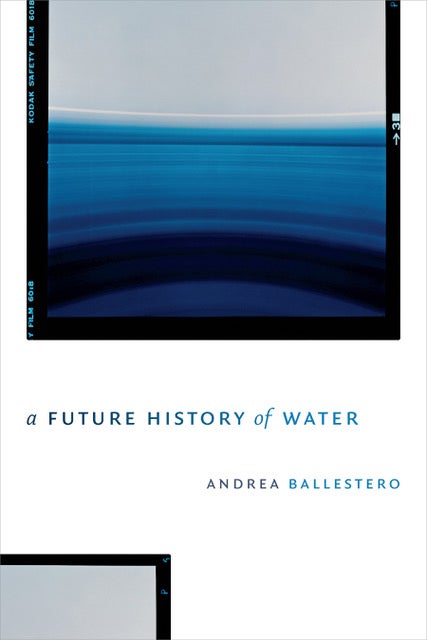
Andrea Ballestero is an Adjunct Professor of Anthropology at Rice University and the University of Southern California (USC) , where she directs the Ethnography Studio. Her work bridges legal and political anthropology , science and technology studies , and political economy to examine how experts negotiate water governance in Latin America through entangled legal, economic, and techno-scientific frameworks. Current research explores subterranean re-discovery via remote sensing and legal technologies Active in ethnographic experimentation and collaborative protocol design Recipient of Mellon , NSF , Wenner Gren , and Fulbright grants Her scholarship spans water pricing in Costa Rica , bureaucratic care in Brazil , and subterranean knowledge across Latin America . The 15 most recent articles analyze topics like volumetric governance , techno-legal ethics , and financial frontiers , reflecting her focus on materiality and value systems. Scientific awards include Fulbright Fellowship and NSF support , with grants emphasizing volumetric spaces and Anthropocene challenges . She also leads the Ethnography Studio , fostering collaborative research strategies and conceptual openness.
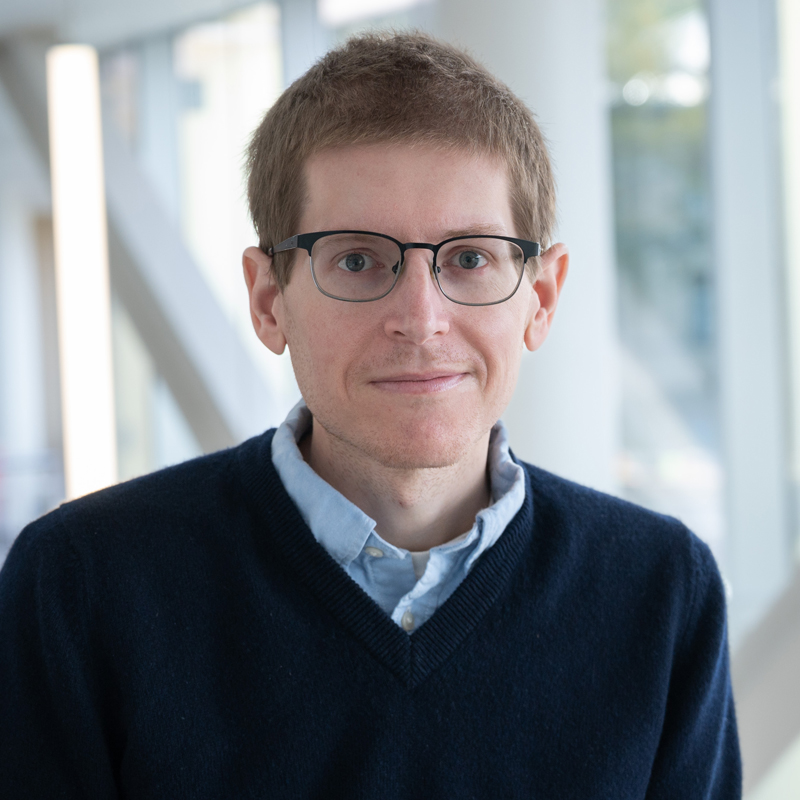
Matthew Rosenzweig is an Assistant Professor in the Department of Mathematical Sciences at Carnegie Mellon University's Mellon College of Science, specializing in mathematical physics, nonlinear partial differential equations, and probability with applications to many-body systems and wave turbulence. His educational background includes: Ph.D. in Mathematics, University of Texas at Austin Postdoctoral Appointment, Massachusetts Institute of Technology Undergraduate Degree, Harvard University Rosenzweig's research focuses on effective dynamics of large-scale systems such as Coulomb/Riesz gases, where he derives nonlinear dispersive, fluid, and kinetic equations from microscopic particle interactions. His work bridges physics and mathematics, increasingly incorporating statistical and machine learning perspectives. Key contributions address mean-field convergence , propagation of chaos , and scaling limits for singular interactions. Analysis of his 15 most recent publications (2022-2024) reveals a dominant trend in uniform-in-time mean-field theory for singular potentials, with strong emphasis on logarithmic Sobolev inequalities, wave turbulence connections (e.g., stochastic KdV equations), and fluid dynamics applications like the Lake equation. The research spans mathematical physics, probability theory, and nonlinear PDE analysis, often featuring collaborations with Sylvia Serfaty and Gigliola Staffilani. Rosenzweig's research is funded by National Science Foundation grants DMS-2441170 and DMS-2345533. As a former CLE Moore Instructor at MIT and Simons Collaboration postdoc, he maintains active involvement in the Center for Nonlinear Analysis at CMU, though no formal lab structure is specified in available materials.
Klemens Fellner is a Professor of Mathematics/Computational Sciences and Group Leader of the Applied Analysis Group at the Institute of Mathematics and Scientific Computing, University of Graz. His research focuses on the analysis of partial differential equations and mathematical modeling across physics, chemistry, and biology. Research Interests: Prof. Fellner's work spans theoretical analysis of nonlinear PDEs (reaction-diffusion, kinetic, and non-local equations) using entropy/duality methods, with applications to: Biological systems (lipolysis, protein localization, stem-cell division) Physical processes (organic photovoltaics, semiconductor modeling) Collective behavior (swarming micro-organisms, aggregation dynamics) Interdisciplinary Mathematics-Arts collaborations Publication Trends: His recent articles (2018-2021) demonstrate strong focus on: Global existence and regularity for reaction-diffusion systems Convergence to equilibrium via entropy methods Drift-diffusion models in semiconductor physics Mathematical biology applications (prion dynamics, lipolysis) Novel approaches for non-local aggregation and hysteresis phenomena Research Leadership: Currently leads the Applied Analysis Group with members including postdocs and PhD students. Key projects: Doctoral School IGDK (International Graduate School) SFB Lipid Hydrolysis (Special Research Program) Mathematics and Arts collaborations Colibri research platform Supervises PhD candidate Reymart Lagunero studying generalized reaction-diffusion systems.
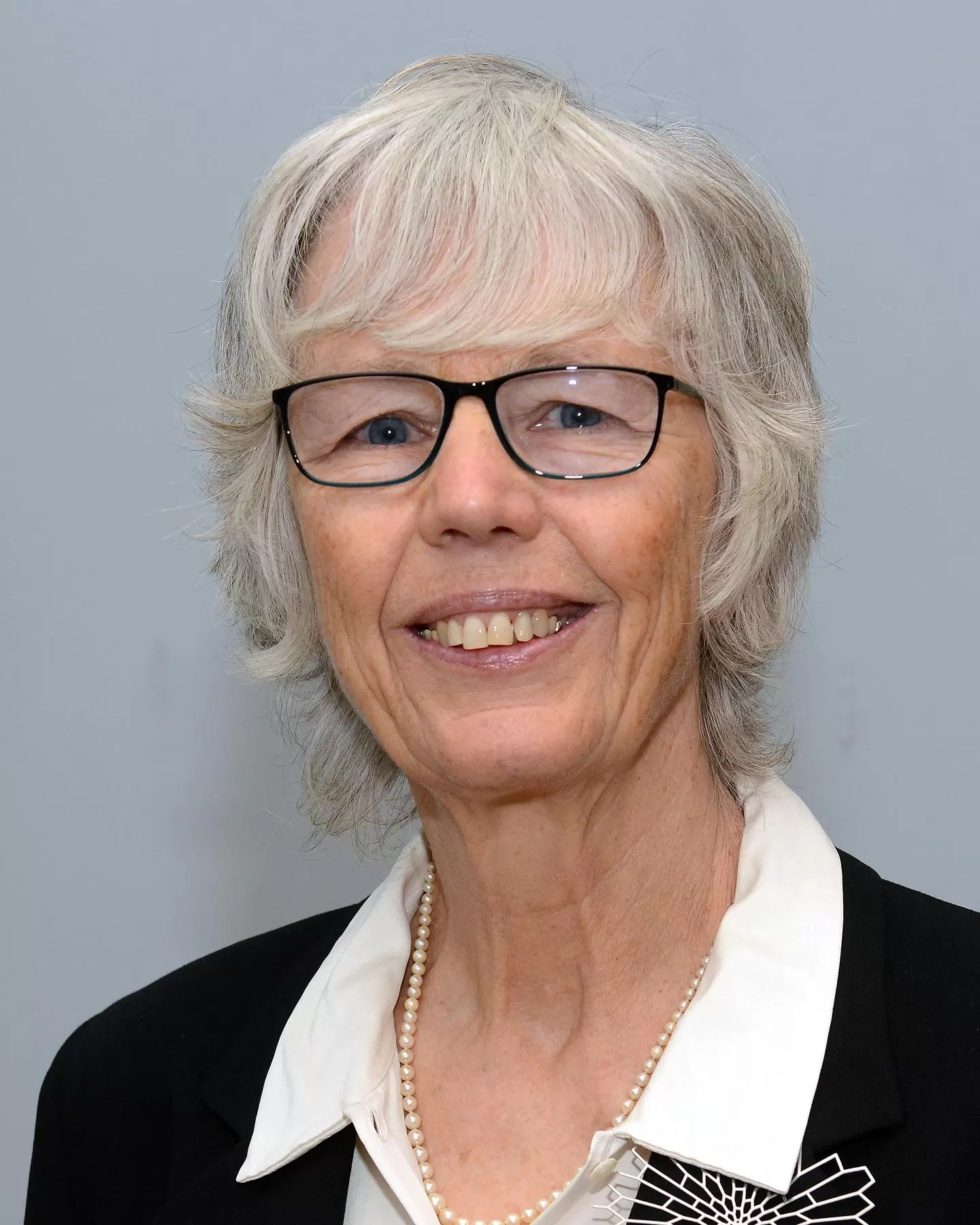
Dr. Uta Passow is a Professor and Canada Research Chair Tier 1 in Biological Oceanographic Processes at the Memorial University of Newfoundland . She leads the AEON Laboratory (Anthropogenic Effects on the Oceanography of Newfoundland) at the Ocean Sciences Centre, focusing on ocean-climate interactions and pollutant impacts. Specializes in Biological Carbon Pump dynamics under climate change Investigates oil spill and microplastic pollution mechanisms Conducts lab and field research in Labrador Sea and Gulf of Mexico Her lab AEON Laboratory explores: Marine snow aggregation and fragmentation Microplastic transport pathways Oil biodegradation in freshwater and marine ecosystems Scientific contributions include: Fellow of The Royal Society of Canada Lead researcher in Transforming Climate Action and Multi-Partner Research Initiative projects Collaborations with Nunatsiavut communities and Fisheries and Oceans Canada Recent publications address oil-marine snow interactions , microplastic sedimentation , and storm impacts on carbon flux . Her work informs ocean policy and spill response strategies.
Professor Foto N. Afrati is a Distinguished Faculty Member at the National Technical University of Athens, specifically within the School of Electrical and Computing Engineering and the Division of Communication, Electronic and Information Engineering. She has held this position since 1993, following previous academic ranks at the same university as Associate Professor (1989-1993), Assistant Professor (1985-1989), Lecturer (1982-1985), and Research Fellow (1980-1982). She completed her PhD in Electrical Engineering at Imperial College of the University of London in March 1980, with a dissertation focused on Error Correcting Codes by Algorithms. Her academic journey also included a Diploma from Imperial College (March 1980) and an earlier Diploma in Electrical and Mechanical Engineering from the National Technical University of Athens (June 1976). Professor Afrati's research interests span several critical areas in computer science: Parallel and distributed computation Processing of very large data (including MapReduce) Data and web mining Database Systems Information integration Query optimization Computation and complexity of algorithms Approximation algorithms Her most recent publications demonstrate expertise in MapReduce environments, query optimization with views, and data exchange frameworks. These works are published in prestigious venues like EDBT, VLDB, PODS, and ICDT, with specific focus areas including adaptive sampling techniques, data source integrity, and algorithm complexity in database environments. Professor Afrati has received significant recognition in her field, including Fellow of the Association for Computing Machinery (ACM) Best Paper Award at the International Conference on Database Theory (ICDT) 2009 She has advised numerous PhD students throughout her career, including Theodoros Mitakos, Ezz Hattab, Nikos Kiourtis, and Angelos Vasilakopoulos. Her current PhD students include Victor Kyritsis and Nikos Stassinopoulos. Professor Afrati maintains strong professional networks through her various visiting positions at institutions such as Google, Stanford University, IBM Research Center, University of Helsinki, University of Paris, DIMACS, and others. She has served as associate editor and reviewer for major academic journals and conferences including IEEE TKDE, ACM Transactions of Database Systems (TODS), Journal of ACM (JACM), and Theoretical Computer Science (TCS). Her extensive work in research projects spans both national and international initiatives, with funding from sources including the European Union's Thalis project, ESPRIT working groups, HCM networks, and Greek General Secretariat of Research and Technology grants.
Dr. Alison Smith is a Principal Research Fellow at the School of Mathematics and Applied Statistics, University of Wollongong. With over 40 years of experience as a biometrician, her research focuses on linear mixed models for plant breeding and crop improvement programs, particularly addressing genotype-environment interactions and multi-phase experimental design. Key collaborations: Industry partnerships across Australian plant breeding programs Honors: Invited to deliver the 2019 Fisher Memorial Lecture at Rothamsted Research Her research spans applied statistics and statistical genetics , with recent work on the Design Tableau approach for linear mixed models. She has supervised multiple PhD projects on topics like genomic selection and statistical diagnostics in plant breeding. Notable grants include the ARC Training Centre in Predictive Breeding and Linkage Projects grants. Her 70+ publications include high-impact studies on frost susceptibility in cereals and genetic analysis of heat stress adaptation in wheat.
Mark Oskin is an Adjunct Professor at the School of Computer Science and Engineering , University of Washington , focusing on Software & Hardware Systems . He leads the Sampa Group and collaborates on projects like HammerBlade and BlackParrot. University: University of Washington School: School of Computer Science and Engineering Department: Department of Electrical & Computer Engineering His research spans Computer Architecture , Parallel Computing , and Graph Processing , with additional expertise in Quantum Computing , Open Source Hardware , and Distributed Shared Memory . Ongoing work includes custom manycore devices for graph execution and open-source RISC-V designs. Past projects like Grappa and WaveScalar advanced distributed memory and dataflow execution. Recent publications include BlackParrot: An Agile Open Source RISC-V Multicore for Accelerator SoCs (IEEE Micro 2020) and Perceptual Compression of Video Storage and Processing Systems (SoCC 2019), reflecting trends in hardware-software co-design, quantum systems, and energy-efficient video processing. Best Paper Award , USENIX ATC 2015 IEEE Micro Top Picks , 2009 Mark has advised numerous students, including Amrita Mazumdar (IoT video compression startup), Brandon Lucia (CMU), and Steve Swanson (UC San Diego). He co-founded Corensic, a startup exploring deterministic multithreaded execution.
Peter Bach Andersen serves as Head of Section and Senior Researcher at the Department of Wind and Energy Systems, Technical University of Denmark (DTU). Based at Elektrovej 329A in Kgs. Lyngby, he leads research in electric vehicle integration and prosumer energy systems with an ORCID identifier 0000-0002-5202-3584. His work spans grid services, battery storage, and smart charging infrastructure within DTU's EV Lab ( www.evlab.dk ). Andersen's research focuses on electric vehicle grid integration , specializing in charging infrastructure planning, battery energy storage systems, and virtual power plant concepts. His fingerprint analysis reveals dominant expertise in Electric Vehicle Engineering (100%), Battery Engineering (13%), Ancillaries (12%), and Power Engineering (11%). Current projects emphasize flexibility quantification, grid service delivery through EV clusters, and Nordic grid characteristics. His work contributes significantly to UN Sustainable Development Goals related to clean energy and sustainable cities. His publication portfolio shows strong trends toward grid-interactive EV systems with recent emphasis on conditional connection agreements, fast-charging urban impacts, and data-driven battery health prognosis. The research demonstrates increasing focus on practical implementation challenges and market integration aspects of vehicle-grid systems. Andersen actively supervises four PhD students (Menchaca, Striani, Unterluggauer, Sevdari) across projects including charging infrastructure planning, EV clustering methods, and urban charging infrastructure impacts. He leads the FLOW project (2022-2026) investigating flexible energy systems for optimal EV integration while participating in multiple EU-funded initiatives. His research group maintains strong industry connections through DTU's EV Lab, focusing on real-world validation of grid services using commercial EVs and chargers.
Dr. Jacqueline Burre serves as an Associate Professor of Neuroscience within the Brain and Mind Research Institute at Weill Cornell Medical College, Cornell University, a role she assumed in 2021. Her research program investigates molecular mechanisms underlying neurodegenerative disorders with emphasis on synucleinopathies including Parkinson's disease and dementia with Lewy bodies, bridging fundamental synaptic biology with translational therapeutic development. Her academic training includes: Ph.D. in Neuroscience from Johann Wolfgang Goethe University, Germany (2006) Diploma in Neuroscience from Johann Wolfgang Goethe University, Germany (2003) Dr. Burre's primary research explores alpha-synuclein's physiological role at the synapse and its pathological transformation in disease. Her laboratory examines how alpha-synuclein interacts with synaptic vesicles, how lipid composition and post-translational modifications (like N-acetylation) regulate these interactions, and how disruptions lead to neurodegeneration. This work extends to STXBP1 encephalopathies and monogenetic epilepsies, employing biochemical, proteomic, and advanced imaging approaches to uncover disease mechanisms. Analysis of her publication trajectory (2020-2025) reveals progressive focus on alpha-synuclein condensation, synaptic vesicle dynamics, and biomarker discovery for synucleinopathies. Her recent work increasingly integrates lipidomics and proteomics to identify early pathological signatures, with emerging emphasis on therapeutic strategies including pharmacological chaperones and gene therapy approaches for Parkinson's disease and multiple system atrophy. Dr. Burre currently leads multiple NIH-funded projects as Principal Investigator: Changes in synaptic vesicle-binding of alpha-synuclein as an early biomarker for synucleinopathies (NINDS R01, 2024-2029) The impact of beta- and gamma-synucleins on alpha-synuclein's synaptic function (NINDS R01, 2022-2026) Synaptic vesicle changes in synucleinopathies (NINDS R21, 2022-2025) A novel gene therapy approach for multiple system atrophy (NINDS subaward, 2023-2025) Within the Brain and Mind Research Institute, her laboratory utilizes cutting-edge techniques including super-resolution microscopy, synaptic vesicle proteomics, and electrophysiology to study synaptic dysfunction. She maintains active collaborations with clinicians and basic scientists across Weill Cornell to accelerate translation of mechanistic insights into therapeutic interventions for neurodegenerative conditions.
Associate Professor Kirk Vessalas is Head of School at the School of Civil and Environmental Engineering , University of Technology Sydney. He has led groundbreaking research on low-carbon concrete , supplementary cementitious materials (SCMs) , and alkali-silica reaction (ASR) mitigation since 1992. His work integrates industrial by-products like fly ash and slag into high-performance concrete systems, supporting Australia's transition to a net-zero economy . PhD in Civil Engineering (UTS, 2009) Bachelor of Applied Science in Materials Science (UTS, 1991) Research interests span: Concrete durability and decarbonisation Mechanisms of ASR and DEF (Delayed Ettringite Formation) Development of smart cement-based sensors with self-sensing and self-cleaning properties Application of nanotomography for microstructural analysis Regulatory reform in Australian and New Zealand concrete standards Recent publications highlight advancements in alkali-activated binders , DEF risk assessment , and SCM integration for sustainable infrastructure. His studies often combine chemical analysis , durability testing , and industry collaboration to address practical challenges. Supervision and grants include mentoring students like Johnson Mak and Nicholas Allan, with over $6M AUD secured from ARC Research Hub , SmartCrete CRC , and international partnerships . He actively collaborates with Cement Concrete & Aggregates Australia , Concrete New Zealand , and infrastructure agencies.
Mostafa Milani is an Assistant Professor in the Department of Computer Science at Western University. His research focuses on data management, databases, and their applications in data cleaning, privacy, provenance, and fairness. Before joining Western, he held postdoctoral positions at the University of British Columbia and McMaster University, and earned his Ph.D. from Carleton University under Dr. Leopoldo Bertossi. Education: Ph.D. in Computer Science from Carleton University (supervised by Leopoldo Bertossi), Postdoctoral Fellowships at University of British Columbia and McMaster University. Research Interests: Data Quality, Privacy, Provenance, Fairness, Entity Matching, Query Optimization, and Database Systems. His work emphasizes ethical data practices and integrates machine learning for improved database interactions. He has contributed to projects like Building Trust in Data (privacy/fairness integration) and Unified Data Exploration (provenance and query recommendations). Courses taught include Databases I/II, Applied Logic, and Web Systems. Current advisees include 7 MSc and 1 PhD student. Former students have graduated across MSc and undergraduate programs. His research is supported by grants and collaborations, and he actively participates in program committees for top conferences like SIGMOD and VLDB.
Prof. Dr. Michael Merz holds the Chair of Mathematics and Statistics in Economics at the University of Hamburg's Faculty of Business Administration. He specializes in actuarial science, risk management, and quantitative finance. His research focuses on stochastic claims reserving, solvency frameworks (Basel II/Solvency II), credibility theory, and risk-adjusted performance measurement. Education: Completed his Diplom in Mathematics (1.1 grade) at the University of Tübingen (2001) with a focus on stochastic processes and mathematical statistics. Earned his PhD (summa cum laude) in 2004 at Tübingen with a thesis on credibility models using orthogonal projections. Previously studied in Valencia, Spain (1998-1999). Research Interests: Actuarial valuation, stochastic reserving methods, risk theory, filter/control theory applications in finance, and capital allocation strategies. Key areas include Solvency II compliance, pricing models for insurance risks, and quantitative risk management frameworks. Publications: Authored/co-authored influential works like Financial Modelling, Actuarial Valuation and Solvency in Insurance (Springer, 2013) and Stochastic Claims Reserving Methods in Insurance (Wiley, 2008). Recent articles address claims uncertainty quantification, multivariate reserving models, and cost-of-capital approaches. Awards: SCOR Prize for Actuarial Science (2004), Promotionspreis der Universität Tübingen (2005), and academic distinctions in physics competitions during high school. Professional Roles: Program director for the Wirtschaftsmathematik program, speaker of the Institute for Statistics and Econometrics, and adjunct faculty at the University of Basel's Actuarial Science program. Served as actuary at Basler Versicherung (2004-2006) and held junior professorships at University of Tübingen (2006-2009).
Johes Bater is an Assistant Professor of Computer Science at Tufts University's School of Engineering. He joined Tufts in 2022 after postdoctoral research at Duke University's Database Group and a Ph.D. in Computer Science at Northwestern University. Education B.Sc. in Electrical Engineering (2011) from Stanford University M.Sc. in Electrical Engineering; Computer Systems (2013) from Stanford University Ph.D. in Computer Science (2020) from Northwestern University Research Focus Bater's research focuses on privacy-preserving analytics , balancing security , privacy , and utility in trustworthy database systems . His work spans differential privacy , secure computation , and data federation to enable robust distributed analytics with provable guarantees. Publications & Trends His publications since 2016 emphasize secure multi-party computation (SMCQL, 2016), differentially private indexing (Longshot, 2023), and privacy-utility trade-offs in federated databases. Key subfields include private data sharing , access pattern security , and incremental computation for outsourced systems. Awards & Grants 2022: Cisco Systems grant for "A Usable and Shareable Tool for Software Threat Modeling" Teaching & Service Bater teaches courses like Database Systems , Dissertation Research , and Special Topics in Data Infrastructure . He served on Tufts' CS PhD Admissions Committee (2022) and as a reviewer for the ACM Conference on Computer and Communications Security (2022).