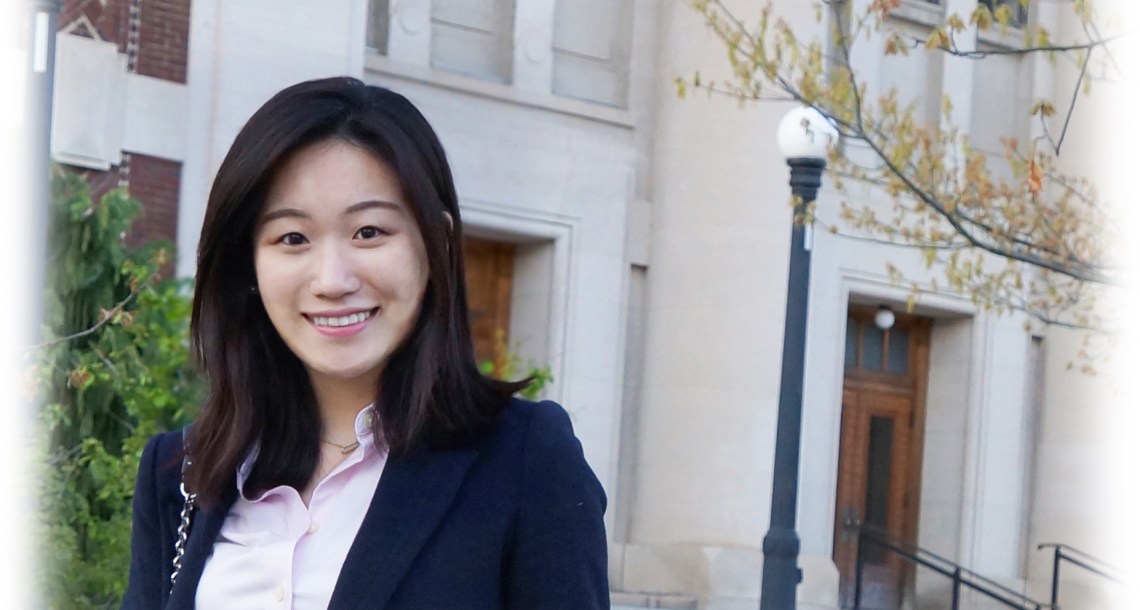
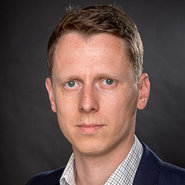
Yelin Kim is an Assistant Professor in the Department of Electrical and Computer Engineering at the University at Albany, State University of New York (SUNY), leading the Inspire Lab for Interaction Sensing and Perception in Real Environment. Her research focuses on: machine learning multimodal signal processing affective media analysis human-machine interaction She quantifies nonverbal behavioral cues (vocal changes, facial expressions, body gestures) to analyze human behavior in real-world interactions using techniques from machine learning, computer vision, and behavioral science. Key recognitions include: Google Faculty Research Award (2018) SUNY-A Faculty Research Award (2017–2019) ACM Multimedia Best Student Paper Award (2014, lead author) Korean Government KETEP Scholarship (2011–2013) Qualcomm Scholarship (2011) She served as ACM ICMI Doctoral Consortium Co-Chair (2018) and delivered invited talks at University of Rochester HCI, RIT AI Seminar Series, and USC EE Seminar. The Inspire Lab (http://albany.edu/inspirelab) develops AI systems for sensing and interpreting affective/social signals in communication.
Dr. Bracha Laufer is a senior lecturer at the School of Electrical Engineering , part of the Iby and Aladar Fleischman Faculty of Engineering at Tel Aviv University. Her research focuses on acoustic source localization, speech signal processing, and machine learning techniques for audio engineering. Her recent work explores conformal prediction and manifold-based approaches for robust source localization, deep learning architectures for sound source separation, and simplex geometry in multichannel signal analysis. These publications highlight interdisciplinary applications of machine learning and statistical methods in acoustics. Dr. Laufer's research integrates Bayesian inference , probabilistic graphical models , and uncertainty quantification to address challenges in adverse acoustic environments. She has contributed to advancements in multi-microphone speaker localization and speech inpainting .
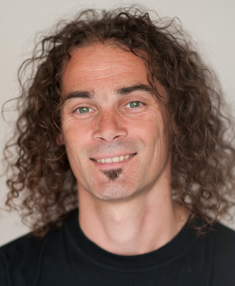
Professor Holger Zellmer serves in the Printing and Packaging Technology department within the Faculty of Computer Science and Media at Leipzig University of Applied Sciences (HTWK Leipzig). His academic appointment focuses on Pre-media systems technology, where he teaches comprehensive courses on prepress engineering and related media production technologies. His research and teaching interests center on the technical aspects of printing systems, with particular expertise in traditional printing plate production across the four main printing processes: offset, letterpress, gravure, and screen printing. His work extends to digital image processing systems, covering equipment, components, and workflows for digitizing, processing, storing, and outputting image data. Professor Zellmer's practical approach to teaching allows students to produce individual printing plates under various conditions and investigate how different process parameters affect printing plate quality. As part of his professional activities, Professor Zellmer maintains regular office hours by appointment, with students encouraged to register via email. His work contributes to the university's strong programs in media technology and printing, which are well-regarded within the German academic landscape for applied sciences.
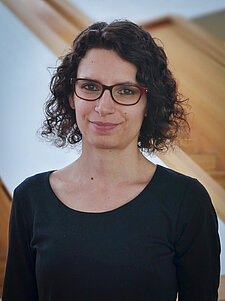
Vedika Khemani is an Indian-American physicist and Associate Professor of Physics at Stanford University. Her research focuses on non-equilibrium many-body quantum dynamics and quantum information theory, particularly the discovery of Floquet time-crystals. She earned her undergraduate degree from Harvey Mudd College and a PhD from Princeton University. She was a Junior Fellow at the Harvard Society of Fellows before joining Stanford. Alma Mater: La Martiniere Calcutta (high school), Harvey Mudd College (BS), Princeton University (PhD) Doctoral Advisor: Shivaji Sondhi Khemani's work bridges condensed matter physics and quantum information, with groundbreaking research on time crystals that exhibit spontaneous breaking of time translation symmetry. Her studies explore how quantum systems evolve under periodic driving and how disorder affects localization. Her publications highlight discoveries in driven quantum systems, time-crystalline order, and many-body localization. These works span theoretical and experimental approaches, leveraging platforms like nitrogen-vacancy centers in diamonds for quantum simulations. 2024 Infosys Prize in Physical Sciences 2022 Breakthrough New Horizons in Physics Prize 2020 McMillan Award (University of Illinois) 2020 American Physical Society George E. Valley Jr. Prize 2020 DOE Early Career Award 2020 Sloan Research Fellowship At Stanford, Khemani collaborates with experimental groups to investigate quantum systems and mentor students. Her research has implications for quantum computing and understanding novel phases of matter.
Prof. Dr. Dirk Neumann is a faculty member at the Institute for Information Systems at the University of Freiburg, Germany. His research spans multiple interdisciplinary domains including business analytics, reinforcement learning applications, energy systems, and social policy analysis. He leads research initiatives including the Climate Action Research Lab (CARL) and Business Analytics Research group at the university. Dr. Neumann's research interests focus on the intersection of information systems, operations research, and societal challenges. His work particularly emphasizes: Application of reinforcement learning to operations research problems Energy systems analysis and smart grid optimization Social implications of technology adoption and policy Information processing of fake news and deep fakes Business analytics for social good His recent publications demonstrate a strong trend toward interdisciplinary research that combines technical methodologies with social impact assessment. The articles span fields from political science and environmental policy to operations research and cognitive science, highlighting his ability to bridge technical and social domains. A significant portion of his recent work focuses on energy systems, particularly smart grids and renewable energy integration, while maintaining strong connections to social equity considerations. Dr. Neumann is actively involved in multiple research collaborations as evidenced by his extensive publication record across diverse domains. His work often involves interdisciplinary teams combining expertise from computer science, economics, political science, and social sciences. His research group, the Climate Action Research Lab (CARL), focuses on applying analytical methods to climate-related challenges, while his Business Analytics research examines practical applications of data science in organizational contexts.
Martin Christof Kindsmüller is a Professor of Human-Computer Interaction at the University of Applied Sciences Brandenburg , holding this position since September 2014. Previously, he served as Acting Professor of Human-Computer Interaction at the University of Hamburg (2012-2014). Member of GI e.V. - Fachbereich MCI Associated with Zentrum Mensch-Maschine-Systeme (ZMMS) at TU Berlin Co-founder of IUUI Research Group - Intuitive Use of User Interfaces Research Interests: His work spans User Experience (UX) , Usability Engineering , and Intuitive User Interfaces , with applications in Smart Applications , Medical Systems , and cross-platform development. He has contributed to frameworks like HCD3A for data-driven app design and theories of trend literacy. Recent Publication Trends: His 2025 studies focus on tangible interfaces and collaborative spatial interaction , while 2024 work addresses artistic data visualization and media informatics education . Earlier research (2021-2017) emphasizes UX implementation in SMEs , zooming UIs , and emotional computing . Academic Contributions: He has served on program committees for Mensch & Computer , CogSci , and KogWis conferences, and as reviewer for Behaviour & Information Technology . His teaching focuses on media informatics curricula and practical UX integration.
Dr. Markus Reichert serves as a Junior Professor and Visiting Scientist at the Central Institute of Mental Health, Mannheim within the Clinic of Psychiatry and Psychotherapy. His work bridges clinical psychiatry with advanced computational and neuroscience methodologies through two dedicated research groups. His research focuses on real-world mental health dynamics using mobile health (mHealth) technologies and systems neuroscience. Key interests include neural correlates of social interactions, urban environmental impacts on affect, hormonal influences on addictive behaviors, and exercise-cognition relationships in eating disorders. He pioneers ecological momentary assessment techniques to capture real-life behavioral and physiological data outside laboratory settings. Analysis of his 2019-2024 publications reveals a cohesive trajectory examining how everyday experiences—from social contact to green space exposure—modulate neural activity and psychiatric resilience. His work consistently integrates neuroimaging (fMRI), real-world monitoring, and sex-specific analyses to uncover biological mechanisms underlying mental well-being and disorder. Dr. Reichert leads the mHealth methods in psychiatry research group and the Systems Neuroscience Psychiatry (SNiP) group, driving innovation in digital phenotyping and neural circuit analysis for psychiatric applications. His collaborative approach spans multi-center studies across European institutions, emphasizing translational impact for clinical practice.
Dr. Lena Wimmer serves as a Postdoctoral Researcher at the Human-Computer-Media Institute of the University of Würzburg, holding dual appointments with both the Chair of Communication Psychology and New Media and the Chair of Psychology IV - Educational Psychology. She joined Würzburg in 2024 following her role as Acting Professor for General Psychology at the University of Kassel (2022-2023) and her position as Research Associate at the University of Freiburg's Department of Empirical Teaching and Learning Research (2020-2024). Dr. Wimmer earned her Diploma in Psychology from the University of Bamberg (2004-2009), then progressed through research positions at Heidelberg University, University of Duisburg-Essen (where she completed her 2015 doctorate on The aesthetic paradox in the processing of fictional vs. non-fictional texts ), Bangor University, and the University of Kent before returning to Germany for her current position. Her research program centers on four interconnected domains: word processing mechanisms examining how readers comprehend fictional versus non-fictional materials; learning from texts and narratives investigating how narrative structures influence knowledge acquisition; educational psychology of autism focusing on category learning differences in autistic individuals; and the self-regulatory effects of mindfulness on cognitive functions and academic performance. Her work frequently employs meta-analytic approaches to synthesize evidence across multiple studies, particularly regarding fiction's cognitive impacts. Dr. Wimmer's publication record shows consistent output with increasing methodological sophistication, moving from single-experiment studies to large-scale meta-analyses. Her recent work has expanded into examining disinformation processing while maintaining her core focus on narrative fiction's psychological effects. She demonstrates strong international collaboration patterns, working with researchers across Germany, the UK, and Switzerland. Dr. Wimmer actively supervises student research projects and has secured funding for studies on mindfulness interventions in educational contexts and the cognitive effects of narrative fiction. Her methodological expertise spans experimental psychology, meta-analysis, and novel measurement development for assessing fiction exposure and processing. At the University of Würzburg, Dr. Wimmer leads a research team investigating how narrative fiction influences social cognition and epistemic vigilance. Her laboratory brings together psychologists, educators, and media scholars to examine the cognitive and social impacts of media consumption, with current projects exploring how different fiction types affect cognitive processing and developing targeted mindfulness interventions for educational challenges.
Dr. Merle I. S. Röhr serves as a Junior Group Leader at the Center for Nanosystems Chemistry, University of Würzburg, where she develops and applies advanced theoretical methodologies to investigate aggregation-induced functions in supramolecular structures. Her research bridges computational and experimental approaches to understand complex molecular behaviors in both ground and excited states. Her scientific focus encompasses Supramolecular Chemistry , Theoretical Chemistry , Quantum Chemistry , Photochemistry , Catalysis , Molecular Dynamics , and Computational Chemistry . Dr. Röhr specifically investigates how supramolecular systems facilitate (photo-)catalytic reactions and how structural motifs affect charge and exciton transport, applying innovative real-time dynamics simulation techniques to uncover mechanistic details of these processes. Her methodological expertise includes QM/MM simulations, quantum-classical dynamics, accelerated dynamics, ab initio methods, and (TD-)DFT techniques. Analysis of her publication record reveals strong interdisciplinary work spanning crystallography, stereochemistry, water oxidation catalysis, and excimer formation mechanisms, demonstrating her ability to connect theoretical predictions with experimental observations in materials science and energy research. 2017-present: Junior Group Leader, Center for Nanosystems Chemistry, University of Würzburg 2016-2017: Postdoctoral Studies, CU Boulder, Colorado, USA 2016: Dr. rer. nat. (Theoretical Physics), Free University of Berlin
Dennis Pauls is a Research Professor in the Department of Animal and Behavioral Physiology at the Institute of Biology, University of Leipzig. He leads his own research group (PAULS LAB) focusing on neurobiological mechanisms underlying behavior, memory formation, and decision-making processes, primarily using Drosophila as a model organism. His work bridges molecular neuroscience, behavioral physiology, and systems neuroscience to understand fundamental neural processes. Dr. Pauls completed his biology studies (Diplom) at the University of Gießen and University of Würzburg (2001-2006), followed by a PhD (Dr. rer. nat.) at the University of Fribourg, Switzerland (2006-2010). He conducted postdoctoral research at the University of Marburg (2010-2011) before becoming a scientific staff member and later group leader at the Theodor-Boveri Institute, University of Würzburg (2011-2019). Since July 2019, he has been a group leader at the University of Leipzig, and completed his Habilitation (Dr. rer. nat. habil, PD) in December 2020. His research focuses on two primary areas: (1) the integration of time in memories, investigating how essential information is encoded as lasting physical changes through synaptic plasticity, and (2) the neurometabolic mechanisms underlying poor food decisions, exploring how animals overcome innate aversions to potentially harmful foods under hunger conditions. His laboratory employs neuro- and optogenetic approaches, electrophysiology, behavioral analyses, and high-resolution light microscopy to address these questions. Analysis of Dr. Pauls' recent publications reveals a strong emphasis on octopamine signaling in learning and memory circuits, time integration mechanisms in neural systems, and the metabolic regulation of feeding behavior. His work demonstrates how neuromodulators influence memory formation, how temporal information is incorporated into neural representations, and how metabolic states affect decision-making processes in Drosophila models. Dr. Pauls currently leads three major DFG-funded research projects: (1) The function of octopamine in reward processing in Drosophila larvae (2019-2023), (2) Neurobiological foundations of integrating time into memories (2023-2026), and (3) Metabolic signatures and neurophysiological mechanisms of poor food intake decisions (2024-2027). He collaborates extensively with the Kittel Lab and other neuroscience groups at the University of Leipzig, contributing to the NeuroTune Graduate School and other interdisciplinary initiatives focused on brain dynamics and neurological disorders. His laboratory is part of the Integrated Research and Treatment Center (IFB) for Adiposity-Related Disorders for his research on food decision-making, demonstrating the translational potential of his basic neuroscience research. Dr. Pauls' work provides fundamental insights into neural circuit function with implications for understanding memory disorders and eating behaviors in humans.
Adrien Doerig is a Visiting Professor in the Department of Education and Psychology at Freie Universität Berlin, where he leads research in the Cognitive Computational Neuroscience Lab. He is also affiliated with the Bernstein Center for Computational Neuroscience. His work bridges cognitive science, computational modeling, and neural mechanisms of perception. Doerig's research focuses on the intersection of computational neuroscience and artificial intelligence, with particular emphasis on visual perception, consciousness, and the development of biologically plausible neural network models. His work explores how the brain processes visual information, with special attention to phenomena like crowding, feature integration, and the temporal dynamics of perception. He has made significant contributions to understanding the limitations of convolutional neural networks for modeling human vision and has pioneered work on topographic neural networks that better capture cortical organization. A key trend in Doerig's recent publications is the exploration of connections between language models and visual processing in the brain. His groundbreaking 2025 Nature Machine Intelligence paper demonstrated that large language model representations align closely with visual representations in the human brain, opening new avenues for using language-based AI in modeling biological visual processing. His work consistently challenges existing paradigms while developing more biologically plausible computational frameworks. Doerig teaches a wide range of courses including Master's in Cognitive Neuroscience, Probability and statistical modeling (both theoretical and practical with focus on ANNs and neuroimaging), Introduction to programming, Applied computational cognitive neuroscience, and specialized courses on vision, language, affective & social neuroscience, and consciousness. He also supervises graduate students through the Cognitive Computational Neuroscience Lab, which includes postdocs, predocs, master's students, and interns working on cutting-edge research questions at the intersection of cognitive science and machine learning.
Dr. Mamta Amrute is an Associate Professor and Principal Investigator at the Institute of Molecular and Cell Physiology, Hannover Medical School (MHH), where she has led her research group since 2017. Her academic journey includes a PhD from MHH (2003-2006), postdoctoral research at MHH (2012-2016), and at the prestigious Medical Research Council-Laboratory of Molecular Biology in Cambridge, UK (2008-2011). Her research program focuses on single-molecule biophysics of molecular motor proteins , with particular emphasis on understanding how mutations in cardiac myosin lead to hypertrophic cardiomyopathy (HCM), a condition affecting approximately 1 in 200 individuals worldwide. The lab employs advanced techniques including Total Internal Reflection Fluorescence Microscopy, optical trapping, and zero-mode waveguides to investigate fundamental motor protein mechanisms. Analysis of recent publications reveals three major research trajectories: 1) Detailed characterization of cardiac and skeletal myosin isoforms at the single-molecule level, 2) Investigation of epigenetic regulation in muscle physiology and atrophy, and 3) Development of computational tools for biochemical research. This work has significant implications for understanding and potentially treating heart disease and muscle wasting conditions. Dr. Amrute's research is supported by multiple funding sources including the Deutsche Forschungsgemeinschaft (DFG), Fritz Thyssen Foundation, and MHH's early career research grant program (HilF). She supervises a diverse team of doctoral students and postdoctoral researchers, providing training in advanced biophysical techniques. The Amrute-Nayak Research Group maintains an extensive international collaboration network spanning institutions in the UK, USA, Japan, Italy, Sweden, and Australia, facilitating cross-disciplinary approaches to studying molecular motors and muscle diseases. Her work bridges fundamental biophysics with clinical applications in cardiology and muscle physiology.
Professor Stefan Wollny is a faculty member at Anhalt University of Applied Sciences with dual appointments in the Department of Applied Biosciences and Process Engineering and the Department of Electrical Engineering, Mechanical Engineering and Industrial Engineering. His academic focus centers on fluid mechanics and process engineering, with specialized expertise in stirring technology, suspension processes, and particle stress analysis in mixing systems. Professor Wollny's research interests span Fluid Mechanics , Stirring Technology , Suspension and Dispersion processes, and Process Engineering . His work combines experimental approaches with numerical modeling to understand particle behavior in various mixing scenarios, with particular attention to both Newtonian and non-Newtonian fluid systems. He has made significant contributions to the understanding of how different impeller designs and baffle configurations affect mixing efficiency and particle integrity. His publication record demonstrates a consistent research trajectory focused on practical applications of mixing technology, with numerous contributions to the Köthen Stirrer Colloquium proceedings and publications in respected journals such as Chemie - Ingenieur - Technik . The research themes across his publications reveal a strong emphasis on optimizing industrial mixing processes through scientific analysis of particle behavior and fluid dynamics. As an educator, Professor Wollny serves as Degree Program Advisor for Process Engineering programs, including Full-Time, Dual Study, and Career-Integrated options leading to a Bachelor of Engineering degree. His teaching responsibilities include Technical Fluid Mechanics, which directly supports his research activities and provides students with foundational knowledge for careers in process engineering. Professor Wollny maintains an active research presence through his involvement with the Köthen Stirrer Colloquium and his ongoing investigations into particle stress and mixing optimization. His work bridges theoretical fluid mechanics with practical industrial applications, making valuable contributions to both academic knowledge and engineering practice in process technology.
Dr. Lara Kobilke is a Visiting Professor at the Hanover University of Music, Drama and Media (HMTMH) from October 2025 to April 2026, working under Prof. Helmut Scherer in the Institute of Communication Science. Simultaneously, she holds a PostDoc position in Computational Communication Research at LMU Munich under Prof. Mario Haim since April 2024. Her academic journey includes previous PostDoc positions in Political Communication Research and media effects research at LMU Munich, and research roles at the University of Zurich. Dr. Kobilke's research centers on psychological reactance and resistance communication, examining how people respond when they perceive their freedom is being restricted. She investigates these mechanisms particularly in social and global crisis contexts, combining psychological, communicative, and socio-theoretical perspectives. Her work extends into political communication and deliberation, health communication with focus on social media challenges (especially TikTok), AI-supported communication, and computational communication research using advanced data analysis methods. Her recent publications reveal a strong focus on understanding resistance to climate communication, developing measurement tools for psychological reactance, analyzing social media challenges' impact on youth, and exploring cross-cutting exposure effects on political participation. Dr. Kobilke's work bridges theoretical development with practical applications in crisis communication and digital media environments. ICA Top Student Paper Award of the Environmental Communication Division (2025) ICA Top Student Paper Award of the LGBTQ+ Interest Group (2020) Nominated for Ars Legendi Prize for Excellence in University Teaching (2025) Multiple teaching awards at LMU Munich for innovative courses on TikTok challenges and AI in electoral decisions Faculty Award performance bonus (€3000, 2020) Dr. Kobilke actively supervises students and develops methodological tools through her role as coordinator of the R-Curriculum at LMU Munich. Her research is supported by grants from the Bavarian Research Institute for Digital Transformation and LMU Munich's Sustainability Fund. She serves as Speaker of the Early Career Network for Political Communication (NapoKo) and regularly reviews for leading international communication journals.
Sarah J. Pethybridge is a Professor in the School of Integrative Plant Science, Plant Pathology and Plant-Microbe Biology section at Cornell University's College of Agriculture and Life Sciences. Her research program focuses on fungal diseases affecting specialty crops in New York state production systems, with particular expertise in table beet, onion, and watermelon pathosystems. Dr. Pethybridge's research interests span multiple dimensions of plant pathology: Fungal disease epidemiology and management in specialty crops Development and implementation of disease forecasting systems Characterization of pathogen population genetics and fungicide resistance Integration of digital tools for disease assessment and management Exploration of plant-microbiome interactions for disease suppression Her publication record demonstrates consistent contributions to applied plant pathology, with recent work emphasizing practical solutions for growers facing challenges with Cercospora leaf spot, Stemphylium leaf blight, and other economically important diseases. Dr. Pethybridge has successfully translated research into practical field applications through tools like the Leaf Doctor mobile application and evidence-based disease management recommendations. Her scientific contributions include: Characterization of Cercospora beticola population dynamics in New York table beet fields Documentation of emerging Stemphylium leaf blight in New York onion production Development of action thresholds for Cercospora leaf spot management Identification of alternative hosts for key pathogens Integration of seed treatment strategies with foliar disease management Dr. Pethybridge maintains active collaborations with extension educators, growers, and researchers across New York state and internationally, ensuring her research addresses current production challenges while advancing fundamental understanding of plant-pathogen interactions.