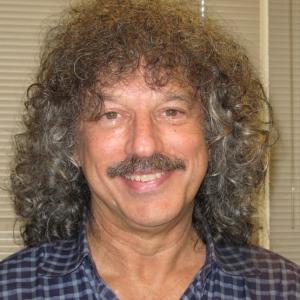
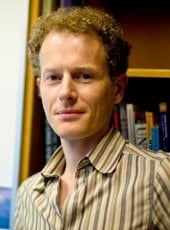
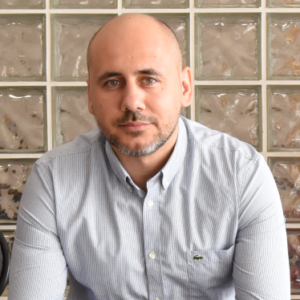
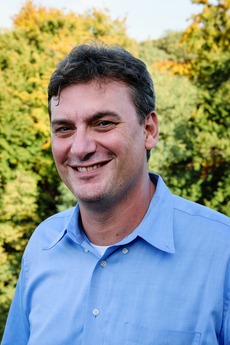
Kai-Yu Wang is a Professor of Marketing at the Goodman School of Business, Brock University. His research spans a wide range of topics in marketing, consumer behavior, and digital technologies, with a particular focus on service recovery, augmented reality, social media marketing, and brand management. Research Interests: Consumer behavior in digital environments Service recovery strategies in social media and chatbot contexts Augmented reality applications in marketing and consumer engagement Brand value co-creation and community building Cross-cultural consumer psychology His recent work delves into the nuances of consumer interactions with emerging technologies like chatbots and AR, examining how these tools influence customer relationships and decision-making processes. Contact Information: Email: kwang@brocku.ca Phone: 905 688 5550 x5597
Peg Rawes is Professor of Architecture and Philosophy at University College London's Bartlett School of Architecture , where she directs research and leads the MA Architectural History program. Her work bridges architectural theory with philosophy, focusing on relational architectural ecologies through three intersecting areas: human/nonhuman life practices, planetary poetics, and housing ecologies. Director of Research, UCL Bartlett School of Architecture (2023-present) REF2029 Lead for Bartlett School EDICPI for EU TACK project (2020) BAUHOW5 PI for European architecture schools partnership (2016-20) Research explores biophilic design , decolonial architecture , and feminist spatial practices across three streams: Architectural ecologies : Human/nonhuman relations in 'Bioprotopia' (2023), vulnerability visualization (2021) Planetary poetics : Climate emergency dialogues (2021), Irigarayan aesthetics (2020) Housing biopolitics : Care frameworks (2017), Spinozist ethical ratios (2015) Key funded collaborations include EU TACK's Communities of Tacit Knowledge (2020) and AHRC's Equal by Design (2016). She contributes to architectural peer review for journals and international research councils while maintaining global partnerships with institutions like Cornell , ETH Zurich , and University of Minnesota .
Robert W. Levenson is a Professor of Psychology at the University of California, Berkeley, and Professor of the Graduate School. He directs the Berkeley Psychophysiology Laboratory and the Institute of Personality and Social Research. His work focuses on emotion, psychophysiology, and affective neuroscience, particularly in aging and neurodegenerative disorders. He has held roles such as Director of the Clinical Training Program and the Bay Area Predoctoral Training Consortium in Affective Science. Levenson earned a Ph.D. in Clinical Psychology from Vanderbilt University. His research examines emotional processes in marital interaction, cultural influences on emotion, and neural correlates of emotion in disorders like Alzheimer's and frontotemporal dementia. Key projects include longitudinal studies on marital dynamics and age-related emotional changes, supported by NIH grants. His research interests span psychophysiological measures of emotion, empathy, and emotional control, with notable contributions to understanding autonomic specificity in emotions. He trains students in psychophysiological methods, neuroanatomy, and emotion assessment.
Brett K. Jakubiak is an Associate Professor in the Department of Psychology at Syracuse University, College of Arts and Sciences. His research focuses on relational well-being, affectionate behaviors, and social support dynamics. He holds a Ph.D. from Carnegie Mellon University (2017) and has been recognized with the Laura J. and L. Douglas Meredith Teaching Award (2021). Jakubiak's work bridges theory and scalable interventions to enhance relationship quality and individual thriving across life stages. Research Interests: Impact of affectionate touch on relational satisfaction Role of social support in stress regulation Attachment theory applications in close relationships Psychological well-being through interpersonal interactions Recent Work Highlights: Explores human-AI relationship dynamics (2024), examines self-disclosure patterns tied to attachment avoidance (2024), and investigates touch's role in shared positive experiences (2023). His NSF-funded research examines affectionate touch in diabetic couples (2022–2027). Service Contributions: Serves on editorial boards for Journal of Social and Personal Relationships and Personality and Social Psychology Review . Active in department governance including tenure committees, diversity initiatives, and strategic planning.
Eunjung Lee serves as Assistant Professor of Business Analytics in the College of Business at Lewis University, bringing extensive industry experience from Samsung and LG alongside prior academic roles at Indiana State University. Her expertise bridges business analytics and educational technology with a pronounced focus on equity-driven research. Her educational foundation includes: Ph.D. in Information Technology Management, University of Wisconsin-Milwaukee M.B.A., Korea University B.S., Kwangwoon University Dr. Lee's research trajectory evolved from business analytics toward educational equity, with recent work emphasizing computational thinking in mathematics education, teacher preparation models, and machine learning applications for gifted identification. She investigates how digital tools transform pedagogy while addressing systemic barriers for underrepresented students. Analysis of her 2022-2025 publications reveals dominant themes in equitable gifted identification through cross-cultural validation of the HOPE rating scale, computational thinking integration in teacher training, and longitudinal studies of enrichment program impacts. Her methodology consistently combines quantitative analysis with equity-centered frameworks. No scientific awards were documented in available sources. While specific advising details remain unreported, her courses in Business Intelligence and Forecasting demonstrate applied analytics instruction. Research grants weren't specified in source materials. Collaborative structures like the Lowell Stahl Center for Entrepreneurship provide institutional context, though dedicated labs or research teams weren't explicitly referenced.
Jianhua Zhang is a Professor of Computer Science and founding deputy head of the AI Lab at the Department of Computer Science, OsloMet - Oslo Metropolitan University, Norway. He holds affiliations with the Faculty of Technology, Art and Design. His career includes roles as Scientific Director at Vekia (France), Head of Machine Learning Lab, and Professorships at East China University of Science and Technology and Beijing University of Technology. He has held visiting positions at TU Berlin, TU Dresden, and the University of Catania. Educations: PhD in Electrical Engineering and Information Sciences (Ruhr University Bochum, 2005), Postdoctoral Research at the University of Sheffield (2005-2006). Research focuses on artificial intelligence, computational intelligence, cognitive human-machine systems, neuroergonomics, affective computing, and AI-driven neuroergonomics. Applications span engineering, biomedicine, finance, and business. He has led over 20 large-scale projects and published extensively (4 books, 13 chapters, ~200 papers). Leadership roles include Chair of IFAC Technical Committee on Human-Machine Systems (2017-2023), Vice Chair of IEEE Norway Section, and editorial roles at journals like Frontiers in Neuroscience and Cognitive Neurodynamics . He organized major conferences like IFAC HMS2025 (Beijing) and ICMLT 2024 (Oslo). Awards: Stanford/Elsevier Top 2% Scientists (2023/2024), Senior Research Fellowship (CSC, 2012), Max Planck Fellowship (2011), Shanghai Pujiang Talent (2007), DAAD Scholarship (2002-2004). Grants and advising: PI for 20+ projects, advising PhD students in AI, machine learning, and control systems. Teaching includes courses on computational intelligence, IoT, and fuzzy systems at both undergraduate and graduate levels. Labs/Teams: AI Lab at OsloMet, Machine Learning Lab (Vekia), and collaborations with institutions globally. Current work emphasizes AI ethics, neuroergonomics in smart cities, and adaptive human-machine systems.
Michael Obal is an Associate Professor of Marketing, Entrepreneurship, and Innovation at the Manning School of Business, University of Massachusetts Lowell. He holds a PhD from Temple University and teaches courses on marketing strategy, digital marketing, and innovation. His research focuses on disruptive technologies, new product development (NPD), and the diffusion of innovations. He has published extensively in journals like Journal of Business Ethics , Research-Technology Management , and Journal of Business Research . Obal has received numerous awards, including the 2024 UML Researchers and Scholars Investment and the 2023 AMA Promising Research Award. Obal’s career spans academia and industry, transitioning from sales at the Boston Beer Company to digital marketing at iProspect before pursuing his PhD. He emphasizes the importance of adaptability in career paths and encourages students to build skills in emerging technologies. His research explores topics like remote work’s impact on business relationships, customer participation in NPD, and sustainability integration in innovation processes. He is an associate editor for Journal of Business-to-Business Marketing and serves on editorial boards for Industrial Marketing Management and Journal of Business Research . Obal’s work also addresses challenges posed by technological disruption and global market dynamics. His recent studies analyze how remote work affects customer engagement and how firms navigate turbulent technological environments. He collaborates internationally through initiatives like the Global Entrepreneurship Exchange (GE2), fostering innovation ecosystems and cross-cultural entrepreneurship education.
Jordan Etkin is an Associate Professor of Marketing at Duke University’s Fuqua School of Business, specializing in studies of goal pursuit, motivation, and time management. She explores how goal structures, variety in activities, and personal quantification impact behavior and well-being. Her research bridges consumer behavior, psychology, and decision science, with frequent publications in top-tier journals like the Journal of Consumer Research and Journal of Marketing Research. Education: PhD (Year not specified, but teaches since 2013) Her research interests focus on the interplay between goals and personal resources (e.g., time), including unintended consequences of tracking behaviors like step-counting. Key themes include motivation dynamics, goal conflict resolution, and temporal resource allocation. She frequently engages with popular media, appearing in outlets like the New York Times and BBC. Recent work (2020–2024) highlights topics such as time limits paradoxically increasing consumption, variety’s role in goal conflict, and machine learning’s applications in behavioral research. Her 2019 JCR Award underscores scholarly impact. Awards: 2019 JCR Awards Announcements (Recipient) Teaching responsibilities include the Marketing Core class for Fuqua’s MBA program. While no lab teams are explicitly mentioned, her research themes suggest collaborative work in behavioral science and consumer studies.
Simon Carn is a Professor in the Department of Geological and Mining Engineering and Sciences at Michigan Technological University, specializing in satellite-based monitoring of volcanic degassing and atmospheric pollution. His work leverages NASA satellite constellations to quantify sulfur dioxide emissions and their climate impacts. Education: PhD in Volcanology from Cambridge University MS in Volcanology and Magmatic Processes from Université Blaise Pascal BA in Earth Sciences from Oxford University Research Focus: Carn pioneers the use of space-borne sensors like OMI and TEMPO to measure volcanic SO 2 , ozone, and other trace gases. His research bridges satellite observations with climate modeling to understand sulfate aerosol formation, volcanic cloud transport, and anthropogenic pollution sources. Key methodologies include DOAS/FTIR remote sensing, satellite-ground data validation, and aviation hazard mitigation systems. Publication Trends: Recent work (2023-2025) centers on high-cadence monitoring via geostationary satellites (TEMPO, DSCOVR/EPIC), analysis of major eruptions (Hunga Tonga, Raikoke), and extending 20+ years of global SO 2 records. Research emphasizes volcanic-climate interactions, eruption response protocols, and quantifying underreported passive degassing that affects climate models.
Dr. Jing Wang is a Professor in the Department of Bioinformatics at Southern Medical University's School of Medicine, with extensive research at the intersection of artificial intelligence and biomedical applications. Her work demonstrates strong cross-disciplinary collaboration across medical institutions, engineering departments, and computer science research groups. Her primary research interests include Artificial Intelligence in Healthcare , Biomedical Engineering , and Traditional Chinese Medicine Informatics , with recent publications showing particular expertise in medical imaging analysis, diagnostic assistance systems, and clinical decision support. Her work spans both theoretical algorithm development and practical clinical implementations. Analysis of her 15 most recent publications (2025-2026) reveals a strong trend toward clinically applicable AI systems, with approximately 60% of publications focused on medical diagnostics and treatment support systems. The remaining publications demonstrate expertise in industrial applications of computer vision and fundamental AI research. Her work shows consistent collaboration with both domestic Chinese institutions and international research groups. Notable scientific contributions include: Development of 'Tianyi', a traditional Chinese medicine language model for clinical practice Innovations in bionic soft robotics for rehabilitation assistance Novel approaches to medical image analysis for cancer diagnostics Her research program appears well-funded with consistent publication output across high-impact journals in biomedical engineering, AI, and medical informatics. Current work suggests strong emphasis on translating AI research into clinical practice, particularly in diagnostic support systems and rehabilitation technology.
Professor Ashish Sharma is a Professor of Hydrology and Water Resources in the School of Civil and Environmental Engineering at the University of New South Wales, Sydney, Australia. With a PhD in Civil Engineering from Utah State University and extensive experience in hydrological research, he has established himself as a leading expert in his field. Dr. Sharma's research focuses on hydrological uncertainty, with particular emphasis on the impact of climate change and variability on hydrological practice. His work spans multiple areas including remote sensing applications, stochastic hydrological modeling approaches, development of hydrological models, and addressing key hydrology challenges such as design flood estimation and water resources management. He has made significant contributions to understanding how climate change affects hydrological extremes and water availability. His publications reveal a strong trend toward advanced modeling techniques for climate change impact assessment, with recent work focusing on spectral transformation methods, multivariate bias correction in climate models, flood forecasting improvements, and the relationship between temperature and precipitation extremes. His research increasingly integrates remote sensing data with hydrological modeling to address challenges in data-scarce regions. Professor Sharma has held significant leadership positions including President of the International Commission of Hydrologic Sciences (IAHS) Commission on Statistical Hydrology (STAHY) since 2016, service on the Australian Research Council's College of Experts twice, and participation on the Technical Committee for the Australian Rainfall and Runoff Design Flood Estimation guidelines (ARR2016). In addition to his research leadership, Professor Sharma actively mentors students and collaborates with researchers globally, as evidenced by his extensive publication record across top hydrology and climate journals. His work bridges theoretical hydrology with practical applications for water resources management under changing climate conditions.
Professor Michael W. Shaw is a distinguished academic at the University of Reading's School of Agriculture, Policy and Development, Department of Plant Sciences, with a research career spanning over two decades. His expertise lies at the intersection of plant pathology, disease epidemiology, and sustainable disease management strategies. Shaw's research interests encompass plant-pathogen interactions , particularly focusing on fungal diseases affecting major crops. His work investigates the epidemiology of plant diseases , fungicide resistance mechanisms , biological control strategies , and asymptomatic pathogen infections . He has made significant contributions to understanding pathogen evolution, host specificity, and the environmental factors influencing disease development. His recent publications demonstrate a consistent research trajectory examining the molecular, ecological, and epidemiological aspects of plant diseases. Shaw's work spans multiple pathosystems including Botrytis cinerea (gray mold), Venturia inaequalis (apple scab), begomoviruses affecting okra, and banana Xanthomonas wilt. His research integrates molecular techniques, field studies, and mathematical modeling to address complex plant health challenges. Professor Shaw has contributed significantly to the understanding of fungicide resistance development, particularly in cereal pathogens, and has explored innovative approaches to disease management through biological control agents and integrated strategies. His work on asymptomatic infections has revealed novel insights into host-pathogen relationships that extend beyond traditional disease paradigms. His collaborative research network spans internationally, with co-authors from multiple countries, reflecting the global relevance of his work in plant health and food security. Shaw's research has practical applications for sustainable agriculture and crop protection strategies worldwide.
Professor Ioannis Katakis is a Faculty Member at the University of Nicosia, where he is affiliated with the School of Sciences and Engineering and the Department of Computer Science. He has held various academic positions across multiple institutions including Aristotle University of Thessaloniki, University of Cyprus, Cyprus University of Technology, Open University of Cyprus, Hellenic Open University, Athens University of Economics and Business, and National and Kapodistrian University of Athens. His educational background includes a PhD in Machine Learning for Automated Text Classification (2005-2009), a Master's in Information Systems (2005-2007), and a Bachelor's in Computer Science (2000-2004), all from Aristotle University of Thessaloniki. Professor Katakis specializes in several cutting-edge areas of computer science and data analysis. His primary research interests include Mining Social, Web and Urban Data , Sentiment Analysis and Opinion Mining , Data Streams , and Multi-label Learning . His work bridges theoretical machine learning approaches with practical applications in social media analysis, healthcare informatics, privacy protection, and smart city technologies. He has published extensively in top venues including CIKM, ECML/PKDD, IEEE TKDE, and ECAI. His recent publications demonstrate a clear trend toward applying machine learning techniques to real-world problems with societal impact. He has focused on areas such as GDPR compliance in smart devices, sentiment analysis in crowd-sourced content, healthcare applications including drug reaction classification and brain disease monitoring, and privacy protection in wearable technologies. His work often involves multi-modal data analysis and addresses challenges in data streams and multi-label classification. Professor Katakis has made significant contributions to his field, with his research cited over 4,200 times. He serves as an Editor for the journal Information Systems and has edited four special issues in journals such as DAMI and InfSys. He regularly contributes to the academic community by serving on program committees for major conferences including ECML/PKDD, WSDM, DEBS, and IJCAI, and by reviewing for prestigious journals like TPAMI, DMKD, TKDE, TKDD, JMLR, TWEB, and ML. He has been actively involved in European research projects, notably serving as Quality Assurance Coordinator and Senior Researcher for projects such as VAVEL (www.vavel-project.eu) and INSIGHT (www.insight-ict.eu). His grant activities demonstrate a strong focus on collaborative, interdisciplinary research with practical applications in urban data management, social media analysis, and healthcare informatics. He has organized three workshops at major conferences (ICML, ECML/PKDD, EDBT/ICDT) and has extensive experience translating research into practical applications through his involvement in European projects.
Professor Joaquim Pinto is a leading climate scientist at the Karlsruhe Institute of Technology (KIT), where he serves as Head of the Working Group "Regional Climate and Weather Hazards" and as Spokesperson of the collegial institute management team. He holds the prestigious AXA Research Fund Chair position at the Institute of Meteorology and Climate Research - Troposphere Research (IMK-TRO). His academic background includes a Licenciate in Geophysical Sciences - Meteorology from the University of Lisbon (1990-1996), PhD studies at the University of Cologne (1998-2002), and academic positions at the University of Cologne (2002-2016) and University of Reading (2013-2016) before joining KIT in 2016. He became a Privatdozent (lecturer) at the University of Cologne in 2011 and earned his habilitation with research on extreme European wind storms. Professor Pinto's research focuses on mid-latitude meteorology and climatology, with special emphasis on extreme weather events , climate variability in Europe across multiple time scales, regional climate modeling and downscaling methods , and the diagnostic modeling and quantification of risks associated with extreme events affecting Europe. His work bridges fundamental climate science with practical applications for risk assessment and management. His extensive publication record demonstrates expertise in analyzing European windstorms, heatwaves, and compound extreme events. Recent work examines the impacts of climate change on wind energy potential, extreme precipitation events, and the complex interactions between atmospheric circulation patterns and regional climate extremes. His research often employs high-resolution climate modeling, statistical-dynamical downscaling approaches, and interdisciplinary collaborations to address pressing climate challenges. AXA Research Fund Chair in Regional Climate and Weather Hazards Professor Pinto teaches graduate and undergraduate courses including "Climate Modelling and Dynamics with ICON," "IPCC Assessment Report," "Climatology," "Energy Meteorology," "Methods of Data Analysis," and "Regional Climate and Weather Hazards." His teaching reflects his research expertise in climate modeling, extreme events, and regional climate change impacts.
Christina Nikitopoulos Sklibosios is an Associate Professor in the Finance Discipline Group at the University of Technology Sydney (UTS) Business School. She specializes in energy finance, renewable energy economics, sustainable finance, and commodity markets. Her research focuses on analyzing price dynamics and volatility in energy markets, particularly addressing challenges posed by renewable energy integration, green bond markets, and climate transition risks. She has held leadership roles including Finance PhD Program Coordinator (2015–2023) and currently serves on the UTS Business School's Faculty Board and HDR Director (acting). Education: Doctoral and academic background in finance and energy economics (details not explicitly provided in texts). Her research projects include modeling electricity prices in Australia’s National Electricity Market (NEM), assessing renewable energy impacts on grid stability, and evaluating green bond premiums. Key grants include ARC grants on energy market volatility and climate risk (2010–2017), and recent awards such as the UTS Strategic Research Accelerator grant (2024–2025) for net-zero decision-making tools. Research interests span energy economics, sustainable finance mechanisms, and commodity market dynamics. She collaborates with international organizations like CEMA, IAEE, and AFFECT, and contributes to policy discussions on energy transition and financial market reforms.