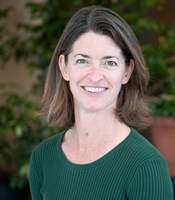
Anne Gallagher Ernst serves as Senior Lecturer and Program Coordinator for the Environmental Studies and Sciences department at Skidmore College, with office location CIS 210H and contact email agallagh@skidmore.edu. Her academic background includes an M.S. in Natural Resources from Cornell University (2001; thesis: Disturbance effects on small headwater streams in upstate NY ) and a B.S. in Biology from Duke University (1993). Dr. Ernst's research centers on stream restoration ecology in the Catskill Mountains, examining geomorphological impacts on aquatic ecosystems. Her work investigates fish population dynamics, macroinvertebrate communities, and habitat quality following natural-channel-design interventions. She teaches foundational courses including ES 100 ( Environmental Concerns in Perspective ), ES 105 ( Field Studies in Environmental Science ), and ES 227 ( Plastic Planet: The Promise and Perils of Polymers ), connecting classroom theory to real-world environmental challenges. Analysis of her 2008-2012 publications reveals consistent focus on Catskill Mountain stream restoration projects, demonstrating how engineered interventions affect ecological indicators. Her work shows complex responses where geomorphological changes don't always translate to expected biological improvements, particularly in macroinvertebrate communities and fish assemblages.
Claudia Bernhard-Oettel is a Professor and Deputy Head of Department at the Department of Psychology, Stockholm University , with a focus on work and organizational psychology . Her career spans roles at institutions like the Swedish Institute for Working Life, Södertörn University College, and Karolinska Institutet, where she coordinated interdisciplinary initiatives in the Stockholm Stress Center. She serves on editorial boards and grant review committees, including the Research Council for Health, Working Life and Welfare (FORTE) and the Academy of Finland. Education: Diplom in Psychology (equivalent to Master's) from TU Dresden (2001); PhD in Psychology from Stockholm University (2008). Her research examines changing labor markets , emphasizing temporary employment , self-employment , and gig work . Key areas include organizational justice , effort-reward imbalance , and career sustainability . She investigates how job insecurity and psychological contracts affect health, well-being, and career transitions. Recent articles highlight trends in temporary agency work narratives , illegitimate tasks , and self-employment health trajectories . Her workgroup-level analyses of leadership and task design offer practical insights into mitigating stress and turnover in the public sector. Scientific Contributions: Editorial leadership in the Scandinavian Journal of Work and Organizational Psychology (2019–2024). Coordination of the Stockholm Stress Center Graduate School (2017–2018). Membership in grant review committees for FORTE and the Academy of Finland. Advising: Supervised doctoral students in alternative employment forms , organizational justice , and workplace lock-in . Current supervisees include Louise Bergman (2025 defense) and Clara Plückelmann.
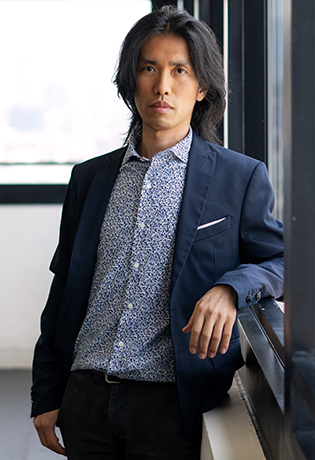
Ryo Ikeshiro is an Assistant Professor at the School of Creative Media, City University of Hong Kong, and co-director of the spatial audio art/research unit SoundLab. His work bridges sound art, computational creativity, and cultural studies through immersive installations, algorithmic audio-visual systems, and sonification techniques. PhD in Creative Practice (Goldsmiths, University of London) MPhil in Music (University of Cambridge) BMus (King's College London) Ikeshiro's research interrogates the materiality of sound through: Multichannel Ambisonics and directional audio Neural network-driven temporal dislocation Sonification of climate data and historical soundscapes Machine learning for artistic interpretation Interplay of identity and technology East Asian ideophonic traditions His 2010-2024 publications and installations reveal cross-disciplinary engagement with: Fractal mathematics in audiovisual art Algorithmic composition systems Interactive installation technologies Sonic cartography Historical memory in sound Collaborative research frameworks SoundLab, which he co-directs, develops spatial audio research at the intersection of: Technical innovation Cultural representation Experimental pedagogy Public engagement International artistic exchange Practice-based research
Victoria Mills is a Senior Lecturer in Victorian Literature and Culture at Birkbeck, University of London, within the School of Creative Arts, Culture and Communication. She serves as Co-Director of the Birkbeck Centre for Nineteenth-Century Studies and Programme Director for the MA in Victorian Studies. Previously, she held a Research Fellowship at Darwin College, Cambridge and a Teaching Fellowship in Nineteenth-Century Literature at King's College, London, following a career in the museum sector at institutions including the Victoria and Albert Museum and The Museum of the Home. Her educational background includes: PhD, University of London MA Victorian Studies, University of London MA Museum Studies, University of Leicester BA (Joint Hons.) Ancient and Modern History, University of Oxford Dr. Mills' research spans the intersection of literature, visual and material cultures, with particular focus on museums, collecting practices, the history of the book, gender and sexuality (especially Victorian masculinities), nineteenth-century classical reception, and the Arts and Crafts Movement. Her work often examines how material objects function within literary texts and how literature engages with visual culture. She has published extensively on nineteenth-century writers including George Eliot, Oscar Wilde, Henry James, and Charles Kingsley, exploring themes of collecting, gender, and visual representation. Her recent publications reveal a consistent focus on material culture approaches to Victorian literature, with increasing attention to gender studies and museum practices. The trajectory of her work shows movement from analyzing specific literary texts to broader cultural studies of collecting practices, museum spaces, and the material conditions of reading and writing in the nineteenth century. Her research demonstrates interdisciplinary engagement with art history, museum studies, gender theory, and book history. Her scientific recognition includes: British Academy Small Research Grant (2024-2026) for 'Art, Labour and Devotion: Uncovering the Victorian Art-Workman' Co-curator of 'Victorian Sentimentality' at Tate Britain (2011) Researcher for 'The Fallen Woman' exhibition at the Foundling Museum (2015) Dr. Mills actively supervises doctoral research and teaches across the BA in English literature and MA in Victorian Studies. Her supervision focuses on nineteenth-century literature and culture related to her research interests, with current doctoral work examining topics like 'Fashioning Victorian Femininity in UK Museums.' She has received research funding including a British Academy Small Grant (2024-2026) for her project on the Victorian art-workman and has co-organized international workshops including 'Mediating History's Materiality' and 'Books in and out of time.' Her grant activity demonstrates strong external funding success and international collaboration. She is actively involved with research centers including the Centre for Nineteenth-Century Studies and the Centre for Museum Cultures, and serves on the steering committees of these institutes. Her professional engagement extends to committee membership with the British Association for Victorian Studies and fellowship in the Higher Education Academy.
Dr. Mellinee Lesley is a Professor in the Language, Diversity & Literacy Studies program at Texas Tech University's College of Education. She serves as Associate Vice Provost for Outreach and Engagement, leading the Community Engaged Learning initiative. Previously, she worked as a high school English teacher and directed a developmental reading program. Ph.D. in Language in Education, Reading/Writing/Literacy from University of Pennsylvania M.A. in English, Rhetoric and Teaching of Composition from New Mexico State University B.A. in English from University of Iowa Her research focuses on critical literacy , disciplinary writing , and equity in education , particularly for marginalized student populations. She explores intersections of media literacies , gender identity , and literacy reform in K-12 settings. Recent publications highlight trends in adolescent writing pedagogy , critical media frameworks , and community-engaged scholarship . Her work bridges high-stakes testing contexts with student-centered literacy approaches . Community Engagement Scholarship Award for Exemplary Projects (APLU/W.K. Kellogg Foundation) Fellow of the National Writing Project Dr. Lesley mentors graduate students in engaged scholarship and examines the democratization of knowledge through collaborative research methodologies . She co-founded the Llano Estacado Writers' Alliance to support equitable literacy practices.
Dr. Irene Fubara-Manuel is an Associate Professor in Digital Media Practice at the University of Sussex's School of Media, Arts and Humanities. Their work bridges media art, animation, game design, and critical theory, focusing on race, migration, surveillance, and queer futurities. They hold a PhD from Sussex (2016-2019) and a PgCert in Higher Education (2020-2022). Their research interrogates biometric surveillance systems, digital colonialism, and intersectional feminist praxis in technology. Key research areas include: Algorithmic governance of migration Data colonialism and global south perspectives Feminist digital infrastructures Queer media representation Intersectional methodologies in digital humanities Recent projects include the AHRC-funded Full Stack Feminism initiative (2021-2024), exploring anti-racist feminist tech ecosystems. Their creative practice spans installations addressing border control algorithms and queer digital futurisms. Notable works include the Full Stack Feminism Archive and Manifestations exhibition. Awards include the JUST AI Fellowship (2020). Teaching focuses on critical media production and digital culture. Their publications span peer-reviewed journals, edited collections, and creative-critical exhibitions, demonstrating a commitment to interdisciplinary praxis.
Yee Man (Margaret) Ng is an Associate Professor in Journalism and the Institute of Communications Research at the University of Illinois. She combines data science methodologies with communication research to study social media dynamics, digital journalism, and technology adoption patterns. Her research interests include: Computational social science Social media analytics Data visualization techniques Communication technology impacts Journalism innovation Post-adoption technology behavior Ng's methodology integrates big data analysis, machine learning algorithms, and traditional survey/experimental approaches. Current work extends diffusion of innovations theory by examining social media users' discontinuance and readoption behaviors. Academic contributions span both empirical research and educational practice. She has taught courses like: JOUR 460 - Data Storytelling JOUR 410 - Data Storytelling for Journalism JOUR 425 - Multimedia Editing and Design JOUR 199 - Hands-on Media Technology Her publications analyze topics ranging from YouTube's recommendation algorithms to digital sustainability in news media, with particular focus on: Platform migration patterns Algorithmic content moderation Political communication dynamics Media technology adoption Regional web usage differences Incivility measurement techniques
Hilde Moseby Berge is an Associate Professor in the Department of General Practice at the University of Oslo. Her research focuses on cardiovascular health in athletes, injury and illness prevention in elite sports, and the psychological and social impacts of cardiac arrest survival among young exercisers. She has collaborated extensively with institutions like the Norwegian Olympic and Paralympic committees, contributing to longitudinal health monitoring programs for athletes. Her work includes evaluating automated external defibrillator (AED) availability in sports clubs and analyzing post-surgical outcomes for musculoskeletal injuries. Berge is also affiliated with the Clinical General Practice Research (Allmix) and General Practice Health Services Research (ALHF) groups, emphasizing her commitment to practical healthcare solutions. Key research themes include: 1) Cardiac events in sports contexts, 2) Health disparities affecting Paralympic athletes, and 3) Long-term health surveillance for Olympic/Paralympic participants. Her studies often use systematic reviews and multi-year cohort analyses, with findings published in journals like British Journal of Sports Medicine and Resuscitation . Berge’s contributions to healthcare systems include designing prevention protocols for sudden cardiac arrest and investigating bone density issues in elite Para athletes. She has co-authored over 15 peer-reviewed articles since 2014, addressing topics such as ECG interpretation in athletes, post-cardiac arrest quality of life, and the epidemiology of sports-related injuries. Her work bridges clinical research and real-world healthcare applications, particularly in sports medicine and emergency preparedness.
Raymond H. Cuijpers is an Associate Professor at Eindhoven University of Technology in the Human Technology Interaction group. His research focuses on Cognitive Robotics , Human-Robot Interaction , and Artificial Intelligence for cognitive agents, with applications in healthcare robotics and aging population support. PhD in Physics of Man from Utrecht University (2000) Postdoctoral research at Erasmus MC Rotterdam and Radboud University Nijmegen Key research areas include: Developing socially intelligent robots with proper social cue interpretation Hybrid AI approaches for real-world complexity handling Visual-haptic perception integration in human motor control Service robots for COPD patient assistance (KSERA project) Rescue robotics and tele-operation applications Recent research output (2025) includes studies on: Personalization in human-robot communication Optimal lighting for elderly visual perception Human-robot bonding mechanisms Interactive sensorized platforms for homecare (GUARDIAN) Audiovisual temporal integration in virtual environments He coordinates large-scale European projects like GUARDIAN and previously KSERA, contributes to sustainable development goals through healthcare robotics, and serves on editorial boards of leading journals including International Journal of Social Robotics . His work spans both technical robotics development and human-centric interaction studies.
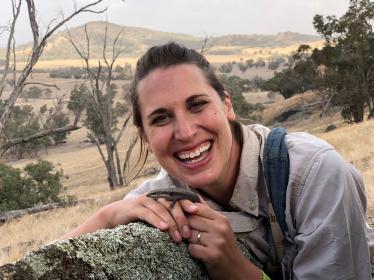
Dr. Julia Riley is an Assistant Professor in the Department of Biology at Mount Allison University. Her research focuses on amphibian and reptile behavior, evolution, and ecology, with a strong emphasis on conservation. She leads the Riley Integrative Ecology Lab, which investigates topics such as social behavior in lizards, developmental plasticity in reptiles, and the impacts of urbanization on species adaptation. Dr. Riley collaborates with institutions across Canada and globally, including Dalhousie University and the New Brunswick Museum. Her work integrates behavioral ecology, evolutionary biology, and conservation science, addressing questions like how environmental factors shape animal traits and how urbanization affects ecological interactions. She actively promotes conservation strategies, such as evaluating protective measures for turtle nests and mitigating road mortality for amphibians and reptiles. Research Themes: Amphibian/Reptile Conservation, Behavioral Ecology, Urban Ecology, Evolutionary Adaptation Key Collaborations: Dr. Joshua Baxter-Gilbert, Dr. Mike Whiting, Dr. Liese Schwanz Funding Partners: NSERC, New Brunswick Innovation Fund, Nature Conservancy of Canada Dr. Riley’s lab emphasizes interdisciplinary approaches, combining fieldwork with quantitative analysis. She mentors students in MSc/PhD programs through her adjunct appointments and prioritizes training in grant writing, field techniques, and ethical research practices.
Dr. Ke Chen is a Senior Lecturer in the School of Computer Science at The University of Manchester, leading the Machine Learning and Perception (MLP@UoM) Lab. His research focuses on machine learning, deep learning, reinforcement learning, and their applications in intelligent systems, computer vision, and audio/speech processing. He has supervised over 50 PhD students and holds editorial roles in journals like Neural Networks and IEEE Transactions on Neural Networks . Dr. Chen has received awards such as the NSFC Distinguished Principal Young Investigator Award (2001) and JSPS Research Award (1993). Education: PhD in Computer Science (1990), with academic positions at institutions including Peking University, The Ohio State University, and Kyushu Institute of Technology. His professional activities include roles in IEEE Computational Intelligence Society committees and external examiner roles at universities like Essex. Research interests span computational cognitive systems, biometric authentication, and video game AI. Key contributions include advancements in deep architectures, reinforcement learning, and speaker-specific feature extraction. His lab, MLP@UoM, explores topics like explainable AI and transfer learning. Recent publications (2024) include work on goal-conditioned reinforcement learning and bias-resilient algorithms. He is actively involved in international conferences, serving as a keynote speaker and program committee member.
Greg Cutter is a Professor in the Department of Ocean and Earth Sciences at Old Dominion University, serving as Interim AVP for Research Compliance. His research focuses on biogeochemical processes linking biology and chemistry in aquatic systems, with expertise in trace element cycling, sulfur gas dynamics, and global change impacts. He holds a Ph.D. in Chemistry from the University of California, Santa Cruz (1982) and a B.A. in Chemistry from UC San Diego (1977). Education: Ph.D. Chemistry, University of California, Santa Cruz (1982) B.A. Chemistry, University of California, San Diego (1977) Research Interests: Dr. Cutter investigates processes affecting trace element speciation (e.g., arsenic, selenium, hydrogen sulfide) in marine and estuarine systems. Key areas include air-sea exchange of trace elements, paleoceanographic tracers, and analytical methodologies for aquatic chemistry. His work integrates field studies, lab experiments, and computer modeling. Grants & Awards: Recipient of the R&D 100 Award (2013) for innovative technologies and the ASLO Sustaining Fellow designation (2015). Over 50 grants include leadership in the international GEOTRACES program, studying trace element distributions in ocean basins. Labs & Collaborations: Directs the Cutter Laboratory, advancing research on biogeochemical cycles. Collaborates globally on projects like the Pacific Meridional Transect (GP15) and Arctic GEOTRACES studies. Engages in educational initiatives to diversify ocean science.
Iti Chaturvedi is a Lecturer in the Department of Information Technology at James Cook University (JCU). She holds a Ph.D. in Computer Engineering from Nanyang Technological University, Singapore. Her research focuses on signal processing and AI applications in social media, including emotion recognition, speech analysis, and sentiment analysis. She has been recognized as a Top 2% Most Cited Researcher globally (2022) and received the JCU CSE Early Career Researcher Award (2020). She teaches courses such as Machine Learning and Data Science, Programming III, and Design Thinking I. Current research projects include sentiment prediction from social media (since 2020). She serves as an Associate Editor for the Expert Systems journal (2023) and has been an ARC Assessor (2020). Key contributions include work on speech emotion recognition, constrained manifold learning for videos, and multimodal emotion recognition systems. Her research outputs span journals like Expert Systems , Signal Processing , and conferences including IJCNN and AAAI.
Pedro Ferreira is a Professor at Iscte Business School, ISCTE - IUL, Lisbon, Portugal. His academic work spans multiple disciplines including business model innovation, cultural management, digital display systems, and consumer behavior. Key research areas: Business Model Innovation, Cultural Management, Digital Display Systems Interdisciplinary work: Healthcare Management, Energy Efficiency, Sensory Marketing Notable collaborations: Rock in Rio, Ferreira's de Castro Cultural Complex His publications demonstrate ecosystem-based approaches to cultural economics, with applications in virtual reality exhibitions and sustainable business practices. Recent work focuses on technology integration in perfume exhibitions and energy efficiency strategies. Earlier research includes pharmacological studies on P2X7 receptors in colitis and foundational financial accounting textbooks. He has analyzed group buying systems in Portugal and explored intersections between management theory and art. Academic contributions span 45 years, with a 2024 patent on digital display systems and a 1979 report on tomato industry economics. Current affiliations include: Iscte Business School ExecED at ISCTE INDEG-ISCTE Edifício INDEG-ISCTE, Lisbon
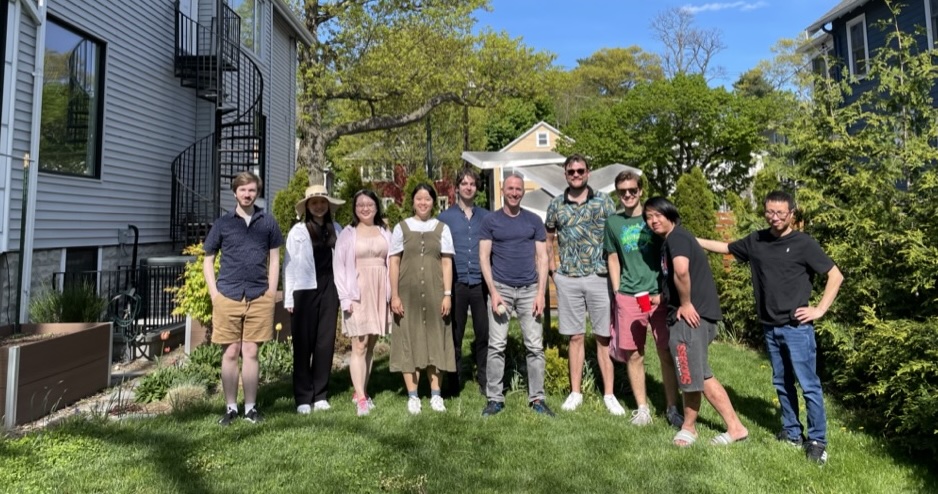
Jacob Whitehill is an Associate Professor in the Department of Computer Science at Worcester Polytechnic Institute (WPI), affiliated with the Learning Science & Technologies (LST) program. His research focuses on applying machine learning to education and human-computer interaction, including speech recognition, emotion analysis, and automated classroom observation. He leads the NSF-funded project Developing New Scientific Instruments for Classroom Observation and collaborates on the AI Institute for Student-AI Teaming (iSAT) . His research interests span Applied Machine Learning (e.g., multi-modal systems, speaker diarization), AI for Education (e.g., automated instructional evaluation, child speech recognition), and Emotion Recognition (e.g., affective computing in classrooms). Recent work emphasizes classroom observation tools and improving student-teacher interaction analysis through video and audio data. Notable projects include: NSF-funded classroom observation tools AI Institute for Student-AI Teaming (iSAT) Schmidt Futures-funded Hybrid Human-Agent Tutoring for math education His team includes PhD students Xinlu He (Data Science), Jiani Wang (Computer Science), and Yiwen Guan (Computer Science), along with visiting scholar Cecilia Tivir. He advises students on topics like speaker recognition, educational data mining, and computer vision in classroom settings. Grants and collaborations include NSF, Schmidt Futures, and industry partnerships. His lab develops tools for automated feedback on teaching practices, leveraging LLMs and multimodal data. For more details, contact jrwhitehill@wpi.edu .