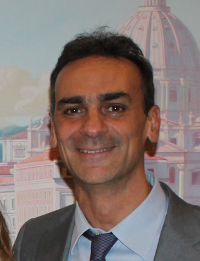
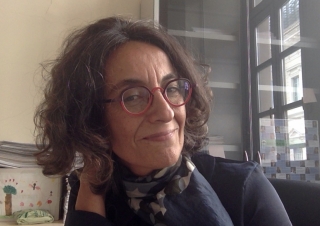
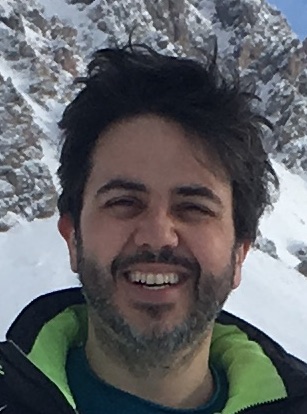
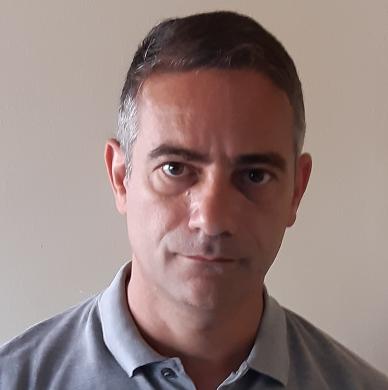
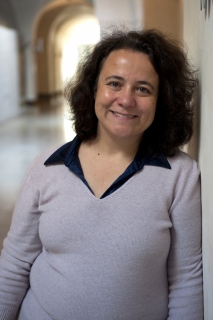
Barbara Caputo is a Full Professor at Politecnico di Torino, leading the VANDAL Laboratory and directing the AI@PoliTo Interdepartmental Lab. She holds a double affiliation with the Italian Institute of Technology (IIT) and has held roles at Idiap-EPFL and Sapienza University. Her research focuses on AI, computer vision, domain adaptation, and federated learning. She contributes to national AI policy, including the Italian Strategy on AI and the National PhD on AI for Industry 4.0. She is an ERC Laureate and ELLIS Fellow, co-founding ELLIS society. Her work spans visual place recognition, action recognition, and cross-domain learning. Education: PhD in Computer Science from KTH Royal Institute of Technology (2005). Major roles include Rector’s Advisor on AI at PoliTo, Board Member of ELLIS, and coordinator of the AI & Industry 4.0 vertical in the National PhD program. Awards include ERC Laureate (2017), ELLIS Fellow (2019), and Inspiring Fifty Italy (2018). Her research emphasizes federated learning, domain adaptation, and AI ethics. Recent articles explore domain generalization, resource-efficient federated models, and AI-environment interactions. She collaborates with institutions like MUR, CNR, and the European Commission on AI policy and tech initiatives.
Luca Iocchi is a Full Professor at Sapienza University of Rome, where he teaches in the Master in Artificial Intelligence and Robotics program. He is affiliated with the Department of Computer, Control, and Management Engineering and the Faculty of Engineering of Information, Computer Science and Statistics. Iocchi serves as an Associate Editor for Artificial Intelligence Journal and has been the scientific coordinator of Spoke of PNRR project FAIR (Future AI Research). His educational background includes: Master in Engineering in Computer Science (Laurea in Ingegneria Informatica) cum Laude, Sapienza Università di Roma, 1995 PhD in Engineering in Computer Science (Dottorato in Ingegneria Informatica), Sapienza Università di Roma, 1999 Professor Iocchi's research focuses on cognitive robotics, task planning, multi-robot coordination, robot perception, robot learning, human-robot interaction, and social robotics. His work has significant applications in security, surveillance, and environmental monitoring. He has published over 200 referred papers with an h-index of 46 (Google Scholar). His research bridges theoretical AI with practical robotic systems operating in real-world environments, with a particular emphasis on developing intelligent systems that can interact effectively with humans. His recent publications show a strong trend toward multi-agent reinforcement learning, trust modeling in human-AI teams, UAV coordination, and planning systems. There's a clear focus on making robotic systems more reliable, efficient, and capable of operating in complex real-world scenarios like healthcare facilities and smart cities. His work increasingly integrates formal planning approaches with machine learning techniques. Professor Iocchi has received numerous scientific awards: 1999 Top Paper Award WebNet'99 2006 Best Paper Award RoboCup 2006 2008 Best Robotics Demo Award AAMAS 2008 2014 Best Paper Award For Engineering Contribution RoboCup 2014 2017 RoboCup@Home SSPL 2017 - 3rd place 2018 Canada-Italy Innovation Award 2019 Best Paper Award For Engineering Contribution RoboCup 2019 As an academic advisor, Iocchi has directed the PhD Program in Engineering in Computer Science from 2020 to 2023. He has been Principal Investigator for numerous research projects including SciRoc (European Robotics League), AI4EU (European AI project), BUBBLES, AIPlan4EU, ROSITA, Trust Your Agents, and FAIR. His research has been supported by EU H2020 programs, national grants, and industry collaborations, demonstrating strong connections between academia and practical applications. Professor Iocchi is actively involved with the Cognitive Cooperating Robots Lab (LabRoCoCo) and is a key member of the RoboCup Federation, having served as Vice-President from 2019 to 2024. He has played a significant role in benchmarking domestic service robots through RoboCup@Home and the European Robotics League Service Robots (ERL-SR), which he helped establish. His leadership in organizing international scientific robot competitions has been instrumental in advancing the field of service robotics.
Marilena Vendittelli is a Professor at Sapienza University of Rome, affiliated with the Robotics group. Her research spans control systems, biomedical robotics, motion planning, and autonomous systems. Research Areas: Control systems for robotics and nonholonomic systems Biomedical applications (hyperthermia therapy, needle insertion) UAV navigation and obstacle avoidance Haptics and human-robot interaction Adaptive estimation algorithms Recent Publications focus on adaptive control of bio-heat equations, safe UAV motion planning, soft robotics actuation, and haptic feedback in medical procedures.
Riccardo Muradore is an Associate Professor at the University of Verona in the Department of Engineering for Innovation Medicine, within the Engineering and Physics section. His academic work focuses on robotics, control systems, and automation technologies with applications across various domains including industrial, surgical, and autonomous vehicle systems. Professor Muradore's research spans several key areas in robotics and control engineering: Industrial robotics and automation systems Teleoperation techniques for remote control of robotic systems Surgical robotics for medical applications Control and systems theory fundamentals Process control and fault detection methodologies Adaptive Optics technologies Unmanned Aerial and Ground Vehicles development His research is supported by numerous national and European projects as well as industry contracts, with notable projects including SARAS (Smart Autonomous Robotic Assistant Surgeon), MURAB (MRI and Ultrasound Robotic Assisted Biopsy), and ISUR (Intelligent Surgical Robotics). Professor Muradore holds several administrative roles including Communication and Third Mission Representative for the Department of Engineering for Innovation Medicine, and serves on various teaching committees and councils. He is affiliated with multiple research groups: ForMe - Formal Methods for the Design of Engineering Systems Networked Systems and Technologies PARCO – Parallel Computing Robotics, Artificial Intelligence and Control Sistemi robotici e automazione (Robotic systems and automation) His teaching portfolio includes Advanced Control Systems, Dynamic Systems, Robotics, Vision and AI, and other courses related to control engineering and robotics.
Elisa Capello is a Full Professor of Flight Mechanics at Politecnico di Torino, Department of Mechanical and Aerospace Engineering (DIMEAS). She serves as Contact person for internationalization of innovation and technology transfer, Member of the Interdepartmental Center PIC4SeR (PoliTO Interdepartmental Center for Service Robotics), and Deputy Coordinator of the Doctoral College in Aerospace Engineering. With over 100 publications, her work spans aerospace engineering, control systems, and robotics. Her research focuses on flexible spacecraft, flight control systems, robotic systems, and unmanned aerial vehicles. She designs guidance, control and navigation systems for aircraft and spacecraft, develops control systems for wind turbines and wind farms, studies flight mechanics of fixed and rotary wing aircraft, tests unmanned aerial systems, and plans mission control for autonomous systems. Her work bridges theoretical control systems with practical aerospace applications, with strong emphasis on experimental validation. Her recent publications demonstrate a strong focus on advanced control techniques for aerospace applications, particularly in UAV control, spacecraft formation flying, and robotic systems. There's a clear trend toward integrating machine learning with traditional control methods, as seen in transformer-based MPC and multimodal learning approaches. Her work spans theoretical development, simulation, and experimental validation across multiple platforms. Member of the Editorial Board of IEEE Control Systems Society (2019-) Member of the Scientific Committee - IEEE Technical Committee Aerospace Control (2016-) International FAI Judge for Helicopter Championship (2009-2015) Professor Capello supervises numerous PhD students working on topics including autonomous aerial vehicles, path planning, risk analysis, spacecraft dynamics, and control. She leads multiple research projects including CREATEFORUAS (2019-2022), Assessment of drag free control systems for L3 gravity wave observatory (2018-2019), and Guidance, Navigation and Control algorithms for in-Orbit servicing (2020-2021). Her international collaborations include institutions in the USA, Japan, and Germany. She is actively involved with the Flight Dynamics, Control and Simulation research group at DIMEAS and the DRAFT (DRones Autonomous Flight Team) at PoliTo, where she mentors students in developing autonomous flight capabilities for various applications.
Luca Mottola is a Full Professor at Politecnico di Milano and Senior Researcher at RI.SE Sweden. He leads the Networked Embedded Software Lab (NESLab), focusing on next-generation IoT, battery-less systems, and mobile robotics. His work bridges embedded computing, wireless networks, and cyber-physical systems, with applications in smart cities and space robotics. Education: No explicit details provided in texts. Research interests include energy-harvesting IoT, drone communication, and real-time systems. Notable awards include the ACM SENSYS Test of Time Award (2022) and multiple Best Paper Awards at top conferences like MOBICOM and RTCSA. Grants/Projects: Overseen projects on battery-less IoT, drone localization, and energy-efficient systems. Editorial roles include IEEE Transactions on Mobile Computing and ACM Transactions on Sensor Networks. Labs/Teams: NESLab, FlyZone Testbed for aerial drones, and collaborations with NXP Technologies, TU Graz, and USC.
Luca Schenato is a Full Professor in the Department of Information Engineering at the University of Padova. His research focuses on distributed control systems, federated learning, multi-agent optimization, and wireless communication protocols. He has extensive experience in developing algorithms for cyber-physical systems, with applications in robotics, smart grids, and sensor networks. Education and Appointments section lists his academic journey but lacks explicit details. He has held positions related to control systems and information engineering throughout his career. Research interests include: Design of resilient wireless control systems Federated learning architectures for edge computing Distributed optimization under communication constraints Robotics and multi-agent coordination Smart energy management systems His recent publications (2021–2025) demonstrate a strong focus on: Over-the-air federated learning innovations High-speed wireless control systems (e.g., 1 kHz Wi-Fi control) Resilient distributed optimization algorithms Human-centric building automation He has contributed to numerous projects related to networked control systems and has organized conferences like ECC13. His work emphasizes bridging theoretical control principles with practical industrial applications.
Carlo Alberto Avizzano serves as Associate Professor in Robotics and Automation at the University of Pisa's School of Engineering, Department of Information Engineering. He coordinates the Department of Excellence in Robotics & Artificial Intelligence (MUR) and leads the Intelligent Automation System Research Group. Research spans robotics, human-robot interaction, computer vision, and control systems Specializes in creating intelligent automation systems with cognitive capabilities Integrates AI, machine learning, and mechatronics for robust autonomous systems His research focuses on developing robots that learn from human examples, adapt to changing environments, and interact through advanced perception systems. Current work emphasizes wearable robotics, UAVs, and industrial automation solutions with applications in medical rehabilitation, firefighting, and manufacturing. He employs distributed computing architectures integrating sensors, real-time control, and knowledge transfer algorithms. Publications reveal strong emphasis on practical implementations: 15 recent works cover exoskeleton design (2024), UAV firefighting systems (2024), industrial bin-picking datasets (2024), and haptic interfaces (2012-2023). Key trends show progression from virtual reality systems (2006-2008) toward modern AI-integrated robotics with industrial and medical applications. Teaching responsibilities include PhD courses in Sensors for Construction, Python Programming for HealthScience, and Digital Perception; plus undergraduate Mechatronics and Computer Vision labs. He serves on PhD boards for Emerging Digital Technologies and Health Science Technology. Extensive patent portfolio including haptic interfaces (2012), sailing simulators (2006), and UAV systems (2024) Research directly translated to commercial products and spin-off companies
Chiara Petrioli is Full Professor at Sapienza University of Rome's Department of Computer, Control and Management Engineering and Deputy Rector for scouting, fundraising, and business incubation. She founded the spinoff WSENSE S.r.l. and coordinated the university's Computer Science Ph.D. program. Her research pioneers the Internet of Underwater Things, leading to breakthrough technologies featured in international media and the NT100 list. Her research interests center on wireless, embedded, IoT, and cyber-physical systems, with a focus on underwater networking. She designs and optimizes communication protocols, security mechanisms, and energy-efficient architectures for underwater sensor networks, enabling applications in environmental monitoring, archaeology, and deep-sea exploration. Recent publications highlight trends in underwater acoustic communications (e.g., dual-channel protocols, S2C modulation), security (authentication, key exchange), and energy efficiency (wake-up radio, UAV-assisted data collection). Applications span dissolved oxygen monitoring, submerged heritage preservation, and sustainable deep-sea mining impact assessment. Her scientific awards include: IEEE Fellow 2021 Fulbright Scholar Inspiring Fifty 2018 N2Women 2019 Star in Computer Networking and Communications Gamma Donna Women Startup Award 2022 Top 2% World Scientist by Stanford Repubblica D 100 Women to Change the World 2021 As principal investigator, she has led over twenty national and international projects, including EC projects GENESI and SUNRISE, and EASME projects ArcheoSub and Seastar. She founded WSENSE S.r.l., a spinoff that translates research into innovative technologies, resulting in international patents and features in BBC, RAI, Wired, and National Geographic. She actively contributes to the academic community as chair of IEEE SECON steering committee, associate editor of ACM/IEEE Transactions on Networking, and through leadership roles in ACM SIGMOBILE and IEEE Transactions on Mobile Computing.
Lorenzo Comba is a Lecturer at the Department of Control and Computer Engineering (DAUIN) within the College of Management and Production Engineering at Politecnico di Torino. His work focuses on UAV (Unmanned Aerial Vehicle) applications in agriculture, integrating control systems and remote sensing technologies. Teaching: Courses include Integrated Factory Management and Fundamentals of Industrial Automation (PLC, Sensors) for Industrial Production Engineering programs since 2020/21. Research Interests: Emphasize precision agriculture, autonomous UAV systems, 3D mapping, and sensor-driven automation. Publications: Recent works analyze LiDAR-based UAV control for precision spraying, 3D mapping strategies for orchards, and optimization of drone localization in agricultural environments.
Sandro Bartolini serves as Associate Professor in the Department of Information Engineering and Mathematical Sciences at the University of Siena, Italy, where he teaches advanced courses in computer architecture and parallel programming while leading cutting-edge research in high-performance computing systems. His academic journey began with a cum laude Laurea in Computer Engineering followed by a PhD in Computer Science and Engineering from Università di Pisa. Education: PhD in Computer Science and Engineering, Università di Pisa Laurea in Computer Engineering (cum laude), Università di Pisa Research Focus: His work centers on photonic interconnects for chip multiprocessors , energy-efficient software optimization for multi-core/GPU architectures, and performance-portable parallel programming models . Current investigations span cryptographic acceleration, blockchain algorithms, and hardware/software co-design for emerging computing paradigms, with strong emphasis on practical implementations bridging theoretical advances and real-world applications. Publication Trends: Recent publications (2019-2023) reveal three dominant threads: (1) Photonic network innovations addressing energy bottlenecks in chip multiprocessors, (2) The PHAST library ecosystem enabling seamless CPU/GPU programming across domains from autonomous vehicles to UAV navigation, and (3) Hardware accelerator designs for convolutional networks and cryptographic workloads. These works consistently target performance-portability challenges in heterogeneous computing environments. Grants and Collaborations: As principal investigator for the Italian Ministry-funded PHOTONICA project, he established international research partnerships with Murcia University, Columbia University, and Hong Kong University of Science and Technology, while securing industry collaborations with STMicroelectronics, Intel Munich, IBM, and IMEC. He has also managed complex IT system deployments for Siemens Italy, RAI (Italian public broadcasting), and SpaceDys. Academic Leadership: Bartolini serves as Associate Editor for the Eurasip Journal of Embedded Computing and actively contributes to the European HiPEAC network. His research group at Siena maintains strong industry ties for technology transfer, particularly in photonic interconnect validation and parallel programming frameworks for next-generation computing systems.
Fabio Ruggiero serves as Associate Professor of Control and Robotics at the University of Naples Federico II, where he leads the Dynamic Manipulation and Legged Robotics (DynLeg) research topic within the PRISMA Lab. He holds significant leadership positions including Chair of the IEEE Italy RAS Chapter and Associate Editor for the IEEE Transactions on Robotics. His research has secured over 1.2M EUR in European/Italian project funding, most recently for the COWBOT project. Professor Ruggiero's research spans multiple cutting-edge robotics domains with particular expertise in model-based control design for robotic systems. His work focuses on dexterous manipulation techniques (both prehensile and nonprehensile), aerial robotics including UAV manipulation and failure recovery, and legged locomotion for both biped and quadruped platforms. His research integrates advanced control theory with practical implementation challenges in dynamic environments. His publication record demonstrates consistent contributions across robotics subfields, with recent work emphasizing aerial manipulation capabilities, dynamic grasping techniques, and legged locomotion control. The research shows progression from fundamental control algorithms toward increasingly complex real-world applications, particularly in unstructured environments requiring adaptive behaviors. As an active member of the robotics community, Professor Ruggiero contributes through editorial work with IEEE Transactions on Robotics and leadership of the IEEE Italy RAS Chapter, helping to shape the direction of robotics research both nationally and internationally. His teaching responsibilities include thesis supervision across multiple robotics domains, with students working on projects related to UAV control, manipulation techniques, and legged locomotion. The research group maintains strong connections with international collaborators and industry partners, facilitating technology transfer and practical applications of theoretical advances. The PRISMA Lab, where Professor Ruggiero conducts his research, serves as a hub for robotics innovation in Southern Italy, featuring specialized facilities for aerial robotics, manipulation research, and legged locomotion studies. The lab supports multiple research lines that intersect through shared control methodologies while addressing domain-specific challenges.
Mario Selvaggio is an Assistant Professor at the Department of Electrical Engineering and Information Technology, University of Naples Federico II. He actively contributes to robotics research through his involvement with PRISMA Lab and ICAROS , while co-founding spinoff companies BeyondShape and Herobots . His academic background includes a Ph.D. in Information Technology and Electrical Engineering (2020) under Prof. Bruno Siciliano, with previous degrees in Mechanical Engineering (2013, 2015). Ph.D. in Information Technology and Electrical Engineering (2020) Bachelor's and Master's in Mechanical Engineering (2013, 2015) His research interests focus on shared control/autonomy, robot teleoperation, passivity-based control, soft robotics, and robotic surgery. He has developed innovative solutions including: Shared-control teleoperation for soft growing robots Non-prehensile object transportation frameworks Advanced modeling of cable-suspended dual-arm systems Medical robotics with force-sensor equipped tools Virtual reality-based teleoperation architectures Recent publications (2021-2025) span topics from semi-autonomous aerial manipulation to cyber-physical measurement systems, with emphasis on human-robot interaction and industrial applications. He serves as Associate Editor for several IEEE conferences and journals. Scientific Awards IEEE RAS Technical Committee on Haptics grant ($2500, 2018) Second prize at Bioengineering Congress (2018) Finalist for 'Fabrizio Flacco' Best Paper Award (2020) Prof. Selvaggio teaches the Master's Course in Automation Engineering and Robotics (2024/2025) using Robot Operating System (ROS) curriculum. He actively collaborates with international research groups at IRISA/INRIA Rennes , Rainbow team , and University of California Santa Barbara (mechanical engineering department). His research combines theoretical advancements with practical implementations, demonstrated through extensive validation in simulated environments and real robotic platforms including KUKA LWR IIWA manipulators, dVRK systems, and humanoid platforms.
Giulia Michieletto serves as an Assistant Professor (RTD-A) at the Department of Management and Engineering, University of Padova, where she leads research in networked control systems and multi-agent robotics. She is a core member of the SPARCS research team and holds the position of publicity and dissemination lead for the IEEE Robotics and Automation Society's Technical Committee on Multi-Robot Systems. Her academic foundation includes a Laurea Degree in Automation Engineering (2014) and a Ph.D. in Information Engineering (2018), both from the University of Padova, supplemented by a Visiting Researcher appointment at LAAS-CNRS (2016-2017) funded by the Eiffel Scholarship Program. Michieletto's research centers on multi-agent system modeling with specialized focus on aerial vehicle formations and nanosatellite coordination . She pioneers thrust-vectoring aerial platform design for enhanced environmental interaction, while advancing theoretical frameworks in bearing rigidity theory. Her work spans wireless sensor networks for environmental monitoring, multi-camera systems for cooperative tracking, and ground robotics for autonomous manipulation, addressing critical challenges in robustness, security, and distributed control. Analysis of her publication trajectory reveals deep integration of bearing rigidity theory with practical aerial robotics applications, evolving toward cybersecurity-enhanced navigation and distributed estimation for sensor networks. Recent work demonstrates increasing sophistication in handling GNSS spoofing attacks, multi-robot formation control under disturbances, and real-time surveillance systems. Her scientific recognition includes: Eiffel Scholarship Program of Excellence (2016) Finalist for IEEE RAS Italian Chapter Fabrizio Flacco Young Author Best Paper Award (2019) As an active educator, Michieletto supervises master's theses on contact-aware aerial robotics and mobile manipulation while securing research leadership as Principal Investigator for the Contact-Aware Robotics (CAR) project and co-PI for formation control research. Her grant portfolio spans national initiatives including TSTARK and INTERACT, plus EU H2020's AEROARMS, frequently as fellowship recipient. She drives innovation within the SPARCS research ecosystem, focusing on networked control solutions for complex robotic systems operating in constrained environments.
Carlo Masone is a Fixed-term Researcher at the Department of Control and Computer Science (DAUIN), Politecnico di Torino, affiliated with the College of Electronic, Telecommunications, and Physics Engineering. He is also an invited member of the College of Management and Production Engineering and the College of Mathematical Engineering, reflecting his interdisciplinary contributions. His research focuses on artificial intelligence, machine learning, computer vision, and robotics, with significant work in visual place recognition, federated learning, and geospatial AI. His research interests span Artificial Intelligence , Machine Learning , Computer Vision , Robotics , Visual Place Recognition , Federated Learning , Open-Set Segmentation , and Geospatial AI . He has developed methods for uncertainty quantification in ML models for autonomous vehicles and contributed to digital heritage through the MAPP project. The recent publications highlight a strong trend in visual place recognition (e.g., EigenPlaces, MeshVPR), geolocalization of astronaut photography (Earthloc, EarthMatch), and robust segmentation (Mask2Anomaly). There is a clear emphasis on leveraging pre-trained features, federated learning for privacy-preserving recognition, and topological methods in vision. His work bridges robotics, AI, and real-world applications in autonomous systems and cultural heritage. Scientific Awards: Outstanding Reviewer at CVPR (2022, 2023, 2024) IROS JTCF Novel Technology Paper Award (2016) Best Paper Award Finalist at IEEE ICIA (2016) ELLIS Fellow (2024–) He advises PhD students in Artificial Intelligence and Computer and Systems Engineering and leads commercial research projects such as Quantifying Uncertainties in ML Models for Driver-Assisted and Autonomous Vehicles and MAPP - Phygital and Participatory Alpine Museums . He has previously collaborated with the Max Planck Institute for Biological Cybernetics (2014–2017). He teaches courses including Machine Learning for Mathematical Engineering , Robot Learning , and GeoAI , and contributes to programming and data science curricula. He is also a co-inventor on a patent for automated neural network design.