Milad Madadi is a Doctoral Researcher at the Department of Chemistry and Materials at Aalto University. His research focuses on advanced thin-film synthesis techniques, particularly atomic and molecular layer deposition (ALD/MLD), for applications in energy storage systems like lithium-ion batteries. Primary affiliation: Aalto University (Department of Chemistry and Materials) Research group: Inorganic Materials Chemistry His work emphasizes engineering solid electrolyte interphases and high-aspect-ratio solid electrolyte thin films using ALD/MLD. Key collaborations include researchers such as Maarit Karppinen and Ville Miikkulainen. Recent publications highlight his contributions to alkali metal-based thin films, CO2-driven synthesis methods, and battery material innovations. These studies span journals like Dalton Transactions and ACS Applied Electronic Materials , with a focus on scalable, conformal thin-film technologies.
Miguel Costas Piñó serves as Associate Professor in the Department of Structural Engineering at the Norwegian University of Science and Technology (NTNU), where he has been faculty since 2017 and was promoted to Associate Professor in 2021. His research bridges computational mechanics with practical engineering applications in structural safety and material behavior. Education PhD in Civil Engineering, University of A Coruña (2016), thesis: "Crashworthiness analysis and design optimization of hybrid impact energy absorbers" (awarded Cum Laude, International Distinctions, and Extraordinary Doctorate Award) Master of Science in Civil Engineering, University of A Coruña (2011), specialization in Structural Engineering Research Focus Dr. Costas's work centers on computational and experimental solid mechanics , with particular expertise in metal plasticity , aluminium structures , and crashworthiness under extreme loading conditions. His laboratory investigates ballistic penetration phenomena and structural optimization for energy-absorbing systems, utilizing advanced finite element methods and physical testing protocols. Current projects integrate machine learning with traditional mechanics to model complex failure modes in multi-material systems. Publication Trends His 2020-2025 publications reveal three dominant trajectories: (1) ballistic resistance of additively manufactured metals for defense applications, (2) crash safety of electric vehicle battery systems, and (3) advanced modeling of mechanical joints. These works consistently combine experimental validation with computational innovation, particularly in neural network applications for large-scale structural simulations. Awards Cum Laude Doctorate International Distinctions (PhD) Extraordinary Doctorate Award Professional Activities Dr. Costas actively collaborates with industry partners on structural safety projects and serves as principal investigator for multiple NTNU research initiatives. His teaching includes graduate courses in materials mechanics, and he maintains dual professional engagement as a classical pianist with Norway's collaborative music community. Current work focuses on AI-driven crash simulation frameworks and next-generation armor materials.
Paul G. Hayes is a Professor and Chair of the Department of Chemistry & Biochemistry at the University of Lethbridge , where he leads the Hayes Research Group . His work focuses on organometallic and inorganic chemistry for catalysis, biodegradable materials, and actinide/lanthanide complexes. Education : B.Sc. (Honours) in Chemistry from Mount Allison University, Ph.D. in Inorganic Chemistry from the University of Calgary, and NSERC Postdoctoral Fellowship at the University of California, Berkeley. Research Interests include: Synthesis of reactive inorganic molecules for chemical transformations and catalysis. Biodegradable/biocompatible materials using Mg, Ca, and Zn complexes. Lanthanide/actinide complexation with phosphazide ligands. Catalytic hydrocarbon functionalization via Rh and Ir complexes. His group employs high-vacuum techniques, X-ray crystallography, and spectroscopy (NMR, EPR, GPC) to characterize these systems. Recent Publications highlight advancements in rhodium-mediated heterocycle synthesis, cyclometalation suppression, and actinide-ligand interactions, spanning Angew. Chem. Int. Ed. , Dalton Trans. , and Organometallics . Key themes include ligand design, small-molecule activation, and green chemistry. Scientific Awards : Tier I Board of Governors Research Chair. NSERC Postdoctoral Fellowship. NSERC Postgraduate Scholarship. Advising and Grants include mentoring over 20 graduate/undergraduate students and securing major funding from NSERC, Alberta Ingenuity, and the Canada Foundation for Innovation. His lab’s Research Facilities include the Research Facility for Organometallic Chemistry and the New Science Building (Science Commons).
Markus Antonietti serves as Professor at the University of Potsdam and Director of the Max Planck Institute of Colloids and Interfaces, specializing in advanced materials chemistry for sustainable energy systems. His research spans: Carbon-negative material cycles Hydrothermal carbonization processes Artificial photosynthesis using carbon nitrides Self-organization in material science Sustainable raw material transformation His 2010 guest lecture series at Collège de France demonstrated applied research in converting biomass into functional carbon structures and developing metal nitride catalysts for solar fuel production, reflecting his focus on closing material loops in energy systems. As institutional leader at the Max Planck Institute, he directs interdisciplinary research bridging fundamental chemistry with industrial applications in resource transformation.
Professor Thomas Jüstel is a leading researcher in inorganic chemistry and applied materials science at the Münster University of Applied Sciences, where he heads the AG TOM (Arbeitsgruppe Thomas Jüstel) research group within the School of Engineering's Chemical Engineering department. His work focuses on the development and characterization of luminescent materials, particularly phosphors for solid-state lighting applications. Dr. Jüstel's research spans multiple areas of optical materials science, with special emphasis on rare earth compounds, transition metal-doped phosphors, and novel host materials for lighting and display technologies. His work addresses fundamental structure-property relationships in luminescent materials while also developing practical applications in solid-state lighting, UV disinfection, and biomedical imaging. His research group has made significant contributions to understanding energy transfer mechanisms, thermal quenching behavior, and crystal field effects in various phosphor systems. Analysis of his recent publications reveals a strong focus on rare earth carbodiimides, tungstate and molybdate phosphors, UV-C emitting materials for disinfection applications, and sustainable recycling methods for critical elements in phosphors. His work bridges fundamental materials science with practical applications in lighting, environmental technology, and medical devices. Recipient of the 1st Innovation Price (2018) for 'Mit Polyphosphat beschichteten Photokatalysatoren gegen Plastikmüll' Recognized in the AD Scientific Index Maintains a high H-Factor as documented in 2024 metrics Professor Jüstel has supervised numerous students and researchers, with an extensive list of former and current team members working on various aspects of luminescent materials. His research group collaborates with institutions across Europe and has secured funding for projects related to sustainable materials, lighting technology, and environmental applications of luminescent compounds. The AG TOM laboratory facilities support synthesis, structural characterization, and optical property measurements of advanced luminescent materials.
Dr. Vennapusa Sivaranjana Reddy is an Associate Professor in the Department of Chemistry at the School of Chemistry, Indian Institute of Science Education and Research Thiruvananthapuram (IISER TVM). With a career spanning theoretical and computational chemistry, her research focuses on ultrafast excited-state intramolecular proton transfer (ESIPT), intersystem crossing (ISC), and triplet state formation in organic molecules. She leads a dynamic research group investigating these phenomena through quantum molecular simulations and computational techniques. Education: M.Sc. and Ph.D. from the University of Hyderabad (2003-2010); B.Sc. from Government Arts College, Kadapa (2000-2003). Professional Experience: Associate Professor (2022–present) and Assistant Professor (2013–2022) at IISER TVM; postdoctoral fellowships at Nagoya University (Japan), Heidelberg University (Germany), and CSIR-HRDG/SERB-funded projects. Her research group explores ESIPT mechanisms in 5- and 6-membered proton transfer cycles, ultrafast ISC pathways in naphthalene and pyrene derivatives, and triplet formation in ESIPT tautomers. The 15 most recent articles highlight her expertise in designing optoelectronic materials, fluorescent probes for H2S detection, and computational modeling of spin-vibronic dynamics. She has secured significant grants from CSIR and SERB and collaborates with institutions across India and abroad. Her students have received prestigious PMRF fellowships and presented award-winning work at international conferences. Scientific Awards: Early Career Research Award (SERB, 2016), Alexander von Humboldt Postdoctoral Fellowship, GATE-2005 (All India Rank 6), UGC-CSIR qualification, and merit scholarship during M.Sc. Dr. Reddy’s group utilizes advanced computational tools like GAUSSIAN 09, TURBOMOLE 7.4, and MCTDH for electronic structure calculations and quantum nuclear dynamics. She mentors Ph.D. students and alumni, including those now at institutions like the University of Vienna and Ludwig-Maximilians-Universität München. Her teaching portfolio includes courses in physical chemistry, quantum chemistry, and computational methods.
Dr. Indrat Aria is a Senior Lecturer in Functional Nanomaterials at Cranfield University's Surface Engineering and Precision Centre within the Faculty of Engineering and Applied Sciences. With expertise spanning nanomaterials, nanotechnology, renewable energy, smart materials, and surface engineering, Dr. Aria leads research focused on developing novel materials for sustainability applications. His educational background includes a PhD in Aeronautics from California Institute of Technology (2013), where he received the prestigious William F. Ballhaus Prize for his outstanding doctoral dissertation, an MSc from Caltech's Department of Aeronautics (2008), and a BSc with Honours (cum laude) from Bandung Institute of Technology, Indonesia (2006). Prior to joining Cranfield, he was a Post-Doctoral Research Associate at Cambridge University and a College Research Associate at Clare College (2013-2017). Dr. Aria's research interests center on the synthesis of hierarchical and 3D assemblies of low-dimensional nanomaterials, integration of nano-bulk materials, engineering of surfaces and interfaces, and design of functional ultrathin films. His work spans applications in solar energy conversion (concentrating solar power, photovoltaics, photocatalysis), electrochemical processes (batteries, supercapacitors, hydrogen electrolysis), soft matter (biopolymers, hydrogels), and REACH compliant materials. His recent publications demonstrate a strong focus on combinatorial sputtering techniques, molten salt corrosion studies, and advanced hydrogel characterization for various applications. Among his notable achievements are the Fulbright fellowship (2007-2012), the Green Talent Award from the German Federal Ministry of Education and Research (2014), and the 2024 Gold Award for Excellence in Hydrogen Research and Innovation from HyDEX for pioneering research in sustainable catalysts for green hydrogen production. Dr. Aria currently leads multiple research projects including H2020 MSCA-RISE FRIENDS2, IMAGE Photoluminescent Coatings, and several Innovate UK projects focused on flexible electrochromic windows, luminescent downshifting, novel electrocatalysts for green hydrogen electrolysis, and lithium-free batteries. His research group collaborates with industry partners such as Photocentric, Lambda Energy, BAE Systems, Hardide, and Thin Metal Films. He actively supervises PhD students and currently offers research opportunities in sustainable active materials for next-generation lithium-free batteries, novel electrocatalysts for green hydrogen by seawater electrolysis, and solid polymer electrolytes for batteries and smart windows.
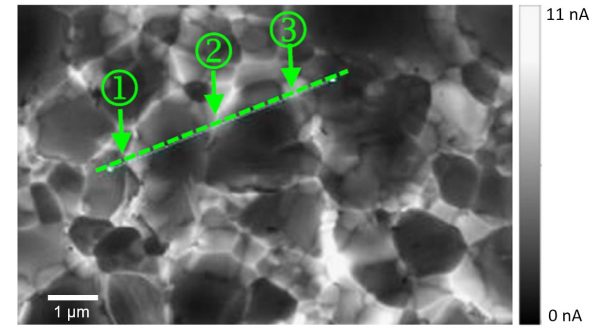
Heayoung Yoon serves as an Associate Professor in the Electrical & Computer Engineering department and Adjunct Associate Professor in Materials Science & Engineering at the University of Utah's College of Engineering. Her research focuses on advanced fabrication and nanoscale characterization of optoelectronic materials and devices, with particular expertise in engineering micro/nanostructures of semiconductor materials to enhance functionality and stability in optoelectronic devices including translucent solar cells and radiation-hard systems. Dr. Yoon earned her BS in Physics with a Computer Science minor from Chungnam National University in South Korea, an MS in Physics from Pohang University of Science and Technology, and a PhD in Electrical Engineering from The Pennsylvania State University. Her academic journey includes positions at Samsung, Penn State University, and NIST where she conducted research on molecular junction devices, pillar array solar cells, and near-field optoelectronic imaging techniques. Her research interests span multiple cutting-edge areas in energy technology and materials science. Dr. Yoon leads investigations into radial junction solar cells that decouple light absorption from carrier collection, thin-film solar cells with enhanced efficiency through microstructural optimization, translucent solar cells for diverse applications like skylights and self-powered facades, multi-probe microscopy techniques for nanoscale characterization, and molecular junction devices for advanced optoelectronics. Her work bridges fundamental research with practical applications to address global sustainability challenges. Analysis of Dr. Yoon's 15 most recent publications reveals a strong focus on solar cell technology and nanoscale characterization. Her research consistently explores patterned back contacts, micro/nanostructured solar cells, and perovskite materials, with particular attention to grain boundaries, surface potential variations, and carrier dynamics at the nanoscale. The publications demonstrate interdisciplinary approaches combining electron microscopy, optical spectroscopy, and device engineering to advance photovoltaic technologies. Outstanding Teaching Award (2024, ECE Department) Chair's Award (2022, ECE Department) CAREER Award (2021, National Science Foundation) Dr. Yoon actively mentors students through thesis research and undergraduate research projects, and leads the Yoon Research Group which develops in-situ, local measurement techniques using electron beams and focused light sources. Her lab focuses on elucidating structure-property relationships in micro/nanomaterials and devices, with applications in energy, optoelectronics, and chemical and biomedical fields. The group leverages cross-disciplinary collaborations to advance energy technologies, particularly in creating exploratory optoelectronic systems that address emerging global challenges in sustainability.
Dr. Deborah Do-Rosario-Benros is a Senior Lecturer in Technical Studies and Representation at the University of East London (UEL), serving as a Cluster Leader in the Department of Architecture & Visual Arts within the School of Architecture, Computing and Engineering. She is a UK-registered architect (ARB/RIBA) with advanced research expertise in computational design methodologies. Educational Background: Doctorate from University College London (The Bartlett School) Master's in Architecture from the University of Lisbon Visiting student at Massachusetts Institute of Technology (MIT) Her research focuses on Design and Computation , Shape Grammars , and Mass Customisation in architecture. Recent work explores 3D printing , robotic manufacturing , and modular design for sustainable housing solutions. Research Publications Trends: Her 2024-2023 articles analyze computational frameworks like multilingual shape grammars, apply robotic construction to micro-housing, critically review 3D printing in large-scale construction, and investigate modular systems using bent metal pipes and space-filling solids. Collaborative co-design with AI and participation in international competitions like the Orange County Sustainability Decathlon are recurring themes. Professional Experience: Prior roles include teaching at the University of Lisbon, visiting faculty at Cornell University, and professional practice at architectural firms Foster and Partners and Arup. She has presented at major conferences including SIGraDi, ZEMCH, and SEEDS. Labs and Teams: As Cluster Leader at UEL, she coordinates research efforts in architecture and computational design, collaborating with institutions like MIT and Cornell.
Stefano Curtarolo is the Edmund T. Pratt Jr. School Distinguished Professor of Mechanical Engineering and Materials Science at Duke University’s Pratt School of Engineering. He also holds professorships in the Department of Physics and Electrical and Computer Engineering, and serves as Director of the Center for Extreme Materials (2025–present). Education: M.S. in Physics, University of Padua (1995, 1998) M.S. in Physics, Pennsylvania State University (1999) Sc.D. in Physics, Massachusetts Institute of Technology (2003) Research Interests: Curtarolo’s work bridges Materials Science , Physics , and Artificial Intelligence , focusing on Autonomous Materials Design , High-Entropy Disordered Systems , and Materials for Extreme Environments . His methodologies integrate Quantum Mechanics , Machine Learning , and High-Throughput Computing . Recent Research Trends: His 2024–2025 publications highlight advancements in High-Entropy Ceramics , including Soliquidy (a geometric descriptor for disorder), Dual-Phase Ceramic Synthesis , and Machine Learning Interatomic Potentials . These works emphasize disorder engineering , plasticity enhancement , and AI-driven material discovery for Aerospace and Deep Space Exploration applications. Scientific Awards: European Academy of Sciences (2024) Clarivate Highly Cited Researcher (2021) Friedrich Wilhelm Bessel Research Award (2016) DOD MURI Awards (2013, 2015) NSF CAREER (2008) ONR Young Investigator (2008) PECASE (2007) Grants & Leadership: Current projects include DETER (2024–2027, Missouri S&T) and Transition States Algorithms (2024–2027, ONR). He co-leads NRT-HDR (2020–2026, NSF). Labs & Teams: Curtarolo directs the Center for Extreme Materials and leads the AFLOW consortium , a global materials design ecosystem. His lab combines machine learning , quantum simulations , and experimental validation for multiscale materials discovery .
Jean-Daniel Penot is a Researcher at CESI's Research and Innovation Department , with expertise in additive manufacturing, materials science, and industrial integration. His work bridges advanced manufacturing technologies with environmental sustainability and educational innovation. Doctorate in Materials Physics (2010) Engineering Degree in Physics (2007) Research Master in Optoelectronics (2007) Penot's research spans Additive Manufacturing and its applications in automotive, nuclear, and construction sectors. He focuses on Laser-Material Interaction , Machine Learning for process optimization, and Sustainable Engineering through life cycle assessments and geopolymer applications. His recent publications emphasize BIM , AM Modular Plants , and Defect Analysis in 3D-printed metals. Penot leads France Additive initiatives and contributes to International Standards as a board member. Penot supervises PhD students including Maryam Houhou and Amal Khabouchi , with a focus on Industrial Security and Energy Transitions . His projects integrate Thermal Comfort , Ultrasonic Inspection , and Quality Assurance in additive manufacturing systems.
Vivian E Ferry is an Associate Professor in the Department of Chemical Engineering and Materials Science at the University of Minnesota's College of Science and Engineering. Her research focuses on advanced materials for energy applications, particularly in solar energy conversion and nanophotonic phenomena. She maintains an active research program with numerous ongoing projects and substantial publication output spanning over 15 years. Her research interests center on Solar Energy , Photovoltaics , Plasmonics , and Nanomaterials , with particular expertise in quantum dots, thin film technology, and metamaterials. Dr. Ferry's work bridges fundamental materials science with practical applications in renewable energy technologies, exploring light-matter interactions at the nanoscale to enhance solar energy harvesting and conversion efficiency. Analysis of her recent publications (2023-2025) reveals a strong focus on chiral optical phenomena, luminescent solar concentrators, metal-insulator transitions in oxide materials, and machine learning applications for spectroscopic analysis. Her work demonstrates a consistent trajectory toward increasingly sophisticated nanoscale optical engineering with practical applications in sustainable energy systems. Dr. Ferry has secured significant research funding from diverse sources including the National Science Foundation, Microsoft Corporation, and industry partners like First Solar. Her current projects include: OLED Cavity Tuning in Commercial Devices for Display Applications (2023-2025) Chiroptical properties of patterned nanocrystal solids (2021-2026) IRG-2: Mesoscale Network Materials (2020-2026) Modeling CdTe solar cells (2021-2022) She actively collaborates with researchers across disciplines, as evidenced by her participation in multi-investigator projects and numerous co-authored publications. Her research group produces both fundamental scientific insights and practical technological advancements in materials for renewable energy applications.
Lei Xu is an Associate Professor at the Department of Engineering, School of Science & Technology, Nottingham Trent University. He leads research in the Advanced Optics and Photonics Group (www.aoplab.com) and serves as Associate Editor for Nonlinear Optics in Frontiers in Photonics . PhD in Optics (2014), Nankai University, China Postdoctoral experience at Australian National University, University of New South Wales His research spans multiple areas of nanophotonics and meta-devices, including: Energy harvesting via resonant meta-optical systems (solar cell enhancement, infrared imaging) Flat optical devices using metasurfaces for advanced nanotechnology Bio-photonics applications in diagnostics and wearable sensors Tunable meta-devices for precision light manipulation Recent publications focus on high-Q resonators, quasi-BIC states, and nonlinear frequency generation in dielectric platforms. He contributes to editorial boards of journals like ACS Nano and Nano Letters .
David Grant is a Professor of Materials Science and Director of the Propulsion Futures Beacon at the University of Nottingham. He leads the Advanced Materials Research Group, focusing on cutting-edge solutions in energy storage and biomaterials. His research spans two primary areas: Energy Storage Systems : Investigating alloy and intermetallic hydrides, complex light metal hydrides, and multi-component systems for hydrogen and thermal storage. Biomaterials : Studying surface modification, coatings, nano-composite structures, degradable materials, and their interactions with cells. Grant's work aligns with the University of Nottingham's world-class research initiatives, emphasizing collaboration with academic and industrial partners to address global challenges through advanced materials science.
Dr. Vanessa Hearnden is a Senior Lecturer in Biomaterials and Tissue Engineering at the University of Sheffield's School of Chemical, Materials and Biological Engineering. She leads the Materials for Health research group and has served as Course Director for the MEng in Biomaterials Science and Engineering. Her career spans roles as module lead for Tissue Engineering and Biology, personal tutor for Bioengineering students, and committee member of the Tissue and Cell Engineering Society and the Senate University Research Ethics Committee. Dr. Hearnden's research focuses on harnessing autologous patient materials like adipose tissue to enhance soft tissue wound healing and treat pathologies. She develops 3D tissue-engineered models for oral mucosa, skin, and tonsil studies while advancing biomaterials through assays like angiogenesis and macrophage interaction analysis. Her work bridges clinical needs with interdisciplinary collaborations in Plastic Surgery, Oral Medicine, and Urology. Recent publications highlight her expertise in adipose-derived therapies for wound healing, bisphosphonate toxicity mitigation, and scaffold fabrication techniques. She contributes to journals as Associate Editor for Frontiers in Medical Technology: Regenerative Medicine and collaborates globally. Teaching roles span BEng/MEng Biomedical Engineering, Materials Science, and MSc Bioengineering programs.