معرفی
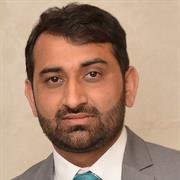
Dr. Indrat Aria is a Senior Lecturer in Functional Nanomaterials at Cranfield University's Surface Engineering and Precision Centre within the Faculty of Engineering and Applied Sciences. With expertise spanning nanomaterials, nanotechnology, renewable energy, smart materials, and surface engineering, Dr. Aria leads research focused on developing novel materials for sustainability applications.
His educational background includes a PhD in Aeronautics from California Institute of Technology (2013), where he received the prestigious William F. Ballhaus Prize for his outstanding doctoral dissertation, an MSc from Caltech's Department of Aeronautics (2008), and a BSc with Honours (cum laude) from Bandung Institute of Technology, Indonesia (2006). Prior to joining Cranfield, he was a Post-Doctoral Research Associate at Cambridge University and a College Research Associate at Clare College (2013-2017).
Dr. Aria's research interests center on the synthesis of hierarchical and 3D assemblies of low-dimensional nanomaterials, integration of nano-bulk materials, engineering of surfaces and interfaces, and design of functional ultrathin films. His work spans applications in solar energy conversion (concentrating solar power, photovoltaics, photocatalysis), electrochemical processes (batteries, supercapacitors, hydrogen electrolysis), soft matter (biopolymers, hydrogels), and REACH compliant materials. His recent publications demonstrate a strong focus on combinatorial sputtering techniques, molten salt corrosion studies, and advanced hydrogel characterization for various applications.
Among his notable achievements are the Fulbright fellowship (2007-2012), the Green Talent Award from the German Federal Ministry of Education and Research (2014), and the 2024 Gold Award for Excellence in Hydrogen Research and Innovation from HyDEX for pioneering research in sustainable catalysts for green hydrogen production.
Dr. Aria currently leads multiple research projects including H2020 MSCA-RISE FRIENDS2, IMAGE Photoluminescent Coatings, and several Innovate UK projects focused on flexible electrochromic windows, luminescent downshifting, novel electrocatalysts for green hydrogen electrolysis, and lithium-free batteries. His research group collaborates with industry partners such as Photocentric, Lambda Energy, BAE Systems, Hardide, and Thin Metal Films.
He actively supervises PhD students and currently offers research opportunities in sustainable active materials for next-generation lithium-free batteries, novel electrocatalysts for green hydrogen by seawater electrolysis, and solid polymer electrolytes for batteries and smart windows.