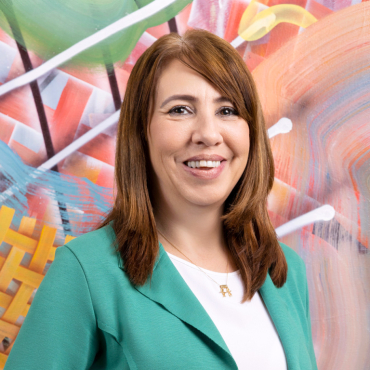
Denise Ranghetti do Pilar is a Professor of UX Design at Savannah College of Art and Design (SCAD) in Savannah, GA, since 2022. Her academic background includes a Postgraduate Certificate in Applied Positive Psychology and a Ph.D. in Psychology from Pontificia Universidade Catolica do Rio Grande do Sul, and a B.S. in Computer Science from Catholic University of Louvain. Her research focuses on User Experience Design and User Experience Research , with specific interests in UX strategy, design thinking, UX metrics, and user research methodologies. She has taught at multiple institutions including Product Arena, UFRGS, UniRitter, and Feevale. Professionally, she has served as Staff User Experience Researcher at Nubank and User Experience Lead at SAP Labs Latin America. She is affiliated with professional organizations BayCHI and AnthtroDesign.
Ellen Arruda is the Tim Manganello/BorgWarner Department Chair and Maria Comninou Collegiate Professor of Mechanical Engineering at the University of Michigan. She holds joint appointments in Biomedical Engineering and Macromolecular Science and Engineering. Her research bridges biomechanics and materials science, focusing on soft tissue mechanics and polymer behavior. PhD (Mechanical Engineering, MIT, 1992) MS (Engineering Mechanics, Penn State, 1988) BS (Engineering Science, Penn State, 1985) Her research spans biomechanics , soft tissue engineering , and polymer mechanics , with applications to knee ligament replacement , impact-resistant materials , and brain-protective helmets . She utilizes full-field displacement mapping and computational modeling to analyze tissue and polymer responses under extreme conditions. Recent publications emphasize knee ligament characterization , nanocomposite design , and impact mitigation . Her work has attracted major funding from DARPA , NSF , and NIH , among others. National Academy of Engineering (2017) A.C. Eringen Medal (2021) Nadai Medal (2019) Distinguished Faculty Achievement Award (2014) As Principal Investigator of the Soft Tissue and Polymer Mechanics Lab , she leads a team exploring tissue engineering strategies and advanced material solutions. Her lab has developed 3D scaffold-free constructs for bone-ligament interfaces and blast-resistant composites .
Professor Damien Field is a leading academic in global soil security and soil education at the University of Sydney, serving as Director of the Sydney Institute of Agriculture and Chair of Division 4 in the International Union of Soil Science. He holds roles in the School of Life and Environmental Sciences and chairs the Sydney Southeast Asia Centre's Executive Research Training committee. His career includes research fellowships, academic leadership roles, and a Master of Education (Higher Education). Education: Bachelor of Science in Soil Science PhD in Soil Structure (Cotton Production) Master of Education (Higher Education) Research Interests: Integrating soil security with global sustainability, soil modeling, and education. His work spans soil functionality, agroecosystems, and community-driven research in Laos and Papua New Guinea. He advocates linking research with teaching, emphasizing real-world problem-solving through innovative curricula and field schools. Publications & Grants: Over 100 peer-reviewed articles, including books on global soil security and chapters on soil sensing. Key projects include soil mapping in Laos and cocoa sustainability in PNG, funded by ACIAR and GRDC. Collaborates with universities in Cambodia, Laos, Vietnam, and the USA. Awards: Vice Chancellor’s Award for Outstanding Mentorship (2016) Fellow of Soil Science Australia (2020) Principal Fellow Higher Education Academy (2020) Roles & Lab: Leads the Sydney Institute of Agriculture and coordinates international field schools with the National University of Laos. Advises postgraduate training and chairs soil education committees internationally.
Yuxia Hu is a Professor at the University of Western Australia, affiliated with the School of Engineering (Civil, Environmental and Mining Engineering) and the School of Social Sciences, Planning and Transport Research Centre. Her research focuses on geotechnical engineering, particularly in large deformation FE analysis, offshore foundation systems, and soil-structure interaction. She has contributed to advancements in suction caissons, plate anchors, and computational mechanics, with applications in offshore wind energy and infrastructure stability. Research Interests: Large deformation FE analysis of soils, soil-structure interaction, offshore foundation systems, soil mechanics, and pavement engineering. Awards: Telford Premium, British Geotechnical Association Prize, and Significant Junior/Senior Paper Award. Grants: Leads projects on offshore anchors, carbon capture in pavements, and road maintenance optimization. Her work addresses challenges in geotechnical design and sustainable infrastructure, with a focus on numerical modeling and experimental validation. Collaborations span academia and industry, emphasizing practical solutions for complex soil-structure systems.
Professor Joel Smethurst holds the position of Professor of Geotechnical Infrastructure at the University of Southampton's Faculty of Engineering and Physical Sciences, where he also serves as Director of Programmes for Civil and Environmental Engineering. His research focuses on geotechnical infrastructure longevity under environmental and operational stresses, including climate change impacts on transportation earthworks and flood defenses. He completed his PhD in Geotechnical Engineering at Southampton in 2004, advancing through roles as Research Fellow, Lecturer, and Associate Professor before attaining his current rank. His educational leadership includes re-accreditation of undergraduate programs (2023-24) and integrating Engineering Council AHEP4 standards. Research has been funded by EPSRC and industry partners like Network Rail and National Highways. Notable projects include the EPSRC ACHILLES Programme Grant investigating weather-driven earthwork deterioration. Advancing geotechnical knowledge through field monitoring (e.g., 20-year slope data) and numerical modeling, his work bridges theory and practice. External roles include editorial board memberships and invited expert presentations on slope stabilization and climate effects.
Lisa Gieg is a Professor in the Department of Biological Sciences at the University of Calgary, where she leads research in environmental microbiology. She holds a B.S. in Microbiology from the University of Alberta (1991) and Ph.D. in Microbiology from the same institution (1996). Her laboratory investigates microbial processes in energy environments, focusing on anaerobic hydrocarbon biodegradation pathways and applications in bioremediation and energy recovery. Dr. Gieg's research examines how anaerobic microorganisms metabolize hydrocarbons and related compounds in contaminated environments and natural reservoirs. Her work elucidates novel biodegradation pathways under sulfate-reducing and methanogenic conditions through cultivation, analytical chemistry, and molecular biology approaches. Current applications include anaerobic bioremediation, enhanced methane recovery from marginal oilfields, biocorrosion mitigation, paraffin treatment, heavy oil recovery, oil sands tailings reclamation, and souring control. Her recent publications demonstrate advances in understanding microbiologically influenced corrosion mechanisms, naphthenic acid biodegradation, piezophile microbiology, and enzyme biotechnology for oilfield applications. This research bridges fundamental microbial ecology with practical solutions for energy industry challenges. Gieg teaches Microbial Physiology (CMMB 443) and Petroleum Microbiology (CMMB 545), training students in environmental microbiology concepts and techniques.
Dr. Jingjing Qiu is an Associate Professor in the Department of Mechanical Engineering at Texas A&M University (TAMU), leading the Advanced Materials & Manufacturing (AM²) Lab. Her research focuses on advanced manufacturing, nanomaterials, multifunctional composites, sustainable materials, energy harvesting, and healthcare applications. She holds a Ph.D. in Industrial & Manufacturing Engineering from Florida State University (2008), and M.S./B.S. degrees in Materials Science from Beihang University (2004/2001). Prior to academia, she gained 1 year of industrial experience as a Quality Engineer at SAIC Motor. Research interests include AI-driven nanomaterials synthesis, low-carbon manufacturing processes, and biomedical innovations such as drug delivery systems for brain tumors. The AM² Lab emphasizes interdisciplinary collaboration in materials science, data science, and sensor integration for energy and medical devices. Recent work highlights include AI-assisted microplastics removal, thermoelectric energy harvesting via graphene aerogels, and neuromorphic computing systems. Her team actively pursues postdoctoral and PhD candidates for research in energy/healthcare materials, requiring expertise in nanomaterials characterization (e.g., SEM, XPS, electrochemical techniques) and interdisciplinary problem-solving. Lab facilities support cutting-edge fabrication and testing of functional materials. Publications span over 15 years, with recent trends in sustainable manufacturing, soft robotics, and bio-inspired materials. Ongoing projects include DOE-funded initiatives on rare earth recycling and low-carbon ceramic production. No scientific awards are explicitly listed in the provided texts.
Scott Fraundorf is an Associate Professor in the Department of Psychology at the University of Pittsburgh, affiliated with The Dietrich School of Arts & Sciences and the MAPLE Lab at the Learning Research and Development Center (LRDC). His research focuses on psycholinguistics, memory systems, cognitive aging, metacognition, and educational technology. He holds a Ph.D. from the University of Illinois at Urbana-Champaign and has been recognized with an NSF Graduate Research Fellowship (2007-2011) and inclusion in the List of Teachers Ranked as Excellent by Students ("Outstanding"). Key research themes include the role of prosody and disfluency in language processing, cognitive aging effects on memory, and the application of statistical modeling to study decision-making and learning strategies. His work bridges experimental psychology with real-world educational interventions, such as adaptive grammar instruction tools and investigations into digital literacy practices among adolescents. Recent publications emphasize cognitive mechanisms underlying expertise retention in medical professionals and the impact of exercise on memory preservation in older adults. He collaborates on projects analyzing how contrastive linguistic cues (e.g., pitch accent, beat gestures) influence online discourse comprehension and long-term memory encoding. Labs/Teams: MAPLE Lab (Memory, Attention, Processing, Learning, Education) Grants: NSF Graduate Research Fellowship Advising: Advises graduate student Jessica Macaluso
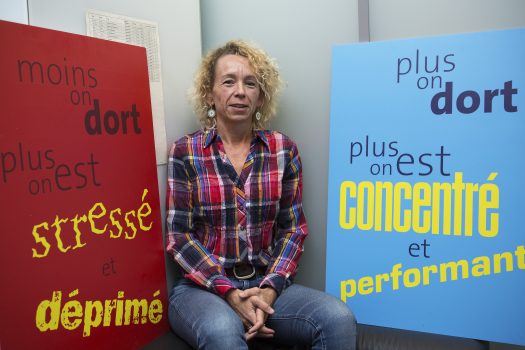
Prof. Sophie Schwartz is a leading neuroscientist at the University of Geneva , where she heads the Sleep & Cognition Lab within the Faculty of Medicine . Her research integrates neuroimaging (fMRI, hd-EEG, MEG) , behavioral testing , and computational modeling to unravel the neural mechanisms underlying memory consolidation , emotion processing , and dreaming during sleep, while also developing clinical interventions to enhance sleep in neurological and psychiatric disorders.
Dr Carol Verheecke-Vaessen is a Senior Lecturer in Applied Molecular Mycology at Cranfield University, affiliated with the Centre for Soil, Agrifood and Biosciences and the Applied Mycology Group under the Environment and Agrifood theme. She leads the Food Safety module in the MSc Food Systems & Management program and is the Director of the Mycotoxin Training Hub, developing industry-focused training and research initiatives globally. Education: PhD in Mycotoxin Research, Federal University of Toulouse, France (2014) Postgraduate Certificate in Academic Practice, Cranfield University (2021) Her research focuses on understanding the molecular mechanisms of mycotoxin production in fungi under environmental stress, particularly climate change. She develops holistic solutions from farm to fork for managing mycotoxin risks, including biocontrol agents, decision support systems, and food waste valorization. Her work spans agrifood chain contamination assessment using advanced molecular and analytical techniques. The recent publications reflect a strong trend in climate change impact on mycotoxin dynamics, real-time detection methods (e.g., CO2 monitoring, spectroscopy), biocontrol strategies in coffee and cereals, and innovative pretreatment techniques for mycotoxin analysis. Her studies often involve interdisciplinary collaborations across Europe, Africa, and Asia. Scientific Awards: Best Innovative PhD Award, Federal University of Toulouse (2015) Fellow of the Higher Education Academy (FHEA) She actively supervises PhD and MSc students and has secured funding from Research England, Innovate UK, and BBSRC. She is co-leading the development of the Magan Centre of Applied Mycology and contributes to the Africa Centre of Excellence for Sustainable Cooling and Cold-chain (ACES). Her research projects include Oats for the Future, NutriNuts, and Gender-equal mycotoxin training, emphasizing sustainable and equitable food systems. Laboratories and Research Teams: Applied Mycology Group, Cranfield University Mycotoxin Training Hub (Director) Magan Centre of Applied Mycology (Co-Lead) Africa Centre of Excellence for Sustainable Cooling and Cold-chain (ACES) – Active Member
Maria Papathoma-Köhle is an Associate Professor at the Institute of Alpine Natural Hazards , University of Natural Resources and Life Sciences, Vienna. She holds a PhD in Tsunami Vulnerability Assessment from Coventry University (UK) and has held roles as Academic Coordinator of the MSc 'Risk Prevention and Disaster Management' at University of Vienna. Her research focuses on natural hazard vulnerability , particularly wildfire and flood risks in alpine regions, with methodological expertise in indicator-based vulnerability assessment and physical vulnerability indices . Education: PhD in Natural Hazards (Coventry University, UK) MSc in Environmental Management (University of Durham, UK) Geology Degree (University of Athens, Greece) Research: Specializes in wildfire vulnerability indices, flood risk modeling, and climate change adaptation frameworks. Developed the Physical Vulnerability Index (PVI) for buildings and contributed to EU-funded projects like FLOODLABEL and EXTEND. Awards: Elise Richter Scholarship (2016) Back to Research Grant (2012) Young European Scientist Award (2002) Projects: Led FWF-funded research on physical vulnerability indicators and collaborated on EU programs for wildfire preparedness. Current work includes climate change adaptation tools for Austrian infrastructure. Advising: Supervised 6 Master's/PhD students on wildfire and flood vulnerability topics. Publications: Over 106 peer-reviewed works; recent articles focus on wildfire indices, IPCC risk diagrams, and dynamic flooding assessment.
Valeria Bruschi is a Researcher at the Department of Information Engineering (DII) within the Faculty of Engineering at Università Politecnica delle Marche (UNIVPM) in Ancona, Italy. Her academic profile was last updated on April 13, 2024, and she maintains her office at the Engineering Faculty on via Brecce Bianche, with contact information including phone +39 071-220-4486 and email v.bruschi@staff.univpm.it. Dr. Bruschi's research spans multiple domains within audio and signal processing, with particular expertise in spatial audio systems, automotive human-computer interaction, and biomedical signal applications. Her work bridges theoretical signal processing techniques with practical implementations across diverse fields including automotive safety systems, hearing aid technology, sleep medicine, and agricultural monitoring. She has made significant contributions to head-related transfer function (HRTF) processing, real-time audio enhancement algorithms, and innovative monitoring systems that utilize acoustic signals for various applications. Analysis of Dr. Bruschi's recent publications reveals a strong trajectory in developing practical audio processing solutions with real-world applications. Her work shows increasing integration of machine learning techniques with traditional signal processing approaches, particularly in areas like driver monitoring systems, snoring detection and cancellation, and spatial audio rendering. A notable trend is her focus on creating lightweight, real-time implementations suitable for embedded systems and practical deployment scenarios, while maintaining high performance standards. Her research consistently demonstrates interdisciplinary collaboration, connecting audio engineering with fields as diverse as automotive safety, sleep medicine, and agricultural technology. Dr. Bruschi actively contributes to advancing audio engineering through her research on equalization techniques, noise reduction systems, and immersive audio technologies. Her work on pulse compression techniques for hearing aid distortion measurement represents an important contribution to audiological assessment methodologies. Her publication record demonstrates consistent scholarly output with increasing impact across multiple application domains, reflecting her ability to translate theoretical signal processing concepts into practical engineering solutions.
Lucila de Almeida is an Associate Professor at NOVA School of Law, Universidade NOVA de Lisboa, holding the prestigious Abreu Chair in ESG Impact, Climate and Energy Law. She concurrently serves as coordinator of the NOVA Green Lab and the Master's in International and European Law, while maintaining a part-time Full Professor position at the European University Institute's Florence School of Regulation. Her academic leadership spans energy regulation, climate policy, and European legal frameworks. Her educational foundation includes: PhD in European Law from the European University Institute LL.M. in Comparative, European and International Law from the European University Institute Master's in Law and Development from FGV São Paulo Law Degree from the Federal University of Rio Grande do Norte Professor de Almeida's research confronts urgent energy-climate intersections through critical analysis of regulatory frameworks. She pioneers studies on peer-to-peer energy trading, consumer protection in digitalized markets, and the legal architecture of sustainable consumption. Her work dissects the European Green Deal's implementation challenges, examining how securitization narratives impact energy, food, and climate policies while advocating for equitable regulatory solutions in energy democratization. Her publication trajectory reveals deepening engagement with energy market transformation, shifting from foundational contract law analyses toward systemic examinations of digitalization, community energy models, and Green Deal stress-testing. Recent works increasingly integrate consumer protection with energy democratization frameworks, highlighting regulatory gaps in peer-to-peer platforms and sustainability reporting. Her scholarly recognition includes: Abreu Chair in ESG Impact, Climate and Energy Law Edmond J. Safra Research Fellowship at Tel Aviv University Finnish Distinguished Professorship by the Academy of Finland As principal investigator for major EU-funded initiatives including Horizon Europe's U2Demo project and International Energy Agency's UserTCP Observatory, she directs cutting-edge research on P2P energy sharing and consumer rights. Her editorial leadership spans Competition and Regulation in Network Industries (Sage) and Energy Research & Social Science (Elsevier), shaping discourse on regulatory innovation. Through the NOVA Green Lab, she cultivates interdisciplinary collaboration on climate law implementation and energy justice, developing practical ESG training frameworks for Portuguese SMEs while advancing theoretical foundations of regulatory private law.
Eduardo Saez De Villarreal Sáez is a Professor in the Department of Sports and Information Technology at Universidad Pablo de Olavide, where he is affiliated with the Center for Research in Physical and Sports Performance (CIRFD) and the AFSD Physical Activity, Health and Sport research group. His academic work spans both theoretical and applied aspects of sports science, with a particular focus on physical performance metrics and training methodologies. His research interests center on athletic performance optimization, with specific expertise in strength training methodologies, sprint mechanics, and resistance training adaptations. Dr. Saez De Villarreal's work frequently examines velocity-based training, blood flow restriction techniques, and the biomechanical aspects of athletic movement. His research bridges laboratory findings with practical applications for athletes across multiple sports disciplines including football (soccer), water polo, cycling, and even unique applications to professional bullfighting performance. Analysis of his recent publications (2024-2026) reveals a strong focus on velocity-based resistance training, with particular attention to velocity loss thresholds and their impact on strength development. His work demonstrates increasing sophistication in training methodology research, with systematic reviews and meta-analyses becoming more prominent alongside experimental studies. The research spans multiple sports contexts while maintaining a strong physiological and biomechanical foundation. Dr. Saez De Villarreal supervises doctoral students in the Physical Activity, Sports and Health Sciences program and collaborates with researchers internationally. His work shows consistent output with publications extending into 2026, indicating ongoing active research. His laboratory work appears to focus on practical applications of sports science research across various athletic populations, from youth athletes to professionals.
Professor Charlotte Hanlon serves as Co-Director of the Centre for Global Mental Health and co-director of the World Health Organization Collaborating Centre for Mental Health Research and Training at King's College London's Institute of Psychiatry, Psychology & Neuroscience. Based in Ethiopia, she has maintained a continuous research and implementation presence in the country since her PhD work from 2004-2006 on perinatal mental health in rural settings, returning permanently in 2009. Her research expertise spans global mental health implementation science, with particular focus on developing, testing and implementing interventions for people with mental health conditions in low- and middle-income countries. Professor Hanlon has significant experience with psychological interventions, social/psychosocial approaches, service models, and system strengthening, with special attention to severe mental health conditions including psychoses and developmental disabilities. Her work consistently incorporates capacity strengthening as an integral component. She coordinates the PhD program for Mental Health Epidemiology at Addis Ababa University and serves on Ethiopia's technical working group for mental health scale-up. Analysis of her recent publications reveals a strong emphasis on context-specific implementation research, particularly in Ethiopia, with growing attention to developmental disabilities, caregiver support, and inclusive education. Her work bridges clinical interventions with health systems strengthening, demonstrating how context shapes effective mental health service delivery in resource-limited settings. The publications show increasing collaboration with African institutions and a focus on sustainable, locally adapted solutions. Commissioner on the Lancet Commission on Ending Stigma and Discrimination in Mental Health Co-lead (with Professor Ashok Malla) of the interventions, services and systems section of the Lancet Psychiatry Commission on Psychoses in Global Context Professor Hanlon leads multiple major research initiatives including HOPE (NIHR global health research group on homelessness and severe mental illness), SCOPE (Wellcome Trust-funded study of psychosis context in Ethiopia), PROMISE (improving detection and care for psychosis in Malawi), PRIZE (peer support intervention for psychosis in South Africa), and SPARK (WHO caregiver skills training for developmental disabilities). Her research approach emphasizes participatory methods, cultural adaptation, and building local research capacity across multiple African countries. She works closely with the Centre for Global Mental Health, which aims to address inequities by closing the care gap and reducing human rights abuses experienced by people living with mental, neurological and substance use conditions in low-resource settings. Her projects often involve collaboration between King's College London, Addis Ababa University, and other African institutions to develop sustainable mental health solutions.