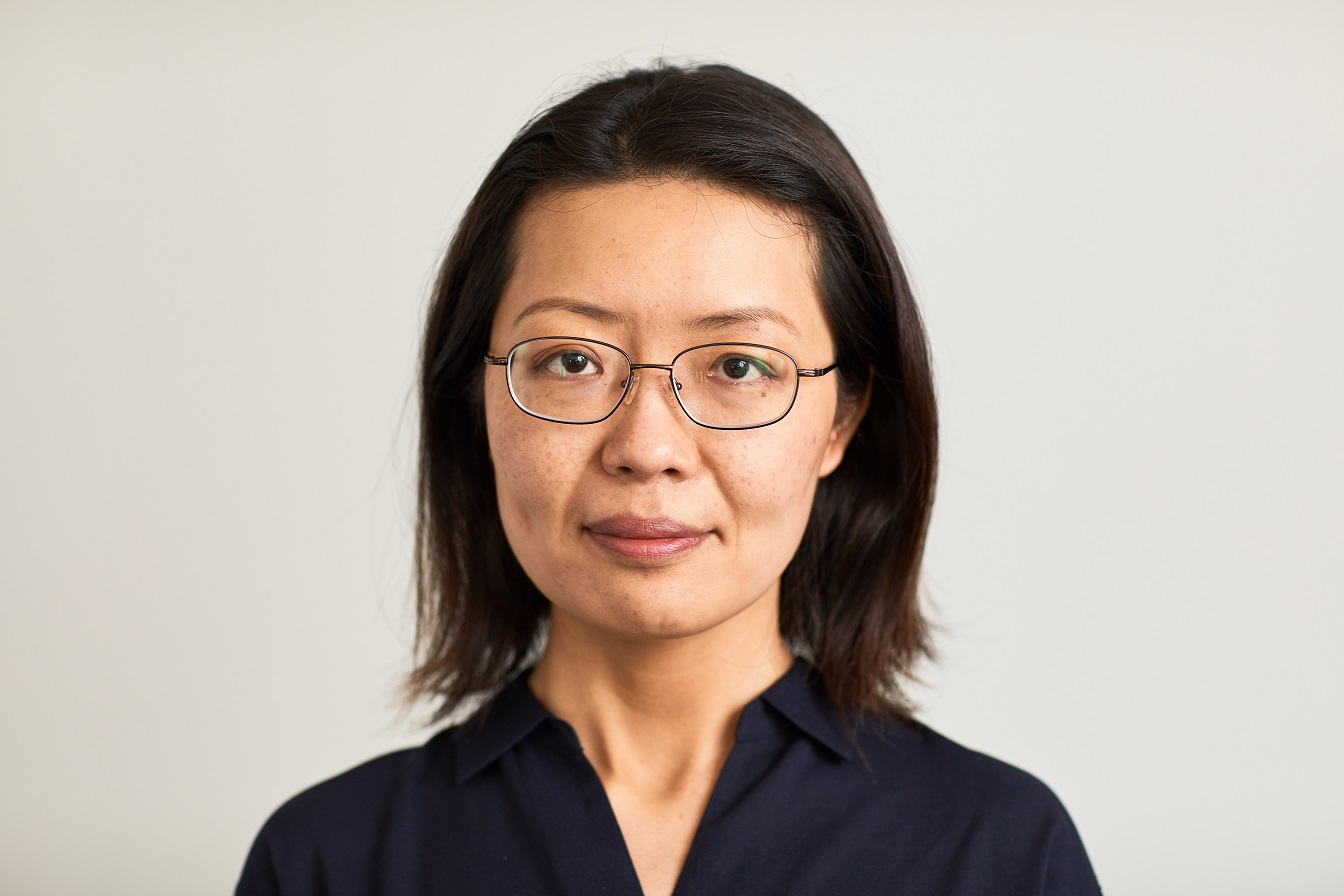
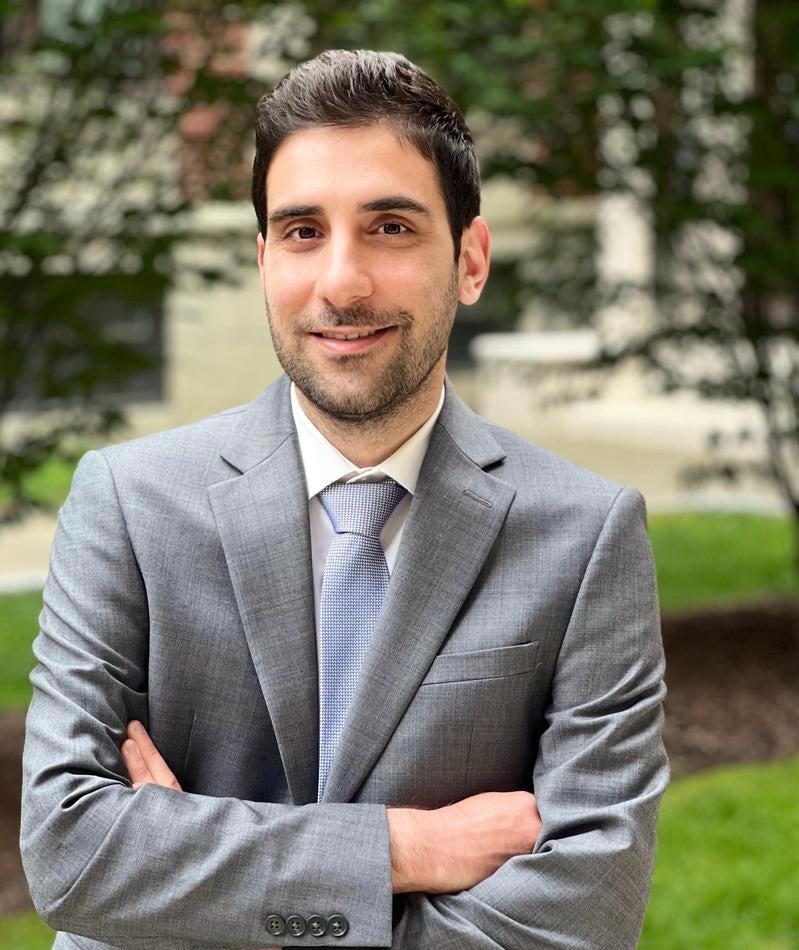
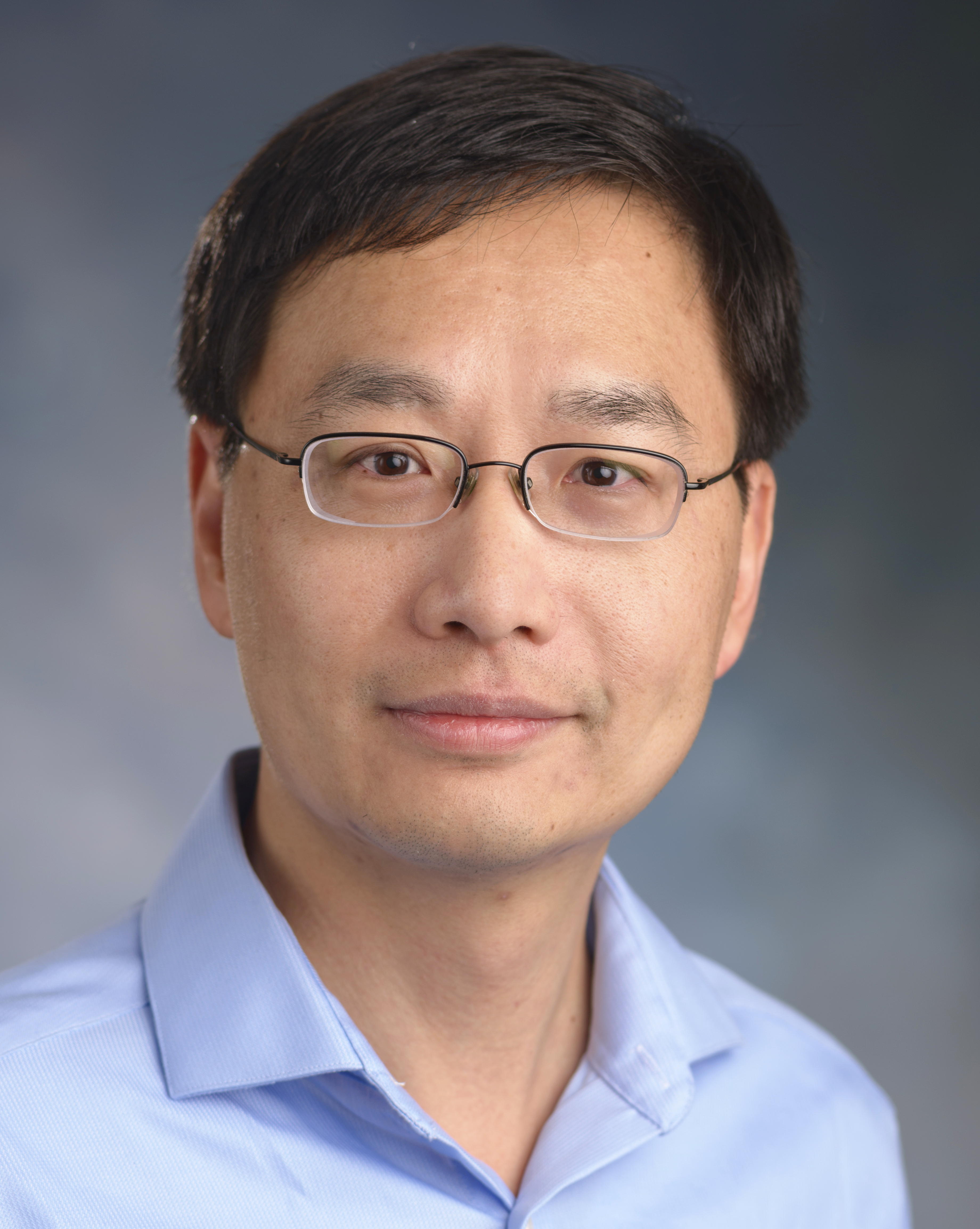
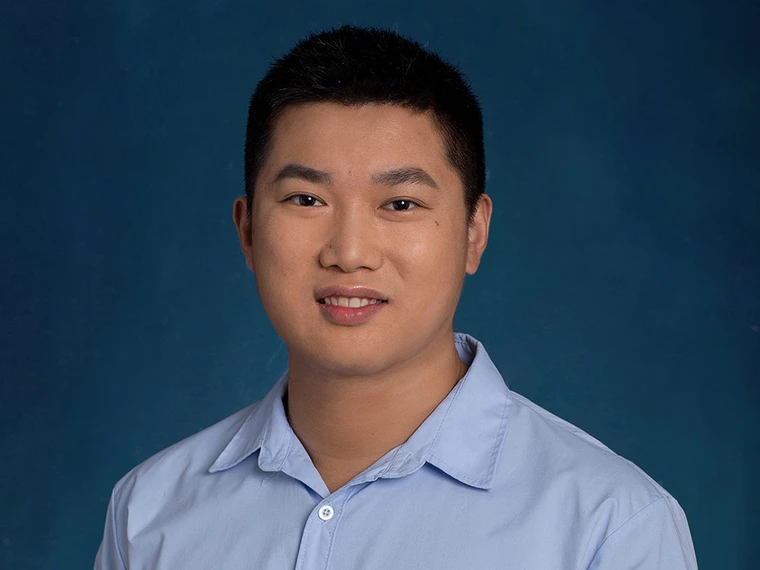
Yang Song is an ARC Future Fellow and Scientia Associate Professor at the School of Computer Science and Engineering , University of New South Wales (UNSW) . She serves as Associate Head of School (Research) and Co-Director of iCinema , focusing on AI and Computer Vision applications for social good. Education: BEng in Computer Engineering (Nanyang Technological University, Singapore), PhD in Computer Science (UNSW, 2013) Research Areas: Biomedical image analysis, human-centred AI, graph data modeling, neuro-symbolic learning, and AI trustworthiness. Her work develops domain-specific deep learning models for radiological segmentation, histopathology cancer analysis, and 3D reconstruction. Recent projects address explainability in LLMs, fairness in AI, and human-robot interaction frameworks. With over 200 peer-reviewed publications in top venues like CVPR , MICCAI , and NeurIPS , her research spans biomedical imaging, robotics, and general multimodal AI. Scientific Awards include: 2024: ARC Industrial Transformation Research Hub for Human-Robot Teaming 2023: Google Inclusion Research Award 2022: NHMRC Ideas Grant for computational brain imaging 2021: UNSW Engineering Research Excellence Award 2020: Scientia Fellowship (UNSW) 2019: ARC Future Fellowship She supervises 24 current PhD/MPhil students and has graduated 15 advisees, including placements at Harvard University and Siemens Healthineers. Her grants include collaborations with Surf Life Saving Australia and industry partnerships for AI-driven solutions.
Professor Dinusha Mendis is a leading academic in Intellectual Property and Innovation Law at Bournemouth University, where she serves as Director of the Centre for Intellectual Property Policy and Management (CIPPM). Her expertise bridges copyright law with emerging technologies like 3D printing, AI, blockchain, and the Metaverse, informed by extensive research and consultation with entities such as the European Parliament, UKIPO, and corporations like HP and Chanel. She holds a PhD from Edinburgh University and has authored seminal works on the intersection of technology and IP. BSc in Law from Aberdeen University LLM and PhD from Edinburgh University Called to the Bar of England and Wales Her research focuses on copyright challenges in immersive environments , AI-generated content regulation , and blockchain/NFTs . She led major studies for the European Commission and UKIPO , including the first peer-reviewed work on 3D printing and IP. Her 2019 co-edited book with Stanford and QUT scholars established foundational frameworks for additive manufacturing legal analysis. Recent publications highlight AI copyright disputes (2024 The Conversation ), NFT legal ambiguities (2022), and pandemic-era 3D printing (2020). Trends show increasing emphasis on decentralized IP systems and machine learning's impact on creative industries . Scientific Awards & Grants JSPS Visiting Professorship (2023) Daiwa Anglo-Japanese Foundation Grant (2024) EU Commission Research Funding (2020) AHRC Grant for 3D Jewellery Study (2017) As a PhD supervisor, she mentors researchers on AI copyright (Benjamin White), crypto-art (Bahar Dagli), and music creation law (Elizabeth Bailey). She contributes to global IP policy through the World Economic Forum's Metaverse Governance Team and EU IPR Enforcement Projects .
Krzysztof Z Gajos is a Gordon McKay Professor of Computer Science at Harvard University’s Paulson School of Engineering and Applied Sciences. He leads the Intelligent Interactive Systems Group, focusing on human-AI interaction, accessible computing, and behavioral research at scale. His work integrates technical innovation with ethical and societal considerations, emphasizing equity-centered design. Education: Ph.D., University of Washington M.Eng. and B.Sc., Massachusetts Institute of Technology (MIT) Research Interests: His research spans AI for public services , health informatics , design for equity , and behavioral research platforms like LabintheWild.org. He investigates how AI can augment human decision-making while addressing biases and ethical challenges. Recent Trends in Articles: Recent work emphasizes human-AI collaboration in healthcare , explainable AI , and equity-centered design . Key themes include reducing overreliance on AI, improving transparency in algorithmic decisions, and centering marginalized communities in technology development. Scientific Awards: Sloan Fellowship Best Paper Awards at ACM CHI, COMPASS, and IUI Advising & Grants: His federal grants support AI ethics and healthcare projects, though recent terminations have prompted efforts to secure alternative funding. He advises students on projects like AI for humanitarian negotiations and digital phenotyping. Labs & Teams: Leads the Intelligent Interactive Systems Group , collaborating with organizations on AI for social good and accessible technology.
Aysegul Gunduz, Ph.D., is a Professor and Fixel Brain Mapping Professor at the University of Florida's Herbert Wertheim College of Engineering, Department of Biomedical Engineering. She leads the Brain Mapping Laboratory, focusing on neural networks and clinical translation for neurological disorders. Her work integrates electrophysiology, bioimaging, and neuromodulation to develop diagnostic and therapeutic systems for conditions like Parkinson’s disease, epilepsy, movement disorders, and stroke. Education: B.S., Electrical Engineering, Middle East Technical University (2001) M.S., Electrical Engineering, North Carolina State University (2003) Ph.D., Electrical Engineering, University of Florida (2008) Post-doctoral Fellowship in Neurology, Albany Medical College (2011) Research interests include human brain mapping, closed-loop deep brain stimulation (DBS), neuromodulation strategies for movement disorders, and wearable sensor technologies for neurological monitoring. Her lab emphasizes translational research, bridging basic science with clinical applications to improve patient outcomes. Awards include the BMES Fellowship (2024), AIMBE Fellowship (2022), and PECASE (2019), reflecting her leadership in neural engineering. Her articles explore cutting-edge topics like DBS efficacy, neural network dynamics, and ethical considerations in neural device research. Grants and collaborations focus on advancing adaptive DBS and brain-computer interfaces. She mentors students in neuroengineering and advocates for equitable participation in clinical research. The Brain Mapping Laboratory actively engages in multidisciplinary projects with neurologists, surgeons, and industry partners. Future work includes optimizing closed-loop systems for Tourette syndrome and Parkinson’s disease, developing open-source neuroimaging tools, and expanding wearable sensor applications for real-time neurological monitoring.
Maureen Meadows is a Professor of Strategic Management at Coventry University's Research Centre for Business in Society. Her work focuses on strategic decision-making, big data applications, privacy in business models, and M&A dynamics. She previously held leadership roles at the Open University and Warwick Business School, where she contributed to strategic management education and research. Education: PhD in Open University (2016) MSc in Management Science from University of Warwick (1987) Bachelor of Arts in Mathematics (Oxford University, 1986) Research Interests: Strategic management tools (e.g., scenario planning), customer data analytics, privacy implications of data sharing, and post-merger integration. She has co-led projects on surveillance society blurring and privacy in the digital economy, funded by Leverhulme and EPSRC. Key Projects: Leverhulme-funded 'Taking Liberties?' (surveillance society) EPSRC-funded 'Monetize Me?' (privacy and quantified self) Co-designing digital strategies for museums and education sectors Grants & Collaborations: Multiple internally-funded projects on board assurance frameworks, creative accounting, and hybrid business models in museums. Active in international conferences and professional bodies like BAM Council. Awards: While no specific prizes are listed, her h-index of 24 and 1,891 citations reflect significant scholarly impact.
Mohammad Mohammadi Amiri serves as an Assistant Professor in the Department of Computer Science at Rensselaer Polytechnic Institute (RPI), appointed in Fall 2023. His research focuses on advancing artificial intelligence through strategic data utilization, with emphasis on large language models, data valuation, federated learning, and deep learning. Previously, he held postdoctoral appointments at Princeton University and MIT Media Lab, building on his strong educational foundation from Imperial College London, University of Tehran, and Iran University of Science and Technology. Education: Ph.D. in Electrical and Electronic Engineering, Imperial College London (2019) - Best Ph.D. Thesis Award recipient M.Sc. in Electrical and Computer Engineering, University of Tehran (2014) - Ranked 1st among all M.Sc. students B.Sc. in Electrical Engineering, Iran University of Science and Technology (2011) - Ranked 1st among all B.Sc. students Dr. Amiri's research centers on optimizing artificial intelligence systems through innovative data strategies. His work addresses critical challenges in large language models including efficiency, memory usage, alignment, and reasoning capabilities. In data valuation, he develops principled methods to quantify data worth for fair trading platforms. His federated learning research tackles privacy concerns, heterogeneous data distribution, and communication overhead in decentralized environments. The deep learning component explores theoretical foundations to improve model interpretability and robustness. Analysis of his recent publications reveals a strong focus on making AI systems more efficient and accessible, with particular emphasis on large language model optimization, federated learning advancements, and data valuation frameworks. His work bridges theoretical foundations with practical applications in wireless communications and distributed computing environments. Scientific Awards: IEEE Communications Society Young Author Best Paper Award (2022) Best PhD Thesis Award from IEEE Information Theory Chapter of UK and Ireland (2019) Eryl Cadwallader Davies Prize for Outstanding PhD Thesis (2019) EEE Departmental Scholarship at Imperial College London (2015-2019) Ranked 1st among M.Sc. students at University of Tehran (2014) Ranked 1st among B.Sc. students at Iran University of Science and Technology (2011) Dr. Amiri actively mentors graduate students, currently supervising five Ph.D. candidates and one M.Sc. student working on efficient LLM fine-tuning, inference, and storage. His research has attracted significant attention, evidenced by numerous keynote invitations at prestigious institutions including Bell Labs, MIT, King's College London, and various IEEE conferences. He serves on program committees for major conferences including IEEE Globecom and ICC, demonstrating his growing influence in the academic community. His research group operates at the intersection of machine learning and wireless communications, developing innovative solutions for resource-constrained environments while addressing fundamental theoretical challenges in AI systems. Current projects focus on making advanced AI more scalable and accessible through efficiency improvements in model training and inference.
Xiaojiang Du is the Anson Wood Burchard Endowed Professor at Stevens Institute of Technology, directing research in IoT security, AI security, and wireless networks. An IEEE Fellow and ACM Distinguished Member, he leads NSF-funded projects on secure IoT systems and cross-platform security vulnerabilities. Education PhD in Electrical Engineering, University of Maryland MS in Electrical Engineering, Tsinghua University BE in Electrical Engineering, Tsinghua University Research Focus: Develops security frameworks for IoT ecosystems and adversarial machine learning, with recent breakthroughs in smart home security anomaly detection. Honors: IEEE Fellow, ACM Distinguished Member, multiple best paper awards at IEEE conferences. Graduated PhD students hold faculty positions at UNC Charlotte, UL Lafayette, and ShanXi University. Professional Service: IEEE ComSoc Distinguished Lecturer, Associate Editor for IEEE Transactions, and General Co-Chair for IEEE/ACM IWQoS 2023. Secured $9M+ in research funding from NSF, NSA, and DOD.
Jonathan Shihao Ji is an Associate Professor in the School of Computing at the University of Connecticut (UConn), leading the Intelligent Systems Lab. He holds a Ph.D. in Electrical and Computer Engineering from Duke University and previously served as an Associate Professor at Georgia State University and Director of the DoD Center of Excellence (CiARE). His research focuses on deep learning applications in computer vision, NLP, robotics, and high-performance computing, with over 50 publications in top venues like CVPR, NeurIPS, and IEEE journals. He has secured grants from NSF, NIH, DoD, and industry partners including VMware and Nvidia. His work emphasizes efficient algorithms for large-scale data processing, parameter-efficient model fine-tuning (e.g., VB-LoRA), and 3D perception benchmarks for UAVs (UAV3D). Notable contributions include sparse network optimization (Dep-L0), energy-based models (M-EBM), and robust defenses against adversarial attacks (Defense-VAE). He is a Senior Member of IEEE and has developed open-source tools like Parallel Word2Vec and WordRank. Recent projects include accelerating Llama2 models on FPGAs (LlamaF) and improving text-to-image synthesis via contrastive learning. His research spans theoretical advancements and practical applications, with industry collaborations in healthcare, robotics, and embedded systems.
Dr. Konstantin Bauman is an Associate Professor in the Department of Management Information Systems at Temple University's Fox School of Business. He holds a PhD in Mathematics (Geometry and Topology) from Moscow State University and dual Master’s degrees in Mathematics and Machine Learning from prestigious Russian institutions. His research focuses on machine learning, data science, and context-aware recommender systems, emphasizing novel methods for predicting customer preferences and designing personalized recommendation frameworks. Education: PhD in Mathematics (Geometry and Topology), Moscow State University MS in Mathematics, Moscow State University MS in Machine Learning, Moscow Institute of Physics and Technology/Yandex School of Data Analysis Research Interests: Data Science and Analytics Machine Learning and Recommender Systems Context-Aware Systems and Text Mining Technology-Enhanced Learning Recent Work Trends: His publications emphasize context-aware recommendation algorithms, privacy concerns in personalized systems, and applications of hyperbolic embeddings. He also explores device impact on employee feedback and cryptocurrency investor behavior using multimodal data analysis. Awards: None explicitly listed in the provided materials. Advising/Grants: No formal advisees listed; his work at Yandex and NYU involved leading machine learning teams and tackling large-scale data science challenges. Labs/Teams: Active in the MIS department at Temple, contributing to research on adaptive learning systems and enterprise machine learning applications.
LEE Wee Sun is a Professor in the Department of Computer Science at the National University of Singapore (NUS), where he previously served as Head of Department, Vice Dean of Undergraduate Studies, and Vice Dean of Research. His academic journey began with a B.Eng. in Computer Systems Engineering from the University of Queensland (1992) and a Ph.D. from the Australian National University (1996), followed by research roles at the Australian Defence Force Academy and MIT. Education: Ph.D., Australian National University, Canberra, Australia (1996) B.Eng. in Computer Systems Engineering, University of Queensland, Brisbane, Australia (1992) Research Focus: Professor Lee pioneers work in Machine Learning , Planning Under Uncertainty , and Approximate Inference , with emphasis on integrating AI subfields for holistic reasoning. His current projects include "Learning to Decompose for Reasoning and Planning" (enhancing LLMs via self-supervised problem decomposition) and "Learning to Reason with Visual-Linguistic Inputs" (unifying vision, language, and reasoning in single architectures). Publication Trends: Recent work (2023-2025) centers on bridging LLMs with classical AI techniques, featuring breakthroughs in uncertainty quantification, multi-task optimization, and graph-based reasoning. Key themes include sparsity-aware vehicle routing, epistemic uncertainty for reliable LLMs, and differentiable neural solvers for combinatorial problems. Awards: IJCAI-JAIR Best Paper Prize (2022) RSS Test of Time Award (2021) RoboCup Best Paper Award (IROS 2015) HRATC 1st Place (2015) IPPC POMDP Track 1st Place (2011, 2014) UAI Google Best Student Paper (2014) Semeval-1 1st/2nd Place (2007) J.G. Crawford Prize (ANU 1996) Leadership & Service: As steering committee chair for ACML and area chair for NeurIPS/ICML/AAAI/IJCAI, Professor Lee shapes global AI discourse. His administrative roles at NUS and collaborations with MIT/Singapore-MIT Alliance demonstrate commitment to advancing AI education and research infrastructure. While student advisees aren't listed, his leadership positions imply extensive mentoring. Research Ecosystem: His work drives NUS's AI initiatives including Knowledge@Computing projects on reasoning frontiers. Current efforts focus on making AI systems robust through uncertainty-aware planning and multi-modal integration, with applications in robotics, verification systems, and combinatorial optimization.
Geoff Pleiss is an Assistant Professor in the Department of Statistics at the University of British Columbia (UBC), affiliated with CAIDA's AIM-SI cluster. He is also a Canada CIFAR AI Chair and faculty member at the Vector Institute. His research bridges deep learning and probabilistic modeling, focusing on uncertainty quantification, Bayesian optimization, Gaussian processes, and ensemble methods. Pleiss earned his PhD in Computer Science from Cornell University (2020), followed by a postdoc at Columbia University. He holds multiple awards, including the AISTATS Top Reviewer and NeurIPS recognitions. His work emphasizes scalable algorithms and open-source contributions, such as the GPyTorch library. Pleiss advises students in Computer Science and Statistics, including Donney Fan (PhD), Tim G. Zhou (MSc), and others. He teaches advanced courses like STAT 547U (Deep Learning Theory) and STAT 520P (Bayesian Optimization). Grants include NSERC Discovery and New Frontiers in Research funding. Pleiss collaborates on interdisciplinary projects, such as astrophysical discovery via machine learning, and actively participates in academic service and outreach. Education: PhD in Computer Science, Cornell University (2020) MSc in Computer Science, Cornell University (2018) BSc in Engineering (Computing with Applied Mathematics), Olin College (2013) Key Research Themes: Uncertainty-aware decision-making with neural networks Scalable Gaussian processes and Bayesian optimization Ensemble methods and their theoretical limitations Recent Grants: NSERC Discovery Grant (2024) New Frontiers in Research Fund (2025, co-PI) His publications span foundational theory to applied machine learning, with over 14,500 citations. He actively mentors students through research internships and advises on open-source software development. Pleiss frequently presents at top conferences and collaborates with industry partners like Microsoft and ASAPP.
Chris De Sa is an Associate Professor in the Department of Computer Science at Cornell University, affiliated with the Cornell Machine Learning Group and leading the Relax ML Lab. His research focuses on algorithmic, software, and hardware techniques for high-performance machine learning, particularly relaxed-consistency stochastic algorithms like asynchronous and low-precision stochastic gradient descent (SGD). He earned his Ph.D. from Stanford University under advisors Kunle Olukotun and Chris Ré. His work emphasizes constructing efficient, parallel, and distributed machine learning frameworks for deep learning and data analytics. Education: Ph.D. in Computer Science, Stanford University (2017) Research Interests: Algorithmic techniques for scalable ML, quantization, distributed optimization, hyperbolic geometry in ML, and reliable measurement of ML systems. His group develops frameworks for efficient inference/training and explores the intersection of ML with domains like agriculture and plant science through courses like PLSCI 7202. Recent Highlights: DARPA YFA Grant (2024), NSF CAREER Award, Google Research Scholar Award, and multiple best paper recognitions. Key contributions include QuIP quantization methods, Coneheads attention mechanisms, and theoretical advances in decentralized training. Awards: NSF CAREER Award DARPA YFA Grant (2024) Google Research Scholar Award Mr. & Mrs. Richard F. Tucker Teaching Award Grants & Advising: Advises 8 Ph.D. students (including Ruqi Zhang, Yucheng Lu, A. Feder Cooper) and holds leadership roles in MLSys conferences. Active in grant-funded research (e.g., NSF Robust Intelligence). Labs/Teams: Leads the Relax ML Lab and participates in Cornell’s Institute for Digital Agriculture (CIDA).
Dr. Alireza Nili is a Senior Lecturer in Service Science at QUT's School of Information Systems within the Faculty of Science. His expertise spans digitization of customer-centric services, AI/chatbots, IoT/IIoT, and sustainable technologies. He holds a PhD from Victoria University of Wellington and has coordinated large-scale courses like IT Systems Design (IFB103), achieving top teaching scores. Nili's research focuses on service ecosystems, trust in digital services, and public/retail sector innovations. He has secured over $1.4M in industry grants for projects involving Cisco, Amazon, and Services Australia. His awards include the 2023 Educator of the Year and multiple top conference paper recognitions. Nili supervises PhD students at Level 3 mentoring status and contributes to major conferences as track chair/associate editor. Research highlights include frameworks for chatbot governance, IOT in agriculture, and AI ethics. His work appears in IEEE Software , Communications of the ACM , and MIT Sloan Management Review . Current projects address consumer trust in AI technologies and spatial data systems. Nili's interdisciplinary approach combines design science with empirical methodologies to bridge theory and practice in digital service innovation.
Dr. Thijs Broekhuizen is an Associate Professor at the University of Groningen's Faculty of Economics and Business, specializing in Innovation Management & Strategy. He currently serves as Scientific Director of the University of Groningen Business School, Coordinator of the Northern-Netherlands Innovation Monitor, and Programme Director of the Executive MBA. His research focuses on digital transformation, value creation in innovation, and digital business models, with interdisciplinary insights bridging strategy, innovation, and digitalization. Education: PhD in Marketing (University of Groningen, 2006) MSc in Marketing (University of Groningen, 2001) Research Interests: Broekhuizen explores value appropriation in technology-driven contexts, digital business models, and strategic responses to disruptive technologies. His work emphasizes SMEs' digital transformation challenges, organizational identity during technological change, and AI-driven innovation management. Key areas include digital platforms, motion picture industries, and social media dynamics. Grants & Projects: TALENT4S3 (€165K, Interreg 2024-2028) SIRM (€189K, Interreg 2023-2027) NWO-funded studies on construction industry profitability and online customer journeys Awards: Best Paper Award at ISoF 2021 Best Short Paper Award Nomination 2021 Teaching & Leadership: Broekhuizen teaches strategy and digitalization in executive programs and has led the MScBA and EMBA initiatives. His educational roles include Programme Director of the Executive MBA (Energy Transition, Health, Sustainable Business Models tracks) and member of the Groningen Digital Business Centre. Labs/Teams: He coordinates the Northern-Netherlands Innovation Monitor (surveying 10,000+ SMEs) and collaborates with the Groningen Digital Business Centre to advance digital strategy research.
Liangming Pan is an Assistant Professor at the University of Arizona's College of Information Science. His research focuses on building trustworthy large language models (LLMs) with an emphasis on logical reasoning, truthfulness, and safety. He holds a PhD in Computer Science from the National University of Singapore (2022), a Master's from Tsinghua University, and a Bachelor's from Beihang University. Education : PhD in Computer Science, National University of Singapore (2022) Master of Engineering in Computer Science, Tsinghua University (2017) Bachelor of Engineering in Computer Science, Beihang University (2014) Research Interests : Dr. Pan's work centers on enhancing LLMs' reliability through: Logical reasoning mechanisms to ensure faithful deductions Truthfulness verification to combat misinformation Safety protocols to mitigate societal harm Key Contributions : Developed TART, an open-source framework for explainable table-based reasoning Created benchmarks like SCITAB and FactCheck-Bench for evaluating LLMs Advanced techniques for knowledge editing and causal reasoning Awards : Best Paper Runner-Up at NeurIPS Table Representation Workshop (2024) Area Chair Award for Question Answering (IJCNLP-AACL 2023) Service & Outreach : He serves as an Area Chair for EMNLP (2024), COLING (2025), and ACL (2024). He has delivered invited talks at Tsinghua University, Peking University, and other institutions.