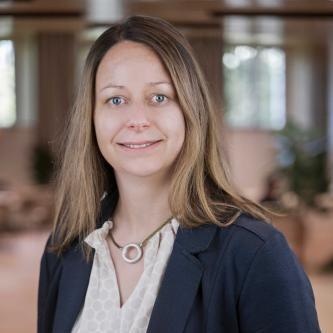
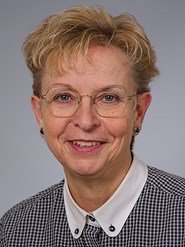
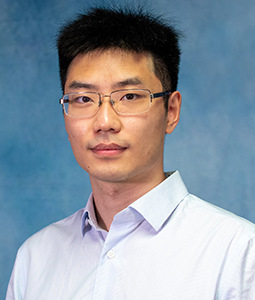
Leona Wiegmann is an Associate Professor of Management Control at ESCP Business School in Paris. Her research examines how digitalization reshapes accounting practices, focusing on tensions between technology and human actors, evolving roles of management accountants, and external stakeholder engagement. She employs qualitative methods like field studies, vignettes, and netnography to explore forecasting, performance management, and accountability. Previously, she held faculty positions at WHU – Otto Beisheim School of Management (Germany) and Monash University (Australia). Open to supervising PhD students, her work appears in journals such as Contemporary Accounting Research and Accounting, Auditing & Accountability Journal . Education: PhD from WHU – Otto Beisheim School of Management Key Research Themes: Digitalization in Accounting, Organizational Dynamics, Qualitative Methodologies Her articles analyze topics ranging from proxy advisor accountability to information search during crises, reflecting her focus on real-world organizational challenges. While no scientific awards are listed, her contributions to accounting and organizational studies literature highlight her scholarly impact.
James Davis is an Assistant Professor in the Elmore Family School of Electrical and Computer Engineering at Purdue University. His research focuses on engineering robust computing systems through socio-technical approaches, emphasizing software correctness, security, and usability. He applies empirical methodologies to evaluate the practical impact of technical solutions. Research interests include software supply chain security, deep learning reproducibility, regular expression optimization, IoT cybersecurity, and the socio-technical challenges in system design. His work bridges theoretical foundations with real-world applications, addressing issues like regex denial-of-service (ReDoS), model reuse in AI, and developer practices for safety-critical systems. Recent publications span topics such as actor reputation metrics in software supply chains, AI safety for downstream developers, and edge-computing optimizations for vision transformers. His interdisciplinary approach integrates empirical studies, formal verification, and human-centered design principles. No scientific awards are explicitly mentioned in the provided materials. His advising record is currently unspecified, though his research group likely engages in collaborative projects with industry and academia. He contributes to initiatives like the Sigstore ecosystem and open-source security tooling, reflecting his commitment to practical impact.
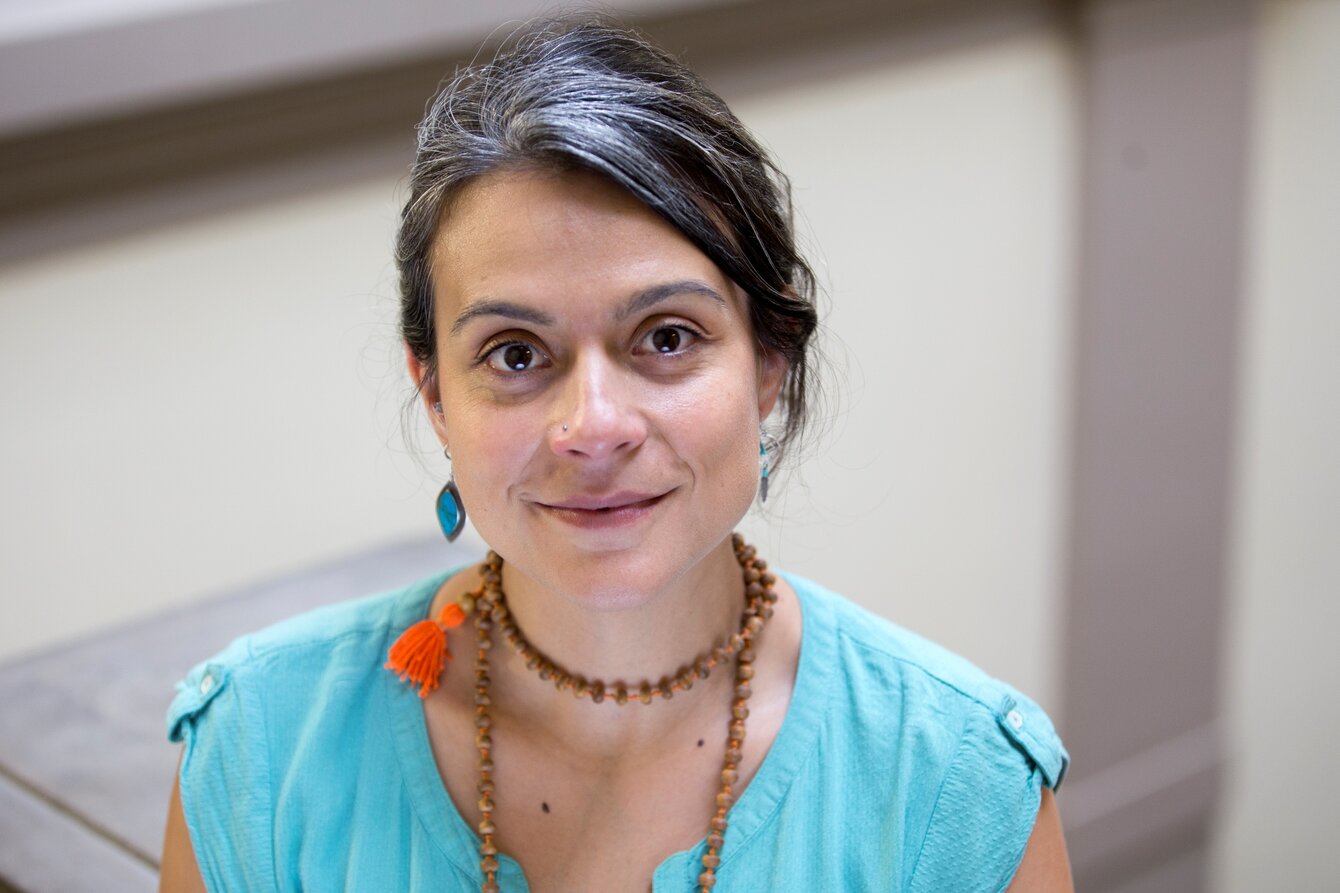
Luisa Arango is an Associate Professor at the Institute of Ethnology, Faculty of Social Sciences, University of Strasbourg, where she also serves as Director of Studies for the Bachelor's program in Anthropology and Ethnology in Distance Learning (EàD). She is based at the MISHA building and is affiliated with the SAGE Laboratory (UMR 7363). Her academic work spans research, teaching, and interdisciplinary collaboration, with a strong focus on urban anthropology and environmental issues. Her research centers on urban environments, water and land resource management, identity dynamics in cities, and the anthropology of techniques, with fieldwork conducted in the Nile Valley (Sudan) and the Colombian Caribbean. She explores themes such as urbanization processes, spatiality and power, local perceptions of climate change, and alternative ethnographic methods. Her work often engages with political ecology, interdisciplinary environmental research, and the social dimensions of nature and resources. Luisa Arango’s recent publications (2013–2024) reflect a consistent focus on hydrosocial systems, urban water governance, land appropriation, and knowledge production in Africa and Latin America. Her articles appear in journals such as Canadian Journal of African Studies , Espaces et Sociétés , Autrepart , and Sources . She has also contributed to interdisciplinary dialogues on climate change, artistic ethnography, and field drawing as research tools. Knowledge about nature in Africa Urban water management in Khartoum and Cartagena Land rights and ethnic identity in Colombia Interdisciplinary approaches to climate and urban planning Ethnographic and artistic methodologies Luisa Arango is actively involved in research networks such as WATERLAT-GOBACIT and GAIA (University of Antioquia, Colombia). She has supervised academic projects and contributed to methodological innovations in ethnographic research. She teaches courses on ethnographic methods, urban anthropology, and research forums for distance-learning students. Her work emphasizes the political dimensions of resource access, the transformative power of collective action, and the importance of integrating social and material realities in understanding urban and environmental change. She has no listed scientific awards in the provided text, but her sustained publication record and leadership roles indicate significant scholarly impact. She is also engaged in public-facing research, including graphic works and documentaries on anthropological practice.
Sébastien Michon is a CNRS Research Director at the SAGE laboratory (Sociétés, acteurs, gouvernement en Europe) at the University of Strasbourg. He holds leadership roles including President of Section 36 (Sociology and Legal Sciences) of the CNRS National Committee and Deputy Director of the Interuniversity House of Human Sciences - Alsace (MISHA). He is also co-leader of the WP 'How European society is regulated' within the Interdisciplinary Thematic Institute MAKErS at the University of Strasbourg (2021–2028). Research Director, CNRS President, Section 36, CNRS National Committee Deputy Director, MISHA Co-leader, WP 'How European society is regulated', ITI MAKErS Member, SAGE Laboratory, University of Strasbourg Education: Habilitation to Direct Research (HDR), University of Paris 1-Panthéon-Sorbonne, 2017 Doctorate in Sociology, Marc Bloch University of Strasbourg, 2006 Sébastien Michon’s research focuses on the sociology of political elites, particularly within European institutions. His work examines the professionalization of political careers, the socialization of political actors, and the dynamics of power and representation in the European Parliament. He employs quantitative methods and sequence analysis to study career trajectories, elite formation, and institutional change. His research extends to public action, parliamentary studies, and the sociology of entrepreneurs and training. He investigates how political fields are structured and how boundaries between politics, economy, and society are negotiated, particularly in the context of EU governance and lobbying. His recent publications reveal a strong trend toward analyzing the revolving door phenomenon, public-private circulations, and the ethics of political careers, especially among European Parliament staff and ministers. He also explores urban politics, municipal elections, and the socio-spatial dimensions of voting. His methodological contributions include innovative uses of sequence analysis and geometric data analysis in sociological research. Scientific Awards and Recognitions: No specific scientific awards or fellowships were mentioned in the provided text. Advising and Grants: Sébastien Michon has led and participated in several significant research programs funded by national and European agencies. These include the ANR REPEIRE project (2024–2025), the ITI MAKErS Chair (2024–2026), the PolEthics project (2022–2025) coordinated by Sciences Po and LIEPP, and the PolEco project under the 'Investissements d’avenir' program at the University of Strasbourg. He also contributed to the NAWA Network on 'Social Space, Fields and Relationality' (2019–2022) funded by the Polish National Academic Exchange Agency. While specific advisees are not listed, his role as an HDR holder and active researcher suggests he supervises PhD and master’s students. He has also produced research datasets, such as the 'Directory of the European Parliament members' (2021), indicating a commitment to open science and collaborative research infrastructure. Labs, Teams, and Networks: Michon is a core member of the SAGE laboratory at the University of Strasbourg and has collaborated extensively with scholars such as Willy Beauvallet, Cécile Robert, Valentin Behr, and Julien Boelaert. He is involved in interdisciplinary initiatives like the ITI MAKErS and has contributed to networks such as the 'Social Space, Fields and Relationality' research network. His work bridges sociology, political science, and European studies, often through collaborative research projects and co-authored publications.
Antoine Miech is a Researcher at DeepMind's Vision Group , with prior affiliations at Inria and Ecole Normale Supérieure where he completed his computer vision Ph.D. under Ivan Laptev and Josef Sivic . He has collaborated with researchers from Facebook AI and Google during his academic career. Research Interests span video understanding, weakly-supervised machine learning, and multimodal analysis. His work focuses on: Text-video embedding Self-supervised video representation Action localization Anticipatory video modeling Scalable multimodal learning Scientific Contributions include: HowTo100M - A massive dataset of narrated instructional videos MIL-NCE - A novel loss function for video-text alignment MEE - A model for handling heterogeneous data Context Gating - Learnable pooling architecture Awards & Recognition : Google Ph.D. Fellowship (2018) Technical Leadership : Created the LOUPE TensorFlow toolbox for feature pooling and maintained annotated video dataset catalogs. Organized the Data Science Game competition (2016-2017).
Andres Verzijl is a Researcher focused on water justice, sustainability, and the interplay between indigenous knowledge and techno-scientific approaches. His work emphasizes grassroots initiatives and fostering symmetrical conversations between diverse forms of knowing. Over 15 years, he has engaged in training students, water professionals, and leaders in irrigation governance and water management in the Andean countries and Asian deltas, particularly the Nile Basin. He critiques how policy discourses and scientific knowledge often marginalize local water practices, advocating for inclusive frameworks that respect multiple knowledges. His research interests center on ontological tensions in water governance, applying political ecology and actor-network theory to study how scientific knowledge and policy discourses influence development projects. He explores these themes through case studies in Peru, Ecuador, India, and Sudan, focusing on groundwater management, irrigation systems in fragile environments, and transnational policy dialogues between regions like the Netherlands and Bangladesh/Vietnam. Recent articles highlight his engagement with spatial variability in Sudan’s Gezira scheme, socio-hydrology experiments in India’s Cauvery Delta, and community-driven water management in the Andes. These works emphasize grassroots perspectives and the role of local knowledge in addressing water security challenges. While no scientific awards are listed, his contributions reflect a commitment to equitable, practice-based solutions in water governance. Andres’s narrative on advising and grants notes his extensive training programs, though specific advisees or grant details are not provided. His work often intersects with community-based initiatives, suggesting a focus on applied research and policy advocacy. No lab or team affiliations are explicitly mentioned, though his collaborations with grassroots leaders imply ongoing engagement with field-based networks.
Dr. Xiang Sun is an Assistant Professor in the Department of Electrical and Computer Engineering at the University of New Mexico (UNM). He holds a Ph.D. in Electrical Engineering from New Jersey Institute of Technology (2018), and M.E. and B.E. degrees from Hebei University of Engineering (2011 and 2008). His research focuses on Mobile Edge Computing, IoT, Drone-assisted Networks, Green Computing, and Data Center Optimization. Dr. Sun has been recognized with awards such as the 2018 InterDigital Innovation Award and NJIT Hashimoto Prize. Education: Ph.D., Electrical Engineering, NJIT (2018) M.E., Computer Applications Technology, Hebei University (2011) B.E., Electronic Information, Hebei University (2008) Research Interests: His work emphasizes IoT resource caching, semantic discovery, green communications, and drone-based mobile access networks. He also explores machine learning applications in edge computing and cybersecurity. Publications & Contributions: Dr. Sun has authored over 40 journal/conference papers, including impactful work on cloudlet networks and IoT semantic mashup. His research has been published in IEEE Transactions, Communications Letters, and top-tier conferences like ICC and GLOBECOM. Awards: 2018 InterDigital Innovation Award 2018 NJIT Hashimoto Prize 2017 IEEE Communications Letters Exemplary Reviewer 2016 IEEE ICC Best Paper Award Professional Activities: He serves as a TPC member for IEEE CCNC and MobiEdge, and reviewer for top journals like IEEE Transactions on Cloud Computing and IEEE Internet of Things Journal. He co-chairs the Social Computing and Semantic Data Mining symposium at IEEE ICNC 2019. Labs & Teams: Active in UNM's Electrical & Computer Engineering labs, focusing on mobile edge computing and IoT innovation. Collaborates with industry partners like InterDigital Communications.
Yana Meerzon is a Full Professor in the Department of Theatre at the University of Ottawa, affiliated with the Faculty of Arts. Her academic roles include teaching advanced courses such as Performance and Migration , THE 5130 Dramaturgy , and THE 5934 Theatre at the Crossroads of Narratives . She holds additional adjunct roles at institutions like Carleton University’s Cultural Mediations Program and Dalhousie University’s Department of English. Her research focuses on theoretical approaches to performance and migration, including studies on displacement, multilingualism, and identity politics. She has authored four books and co-edited nine collections, with recent works exploring Russian nationalism and migration narratives. Her current SSHRC-funded project examines the intersection of migration and neo-nationalism in European theatre. Meerzon’s academic leadership includes serving as President of the Canadian Association for Theatre Research (2020–2022) and membership in global organizations like IFTR and EASTAP. Her educational background includes a Ph.D. from the University of Toronto and advanced degrees from the Russian Academy of Theatre Arts (GITIS). Her scholarly contributions span over 86 publications, including analyses of Wajdi Mouawad’s work, Michael Chekhov’s pedagogy, and digital performance in crises. She actively engages in public discourse through interviews and media links, emphasizing the ethical and cultural dimensions of migrant theatre practices in Canada and beyond.
Ulrica Nylen is an Associate Professor in Business Administration (Management) at Umeå School of Business, Economics and Statistics (USBE), Umeå University. Her work focuses on teaching organizational behavior, leadership, and qualitative research methods, while actively collaborating with societal actors on applied research projects. Research Interests: She investigates professional identity development, particularly among Swedish police officers in international roles; interprofessional teamwork in human services sectors; and collaboration dynamics across organizations. Her methodological focus includes advancing qualitative research techniques. Current projects include studies on women entrepreneurship in Västerbotten and university-society partnerships. Awards: Nordeas thesis award (Diversity and Inclusion) Collaborations & Grants: Engages in multi-stakeholder projects with public agencies and NGOs, emphasizing applied research. Notable collaborations include evaluations of healthcare delivery systems and social service innovations. Labs/Teams: Works within interdisciplinary teams at USBE and partners with regional organizations like Västerbottens läns landsting to implement research into practice.
Kristin Konnyu is a Lecturer in Implementation Science at the Aberdeen Centre for Evaluation, School of Medicine, Medical Sciences and Nutrition, University of Aberdeen. She was previously an Assistant Professor at Brown University’s Center for Evidence Synthesis in Health. Her work bridges evidence synthesis and implementation science across health, public health, and climate change interventions. Education: PhD in Epidemiology, University of Ottawa (2018) BEd in Education, University of Ottawa (2013) MSc in Rehabilitation Sciences, University of British Columbia (2008) BSc in Anatomy and Cell Biology, McGill University (2005) Her research focuses on methods for synthesizing complex interventions and translating evidence into practice, particularly in complex systems involving multiple actors and behaviors. She is interested in de-implementation of low-value care, healthcare innovation adoption, and climate change mitigation in healthcare. She employs interdisciplinary approaches, drawing from epidemiology, education, and rehabilitation sciences. Her recent publications demonstrate strong trends in systematic reviews, meta-analyses, and methodological innovation in implementation science. She frequently contributes to Cochrane reviews and protocols, with a focus on audit and feedback, behavior change techniques, antenatal care, and environmental impacts of health interventions. Her work often involves large collaborative teams and high-impact journals. Scientific Awards: Robert L. Kane Memorial Award (2022) Joseph De Koninick Prize for Outstanding Doctoral Thesis (2019) Worton Researcher in Training Award (2018) Award of Excellence, Faculty of Medicine, University of Ottawa (2017) Kristin Konnyu supervises Masters and PhD students in Applied Health Sciences, with interests in implementation science and evidence synthesis for complex problems. She is co-course coordinator for PU5031: Evidence-based Health and evaluator for two other postgraduate courses. She also teaches short courses and webinars on implementation and evidence synthesis methods. She is affiliated with the Cochrane Collaboration and serves as a methods editor for the Climate Solutions Working Group at the Campbell Collaboration. She leads and contributes to major commissioned reports for agencies like AHRQ and the Department of Veterans Affairs, and her work supports health policy and clinical decision-making. Her lab and team collaborations are extensive, involving international researchers in systematic review methodology and implementation science.
Evangelia Petridou serves as Associate Professor in the Department of Humanities and Social Sciences at Mid Sweden University, where she is core faculty at the Risk and Crisis Research Centre (RCR). Her academic work bridges political science and practical crisis management, with emphasis on European policy processes and Swedish governance structures. Her research focuses on policy entrepreneurship dynamics during crises, particularly examining how actors navigate institutional constraints in emergency contexts. Key areas include reactive policy entrepreneurship, risk communication across EU nations, and the operationalization of national policy styles during pandemics. She integrates theoretical frameworks like Kingdon's Multiple Streams with empirical analyses of Swedish municipal responses to disasters. Recent publications (2022-2025) reveal three dominant trends: conceptual expansion of policy entrepreneurship to street-level bureaucrats, methodological innovation through immersive simulations in crisis training, and comparative analyses of European pandemic responses. Her work consistently addresses the tension between centralized policy directives and local implementation challenges, especially in decentralized systems like Sweden. Dr. Petridou leads multiple externally funded projects including FUTURESILIENCE, LEGITIPREP, and RISE (Resilience in Sweden: Governance, Social Networks and Learning). She directs the RCR Lab at Mid Sweden University, which pioneers experimental design in crisis management education through virtual/physical immersion classrooms. Her collaborative network spans 15+ European institutions with frequent co-authorship on cross-national policy studies.
Rodrigo Zamith is an Associate Professor and Chair of the Journalism Department at the University of Massachusetts Amherst. He is also a Faculty Associate of UMass' Computational Social Science Institute and a Faculty Affiliate of its Department of Communication. His work bridges journalism and technology, focusing on the evolving media landscape and digital research methods for social scientists. Dr. Zamith received his academic training from: Ph.D. in Mass Communication from the University of Minnesota M.S. in Mass Communication from Florida International University B.A. in Journalism from the University of Minnesota Rodrigo Zamith's research interests focus on the intersection of journalism and technology, examining how digital platforms and algorithms reshape news production and consumption. His work explores news innovation, emerging media technologies, data-driven news work, algorithms in journalism, and computational social science. He investigates how journalistic practices are reconfigured in digital environments and develops innovative digital research methods for studying media phenomena. His scholarship draws on theoretical frameworks from sociology, psychology, science & technology studies, and economics, employing both quantitative and qualitative methodologies. His recent publications demonstrate a clear trajectory examining the role of algorithms, data, and digital platforms in journalism. His work spans computational analyses of news recommendation systems, examinations of open-source infrastructure in newsrooms, studies of visual climate change communication on social media, and investigations into how journalists navigate audience metrics. His research reveals both the challenges and opportunities presented by technological change in journalism, with particular attention to issues of transparency, trust, and democratic implications. Dr. Zamith has received significant recognition for his scholarly contributions: Nafziger-White-Salwen Dissertation Award (best dissertation in mass communication) Finalist for the Gene Burd Dissertation Award Finalist for Digital Journalism's Article of the Year award Lilly Teaching Fellow FlexLearning Fellow Recipient of UMass' College Outstanding Teaching Award Finalist for the University's Distinguished Teaching Award As an educator, Dr. Zamith teaches both conceptually-oriented and skills-oriented courses including Data-Driven Storytelling, Introduction to Journalism, International Journalism, Content Analysis, and Introduction to Visual Storytelling. His teaching excellence has been recognized through multiple awards. While specific grant information isn't detailed in the provided text, his research output suggests active engagement with funding opportunities in computational social science and digital journalism. Dr. Zamith is affiliated with UMass' Computational Social Science Institute, where he contributes to interdisciplinary research on digital methods. His work with GitHub repositories suggests engagement with open-source communities, and his research on newsroom technology indicates connections with media organizations exploring digital innovation.
Lena Brogaard is an Associate Professor at Roskilde University's Department of Social Sciences and Business, specializing in public-private interaction. She leads the Roskilde School of Governance research group, serves as deputy head of the Center for Research in Public-Private Partnerships (COPS), and co-manages the department's PhD school. Her work focuses on how public-private collaborations influence quality, sustainability, and innovation in public services, with a particular emphasis on procurement and relational contracting. Education: M.Sc. and Ph.D. in Political Science from the University of Copenhagen; research residency at the University of Minnesota; exchange at Columbia University. Brogaard employs mixed methods, including surveys, administrative data, and interviews, while contributing to systematic literature reviews. Recent projects like CIGS (2025–2028) examine green skills in vocational education, and TROPICO (2017–2021) explored open governance models. Her publications address public procurement, contract management, and innovation partnerships. Key awards include the 2023 Ministry of Education and Research Teaching Prize and the 2022 Roskilde University Teaching Award. She actively engages in media commentary on public-private cooperation, presented at institutions like Cardiff University (2025), and co-authored datasets on performance information interpretation (2023). Brogaard also contributes to journals as an Associate Editor for Public Administration.
Professor Jonathan Tummons is a leading ethnographer of education at Durham University's School of Education. He holds roles as a Fellow of the Durham Research Methods Centre and the Wolfson Research Institute for Health and Wellbeing. His research focuses on vocational learning, professional development, and higher education, employing Actor-Network Theory (ANT) and Communities of Practice (CoP) frameworks. Tummons has published extensively on education policy, professional expertise, and the intersection of material objects with learning processes. He serves as deputy editor of Ethnography and Education and organizes conferences like the Oxford Ethnography and Education event. His work has influenced UK policy bodies such as Ofsted and the OECD. Research Interests: Actor-Network Theory, Communities of Practice, Further/Higher Education, Professional Learning, Modes of Existence. He advises doctoral students on ethnographic methods and pedagogical innovation. Esteem Indicators: Senior Fellow of the Higher Education Academy Editorial Roles: Deputy Editor of Ethnography and Education , Associate Editor of Higher Education Research and Development External Roles: PhD Examiner at multiple universities (UK, Spain, Australia) Key Publications Include: Communities of Practice in Higher Education (2024) Exploring Communities of Practice in Further and Adult Education (2022) Ethnographies of Education for Social Justice (2025) Labs/Teams: Active in ethnographic research networks across universities and healthcare institutions.
Qi Zhang is an Assistant Professor in the Department of Computer Science and Engineering, AI Institute at the Molinaroli College of Engineering and Computing, University of South Carolina. His research focuses on developing safe, reliable, and trustworthy AI systems through advancements in reinforcement learning and decision-making algorithms for uncertain environments. He holds a Ph.D. from the University of Michigan (2020) and a B.E. from Shanghai Jiao Tong University (2015). Research interests include artificial intelligence, reinforcement learning, multi-agent systems, and decision-making under uncertainty. Key themes involve leveraging domain knowledge for robust AI solutions and ensuring ethical, transparent, and risk-aware system designs. His work spans applications in autonomous systems, healthcare, robotics, and materials science. Current projects emphasize improving algorithmic trustworthiness, safety, and adaptability across diverse contexts. He is affiliated with the AI Institute at USC and maintains an active research lab focused on these areas.