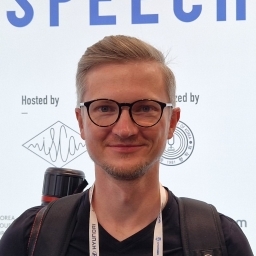
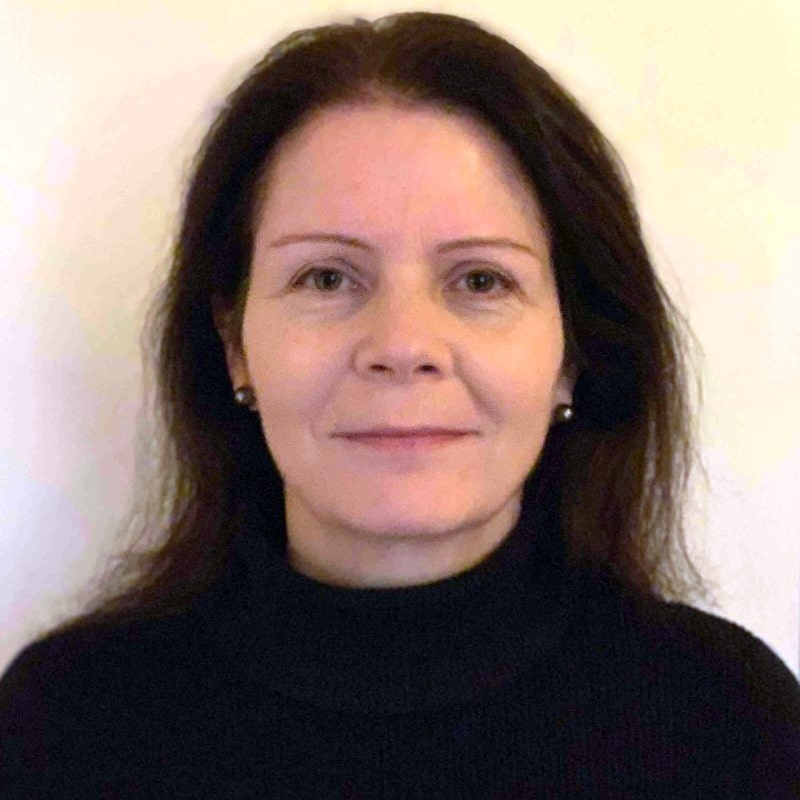
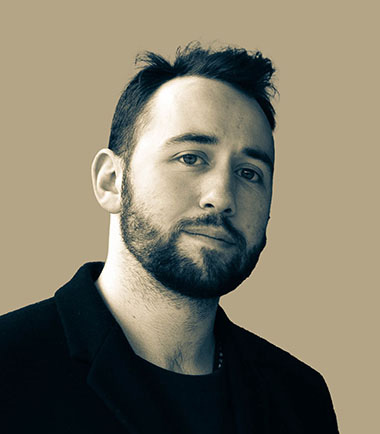
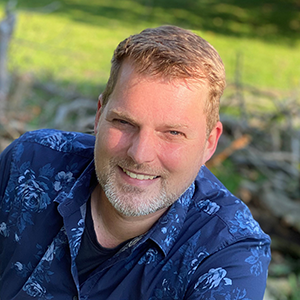
Dr. Marcin Witkowski is an Assistant Professor at the AGH University of Science and Technology in Cracow, Poland, specializing in the Department of Electronics and Telecommunications . His work focuses on signal processing with particular emphasis on speaker verification, speech dereverberation, and multichannel audio analysis. He holds a Ph.D. (2022) and master's degree (2012) in Electronics and Telecommunication from AGH UST, alongside a B.E.E. in Acoustics Engineering (2013). Research Interests: Far-field speaker verification, speech dereverberation techniques, robust audio processing, and blind source separation. His projects include developing anti-spoofing systems and enhancing distant speech recognition in reverberant environments. Recent work explores neural network hallucinations in Whisper ASR and VR-based voice training tools. Labs/Teams : Core member of the Signal Processing Group at AGH UST. Active in EU-funded projects on multichannel signal processing and speaker recognition systems.
Laurie Heller is a Teaching Professor of Psychology at Carnegie Mellon University's Department of Psychology, affiliated with the Dietrich College of Humanities and Social Sciences. She holds additional affiliations with the Carnegie Mellon Neuroscience Institute (CMNI), CMU Music & Technology, CMU Center for Transformational Play, CMU CyLab Security and Privacy Institute, and the Center for the Neural Basis of Cognition (CNBC). Her research focuses on auditory perception, cognitive neuroscience, and the interplay between sound and human cognition. Education includes an S.B. in Brain & Cognitive Sciences from MIT, a Ph.D. in Psychology from the University of Pennsylvania, and a postdoctoral fellowship in Neuroscience at the University of Connecticut Health Center. Her work explores acoustic cues in sound event recognition, sound localization, and the effects of unwanted sounds. Collaborative projects include improving hearing aids, navigation aids for the visually impaired, and machine learning systems for sound classification. Recent research trends emphasize misophonia, environmental sound perception in hearing-impaired populations, and AI-driven sound synthesis. Her courses include Auditory Perception, Research Methods in Cognitive Psychology, and Music Cognition. She leads the Auditory Perception Lab and serves as an Associate Editor for the Journal of the Acoustical Society of America.
Professor Julie Wall is a faculty member at the University of West London, serving as Professor of AI and Advanced Computing in the School of Computing and Engineering. She is actively engaged in research, teaching, and professional service, including her role as an expert at the British Standards Institution (BSI) in the domain of artificial intelligence. Research Interests: Julie Wall's research is centered on the design and application of intelligent systems for processing and modeling temporal data, particularly in speech and language. She leverages neural network architectures—ranging from biologically inspired models to computationally efficient deep learning systems—to analyze diverse data types such as audio, video, images, tabular data, and 3D features. Her work extends to developing production-grade deep learning and natural language understanding systems for immersive environments like virtual and augmented reality. Publications and Research Trends: Her body of work, comprising over 50 high-quality papers and multiple patents, reflects a strong trajectory in AI systems that integrate multimodal data with temporal dynamics. The research spans core areas of machine learning, natural language processing, and applied AI, with increasing focus on real-world deployment, efficiency, and intelligent interaction in extended reality platforms. Scientific Awards: US Patent UK Patent Advising and Grants: Julie Wall supervises research students across disciplines including forensic science and artificial intelligence. She contributes extensively to academic programs, teaching courses such as BSc and MSc in Computer Science, Artificial Intelligence, Data Science, and specialized AI programs in cybercrime and criminal justice. While specific grant details are not listed, her patent holdings and publication volume suggest sustained research funding and project leadership. Labs and Teams: As a leading researcher in AI and advanced computing, she is likely involved in or leads research groups focused on intelligent systems, deep learning, and multimodal AI at the University of West London, though specific lab names are not mentioned in the text.
Dr. Rob Maher is a Professor in the Department of Electrical & Computer Engineering at Montana State University (MSU), part of the Norm Asbjornson College of Engineering. He holds a BS from Washington University, an MS from the University of Wisconsin-Madison, and a Ph.D. from the University of Illinois at Urbana-Champaign, all in Electrical Engineering. His research focuses on digital audio signal processing, audio forensics, music synthesis, and acoustics. He served as ECE Department Head from 2007–2017 and is an Affiliate Professor of Music Technology in MSU's School of Music. Education: B.S. Washington University (1984), M.S. UW-Madison (1985), Ph.D. Illinois Urbana-Champaign (1989) Research Interests: Forensic audio analysis, gunshot acoustics, music synthesis, room acoustics Teaching: Courses on signal processing, audio engineering, and ethics in engineering He is a Fellow of the Audio Engineering Society (AES), Senior Member of IEEE, and has received awards including MSU's President's Excellence in Teaching Award (2022). His work includes over 50 publications on forensic audio analysis and acoustic modeling, as well as grants from the National Institute of Justice and National Park Service. Professional service includes editorial roles at the Journal of the AES and leadership in organizations like the IEEE Central Montana Section. He also engages in community activities as a runner and musician, including membership in the Second String Orchestra.
Gaël Richard is a Professor at Télécom Paris, part of the Institut polytechnique de Paris. He leads the Signal, Statistics and Learning (S²A) research group within the LTCI laboratory and is the Executive Director of Hi! Paris, a hub for AI and data science. His primary research focuses on audio signal processing, including speech synthesis, source separation, and non-negative matrix factorization techniques. He has contributed significantly to applications in automotive and music industries, and his work has been recognized with the 2020 IMT-Académie des Sciences Grand Prix and a 2022 ERC Advanced Grant for the HI-Audio project. Education and Career: Gaël Richard transitioned from classical music to applied mathematics, earning a PhD in speech synthesis. His academic journey blends technical expertise with creative problem-solving, leading to impactful contributions in machine learning and audio technologies. Research Interests: His work spans machine learning for audio signals, including speech synthesis, sound separation, and music information retrieval. He emphasizes reproducibility, publishing tools like YAAFE and databases widely used in the field. Key Projects: The HI-Audio project explores AI-driven audio processing, while his ERC grant supports advancements in hybrid deep learning for audio. He co-supervises PhD students in areas like intelligibility in noisy environments and EEG-based source separation. Awards and Recognition: In addition to major grants and the IMT-Académie des Sciences prize, his work on source separation and audio indexing has earned international acclaim. He actively contributes to academic conferences and serves on editorial boards. Labs and Teams: He leads the S²A team at LTCI, fostering collaborations between academia and industry partners like Thales and Deezer. His research bridges theoretical advancements with practical applications in audio technology.
Professor Lorenzo Picinali is a faculty member at Imperial College London's Dyson School of Design Engineering, specializing in Spatial Acoustics and Immersive Audio. He leads the Audio Experience Design research group, focusing on perceptual and computational aspects of spatial audio, ecoacoustic monitoring, and clinical hearing applications. His academic journey includes roles at Imperial College London since 2015, previously at De Montfort University (2009–2015). He holds a PhD in Music Technology (2010) and degrees in Auditory Science and Music Communication. Research interests span spatial audio rendering, binaural technologies, hearing science, and ecoacoustic monitoring. His work explores applications like VR-based auditory training for cochlear implant users (BEARS project), the SONICOM HRTF dataset for personalized audio, and MAARU devices for ecological soundscapes. Collaborations span industries and universities, with funding from EU and UK research initiatives. Key publications include advancements in HRTF upsampling via GANs, spatial hearing training, and ecoacoustic recording systems. He advises numerous students and oversees projects like PLUGGY for cultural heritage and HELIX for auditory-cognitive training. His labs develop tools like the 3D Tune-In Toolkit and MAARU units, emphasizing practical applications of audio research.
Soon Il Kwon is a Professor in the Department of Software at Sejong University's College of Software Convergence in Seoul, South Korea. He leads the Interaction Technology Laboratory and has established himself as a prominent researcher in speech and audio processing with 46 research outputs spanning from 2002 to 2024. Department of Software, Sejong University College of Software Convergence, Sejong University Head of Interaction Technology Laboratory Dr. Kwon received his academic credentials from prestigious institutions: B.S. in Electronic Engineering from Yonsei University (1998) M.S. in Electrical Engineering from University of Southern California (2000) Ph.D. in Electrical Engineering from University of Southern California (2005) His research interests focus on the intersection of artificial intelligence and human communication, specializing in speech and audio signal processing for pattern recognition. He has pioneered work in emotion recognition from voice signals, user personality trait recognition, speech recognition for elderly populations, and heart disease classification through stethoscopic analysis. His work bridges technical innovation with practical applications that address real-world challenges in healthcare and human-computer interaction. Analysis of Dr. Kwon's recent publications reveals a clear research trajectory focused on advancing speech emotion recognition through deep learning techniques. His work demonstrates a progression from traditional machine learning approaches to sophisticated neural network architectures including CNNs, LSTMs, and attention mechanisms. The research spans multiple application domains including healthcare diagnostics, emergency response systems, and adaptive user interfaces, showing his ability to translate theoretical advances into practical solutions. His most recent work emphasizes efficiency and multimodal approaches to emotion recognition. Dr. Kwon's research contributes to several United Nations Sustainable Development Goals, particularly those related to good health and well-being, quality education, and industry innovation. His laboratory, the Interaction Technology Lab, focuses on AI-based speech/audio signal and information processing for human physical, mental and biological pattern recognition. The lab's research has practical implications for developing more intuitive human-computer interfaces and diagnostic tools.
Hugh O'Dwyer is a Teaching Professor at Trinity College Dublin (TCD) within the Department of Electronic Engineering, where he lectures on the M.Phil in Music and Media Technology (MMT) program. He holds a Ph.D. from TCD (2021) under Prof. Frank Boland, focusing on Machine Learning applications for audio, particularly Sound Source Localization and Virtual Testing of Binaural Audio. His doctoral work included objective/subjective headphone and ambisonic microphone evaluation, alongside machine learning-based localization methods. Education: He graduated from TCD's School of Engineering with a Biomedical Engineering degree (2015), researching EEG-based musical instrument perception in the brain through his thesis. During studies, he actively participated in Trinity Orchestra and Jazz Society roles, earning a lifetime honorary membership for his contributions. Research interests span spatial audio engineering, machine learning in acoustics, and music technology education. He has published extensively with the Audio Engineering Society (AES), presenting at conferences in Helsinki, Milan, and Dublin. His work includes VR audio recording techniques, sound projector calibration, and ambisonic microphone comparisons. Outside academia, he mentors young musicians through the Suburban Sounds program and developed a CPD course in music technology for over 100 teachers during the pandemic. As a musician/producer, he has collaborated with prominent Irish artists like Hozier and Saint Sister, and his band Spies' album 'Constancy' (2018) received critical acclaim.
Stefan Goetze is a Visiting Professor in the Department of Computer Science at the University of Sheffield, affiliated with the Speech and Hearing (SpandH) research group. He previously held a Senior Lecturer position from 2020 to 2025. He earned his Dipl.-Ing. (2004) and Dr.-Ing. (2013) in Electrical/Communication Engineering from the University of Bremen, Germany. Prior to his academic role at Sheffield, he led departments at the Fraunhofer-Institute for Digital Media Technology IDMT in Oldenburg, Germany, including the "Audio System Technology for Audiology and Assistive Systems" and "Automatic Speech Recognition" groups. His research focuses on machine learning, signal processing, and assistive technologies, particularly in speech enhancement, dereverberation, and hearing aid systems. He supervises multiple PhD students and has contributed to grants such as the "Participatory co-design of a platform for collecting atypical speech data" (2022). His work spans acoustic event detection, audiovisual processing, and medical applications of speech technology. Key research interests include robust speech recognition in reverberant environments, noise reduction, and the application of deep learning to audio challenges. Notable publications address speech separation models, metric-driven enhancement, and active learning for sound classification. Collaborations include projects on assistive living technologies and healthcare communication systems.
Roberto Gil Pita is a Professor at the University of Alcalá (Spain), affiliated with the Department of Signal Theory and Communications. He leads the AES3 research group focusing on acoustic and electromagnetic smart sensor networks and signal processing applications. His doctoral work (2006) centered on radar target classification using statistical and AI methods under the supervision of Dr. Manuel Rosa Zurera. His research spans signal processing, machine learning, and their applications in aerospace, biomedical systems, and smart cities. Key areas include UAV detection, emotion recognition from speech, and acoustic localization using microphone arrays. His academic background includes a doctorate from the University of Alcalá and extensive contributions to wireless acoustic sensor networks, hearing aid signal processing, and bioimpedance spectroscopy. He has developed energy-efficient algorithms for real-time audio analysis, acoustic violence detection systems, and robust methods for speech enhancement in noisy environments. His work bridges theoretical signal processing with practical engineering solutions for defense, healthcare, and urban monitoring. Research interests extend to aeroelastic flutter analysis in aviation, wearable biomedical sensors for stress assessment, and data-driven approaches for sound environment classification. He has pioneered the use of deep learning in flutter testing and acoustic event classification, contributing to datasets like REALISED for benchmarking machine learning models. Notable projects include acoustic localization of drones using microphone arrays, real-time emotion detection systems, and collaborative research in smart healthcare technologies. His work emphasizes computational efficiency and energy conservation, particularly for embedded systems and battery-operated devices.
Prof. Katie Skinner is an Assistant Professor of Robotics at the University of Michigan, leading the Field Robotics Group (FRoG). Her research focuses on enabling autonomy in dynamic environments through advancements in perception, multi-sensor fusion, and robot learning. She specializes in underwater and space robotics, with applications in marine archaeology, autonomous vehicles, and planetary exploration. Her work has led to innovations in sonar-based perception, underwater SLAM, and neural radiance fields for 3D reconstruction. She has secured prestigious grants, including the NSF CAREER Award, and actively mentors PhD students like Advaith Sethuraman and Anja Sheppard. Prof. Skinner collaborates with institutions such as NOAA and NASA, contributing to real-world field deployments like the Thunder Bay National Marine Sanctuary surveys. The FRoG lab has developed datasets like AI4Shipwrecks, advancing machine learning for underwater exploration. Her educational background and prior roles are not explicitly detailed in the provided texts, but her extensive conference presentations (IROS, CVPR, ICRA) and leadership in major robotics initiatives underscore her expertise. She emphasizes bridging simulation and real-world deployments, with recent work on GPU-accelerated underwater simulation frameworks (OceanSim) and radar/sonar fusion techniques. Her lab’s contributions span both theoretical advancements and practical tools for autonomous systems in challenging environments. Awards: NSF CAREER Grant Key Collaborations: NOAA Ocean Exploration Program, Thunder Bay National Marine Sanctuary Labs/Teams: University of Michigan Field Robotics Group (FRoG)
Hassan Kais is a Teacher-researcher affiliated with the Institute of Acoustics at Le Mans University. His work bridges acoustics and telecommunications, focusing on advanced signal processing techniques. Key research areas: Acoustics, Machine Learning, Wireless Communications Institution: Le Mans University, France Hassan's research explores the intersection of acoustic signal analysis and next-generation communication systems. Notably, he has contributed to: Innovative microphone array designs for sound capture SCMA (Sparse Code Multiple Access) systems in telecommunications Machine learning applications in acoustic and wireless signal processing mmWave hybrid MIMO systems for 5G networks Thermo-acoustic and electroacoustic sensor development His publications demonstrate interdisciplinary expertise in: Acoustic wave propagation in complex media Deep learning for communication protocols Signal processing algorithms Metamaterials and transducer design Audio sensor networks Non-linear acoustics applications
Shubhr Singh is a Visiting Professor at Queen Mary University of London's School of Electronic Engineering and Computer Science, based in the Peter Landin building (Room CS 403). His research focuses on artificial intelligence, machine learning, audio signal processing, and their applications in bioacoustics and financial technology. He has contributed to advancements in graph neural networks (GNNs) for audio identification and classification, few-shot learning for bioacoustic event detection, and AI-driven innovations in banking systems. His work spans interdisciplinary areas such as perceptual music similarity metrics, intelligent audio control systems, and agricultural studies on crop growth optimization. Singh collaborates on international challenges like the DCASE series, exploring cutting-edge methods in sound event detection and domain adaptation. Key research trends in his publications include leveraging GNNs for complex audio analysis tasks, addressing data scarcity via few-shot learning, and integrating AI into real-world applications like neobanks and agricultural sustainability. His articles reflect a blend of theoretical advancements and practical implementations across diverse domains.
Aidan Hogg is an Assistant Professor/Lecturer in Computer Science at Queen Mary University of London (QMUL) and an Honorary Research Associate at Imperial College London. His primary affiliation is with the Centre for Digital Music (C4DM) and the School of Electronic Engineering and Computer Science at QMUL. He co-leads the Virtual, Immersive, Augmented and Binaural Audio Lab (VIABAL) . Education: PhD and MEng from Imperial College London, specializing in engineering and computer science disciplines. His research focuses on deep learning for spatial acoustics , immersive audio , and statistical signal processing with applications to speech and audio systems. Key areas include HRTF upsampling , speaker diarization , and acoustic localization . Grants: Secured funding such as the Online Speech Enhancement in Scenarios with Low Direct-to-Reverberant-Ratio grant (£65,621 from L-ACOUSTICS UK LIMITED, 2024–2025). His work bridges academia and industry, particularly in audio engineering and AI-driven audio solutions. Labs/Teams: Active in the Centre for Multimodal AI and collaborates with institutions like the Central Conservatory of Music, China. His research outputs include datasets like the SONICOM HRTF Dataset and contributions to conferences such as DAFX, ICASSP, and WASPAA.
Vincent Lostanlen is a Researcher (chargé de recherche) at CNRS, affiliated with the LS2N laboratory located at Centrale Nantes engineering school. He also serves as a visiting scholar at New York University. His research focuses on developing artificial intelligence for audio analysis, emphasizing machine listening systems, bioacoustic monitoring, and computer music. Key projects include the BirdVox platform for avian migration monitoring and the Kymatio Python library for wavelet scattering transforms. Education: Ph.D. in Mathematics from École Normale Supérieure (2017), supervised by Stéphane Mallat; MSc in Acoustics & Music Informatics from Université Pierre-et-Marie-Curie (2013); Dipl. Ing. in Signal Processing from Télécom ParisTech (2013). Research interests span audio representation learning, environmental sensor networks, and generative models for sound. Notable contributions include the SONYC-UST urban sound dataset and the PCEN signal frontend for robust acoustic sensing. Scientific awards include the 2019 AFIM Young Researcher Award, 2016 SFA Best Poster Prize, and 2015 IEEE MLSP Best Paper Award. He advises graduate students across computer science and music technology domains, with former advisees working in academia and industry. Current activities include developing green AI for audio processing and collaborating on bioacoustic sensor networks for biodiversity monitoring. His work bridges signal processing theory with practical applications in music, ecology, and biomedical engineering.