معرفی
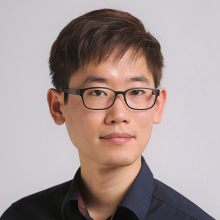
Soon Il Kwon is a Professor in the Department of Software at Sejong University's College of Software Convergence in Seoul, South Korea. He leads the Interaction Technology Laboratory and has established himself as a prominent researcher in speech and audio processing with 46 research outputs spanning from 2002 to 2024.
- Department of Software, Sejong University
- College of Software Convergence, Sejong University
- Head of Interaction Technology Laboratory
Dr. Kwon received his academic credentials from prestigious institutions:
- B.S. in Electronic Engineering from Yonsei University (1998)
- M.S. in Electrical Engineering from University of Southern California (2000)
- Ph.D. in Electrical Engineering from University of Southern California (2005)
His research interests focus on the intersection of artificial intelligence and human communication, specializing in speech and audio signal processing for pattern recognition. He has pioneered work in emotion recognition from voice signals, user personality trait recognition, speech recognition for elderly populations, and heart disease classification through stethoscopic analysis. His work bridges technical innovation with practical applications that address real-world challenges in healthcare and human-computer interaction.
Analysis of Dr. Kwon's recent publications reveals a clear research trajectory focused on advancing speech emotion recognition through deep learning techniques. His work demonstrates a progression from traditional machine learning approaches to sophisticated neural network architectures including CNNs, LSTMs, and attention mechanisms. The research spans multiple application domains including healthcare diagnostics, emergency response systems, and adaptive user interfaces, showing his ability to translate theoretical advances into practical solutions. His most recent work emphasizes efficiency and multimodal approaches to emotion recognition.
Dr. Kwon's research contributes to several United Nations Sustainable Development Goals, particularly those related to good health and well-being, quality education, and industry innovation. His laboratory, the Interaction Technology Lab, focuses on AI-based speech/audio signal and information processing for human physical, mental and biological pattern recognition. The lab's research has practical implications for developing more intuitive human-computer interfaces and diagnostic tools.