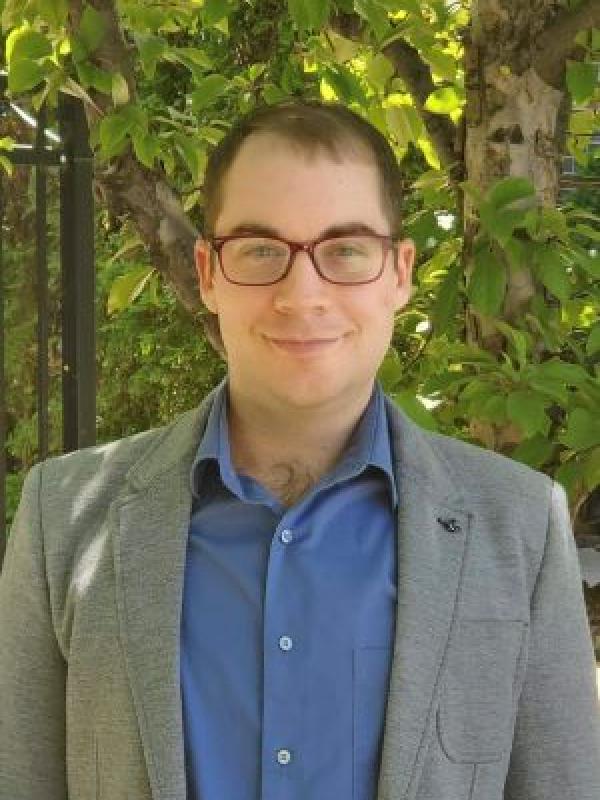
Aurèle Maheo is a Research Fellow at the Computer Science Department of Telecom SudParis, affiliated with the Parallel and Distributed Systems (PDS) group. His research focuses on distributed systems, parallel computing, and hardware acceleration, with applications in machine learning and high-performance computing. He has contributed to projects such as SpeedyLoader for optimizing machine learning pipelines and FPGA memory bandwidth improvements. His work bridges theoretical distributed systems principles with practical implementation challenges in large-scale environments. Affiliations: PDS Group, Computer Science Department, Telecom SudParis Research interests include distributed consensus algorithms, system scalability, and hardware-software co-design for accelerating computational workflows. Recent work highlights include presentations on machine learning pipelining techniques and FPGA-based memory optimization strategies.
Jiannan Wang is an Associate Professor in the School of Computing Science at Simon Fraser University (SFU). He holds a Ph.D. from Tsinghua University (2013) and a B.Sc. from Harbin Institute of Technology (2008). His research focuses on database systems, data management, and data science, with particular emphasis on data cleaning, crowdsourcing, and big data technologies. He leads the SFU Data Science Research Group, aiming to accelerate data science workflows through innovative tools like DataPrep and ConnectorX. Education: Ph.D. in Computer Science and Technology, Tsinghua University, China (2013) B.Sc. in Computer Science and Technology, Harbin Institute of Technology, China (2008) Research Interests: Dr. Wang's work spans database systems, data cleaning, crowdsourcing, and big data education. He develops open-source tools for data scientists to streamline data preparation and analysis. His lab's mission is to make data science more efficient through technologies like DataPrep and ConnectorX . Awards: IEEE TCDE Rising Star Award (2018) CS-Can|Info-Can Outstanding Early Career Researcher Award (2020) VLDB Best Experiments, Analysis & Benchmark Paper Award (2021) PVLDB Distinguished Review Board Member Award (2020) Advising & Leadership: Director of SFU's Professional Master's Program in Big Data and Visual Computing. Supervised over 20 graduate and undergraduate students, many of whom have gone on to roles at top companies like Google, Amazon, and Huawei. Lab & Teams: Part of the SFU Data Science Research Group and the SFU Big Data Academic Advisory Committee. His lab collaborates with industry partners and contributes to open-source projects in data management and machine learning.
Marc Pollefeys is a Full Professor of Computer Science at ETH Zurich and Director of the Microsoft Mixed Reality and AI Zurich Lab. He has held roles such as Visiting Professor at Stanford University (2007) and Assistant/Associate Professor at UNC-Chapel Hill (2002–2009). His research focuses on 3D computer vision, robotics, machine learning, and augmented reality. Education: PhD in Computer Science from KU Leuven (1999), followed by postdoctoral research there until 2002. He transitioned to academic roles at UNC-Chapel Hill before joining ETH Zurich in 2007. Research interests include 3D reconstruction, visual localization, SLAM, and applications in archaeology, urban modeling, and robotics. Notable projects include real-time 3D scanning, city-scale reconstruction, and autonomous vision-based drones. Key awards include ACM Fellow (2022), IEEE Fellow (2012), and ERC Starting Grant (2008). He advises numerous PhD students and collaborates with institutions like Google and Microsoft. Labs and teams: Leads the Computer Vision and Geometry (CVG) lab at ETH Zurich and directs the Microsoft Mixed Reality and AI Lab. His work bridges academia and industry, focusing on perception for mixed reality and autonomous systems.
Tiina Salmi is an Academy Research Fellow specializing in superconductivity and high-field magnet systems. She holds a Doctor of Science (Technology) in Electrical Engineering (2015) and a Master of Science in the same field (2009). Her research focuses on quench protection systems, superconducting magnet design for particle accelerators (e.g., Future Circular Collider, Muon Collider, and LHC upgrades), and material behavior under extreme conditions. Affiliations: Academy of Finland, collaborating with institutions like CERN and LARP. Key Projects: FCC dipole development, Muon Collider storage ring magnets, and HTS tape mechanical analysis. Editorial Roles: Editorial board member for IEEE Transactions on Applied Superconductivity (2020–present). Research Interests Her work addresses critical challenges in superconducting magnet technology, including quench dynamics, thermal management, and high-field stability. She employs computational models (e.g., FEM simulations) and AI-driven approaches to optimize magnet performance and safety. Recent focus areas include: Superconducting materials (Nb 3 Sn, ReBCO, HTS) under mechanical/thermal stress CLIQ protection systems for FCC-hh dipoles Surrogate models for predicting heater delays Mechanical behavior of 2G HTS tapes Grants & Activities Active in international collaborations like the Muon Collider Project and the LARP (LHC Accelerator Research Program). Conducted over 80 peer-reviewed publications (2011–2025) and presented at conferences since 2013. Her work aligns with SDGs 9 (Industry, Innovation) and 12 (Sustainable Consumption). Future Work Ongoing projects include optimizing superconducting magnets for next-gen colliders and advancing AI applications in magnet design. Exploring sustainable materials and cost-effective high-field magnet solutions for future accelerators.
Jeffrey C. Suhling is the Quina Distinguished Professor and Department Chair of Mechanical Engineering at Auburn University . His research focuses on the mechanical and thermal behavior of lead-free solder alloys , particularly in automotive electronics and high strain rate applications . He has extensively studied the reliability of hybrid SAC-LTS solder joints under thermal cycling, vibration, and shock. Scientific awards : Quina Distinguished Professor His work integrates finite element modeling , microstructural analysis , and machine learning to predict solder joint failure and optimize material performance. Key areas include creep behavior , damage accumulation , and interfacial reliability in extreme environments.
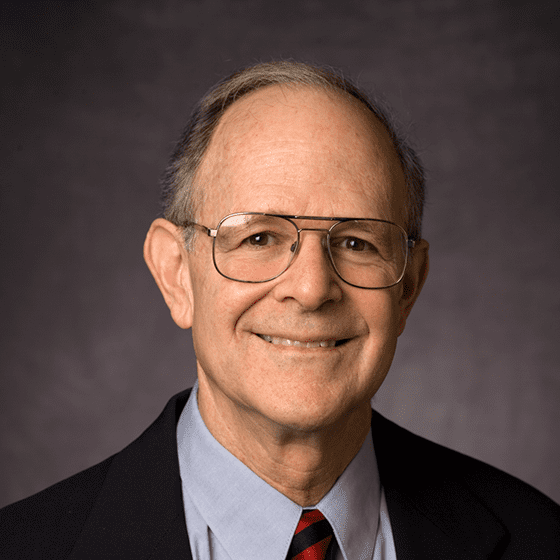
David A. Hammer is the J. Carlton Ward, Jr., Professor of Nuclear Energy Engineering and Professor of Electrical and Computer Engineering at Cornell University's College of Engineering. He has been a faculty member since 1977 and has held visiting positions at Imperial College London, Applied Materials, Inc., and the Paris Observatory. His work bridges nuclear engineering, plasma physics, and electromagnetics. His research focuses on high energy density plasmas generated by pulsed power systems, particularly through wire explosions, X-pinches, and gas-puff Z-pinches. Key areas include inertial confinement fusion, magneto-Rayleigh-Taylor instabilities, and plasma diagnostics using visible and X-ray spectroscopy, laser-based methods, and electro-optical instruments. He also explores the application of X-pinch radiation for biomedical radiography. His recent publications reveal a strong emphasis on Z-pinch and hybrid X-pinch dynamics, plasma turbulence, magnetic field diagnostics using Faraday rotation and Zeeman splitting, and the development of advanced imaging and spectroscopic techniques. His work frequently involves the COBRA pulsed-power generator and addresses fundamental questions in plasma stability, implosion dynamics, and radiative collapse. Distinguished Career Award, Fusion Power Associates Board of Directors (2018) Cornell College of Engineering Teaching Award (2006, 1998) Cornell IEEE Professor of the Year Award (2006) McCormack Advising Award (2005) IEEE Plasma Science and Applications Committee Award (2004) Hammer has advised numerous graduate students and led experimental campaigns involving plasma diagnostics, liner implosions, and laboratory astrophysics. His work is supported by grants from agencies interested in fusion energy, plasma science, and advanced diagnostics. He has developed innovative platforms, including 3D-printed plasma loads, to study turbulent plasma jets and magnetization. His lab at Cornell is a key facility for high-energy-density plasma research. He leads a research group focused on plasma diagnostics and pulsed power experiments, operating the COBRA generator and developing novel measurement techniques. His team investigates plasma instabilities, magnetic field generation, and the transition from radial implosions to collimated jets, with implications for both fusion and astrophysics.
S. Mohadeseh Taheri-Mousavi is an Assistant Professor in the Department of Materials Science and Engineering at Carnegie Mellon University (CMU), part of the College of Engineering. She joined CMU in September 2022 after postdoctoral appointments at MIT and Brown University. Her research is supported by major grants from NASA STRI, DARPA, the Army Research Laboratory, and the Naval Nuclear Laboratory, and she is affiliated with the NextManufacturing Center and the Wilton E. Scott Institute for Energy Innovation. Her educational background includes a Ph.D. from EPFL, Switzerland, and M.Sc. and B.Sc. degrees from Sharif University of Technology, Iran. She was awarded both early and advanced Swiss National Science Foundation fellowships during her postdoctoral studies. Taheri-Mousavi’s research focuses on the intersection of materials science, mechanical engineering, and computer science. She develops multi-scale computational models and AI-driven frameworks—such as AlloyGPT and generative AI agents—to design next-generation structural alloys, particularly for additive manufacturing and extreme environments. Her work emphasizes materials sustainability, industrial decarbonization, and uncertainty quantification in alloy design. The integration of machine learning with Integrated Computational Materials Engineering (ICME) and CALPHAD methods enables rapid exploration of high-dimensional composition and processing spaces. Her recent publications (2023–2025) show a strong trend toward AI/ML applications in alloy discovery, hydrogen embrittlement modeling, and high-temperature aluminum and tungsten alloys. These works reflect a deep commitment to accelerating materials innovation through human-AI collaboration and smart experimental validation. Her scientific honors include prestigious Swiss National Science Foundation fellowships. She has also received seed funding from the Scott Institute for Energy Innovation to study hydrogen embrittlement. She advises a dynamic team of doctoral students and a postdoctoral researcher, working on topics including hydrogen embrittlement, generative AI for welding, and gradient alloys. Her research is funded by high-impact grants from NASA, DARPA, the Army, and the Naval Nuclear Laboratory, supporting transformative projects in structural alloy design. She leads the Taheri-Mousavi Group, which operates within CMU’s Materials Characterization Facility and the NextManufacturing Center. The group focuses on developing novel AI-integrated computational frameworks to guide efficient and intelligent experimentation in alloy development.
Andrea Bunt is a Full Professor and Associate Head (Graduate) in the Department of Computer Science at the University of Manitoba, where she co-directs the HCI lab. She has established herself as a leading researcher in human-computer interaction with significant contributions to software learnability, rural computing, and technologies for children and families. Her work bridges theoretical and practical aspects of HCI, with strong community engagement through student supervision and collaborative projects. Dr. Bunt completed her B.Sc. at Queen's University, followed by an M.Sc. in 2001 and Ph.D. in 2007 at the University of British Columbia. Prior to joining the University of Manitoba, she was a Postdoctoral Fellow at the University of Waterloo in the Human-Computer Interaction Lab. This educational trajectory has provided her with a strong foundation for her interdisciplinary research approach. Her research interests span multiple areas within human-computer interaction, with particular focus on software learnability for diverse user groups, improving computing experiences in rural and remote communities, and designing technologies specifically for children and families. Her work on explainable AI, gender inclusivity in technology, and collaborative learning dynamics represents cutting-edge contributions to the field. Recent projects include Stream Assistant for live streamers, digital interventions for adolescent tech disengagement, and gender-inclusive approaches to online question-and-answer platforms. Analysis of her recent publications reveals a strong emphasis on user-centered approaches to technology design, particularly focusing on vulnerable or underserved populations. Her work consistently bridges theoretical HCI principles with practical applications, demonstrating how technology can be made more accessible, inclusive, and effective for diverse user groups. There's a clear trajectory toward addressing societal challenges through HCI, with increasing focus on ethical considerations in AI systems. CS-Can | Info-Can Young Researcher Award (2018) NSERC Accelerator Supplement (2015-2018) Multiple Best Paper Awards at premier conferences including CHI, Graphics Interface, and FDG Consistent recognition for methodological innovation and impactful research contributions Dr. Bunt actively mentors a diverse group of students at all levels, from undergraduate research assistants to Ph.D. candidates. Her lab receives funding from NSERC Discovery Grants and other sources to support research on intelligent interactive systems. She has successfully guided numerous students through their academic journeys, with many going on to impactful careers in academia and industry. Her collaborative approach extends to interdisciplinary partnerships across computer science, education, and social sciences. The HCI lab she co-directs serves as a vibrant research hub focusing on real-world applications of human-computer interaction principles. Current projects address critical challenges including technology use in rural communities, digital wellbeing for adolescents, and inclusive design practices. The lab fosters a collaborative environment where students and researchers work together to develop innovative solutions to complex HCI problems.
Dr. John W. McClory is a Professor of Nuclear Engineering at the Air Force Institute of Technology (AFIT) , where he has been affiliated since 2008. He serves as the Director of Nuclear Expertise for the Advancing Technology (NEAT) Center, Director of the Nuclear Weapons Effects Graduate Certificate Program, and holds the AFTAC Endowed Term Chair for Materials. His academic career spans military service as a former Army officer and teaching at the United States Military Academy. Education : Ph.D. in Nuclear Engineering (AFIT, 2008), M.S. in Physics (Texas A&M, 1993), B.S. in Physics (Rensselaer Polytechnic Institute, 1984) Dr. McClory’s research focuses on radiation effects on military electronics , nuclear forensics , and nuclear weapon proliferation . His work includes neutron detection , scintillator development , and radiation transport modeling , with applications in nuclear security and materials science . His recent publications emphasize radiation-hardened materials , computational modeling of nuclear effects , and machine learning applications in nuclear forensics . Collaborative projects span neutron spectroscopy , high-power microwave detection , and radiation-induced defect analysis in semiconductors. Scientific Awards : MOAA AFIT Outstanding Military Professor (2010) Dr. Leslie M. Thornton Teaching Excellence Award (2011) Military Legion of Merit (2012) Dean's Distinguished Teaching Professor Award (2019) Ohio Magazine Excellence in Education Honoree (2013) Dr. McClory has advised 22 PhD and 41 MS students and secured 25 research grants . He leads the NEAT Center and contributes to nuclear weapons effects curriculum and AFTAC materials research .
Jeremy W. Smith is an Assistant Professor of Music Theory at The Ohio State University. His research focuses on the analysis of electronic dance music (EDM), particularly the role of continuous processes such as glissandi, accelerations, and filter sweeps in shaping subgenre aesthetics and listener experience. He also explores video-game music through semiotic and hermeneutic frameworks. His teaching includes courses on popular music analysis and video-game music studies. Smith holds a PhD from the University of Minnesota (2019) and degrees from the University of Toronto, including a BM (2013), BEd (2013), and MA (2015). As a performer, he plays euphonium and trombone with local ensembles. Education: PhD, Music Theory, University of Minnesota, 2019 MA, Music Theory, University of Toronto, 2015 BM, Music, University of Toronto, 2013 BEd, Education, University of Toronto, 2013 Research Interests: Smith’s work examines how continuous processes in EDM contribute to structural and aesthetic functions, including orientation, ornamentation, and disorientation. He applies semiotic analysis to fan adaptations of video-game music, such as The Legend of Zelda: Majora’s Mask . His analyses address broader questions about music’s role in cultural and technological contexts. Publications: His recent articles explore EDM subgenres, breakdown aesthetics, and the technical creation of continuous processes via automation curves. While his work emphasizes EDM, it also intersects with pop music and game music studies, highlighting cross-disciplinary themes like authenticity in electronic music and listener engagement.
Nicola Marzari is a Professor of Theory and Simulation of Materials at EPFL, where he also serves as Director of the National Centre for Computational Design and Discovery of Novel Materials (NCCD). He is Chairman of Psi-k, an international network for advanced materials' computational design. Previously, he held the Toyota Chair of Materials Engineering at MIT and leadership roles at the University of Oxford, including Director of the Materials Modeling Laboratory and a Statutory Chair in Materials Modeling. His education includes a Laurea in Physics (summa cum laude) from the University of Trieste, a PhD in Physics from the University of Cambridge under Prof. Michael C. Payne, and postdoctoral work at Rutgers University with Prof. David Vanderbilt. Marzari's research focuses on computational materials science, electronic structure theory, and high-throughput simulations. He develops methods for predicting material properties using first-principles approaches, machine learning, and quantum espresso software. Key areas include energy materials (batteries, thermoelectrics), magnetic materials, and optoelectronic systems. His work bridges fundamental physics and practical material design, emphasizing reproducible workflows and open-source tools like koopmans and AiiDA . His recent articles highlight advancements in machine learning for materials interfaces, dynamical Hubbard functionals, and thermal conductivity modeling. He actively contributes to EuroHPC initiatives for exascale materials design and OPTIMADE standards for materials data exchange. Marzari leads interdisciplinary teams at EPFL and collaborates globally on projects ranging from defect engineering in semiconductors to AI-driven materials discovery. His research aims to accelerate the development of sustainable energy and electronic technologies through computational innovation.
Timothy M. Jones is a Professor of Computer Architecture and Compilation at the University of Cambridge's Computer Laboratory, serving as Director of the Computer Architecture and Semiconductor Design Centre (CASCADE) and Fellow/Director of Studies at Gonville and Caius College. His research focuses on parallelism extraction in applications to enhance performance and address energy efficiency/reliability challenges in compilers, binary translators, and microarchitectures. Current work includes novel cache prefetching techniques, thread-level parallelism schemes, and advanced core prediction methods. He has an Erdős number of 4 and a Dijkstra number of 4 via collaborative networks. Research interests span computer architecture fundamentals, compiler optimizations, hardware security mechanisms, and fault tolerance strategies. Notable contributions include speculative vectorization, heterogeneous parallel error detection (MEEK/FireGuard), and security tools like MarkUs and MineSweeper. CASCADE oversees interdisciplinary projects addressing future microprocessor/system challenges. Jones supervises PhD students through CASCADE's 2025 intake program. Publications emphasize architectural innovations in memory systems, security, and energy efficiency. Key works include MASCOT (memory dependence prediction), Scalar Vector Runahead (2024), and Decoupled Vector Runahead (2023). His work integrates hardware-software co-design principles to tackle real-world processor bottlenecks.
Jun Xiao is an Assistant Professor in the Department of Materials Science and Engineering at the University of Wisconsin-Madison since August 2021. He holds additional affiliations with the Physics and Electrical & Computer Engineering departments. His research focuses on quantum materials, light-matter interactions, and terahertz optoelectronics. Ph.D. in Applied Science and Technology from UC Berkeley (2018) Postdoctoral scholar at Stanford University and SLAC National Accelerator Laboratory Bachelor's degree in Physics from Nanjing University Research interests include structure-property relationships in quantum materials, ultrafast optical engineering, and THz device development. His lab explores non-equilibrium phase transitions, quantum collective excitations, and photocarrier dynamics for energy and computing applications. Recent publications emphasize topological semimetals for THz sensing, stacking order engineering in 2D materials, and spin-mechanical coupling in antiferromagnets. His group integrates ultrafast lasers, quantum transport measurements, and in-situ strain control to study ferroelectricity, magnetism, and electron correlations. Scientific awards include Nature Communications Editor's Suggestion (2018) Nature Nanotechnology publication (2015) Jun Xiao's lab operates 2D material preparation and multimodal characterization facilities, including ultrafast laser systems, CW light sources, and cryogenic strain cells. He teaches courses on quantum materials and device physics, including MS&E 803 and MS&E 456.
Magdalena Szymczyk is a Lecturer in the Department of Biocybernetics and Biomedical Engineering at AGH University of Science and Technology, Faculty of Electrical Engineering, Automatics, Computer Science and Biomedical Engineering. Her work bridges embedded systems, biomedical signal processing, and geophysical data analysis. Research focuses on energy-efficient sensor networks, neural networks for GPR data classification, and mathematical transforms in signal analysis Expertise in parallel computing, real-time systems, and biomedical engineering applications Her publications (2015–2025) demonstrate a trajectory from parallel neural networks and S-transform/GPR methodologies to recent work on MicroPython in embedded systems. Key themes include energy optimization in distributed architectures and AI-driven signal processing across biomedical and geophysical domains. She has authored works on deterministic chaos in simulations, GPU image processing, and cybersecurity in microcontroller systems. Her current research emphasizes embedded systems security, medical signal diagnostics, and computational methods for geological analysis. She utilizes tools like OpenCL for GPU acceleration and MATLAB for parallel computing implementations.
Peter Pal Zubcsek serves as Senior Lecturer of Marketing at Tel Aviv University's Coller School of Management, previously holding an Assistant Professor position at University of Florida. His academic work bridges marketing, network science, and consumer psychology through rigorous quantitative analysis. His educational background includes: Ph.D. in Management from INSEAD M.Sc. in Informatics from Budapest University of Technology and Economics Zubcsek's research investigates how social network structures shape consumer behavior, with special focus on mobile advertising effectiveness, customer relationship management, and innovation diffusion. His work employs advanced network analysis to model consumer interactions and predict market responses. His publication trajectory from 2011-2017 reveals evolving expertise: starting with foundational network diffusion models (2011), progressing through mobile advertising frameworks (2016), and culminating in connected consumer intelligence systems (2017). This progression demonstrates increasing sophistication in integrating real-world network data with consumer behavior prediction. Key recognitions include: Journal of Interactive Marketing Best Paper Award (2016) MSI Research Grants totaling over $70,000 for mobile consumer behavior projects International Mathematical Olympiad silver medal (1998) He has secured significant research funding including MSI's $40,000 'Ideas Challenge' grant and leads the 'mLab' mobile research initiative, though specific student mentorship details remain undisclosed. His editorial role at Journal of Interactive Marketing underscores disciplinary leadership. The 'mLab' research initiative represents his current focus on mobile consumer behavior, leveraging collaborative frameworks to study real-time advertising response and device ecosystem interactions.