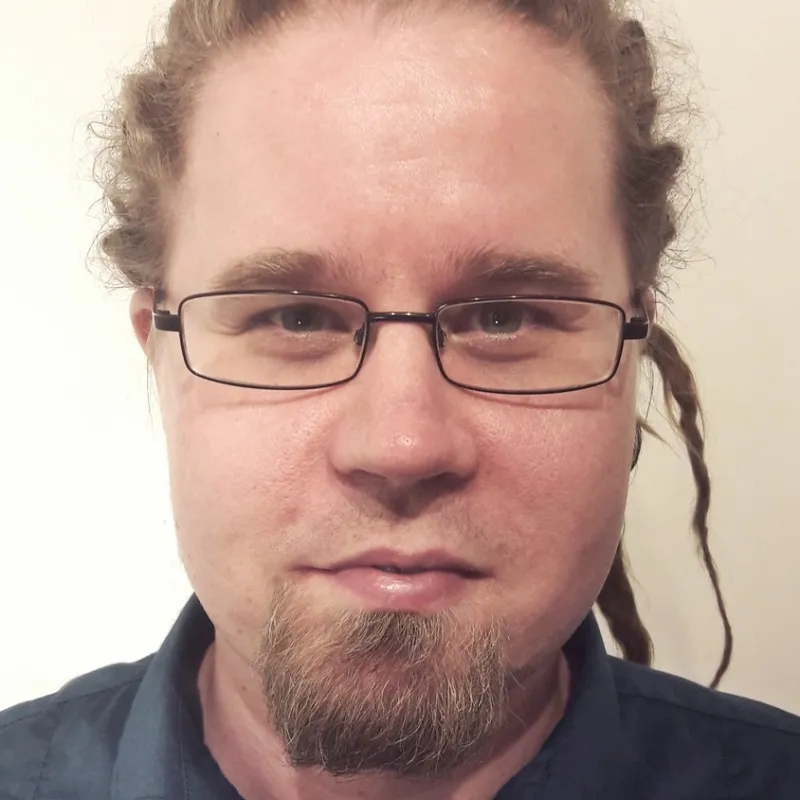
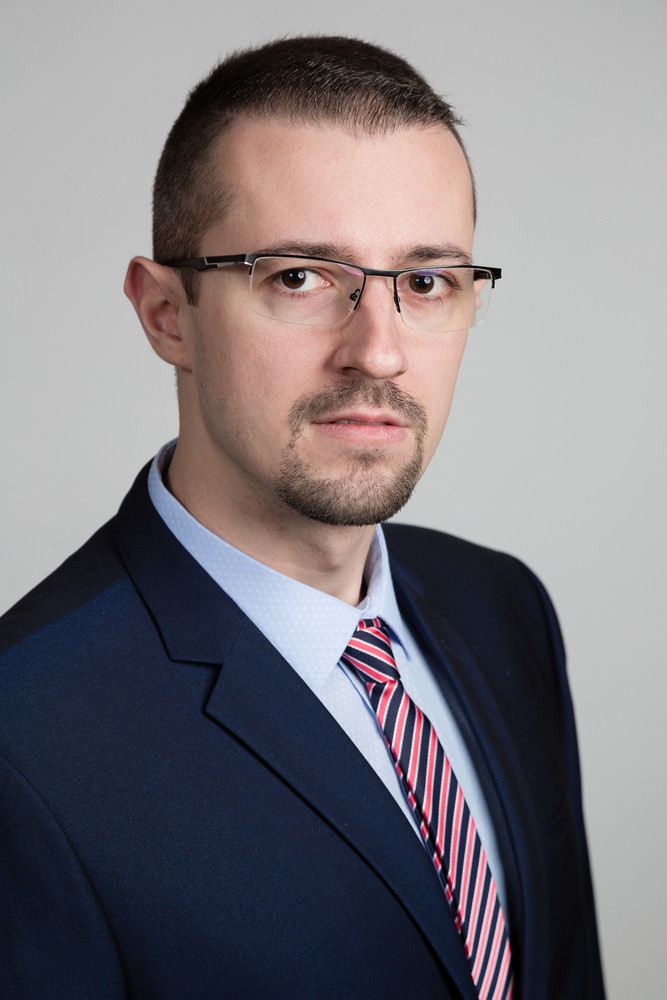
Henri Petrow is a Researcher in Computational Engineering at Lappeenranta-Lahti University of Technology (LUT), working within the LUT School of Engineering Sciences. He has been affiliated with LUT since 2014, progressing through positions from Research Assistant to Junior Scientist before becoming a Researcher in 2022. His research spans multiple technical domains with a focus on instrumentation and nuclear physics applications. His work demonstrates strong expertise in detector technology for high-energy physics experiments. Petrow's publication record shows a consistent focus on detector systems for the CMS experiment at CERN, particularly concerning GEM (Gas Electron Multiplier) detectors and associated electronics like the VFAT3 ASIC. His research demonstrates expertise in detector assembly, electronics design, and instrumentation for particle physics applications. Instrumentation development for particle physics ASIC design and testing for detector systems Detector assembly and operational experience Hardware optimization for high-energy physics experiments His work has contributed to advancing detector technology for major particle physics experiments, with practical applications in high-energy physics research infrastructure.
Eric Benton is a Professor in the Physics Department at Oklahoma State University . He has over two decades of experience in space radiation research , nuclear physics , and radiation detection technologies . His work spans both theoretical modeling and experimental validation, with active collaborations at facilities like NASA and Brookhaven National Laboratory. Current faculty member since 2022 Previously Associate Professor (2012-2022) and Assistant Professor (2006-2012) at Oklahoma State University PhD in Physics from University College Dublin (2004) Dr. Benton's research focuses on space radiation dosimetry , neutron shielding materials , and radiation detection systems for aerospace applications. His recent studies include: Space radiation simulations at HIMAC accelerator Radiation shielding effectiveness of composite materials CR-39 nuclear track detector analysis using deep learning Monte Carlo modeling of radiation fields in aircraft and thunderstorms Development of miniaturized dosimeters for spacecraft He has secured multiple grants from NASA and University of Oklahoma for projects including: Synergistic space environment effects on polymer composites Enhanced active tissue equivalent dosimeters Radiation smart structures with nanostructured materials Suborbital radiation dosimeter testing Courses taught include Doctoral Dissertation Research , Modern Laboratory Methods II , and Radiation Biophysics . He actively mentors graduate students in experimental physics and space radiation research.
Neil Detweiler is an Assistant Professor of Biology and Director of Pre-Health Programs at Goshen College. He holds a A.A. from Hesston College (2006), B.A. from Goshen College (2008), Ph.D. from University of Arkansas Medical Sciences (2015), and completed a postdoctoral fellowship at the University of New Mexico Health Sciences Center (2015-2018). His research focuses on pulmonary hypertension mechanisms, ion channel physiology, and cellular responses to hypoxia/hypercapnia. He explores therapeutic targets for pulmonary vascular diseases and investigates acid-sensing ion channels (ASICs) and BK channels in respiratory and cardiovascular systems. Key research areas include the role of ASIC channels in ventilatory responses, BK channel dysfunction in pulmonary arterial hypertension, and estrogen receptor signaling in vascular pathology. His work combines mouse models, cellular electrophysiology, and pharmacology to uncover disease mechanisms. As Director of Pre-Health Programs, he supports students pursuing healthcare careers. Publications highlight contributions to understanding ASIC and BK channel biology, hypoxic/hypercapnic ventilatory drive, and novel therapeutic strategies for pulmonary hypertension. Research projects span molecular biology, pharmacology, and clinical translational science.
Grant McCallum is a Research Assistant Professor in the Department of Biomedical Engineering at Case Western Reserve University's Case School of Engineering, affiliated with the Neural Engineering Center. He holds a Ph.D. in Electrical Engineering (2011) from the same institution, following nine years of industry experience as a Senior ASIC Design Engineer at Texas Instruments and nVidia Corporation, where he developed broadband access integrated circuits and graphics processors. Research Interests: Development of peripheral nerve interfaces Low-noise neural recording systems Implantable biotelemetry devices Recent Research Trends: His publications focus on chronic neural interfaces with the autonomic nervous system, including vagal tone measurement validation, tumor neurobiology monitoring, and carbon nanotube-based electrode technology. These works span interdisciplinary applications in neuroscience, oncology, and biomedical instrumentation.
BOGDANFFY Lorand is a Professor and Head of the Department of Automation, Computers, Electrical and Power Engineering at the Faculty of Mechanical and Electrical Engineering, UPET.RO. He holds a PhD and specializes in IoT systems, control engineering, renewable energy, and e-learning technologies. His research integrates simulation, modeling, and sensor networks into practical applications like smart urban management, solar tracking systems, and underground mining safety. His work spans interdisciplinary areas such as: IoT-enabled environmental monitoring for sustainable cities Computational methods in mining safety and risk analysis Development of e-learning platforms and educational software Advanced motor control systems and sensorless vector control His recent publications highlight trends in: Smart infrastructure and energy optimization Data-driven decision-making in insurance and risk management 360° imaging systems and mobile teleoperation No scientific awards are listed in the provided texts. His advising and grants focus on engineering education and industrial automation projects. He leads teams in developing control systems and renewable energy solutions.
Valencia Joyner Koomson is an Associate Professor in the Department of Electrical and Computer Engineering at Tufts University’s School of Engineering. She also holds concurrent appointments in the Tisch College and the Department of Computer Science. Her primary affiliation is with the Advanced Integrated Circuits and Systems Lab, where her research focuses on silicon-based VLSI systems, optoelectronic integration, and biomedical imaging applications. Dr. Koomson received her Ph.D. from the University of Cambridge and previously worked at the University of Southern California’s Information Sciences Institute (USC/ISI), specializing in radiation-hardened VLSI systems for military and aerospace applications. Her academic journey includes a B.S. and M.Eng. from MIT, followed by a Marshall Scholarship and Intel Foundation support. She has held visiting professorships at MIT, Boston University, and Rensselaer Polytechnic Institute. Notable awards include the NSF CAREER Award and recognition as a National Science Foundation Graduate Research Fellow. Research interests span mixed-mode VLSI systems (analog/digital/optical), optoelectronic system-on-chip integration, and applications in medical imaging and optical wireless communication. Her lab develops wearable health monitoring devices, including the AHOMKA hypertension management platform for Ghana. Recent work includes miniaturized NIRS instruments, microfluidic devices for cell analysis, and millimeter-wave circulators in CMOS. Dr. Koomson has authored over 85 publications and secured grants from NIH, NSF, and industry partners. Current projects include mHealth platforms, noninvasive brain stimulation systems, and culturally adapted healthcare solutions. She actively mentors graduate students in interdisciplinary research combining electrical engineering with biology and public health. Grants: Over 39 funded projects, including NIH’s AHOMKA initiative and NSF’s HDR Tripods Center. Labs: Advanced Integrated Circuits and Systems Lab (AICS Lab) with collaborators in biomedical and materials sciences. Teaching: Courses on VLSI design, digital electronics, and wearable systems.
Dr Nemat Khan is an Honorary Senior Research Fellow at the School of Biomedical Sciences, The University of Queensland , affiliated with the Faculty of Health, Medicine and Behavioural Sciences . He holds a PhD in Pharmacology from UQ, preceded by a Bachelor of Pharmacy from Pakistan and regulatory experience at the Ministry of Health, Pakistan . Research focuses on neuroinflammation and vascular dysfunction in diseases like multiple sclerosis (MS) and sepsis . Key projects involve Eph/ephrin signaling , ASIC inhibitors , and NLRP3 inflammasome targeting. Current funding includes grants from National Multiple Sclerosis Society-US and Multiple Sclerosis Research Australia . Collaborations include A/Prof Mark Coulthard , Dr Neville Butcher , and Dr Lachlan Rash . He utilizes animal models (EAE, CLP, Cuprizone) and molecular biology for translational research. Research trends from his 15 most recent publications (2024–2017) span MS pathophysiology , sepsis vascular repair , ischemia-reperfusion injury , and ASIC/NLRP3 targeting , with keywords including Pharmacology , Neuroinflammation , Ion Channels , and Translational Medicine . Supervision includes Doctor Philosophy candidates in MS drug development , sepsis mechanisms , and neuroprotective agents , often as associate advisor alongside experts like Dr Lachlan Rash and Dr Neville Butcher .
Stephanie Heusser serves as an Assistant Professor in the Department of Drug Design and Pharmacology within the Faculty of Health and Medical Sciences at the University of Copenhagen. Her research focuses on the structural and functional characterization of acid-sensing ion channels (ASICs), with particular emphasis on their role in neurological disorders and potential as therapeutic targets. Based at Universitetsparken 2 in Copenhagen, she maintains an active research program integrating biophysical, pharmacological, and chemical biology approaches. Her primary research interests center on acid-sensing ion channel mechanisms , including: Conformational dynamics during activation and desensitization Regulation by transporter proteins and peptide modulators Structural basis of pH sensing and ion selectivity Therapeutic targeting for pain, stroke, and neurodegenerative conditions Protein engineering approaches to study channel function Recent publications reveal a strong focus on ASIC structure-function relationships, with significant contributions to understanding channel-transporter crosstalk and venom peptide inhibition mechanisms. Dr. Heusser's work demonstrates substantial scholarly impact, with her 2021 review article in Trends in Pharmacological Sciences accumulating 35 citation indexes and 49 Mendeley readers, while being referenced in 15 X (Twitter) discussions and 1 Wikipedia page. Her research shows consistent high-impact output in premier journals including Nature Communications , eLife , and Cell Chemical Biology , with collaborative networks spanning multiple international institutions. Her laboratory utilizes advanced techniques including: Protein semisynthesis for site-specific modifications Electrophysiological characterization of channel function Structural biology approaches to map conformational changes Pharmacological profiling of channel modulators Current work explores channel-transporter crosstalk mechanisms and the development of novel therapeutic strategies targeting ASIC-mediated pathologies.
Stephan Pless is a Professor in the Department of Drug Design and Pharmacology at the University of Copenhagen's Faculty of Health and Medical Sciences. His research focuses on the molecular function and pharmacology of ion channels, which regulate cellular excitability by controlling ion flux across cell membranes. These membrane proteins are therapeutically relevant targets as their dysfunction is associated with numerous diseases. Dr. Pless received his Graduate degree (diploma) from the University of Hamburg, Germany (1998-2004), followed by a PhD from the University of Queensland, Brisbane, Australia (2005-2008). He completed postdoctoral training at the University of British Columbia, Vancouver, Canada (2008-2013). Dr. Pless leads a research group that investigates the function and pharmacology of ion channels using a combination of electrophysiology, synthetic amino acids, protein engineering, and spectroscopic approaches. His work primarily focuses on acid-sensing ion channels (ASICs) and sodium leak channels (NALCN), with implications for understanding pain sensation, neurological disorders, and potential therapeutic interventions. The lab employs innovative technologies including non-canonical amino acid incorporation, protein splicing and various spectroscopic methods to study channel structure-function relationships. Analysis of Dr. Pless's recent publications reveals a strong focus on understanding the structural and functional mechanisms of ion channels, particularly ASICs and NALCN. His work spans from basic biophysical characterization to therapeutic applications, with increasing integration of computational methods and protein engineering approaches. A notable trend is the exploration of protein-protein interactions within channel complexes and the development of novel modulation strategies. Lundbeck Foundation Collaborative Project Grant (2023-2027) Paul F Cranefield Award from the Society of General Physiologists (2020) Lundbeck Foundation Ascending Investigator Grant (2019-2023) DFF Sapere Aude Starting Grant (2018-2021) Carlsberg Foundation Distinguished Associate Professor Fellowship (2017-2020) Lundbeck Foundation Fellowship (2013-2018) Dr. Pless has successfully secured significant research funding throughout his career, beginning with postdoctoral fellowships from the Michael Smith Foundation, Banting Postdoctoral Research Fellowship, and Heart & Stroke Foundation. His independent career has been supported by prestigious grants from the Lundbeck Foundation, Carlsberg Foundation, and Danish Independent Research Fund. His lab, the Pless Lab (www.theplesslab.com), actively recruits motivated students and postdocs interested in ion channel research. The Pless Lab is part of the vibrant research community at the University of Copenhagen, situated in one of the world's most livable cities known for its bicycle-friendly infrastructure and high quality of life. The lab collaborates extensively with researchers both within Denmark and internationally, as evidenced by the diverse authorship on recent publications.