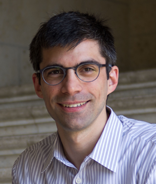
Michael Walfish is a Professor at the Courant Institute of Mathematical Sciences within New York University . His work focuses on computer systems, network security, and verifiable computation with applications in distributed systems and cybersecurity. Current faculty member (not retired or former staff) Teaching experience includes advanced systems courses like Operating Systems and Honors Operating Systems at NYU Research interests span multiple dimensions: Network security and defense mechanisms Verifiable computation systems Distributed system design Zero-knowledge proofs applications Hardware and software security Recent publications demonstrate strong focus on: Zero-knowledge systems (Zombie, Verifiable ASICs) Web and email security (Pretzel, Yesquel) Probabilistic verification (Less is more) Cryptographic protocols in systems (Cobra, DQE) Scientific recognition: Best Paper Award at SOSP 2017 Distinguished Student Paper Award at Security 2016
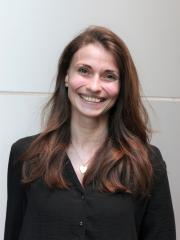
Silvia Mella is an Assistant Professor in the Digital Security (DiS) group at Radboud University, Netherlands, and a member of the Cryptographic Engineering & Side-Channel Analysis (CESCA) Lab. Her research focuses on cryptographic hardware for embedded devices, including secure implementations of cryptographic algorithms and analysis of side-channel and fault attacks. She holds a PhD from the University of Milan (2018) and previously worked at STMicroelectronics (2015–2022), developing hardware accelerators for public-key cryptography. She has supervised numerous PhD and Master’s students, co-authored over 30 publications, and contributed to cryptographic standards like ASCON and Xoodoo. Her work emphasizes bridging theoretical cryptography with practical hardware security solutions. Education: Bachelor and M.Sc. in Mathematics, University of Milan, Italy PhD in Cryptography (2018), University of Milan, Italy Research Interests: Design/analysis of symmetric cryptographic schemes Hardware implementation security Side-channel and fault attack countermeasures Post-quantum cryptography Lightweight cryptographic primitives Recent Research Trends: Recent work focuses on novel code-based cryptographic constructions (ChiLow/ChiChi), low-latency pseudorandom functions (Koala), and SCA-resistant implementations of algorithms like Xoodoo and Xoodyak. Her research bridges theoretical cryptographic analysis with practical hardware vulnerabilities, often leveraging machine learning techniques for attack detection. Advising & Collaboration: Co-supervised 10+ PhD/Master students on topics like cryptographic permutations and post-quantum schemes Active in industry-academia collaborations through STMicroelectronics and PROACT projects Involved in open-source cryptographic library development Labs & Teams: Leading research in the CESCA Lab at Radboud University, focusing on cryptographic engineering and embedded system security. Collaborates with the Politecnico di Milano and STMicroelectronics on hardware security projects.
Dr. Elena-Laura Budusan serves as a Postdoctoral Research Fellow at the University of Queensland's Institute for Molecular Bioscience (IMB), where she investigates ion channel pharmacology using venom-derived peptides as molecular probes. Her work bridges basic science and therapeutic development, with emphasis on acid-sensing ion channels (ASICs) implicated in pain and stroke pathologies. Her primary research focuses on characterizing venom peptides from spiders (e.g., Hi1a, Hc3a) and snakes (e.g., mambalgin-3) that modulate ASIC function. Through multidisciplinary approaches combining peptide chemistry, electrophysiology, and molecular modeling, she elucidates structure-activity relationships to develop novel analgesics and neuroprotective agents. Current projects include optimizing peptide stability, evaluating therapeutic efficacy in stroke models, and exploring mechanisms of ion channel desensitization. Analysis of her 2021-2024 publications reveals a cohesive trajectory from molecular characterization (e.g., mambalgin-3's interaction with ASIC1 variants) to translational applications (e.g., Hi1a's effects in stroke models). Her work demonstrates progression from in vitro mechanistic studies to in vivo validation, highlighting venom peptides' potential as therapeutic leads for neurological disorders. No scientific awards or fellowships are documented in the provided materials. Dr. Budusan is available for research supervision and collaborates extensively within IMB's Venom Therapeutics Laboratory. Her work leverages institutional resources including automated patch clamp facilities and peptide synthesis platforms, though specific grant funding details are not disclosed in the source texts. She operates within IMB's collaborative ecosystem under the mentorship of Professor Lachlan Rash and Professor Glenn King, contributing to Australia's internationally recognized venom research program. Her team employs cutting-edge techniques from CRISPR-based lineage tracing to in-silico structure prediction, positioning her work at the intersection of toxinology and drug discovery.
Haluk Konuk is a Visiting Professor at the Faculty of Engineering, Özyeğin University. With a PhD in Electrical Engineering from the University of California, Santa Cruz (1996), he specializes in VLSI testing, Design for Testability, and Electronic Design Automation. He worked at Hewlett-Packard/Agilent Technologies and Broadcom Corporation for over 25 years, contributing to the development of critical internet infrastructure ASICs and processors. Since 2021, he has founded Palo Alto Test Technologies, focusing on advanced testing solutions. PhD in Electrical Engineering, University of California, Santa Cruz (1996) MS in Electrical Engineering, Case Western Reserve University (1989) BS in Electrical & Electronics Engineering, Boğaziçi University (1986) His research focuses on Design for Testability (DFT), Automatic Test Pattern Generation (ATPG), and Electronic Design Automation (EDA), addressing challenges in VLSI and CMOS circuit testing. His work includes modeling open-defects, fault simulation, and optimizing test efficiency for digital circuits. Haluk Konuk's publications span test compression, delay fault testing, and fault modeling, reflecting his long-term contributions to VLSI test methodologies. He holds 9 U.S. patents and has served on IEEE conference program committees. Fulbright Scholarship 9 U.S. Patents in VLSI Test Technology
Dr. Neculai Cojan is an Associate Professor at the Technical University of Iasi (TUIASI), Department of Electronics and Telecommunications. His academic role includes teaching analog integrated circuits and conducting research in advanced electronic circuit design. He holds a Ph.D. in Engineering and has been actively involved in industry-sponsored projects, such as the FSM project collaboration mentioned in his work. His research focuses on analog circuit design, particularly in Gm-C filters, MOSFET-based amplifiers, and oscillator development. Notable contributions include novel implementations of oscillation-based testing methodologies and variable gain amplifier architectures. His work frequently explores integration challenges in CMOS technologies and high-frequency signal processing. Recent publications (2010-2011) emphasize structured approaches to filter design, electrically controlled components, and top-down project methodologies. His research bridges theoretical analysis with practical applications in both academic and industrial contexts. Dr. Cojan’s technical expertise is further evidenced by his involvement in circuit testing innovations and the development of industry-relevant solutions. Despite no listed awards, his sustained output in high-impact circuit design areas reflects significant contributions to the field of analog electronics.
Angelo Sassaroli is a Research Assistant Professor in the Department of Biomedical Engineering at Tufts University. He leads the Diffuse Optical Imaging of Tissue (DOIT) Lab, focusing on quantitative modeling of light propagation, medical imaging instrumentation, and near-infrared spectroscopy techniques. His work bridges theoretical analyses, experimental studies, and clinical applications in brain/muscle hemodynamics. Education: PhD in Physics, University of Electro-Communications, Tokyo, Japan (2002) Bachelor's in Physics, University of Florence, Italy (1996) His research centers on diffuse optical tomography and near-infrared spectroscopy , with emphasis on depth-sensitive techniques like dual-slope methods and coherent hemodynamics spectroscopy. Key innovations include Monte Carlo simulations for photon transport, self-calibrated measurement systems, and applications in functional brain imaging and tissue oximetry. The DOIT Lab develops novel instrumentation for frequency-domain NIRS, enabling non-invasive monitoring of cerebral and muscular perfusion. Recent publications (2023-2025) demonstrate a strong focus on advancing Monte Carlo methodologies , dual-slope/double-ratio techniques , and depth-resolved hemodynamic measurements . These works collectively enhance spatial accuracy in optical diagnostics and address challenges in clinical translation. No scientific awards are mentioned in available materials. He advises PhD, MS, and undergraduate researchers in the DOIT Lab, which maintains active collaborations and presents at major conferences (e.g., SPIE Photonics West). The lab develops open-source tools and participates in academic initiatives like the Tufts Optics Research Club. The DOIT Lab specializes in coherent hemodynamics spectroscopy and frequency-domain NIRS , operating from the Science and Technology Center at Tufts. Research spans light-tissue interaction modeling, instrument design, and clinical pilot studies for brain/muscle monitoring.
Bill Ashmanskas is a Senior Lecturer in the Department of Physics and Astronomy at the University of Pennsylvania's School of Arts & Sciences. His roles include teaching undergraduate physics courses and developing curriculum, alongside research in instrumentation, FPGA-based electronics, and medical imaging technologies. He is affiliated with both the Physics department’s HEP Instrumentation Group and the Radiology department’s Physics and Instrumentation Group. Education includes a Ph.D. from UC Berkeley (1998) and an A.B. from Harvard University (1992). His research focuses on readout electronics for High Energy Physics and Positron Emission Tomography (PET), with notable contributions to waveform-sampling DAQ systems and ASIC testing for HL-LHC upgrades. Key research interests span instrumentation design, medical imaging innovations, and HEP detector technologies. Recent publications emphasize PET-DBT hybrid systems and radiation-tolerant electronics. Awards include the 2020 Provost’s Teaching Excellence Award and a 2005 PECASE for early-career scientific achievement. Grants/Advising: Active in CDF and ATLAS collaborations, with extensive contributions to Fermilab experiments and Penn’s HEP instrumentation projects. Labs/Teams: HEP Instrumentation Group (Physics), Radiology Physics Group (Penn Medicine).
Dr. Wolfram Erdmann is a Researcher at the Paul Scherrer Institute (PSI) in Villigen, Switzerland, affiliated with the Laboratory for Particle Physics. His work focuses on advanced detector technologies for high-energy physics experiments, particularly within the CMS Collaboration at CERN's Large Hadron Collider (LHC). Research Interests: Dr. Erdmann specializes in particle physics instrumentation, with emphasis on silicon pixel detector development, radiation-hardened sensor design, and performance optimization for high-luminosity collider environments. His research spans detector upgrades, beam testing, and data analysis for heavy-flavor quark production. Publication Trends: Recent work (2010–2017) centers on CMS pixel detector upgrades for Phase I and II, radiation damage characterization, and test-beam validations. Earlier publications (2006–2009) detail foundational contributions to readout electronics, mechanical design, and qualification protocols for LHC experiments. Collaborations: Active member of the CMS and H1 Collaborations, contributing to technical design reports, hardware commissioning, and physics analyses.
Jason Voorneveld is an Assistant Professor in Cardiology at Erasmus University Medical Center, specializing in ultrasound velocimetry and blood flow dynamics. His research focuses on developing advanced ultrasound technologies for cardiovascular assessment, with expertise in high-frame-rate imaging, contrast-enhanced ultrasound, and microbubble characterization. Research directions include: Non-invasive blood pressure measurement techniques High-speed 3D ultrasound probe development Microbubble mechanics for contrast imaging Validation of echo-particle image velocimetry Voorneveld earned his PhD from Erasmus MC in 2019 after completing his Master's in Biomedical Engineering at the University of Cape Town. His research contributions have been recognized with multiple awards including the Dekker Postdoc Fellowship and PhD Cum Laude distinction.
Donghyun Kim serves as an Assistant Professor in the Department of Electrical and Computer Engineering at Missouri University of Science and Technology, where he leads research in electromagnetic compatibility (EMC), signal integrity (SI), and power integrity (PI) for high-speed electronic systems at the Electromagnetic Compatibility Laboratory in Rolla, Missouri. His academic credentials include: Ph.D. in Electrical Engineering, KAIST, Daejeon, Korea (2018) M.S. in Electrical Engineering, KAIST, Daejeon, Korea (2014) B.S. in Electrical Engineering, KAIST, Daejeon, Korea (2012) Dr. Kim's research spans electromagnetic challenges in advanced electronic packaging, with core expertise in 2.5D/3D IC systems, through-silicon via (TSV) technology, and nanometer-scale device design. His work addresses critical signal integrity issues in high-speed digital channels, power distribution network noise, and electromagnetic interference in printed circuit boards (PCBs), while also exploring nanomaterial applications like MXene-graphene hybrids for viral biosensors. Analysis of his 2024 publications reveals dominant themes in high-frequency modeling up to 100 GHz, PCB dielectric characterization techniques, statistical eye diagram methodologies, and surface roughness effects on transmission lines. This body of work demonstrates consistent focus on solving practical EMC and SI challenges in next-generation electronic packaging through rigorous electromagnetic theory and measurement validation. Scientific recognition: No awards listed in available sources Academic mentoring and research funding details are not publicly specified, though his role in the Electromagnetic Compatibility Laboratory indicates active supervision of graduate research. The laboratory provides critical infrastructure for industry-academic collaboration in EMC testing, high-frequency measurements, and signal integrity analysis. The Electromagnetic Compatibility Laboratory at Missouri S&T serves as Dr. Kim's primary research base, featuring state-of-the-art facilities for electromagnetic testing, high-speed channel characterization, and nanomaterial-based sensor development, supporting both fundamental research and industry-driven solutions.
Ulkuhan Guler is an Associate Professor in the Department of Electrical & Computer Engineering at Worcester Polytechnic Institute (WPI), affiliated with the College of Engineering and Biomedical Engineering. She holds the Dean’s Excellence Professorship and the Joseph Samuel Satin Distinguished Fellowship in ECE. Her research focuses on analog/mixed-signal integrated circuits, energy harvesting, and wireless power systems for healthcare and IoT applications. She leads the Integrated Circuits and Systems Lab at WPI, developing wearable sensors for noninvasive monitoring of oxygen and carbon dioxide levels. Guler earned her BS from Istanbul Technical University (1999), MS from The University of Tokyo (2003), PhD from Bogazici University (2014), and completed a postdoc at Georgia Tech (2018). Her work emphasizes miniaturized biomedical devices, including implantables and wearables, with applications in smart healthcare. Key research areas include luminescence-based oxygen sensing, transcutaneous gas monitoring, and secure wireless power transfer. Awards include recognition for her contributions to biomedical circuits and systems. Notable projects include a first-of-its-kind wearable oxygen sensor addressing racial bias in infant care and a transcutaneous CO₂ monitor using lifetime-based referencing. She collaborates on interdisciplinary teams to advance technologies like optical wireless power systems and hyperdimensional computing for acute mountain sickness detection.
Claude Thibeault is a Professor in the Department of Electrical Engineering at École de technologie supérieure (ÉTS), with a Ph.D. from Polytechnique Montréal and a B.Eng. from UQAC. His research focuses on microelectronics , integrated circuit testing , and fault tolerance , particularly in aerospace and FPGA systems. He leads the LaCIME lab, which specializes in communications and microelectronic integration. His work spans radiation effects on circuits , asynchronous design , and test methodologies . Recent publications analyze cosmic radiation impacts on FPGA architectures and knowledge-based diagnostic systems . He supervises numerous graduate students in projects related to hardware acceleration , chaotic communication systems , and power-aware testing . LaCIME emphasizes industry collaboration and technology transfer , with research axes in intelligent systems and connectivity . The lab actively recruits students with backgrounds in electrical or microelectronics engineering.
Valencia Koomson is an Associate Professor at Tufts University across three departments: Electrical and Computer Engineering (since 2011), Computer Science (since 2023), and Tisch College (since 2020). She previously served as a VLSI research engineer at USC/ISI and held visiting roles at MIT, Boston University, and Rensselaer Polytechnic Institute. Ph.D., University of Cambridge (2003) M.Phil., University of Cambridge (2000) M.Eng. and B.S., MIT (1999 and 1998) Her research focuses on silicon-based mixed-signal VLSI systems for biomedical imaging and optical wireless communication, with additional work in analog signal processing and nanoscale system integration across visible to millimeter-wave frequencies. Recent publications highlight her innovations in fdNIRS-tDCS brain stimulation systems , microfluidic cellular connectivity platforms , and ChromaSense wearable health sensors that address skin-tone bias in medical devices. She has secured multiple NSF grants including a CAREER award, plus NIH and industry funding. Scientific Awards: NSF CAREER Award Marshall Scholar IEEE Senior Member MLK Jr. Visiting Professor Fellowship (MIT) Two U.S. patents issued She leads the Advanced Integrated Circuits and Systems Lab at Tufts, which develops nanoscale systems spanning 60GHz RF to optical frequencies for medical and communication applications.
Frank Kagan Gürkaynak is Director of the Microelectronics Design Center (DZ) and a Researcher at ETH Zurich's Department of Information Technology and Electrical Engineering (D-ITET). He leads the PULP open-source hardware project and works closely with Prof. Luca Benini in the Integrated Systems Laboratory (IIS). His academic journey includes BSc/MSc from Istanbul Technical University and a PhD from ETH Zurich. Roles: Microelectronics Design Center Director, Senior Scientist in IIS, VLSI course lecturer Research focuses on energy-efficient digital circuits, cryptographic hardware security, and open-source processor architectures. Key projects include EU-funded initiatives like European Processor Initiative (EPI), Convolve, and NeuroSoC, along with SNSF grants Tiny Trainer and PEDESITE. Active in teaching VLSI design, embedded systems, and essential engineering skills. Publications emphasize secure cryptographic accelerators, low-power processor clusters, and GALS system design methodologies. Contributions include energy-efficient ASICs for IoT to HPC domains and pioneering work in side-channel attack-resistant hardware.
Sebastian Dorl is a researcher at the Fachhochschule Oberösterreich (University of Applied Sciences Upper Austria) , affiliated with the Research Center Hagenberg and the ASiC (Applied Systems and Cybernetics) group. His work spans bioinformatics, machine learning, and data-driven modeling, with a focus on proteomics data analysis, spectral library search algorithms, and industrial process optimization.