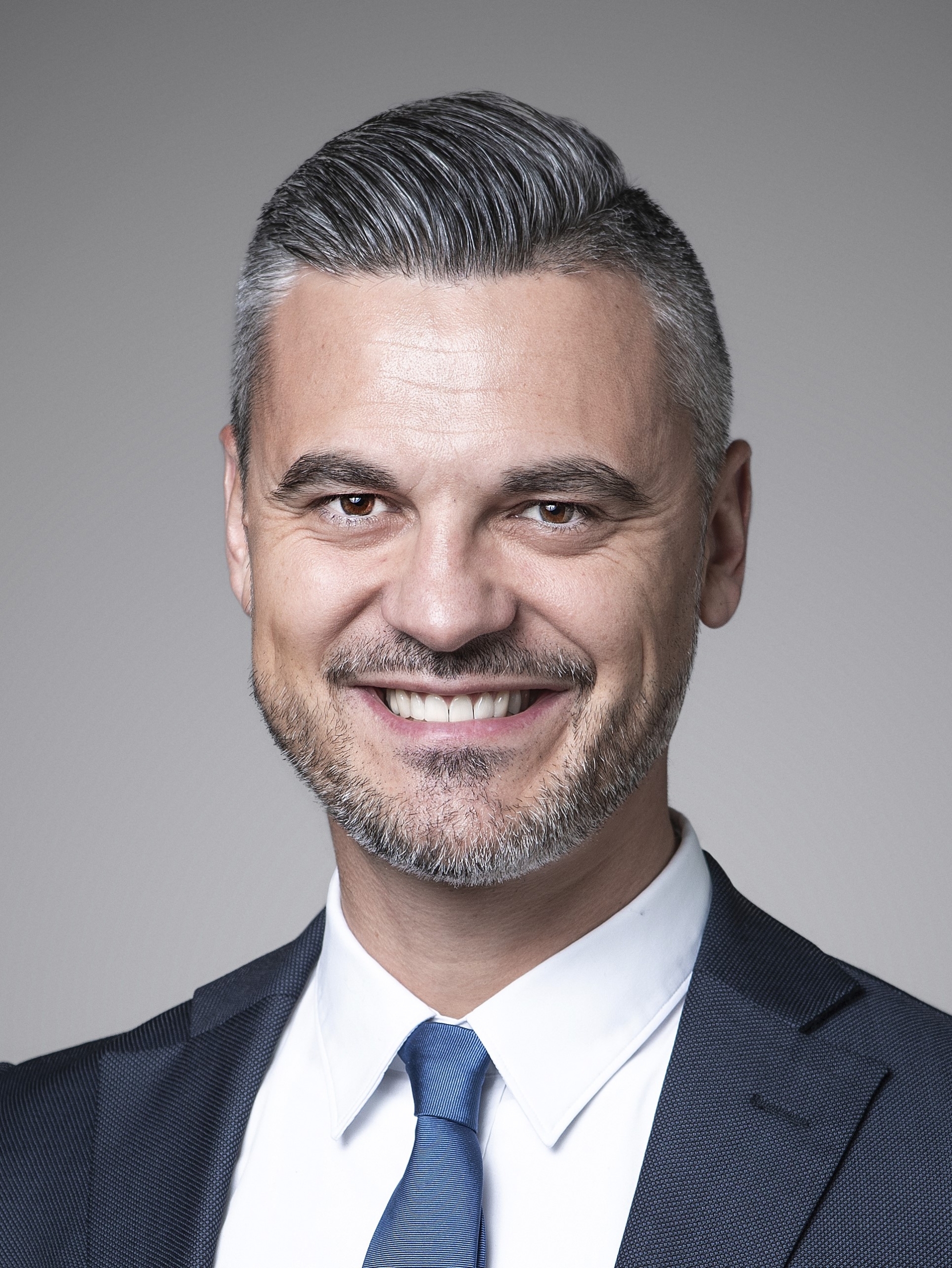
Alexander Braun is Associate Professor of Insurance and Capital Markets at the University of St.Gallen, where he directs the Institute of Insurance Economics. He holds a Ph.D. in Finance from St.Gallen and previously worked in Lehman Brothers' capital markets division. His research specializes in insurance-linked securities, InsurTech innovation, and risk transfer mechanisms, with awards from the Casualty Actuarial Society and International Actuarial Association. Research focuses on three interconnected areas: 1) Design and pricing of catastrophe bonds and cyber ILS, employing factor models for risk-adjusted returns; 2) Digital insurance transformation, including blockchain applications and on-demand insurance models; 3) Climate risk finance, examining extreme weather impacts on equity markets and corporate finance. Methodologies combine empirical analysis, stochastic modeling, and mechanism design. Publications demonstrate consistent innovation in risk transfer mechanisms, notably developing novel pricing frameworks for natural catastrophe bonds and cyber ILS. Recent work extends to DAO governance design, climate risk integration in asset pricing, and optimal regulatory interventions for extreme events. Industry collaborations include projects on trade finance insurance and blockchain implementation. Dr. Braun leads SNSF-funded projects on insurance-linked securities valuation and teaches graduate courses in risk management, InsurTech, and blockchain applications. He serves on editorial boards of Journal of Risk and Insurance and Geneva Risk Papers, with significant media contributions to Swiss and German outlets on insurance innovation topics.
Michele Melchiori is an associate professor at the Università degli Studi di Brescia (Italy) since 1998, specializing in systems for information processing. He holds a PhD in Information Engineering from the University of Brescia and a Master's in Computer Science from the University of Milan. His research focuses on information systems design, semantic-based services, blockchain integration, and smart city technologies. Notable contributions include frameworks for smart contract design, blockchain applications in agri-food supply chains, and IoT-driven solutions for construction quality assurance. His work bridges theoretical advancements with practical implementations, spanning projects funded by collaborative initiatives. Key areas include personalized data exploration using semantic web technologies, trust management in decentralized systems, and healthcare applications like food recommendation systems. He has authored over 80 publications, emphasizing interdisciplinary approaches to data management challenges. Melchiori frequently contributes to academic events such as the Italian Symposium on Advanced Database Systems. His research bridges technical innovations (e.g., blockchain) with societal needs (e.g., smart city infrastructure and post-pandemic healthcare models).
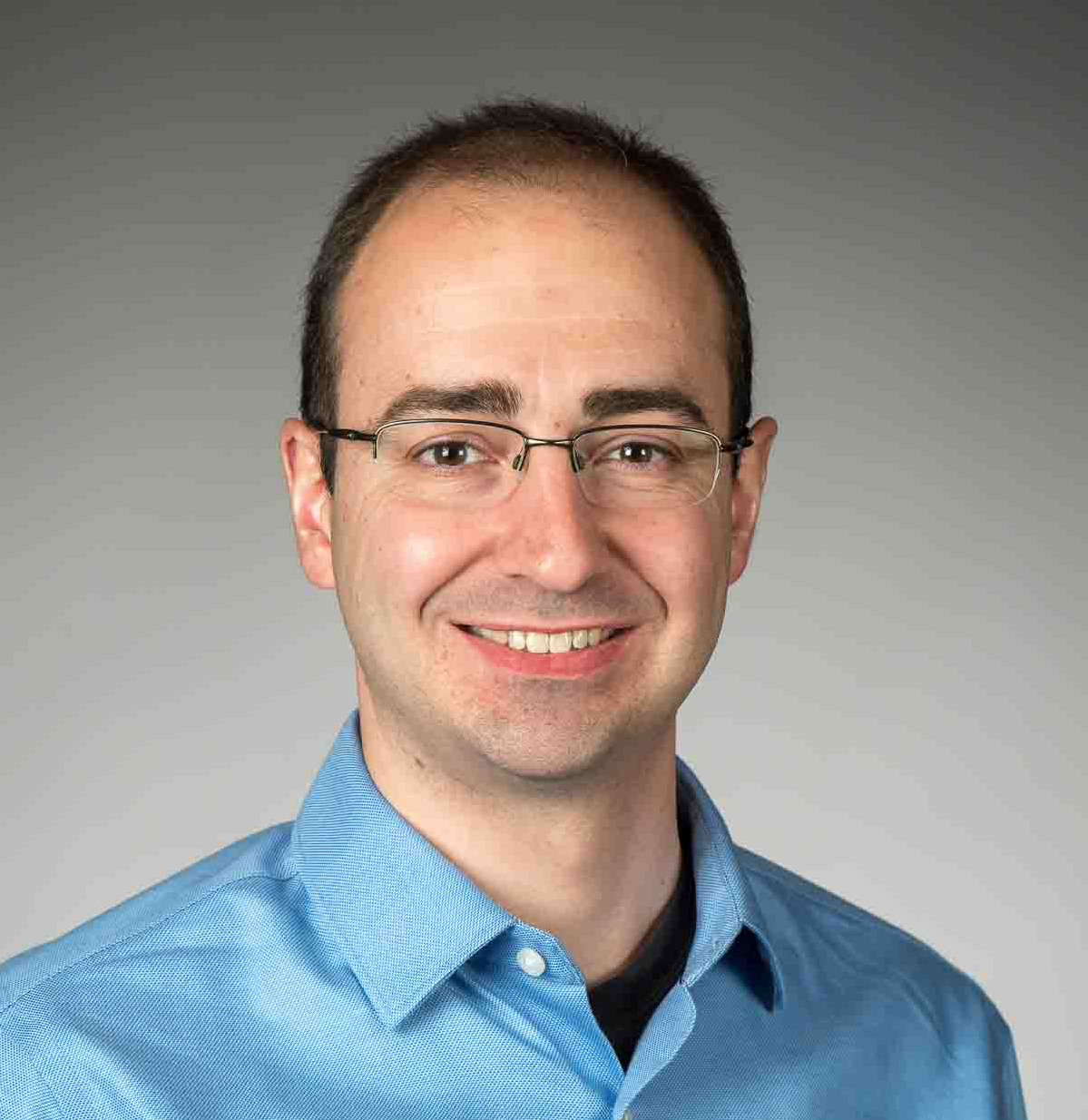
Collin McMillan, Ph.D., is an Associate Professor of Computer Science at the University of Notre Dame's College of Engineering. He earned his Ph.D. from William & Mary under Denys Poshyvanyk. His research focuses on software engineering and natural language processing, particularly in automated documentation generation, program comprehension, and human-AI collaboration in code analysis. Education: Ph.D. in Computer Science (William & Mary), advised by Denys Poshyvanyk. His work integrates eye-tracking studies, neural networks, and graph-based models to improve code summarization and developer tooling. Research interests include source code summarization, developer behavior analysis, privacy behavior detection in Android apps, and tools for program comprehension. His lab, the Automatic Program Comprehension Lab (APCL), develops datasets and tools like CodeGRITS, available via Huggingface and GitHub. Publications span 2007–2025, emphasizing developer-centric AI models, code summarization techniques, and empirical studies on programmer attention. Key themes include context-aware models, eye-tracking integration, and LLM applications in software engineering. Awards: ASEE Teaching Award (2020), NSF CAREER Award (2015), Distinguished Paper Award (2021). Grants: NSF funding for AI/SE integration, totaling over $2.5M since 2015. Service: Associate Editor for TSE and EMSE, program committee roles at ICSE, FSE, and ASE. Current students include Maria Dhakal (2023), Robert Wallace (2023), and Chia-Yi Su (2022). Graduates have moved to faculty positions (e.g., Clemson University) and industry roles at Google, Qualtrics, and Ascend Health.
Paolo Modesti is a Senior Lecturer in Cybersecurity at Teesside University's School of Computing, Engineering and Digital Technologies. He holds a PhD in Computer Science from Ca' Foscari University Venice, Italy, and an MSc from the University of Udine. His research focuses on security protocols, formal methods, and tool development for secure systems. He is a Fellow of the Higher Education Academy and a licensed professional engineer. Dr. Modesti's work includes designing formal verification frameworks (e.g., AnBx compiler/IDE) and analyzing protocols like Open Banking APIs and Bitcoin's Payment Protocol. He actively contributes to academic conferences (e.g., IEEE, ACM) and serves on program committees for security-related events. His teaching roles include leading the BSc Cyber Security program and modules on Ethical Hacking and Security Analysis. Research interests span security protocol modeling, automatic code generation, intrusion detection systems, and blockchain security. He advocates bridging the gap between academic tools and industry practices through frameworks like PTES and MITRE ATT&CK. His tools, such as the AnBx ecosystem, aim to simplify formal methods adoption for practitioners.
Alessandro Scarso is a Full Professor at the Department of Molecular Sciences and Nanosystems, Ca' Foscari University of Venice. He earned a PhD in Chemical Sciences from the University of Padua and completed postdoctoral research at The Scripps Research Institute (USA) and Ca' Foscari. His expertise spans organic chemistry, catalysis, and supramolecular chemistry, with a focus on sustainable processes and bisphosphonate drug development. Scarso has held leadership roles, including vice-coordinator of the PhD Programme in Chemistry (Ca' Foscari & Trieste) and editorial positions in journals like RSC Advances and Organics . Research interests include micellar catalysis, supramolecular nanocontainers, and enzyme-like catalytic systems. Notable awards include the 2010 Young Scientist Prize and Gian Paolo Chiusoli Medal. He teaches advanced courses in organic chemistry, catalysis, and scientific writing, and has supervised over 20 graduate and 6 PhD students. Scarso's work integrates experimental and computational methods, addressing challenges in green chemistry and drug design. He has secured grants and collaborates internationally on projects like the Cariparo SELECT program. His contributions include over 85 publications, with an H-index of 31, and active peer review roles recognized by Publons. Scarso also leads institutional initiatives, including Ca' Foscari's Harvard Summer School and quality assurance for bio/nano-materials programs.
Renee Bryce is a Professor in the Department of Computer Science and Engineering at the University of North Texas, holding the distinction of University Distinguished Teaching Professor. She is affiliated with Discovery Park, a hub for interdisciplinary research. Her research focuses on software testing methodologies, mobile computing, AI-driven systems, and inclusive education practices in technology. Her work spans innovative applications such as IoT-driven drone simulations, context-aware mobile systems, and AI-enhanced bug triaging. She has pioneered reinforcement learning approaches for GUI testing and combinatorial testing strategies. Notable contributions include the Bug Wars competition platform for bug detection education and the development of tools like Caret-HM for Android session analysis. Renee has been recognized with the University Distinguished Teaching Professor award for her impactful educational contributions. Her research emphasizes practical tools for improving software quality and accessibility, including frameworks for sustainable mobile computing and inclusive online learning environments. She has collaborated on projects such as the REU Site: Bug Wars, fostering undergraduate research in software testing. Her ongoing work addresses challenges in user-centric testing, security coding bugs, and the intersection of technology with ecological and social values.
Professor Alexandru Dumitru Nicolae of the Technical University of Iasi is a distinguished academic in digital communications technology with extensive research contributions across multiple domains. Primary affiliations: Technical University of Iasi Academic rank: Professor Research Interests span digital communications, QAM modulations, Markov chains, and magnetic field analysis. His work bridges classical telecommunication coding schemes with modern applications in photovoltaic systems and biomedical engineering. Recent Publications show evolving focus into Digital Twin frameworks for automotive systems, IoT applications in biomedicine , and EMF exposure analysis across various technologies. While maintaining roots in digital modulation and line code spectral properties , his research has expanded to include electric vehicle propulsion and renewable energy systems . Technical Contributions include seminal work on: Constant envelope modulation techniques Run-length limited coding Phase-locked loop applications Electric field modeling for power lines His methodological approach combines mathematical modeling with experimental validation , particularly in ANSYS Maxwell simulations and finite element analysis for electromagnetic field computations.
Vatche Isahagian is a researcher with affiliations at Bentley University's McCallum School of Business in the Computer Information Systems department and IBM Research (Cambridge, MA and Yorktown Heights, NY). He completed his PhD in Strategic and operational services for workload management in the cloud from Boston University in 2013. His research focuses on serverless computing, business process management, and the application of artificial intelligence in enterprise settings. He has published extensively on topics including Function-as-a-Service (FaaS), workflow automation, deep learning platforms, and cloud resource management. His work bridges theoretical computer science with practical enterprise applications, particularly in automating business processes through AI technologies. Recent research shows a strong trend toward applying large language models to business process automation, with publications in 2023-2025 focusing on conversational interfaces for workflow generation, security policy automation using LLMs, and business process-specific foundation models. His work demonstrates how AI can be integrated into enterprise systems to improve efficiency and decision-making. As a highly collaborative researcher, he has worked extensively with Vinod Muthusamy (54 joint publications), Yara Rizk (22), Aleksander Slominski (20), and Praveen Venkateswaran (17), among others. His research has been published in top venues including AAAI, KDD, Middleware, BPM, and IEEE conferences. His contributions to serverless computing were particularly influential, with early work helping define the field through publications like 'The rise of serverless computing' (Communications of the ACM, 2019) and 'Serverless Computing: Current Trends and Open Problems' (2017). This foundational work helped establish serverless architecture as a significant paradigm in cloud computing.
Chrisa Tsinaraki is a Lecturer at the School of Electrical and Computer Engineering (ECE) of the Technical University of Crete. She specializes in interdisciplinary research areas including Citizen Science, Artificial Intelligence, Semantic Web technologies, and Data Management. Her work bridges technical innovation with societal applications, particularly in environmental policy, public health, and smart spaces. Her research portfolio includes contributions to the Web of Things (WoT), analyzing mobile apps during health crises, and leveraging citizen science for biodiversity conservation. She has collaborated with institutions like the European Commission’s Joint Research Centre (JRC) on projects involving spatial data analysis, semantic interoperability, and multimedia content management. Key Projects: CoCoMA (Content & Context-Aware Multimedia Systems), MoM-NOCS (Mobile Multimedia Nature Observation Management) Technical Expertise: SPARQL/XQuery integration frameworks, OpenAPI semantics, and ontology-driven data systems Her publications emphasize practical applications of emerging technologies in public sectors, policy-making, and crisis management. She has authored over 50 peer-reviewed articles, contributing to both technical advancements and policy-oriented analyses.
José Proença is a Lecturer and Integrated PhD Researcher at CISTER Research Centre, ISEP, Portugal. He is currently a postdoc focusing on formal models for component-based systems. Previously, he worked at HASLab (University of Minho) and Distrinet (KU Leuven), collaborating with researchers like Luís Barbosa, Danny Hughes, and Dave Clarke. His expertise includes coordination of distributed components (Reo language), software product line engineering, and embedded systems (LooCI middleware and VirtuosoNext RTOS). Education: 5-year degree in Mathematics and Computer Science from University of Minho, with an Erasmus exchange at Bristol University, UK. PhD in Computer Science from Leiden University (2011), conducted at CWI, Amsterdam, in the Foundations of Software Engineering group. Research interests span formal methods, distributed systems, embedded systems, and software engineering. He has contributed to projects like IBEX (quantitative cyber-physical programming) and MARS (toolset for real-time systems). His work emphasizes practical applications of formal models in real-time and safety-critical systems. Publications focus on coordination models, multiparty session types, and formal verification, with contributions to journals like Science of Computer Programming and conferences such as COORDINATION and FMAS. He actively collaborates on tools like CAOS (Scala framework) and ARx (reactive programming for connectors).
Samir Lemeš serves as Dean of the Polytechnic Faculty at the University of Zenica (2022-2026), where he was elected as full professor in both Graphics and Visualization (November 2023) and Measuring Techniques (May 2022). Previously, he held significant leadership roles including Head of the Department of Software Engineering (2020-2023), Vice-Dean for Scientific Research (2015-2022), and Head of the Department of Civil Engineering and Building Structures (2015-2019). His research spans graphics and visualization, measuring techniques, computer graphics, CAD applications, digital image processing, and environmental monitoring systems. His work bridges theoretical computer science with practical engineering applications, particularly in Industry 4.0 contexts where he explores AI image generators, blockchain technologies, and IoT-enabled embedded systems. His research demonstrates a consistent focus on applying computational methods to solve engineering and environmental challenges. Analysis of his recent publications (2023-2025) reveals a strong emphasis on Industry 4.0 technologies, with significant contributions in computer vision applications, AI prompt engineering, digital image processing using OpenCV, and blockchain implementations. His work shows increasing interdisciplinary collaboration, particularly between computer science, environmental science, and industrial engineering. Professor Lemeš has been instrumental in several international environmental projects including the Network of Aarhus Centers for the Green Agenda and Environmental Protection (2024-2026), Reindustrialisation Following the Brownfield is Better than Greenfield Principle (2024-2026), and the Healthy Urban Environment Erasmus+ project (2018-2021). His grant portfolio demonstrates consistent funding from EU programs, UNESCO, OSCE, and international environmental organizations. He teaches across multiple engineering disciplines including Introduction to Information Technology, Computer Graphics, CAD in Construction, and Standardization, serving both undergraduate and doctoral students at the Polytechnic Faculty. His courses bridge theoretical computer science with practical engineering applications, particularly in the context of Industry 4.0 technologies.
Professor Andrew Gunstone is the inaugural Associate Deputy Vice-Chancellor Reconciliation and Professor Indigenous Studies at Federation University, leading the National Centre for Reconciliation, Truth, and Justice established in 2023. His roles include advancing reconciliation through academic research, policy development, and community engagement. He holds a PhD from the University of Queensland and advanced degrees in public policy and indigenous studies from Deakin and University of South Australia. His research focuses on reconciliation frameworks, truth-telling mechanisms, and reparative justice. Key areas include Reconciliation Action Plans (RAPs), systemic racism analysis, and Indigenous political representation. He has secured over $8 million in grants, including a landmark 2023-2028 Canadian SSHRC project on truth and reconciliation. Gunstone's 170+ publications include nine books and foundational texts like Unfinished Business: The Australian Formal Reconciliation Process . He co-chairs Reconciliation Victoria and edits the Journal of Australian Indigenous Issues . His recent book Reflections on the Voice analyzes the 2023 Referendum and its implications for Australia's reconciliation journey.
Wensheng Zhang is an Associate Professor at Iowa State University's Department of Computer Science within the College of Engineering. His research focuses on systems and networking, particularly in cybersecurity, privacy-preserving technologies, distributed systems, and edge computing. He holds a Ph.D. from The Pennsylvania State University, an M.S. from the Chinese Academy of Sciences, and a B.S. from Tongji University. Dr. Zhang leads the Laboratory for Wireless Networks and Systems, exploring advanced topics like secure data aggregation, privacy in cloud computing, and IoT security frameworks. Recent research trends include investigating robustness of multimodal AI models, fair allocation in federated learning systems, and integrating cryptographic techniques (e.g., homomorphic encryption) with edge-based reinforcement learning for applications in traffic management and smart homes. His work emphasizes real-world deployable solutions for privacy and security challenges in distributed environments. No scientific awards are explicitly listed in the provided information. His advising and grant activities are not detailed here, though his prolific publication record suggests active participation in research funding and mentorship. The laboratory focuses on practical innovations in wireless networks, blockchain-IoT systems, and wearable sensor applications.
Dr. Rukshan Athauda is a Senior Lecturer at the University of Newcastle, affiliated with the School of Information and Physical Sciences (Computing and Information Technology). He holds a PhD in Computer Science from Florida International University and has over 15 years of academic and industry experience. His roles include leadership positions such as Program Convenor for multiple degree programs and RHD Coordinator. Research Expertise: His work spans Database Systems, Educational Technology, Cloud Computing, and IT Security. Notable projects include frameworks for collaborative music post-production, virtual labs in education, and trust models in digital ecosystems. He has co-authored 75+ publications and attracted $741K in grants. Teaching: Currently teaches Systems and Network Administration and Cloud Computing. Previously developed courses in databases and IT systems at the University of Moratuwa and SLIIT in Sri Lanka. Professional Activities: Editorial board member of the International Journal of Computer and Information Technology. Keynote speaker at multiple conferences and recipient of awards for collaboration and teaching innovation. Grants & Supervision: Lead 19 grants, including projects on transport scheduling and learning analytics. Supervised 10+ PhD/Masters projects on topics like cybersecurity, learning frameworks, and fog-cloud environments.
Khaled Rasheed is a Professor at the School of Computing, University of Georgia, where he has served in various academic capacities since 2000. His current appointment as Professor in the Franklin College of Arts & Sciences - Division of Physical & Mathematical Sciences, School of Computing began in August 2017. Previously, he served as Associate Professor (2006-2017) and Assistant Professor (2000-2006) at the same institution. Dr. Rasheed also serves as Graduate Program Faculty in the School of Computing since 2003. Dr. Rasheed earned his Doctor of Philosophy in Computer Science from Rutgers State University of New Jersey in 1998, following a Master of Science in Computer Science from the same institution in 1995. His undergraduate education includes a Bachelor of Science in Computer Science from Alexandria University, Egypt, completed in 1990. Dr. Rasheed's research focuses on Artificial Intelligence, with particular expertise in Genetic Algorithms, Evolutionary Computation, Data Mining, and Machine Learning. His work bridges theoretical AI development with practical applications across diverse domains. His research spans Bioinformatics and Health Informatics, Computational Intelligence, Engineering Design Optimization, and specialized applications in Poultry Science and Agriculture. His interdisciplinary approach has led to significant contributions in applying AI techniques to solve real-world problems in agriculture, healthcare, and engineering. Recent work demonstrates his focus on deep learning applications for animal behavior monitoring, crop yield prediction, and protein structure analysis, showing both technical innovation and practical impact. Dr. Rasheed's scholarly output shows a clear progression from foundational AI research toward domain-specific applications. His recent publications (2023-2025) reveal a strong emphasis on agricultural applications of AI, particularly in poultry science and crop management, while maintaining contributions to core AI methodology development. His work demonstrates consistent citation impact across multiple domains, with particular influence in agricultural technology applications of computer vision and deep learning. Student Career Success Influencer Award 2023 Student Career Success Influencer Award 2022 Outstanding Faculty Service Award Second Best Paper Dr. Rasheed has secured multiple significant research grants, including a current project with COBB-VANTRESS INCORPORATED (2025-2027) for developing tracking systems for poultry, and a major USDA NIFA grant (2022-2028) for forest sustainability research. His funded projects demonstrate his ability to translate theoretical AI research into practical applications with economic and environmental impact. His grant portfolio spans multiple funding agencies including NIH, USDA, and industry partners, reflecting the interdisciplinary nature of his work. Dr. Rasheed maintains an active research laboratory focused on evolutionary computation and machine learning applications. His work often involves interdisciplinary collaborations across computer science, agriculture, biology, and engineering. His recent publications and grants indicate a strong emphasis on applying AI to agricultural challenges, particularly in poultry science and crop management, while maintaining a foundation in core AI methodology development.