معرفی
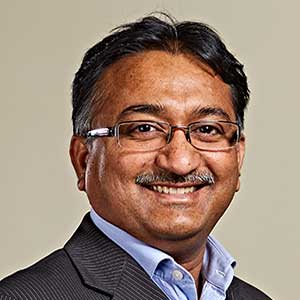
Samir Lemeš serves as Dean of the Polytechnic Faculty at the University of Zenica (2022-2026), where he was elected as full professor in both Graphics and Visualization (November 2023) and Measuring Techniques (May 2022). Previously, he held significant leadership roles including Head of the Department of Software Engineering (2020-2023), Vice-Dean for Scientific Research (2015-2022), and Head of the Department of Civil Engineering and Building Structures (2015-2019).
His research spans graphics and visualization, measuring techniques, computer graphics, CAD applications, digital image processing, and environmental monitoring systems. His work bridges theoretical computer science with practical engineering applications, particularly in Industry 4.0 contexts where he explores AI image generators, blockchain technologies, and IoT-enabled embedded systems. His research demonstrates a consistent focus on applying computational methods to solve engineering and environmental challenges.
Analysis of his recent publications (2023-2025) reveals a strong emphasis on Industry 4.0 technologies, with significant contributions in computer vision applications, AI prompt engineering, digital image processing using OpenCV, and blockchain implementations. His work shows increasing interdisciplinary collaboration, particularly between computer science, environmental science, and industrial engineering.
Professor Lemeš has been instrumental in several international environmental projects including the Network of Aarhus Centers for the Green Agenda and Environmental Protection (2024-2026), Reindustrialisation Following the Brownfield is Better than Greenfield Principle (2024-2026), and the Healthy Urban Environment Erasmus+ project (2018-2021). His grant portfolio demonstrates consistent funding from EU programs, UNESCO, OSCE, and international environmental organizations.
He teaches across multiple engineering disciplines including Introduction to Information Technology, Computer Graphics, CAD in Construction, and Standardization, serving both undergraduate and doctoral students at the Polytechnic Faculty. His courses bridge theoretical computer science with practical engineering applications, particularly in the context of Industry 4.0 technologies.