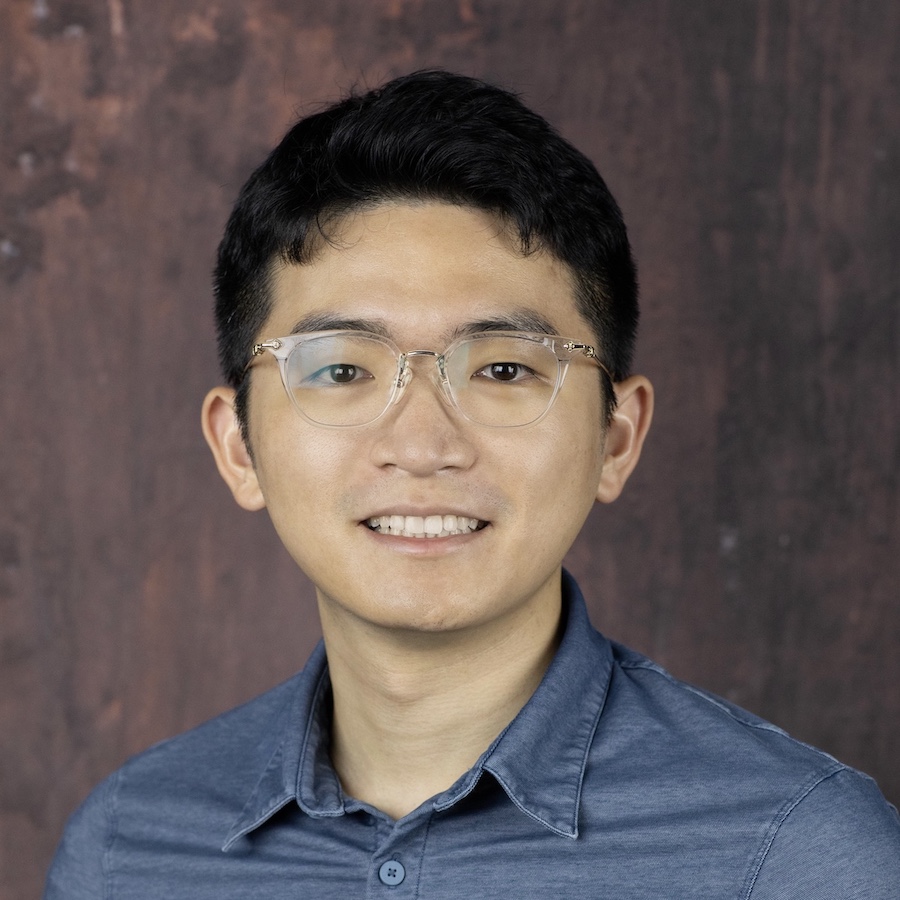
Denny Yu is an Associate Professor at the Edwardson School of Industrial Engineering, Purdue University. His work bridges human factors, neuroergonomics, and healthcare safety through advanced sensor systems and AI. Primary Affiliation : Edwardson School of Industrial Engineering, Purdue University Research Themes : Surgical ergonomics, autonomous vehicle human factors, cognitive workload assessment, multimodal physiological sensing Dr. Yu's research focuses on neuroergonomics and human-robot interaction , particularly in surgical and transportation contexts. His team develops sensor-based systems for workload monitoring, including: EEG-eye tracking fusion for situation awareness Wearable exoskeletons for surgical posture support Computer vision tools for lifting task risk analysis Smart infusion pump usability frameworks AI-driven surgical coaching systems Recent publications emphasize deep learning applications in soft tissue deformation estimation and real-time adaptive systems for robotic surgery augmentation. His work spans both occupational health (veterinary surgeons, airport workers) and medical device innovation domains.
Dr. Jie Gao is an Assistant Professor at the School of Information Technology , Carleton University, with cross-appointments at Dalhousie University (Adjunct Faculty, 2024) and Carleton University (2025). He holds a Ph.D. in Electrical and Computer Engineering from the University of Alberta (2014) and has held postdoctoral and research associate positions at Ryerson University (2017-2019), University of Waterloo (2019-2020), and Marquette University (2020-2022). His research focuses on machine learning for communications/networking , 6G wireless networks , cloud/multi-access edge computing , IoT/industrial IoT solutions , and network virtualization/digital twins . Research Leadership: Co-investigator on projects related to AI-assisted network slicing, digital twin-driven resource allocation, and integrated satellite-terrestrial networks Led work on energy-efficient UAV-assisted edge computing (IEEE Best Land Transportation Paper Award 2024) Professional Roles: Senior Member, IEEE Lead Associate Editor, IEEE Access Vehicular Technology Society Section (2020-present) Associate Editor, Springer Peer-to-Peer Networking and Applications (2020-present) IEEE Vehicular Technology Society Young Professional Ambassador (2024) Notable Contributions: Authored/co-authored books on Intelligent Computing and Communication for the Internet of Vehicles (Springer, 2023) and Connectivity and Edge Computing in IoT (Springer, 2021) Holds patents on medium access control methods (US Patents 2022, 2024) Received multiple IEEE service awards (2018-2024)
Tingjun Chen is the Nortel Networks Assistant Professor in the Department of Electrical and Computer Engineering at Duke University's Pratt School of Engineering, with a secondary appointment in Computer Science. He directs the FuNCtions Lab, focusing on wireless, optical, and quantum networked systems with emphasis on edge computing and energy efficiency. Originally from Tsinghua University (B.S. 2014), he earned M.S. (2018) and Ph.D. (2020) degrees from Columbia University under Gil Zussman. His research spans wireless networking, optical systems, energy-harvesting technologies, and AI-ML integration in communication infrastructure. Recent publications demonstrate expertise in mmWave systems, optical transmission management, and RF in-physics computing, with field trials and testbed deployments in dense urban environments. His work has received multiple top conference paper awards and major grants from NSF, ARO, and industry partners. Key awards include: NSF CAREER Award (2025) IBM Academic Award (2023, 2021) Facebook Fellowship (2019) ACM SIGMOBILE Dissertation Award Runner-up (2021) His lab develops scalable network solutions through projects like: NSF CAREER: Mobile Fronthaul Optimization NSF CC* Integration-Large: Campus RDMA Networking NSF NewSpectrum: Spectrum Monitoring Systems Duke Quantum Network Initiative
Ludwig Schmidt is an Assistant Professor in the Computer Science Department at Stanford University and a member of Stanford Data Science. He also serves as a member of the technical staff at Anthropic and LAION, contributing to both academic and industrial research in machine learning. Dr. Schmidt completed his PhD at MIT, where he received the prestigious George M. Sprowls Award for best PhD theses in computer science, followed by a postdoctoral position at UC Berkeley. His educational background provides a strong foundation for his research at the intersection of theoretical and applied machine learning. Dr. Schmidt's research focuses on the empirical foundations of machine learning, with particular emphasis on datasets, reliable generalization, multimodality, and language models. His work addresses critical challenges in ensuring machine learning models perform consistently across different domains and data distributions. His research group has made significant contributions to open source machine learning through projects like OpenCLIP, DCLM, and the LAION-5B dataset, which have become important resources for the machine learning community. An analysis of Dr. Schmidt's recent publications reveals a strong focus on dataset quality, multimodal learning, and language model training. His work spans from fundamental research on generalization and robustness to practical applications in vision-language systems and tabular data. A recurring theme is the importance of high-quality, diverse datasets for training robust machine learning models, with several papers addressing dataset curation, evaluation methodologies, and the impact of data quality on model performance. New Horizons Award at EAAMO Best paper awards at ICML & NeurIPS Best paper finalist at CVPR Sprowls dissertation award from MIT (George M. Sprowls Award) Dr. Schmidt actively mentors doctoral students and postdoctoral researchers. His current advisees include doctoral candidates Liangyu Chen, Shiye Su, Elaine Sui, Audrey Xie, John Yang, Yuhui Zhang, and Wanjia Zhao. He serves as Doctoral Dissertation Reader for Kyle Hsu and Aishwarya Mandyam, and as Postdoctoral Faculty Sponsor for Benjamin Feuer and Mike Merrill. His research has attracted significant funding that supports these students and enables his group to contribute to open source projects like OpenCLIP and LAION-5B. Dr. Schmidt leads a research group focused on empirical machine learning foundations. The group actively contributes to open source machine learning through code repositories and datasets, including OpenCLIP, OpenFlamingo, LAION-5B, and the DataComp datasets. Their work bridges theoretical insights with practical applications, developing tools and resources that advance the entire machine learning community.
Mustafa Abdallah is an Assistant Professor at the Computer and Information Technology (CIT) department of Purdue University in Indianapolis, with a courtesy appointment at the Purdue Polytechnic Institute. He holds a PhD in Electrical and Computer Engineering from Purdue University (2022) and prior degrees from Cairo University (MS: 2016, BS: 2012). His research focuses on game theory, behavioral decision-making, explainable AI, and deep learning, applied to cybersecurity, autonomous systems, and IoT anomaly detection. His work has been recognized by the prestigious Bilsland Fellowship and grants from IEEE and IUPUI. Industrial collaborations include Adobe Research (meta-learning for time-series forecasting), Principal Financial Group (financial risk prediction using Kalman filters), and RDI Company (deep learning for pronunciation systems, resulting in a US patent). He has published extensively in top venues like IEEE S&P, IEEE TCNS, and ACM AsiaCCS.
Fardina Alam is a Lecturer in the Department of Computer Science at the University of Maryland, College Park. She holds a Ph.D. from George Mason University (2023), where she specialized in Structural Bioinformatics and Machine Learning. Her academic rank reflects UMD's Professional Track Faculty, equivalent to an Assistant Professor of Teaching. Dr. Alam's research focuses on deep learning applications in protein structure prediction, generative AI, and ethical data practices. She has contributed to projects funded by an NSF FET Grant (#1900061) and published in journals like Biomolecules. Awards include the 2023 Outstanding Dissertation Award and 2022 Editor's Choice Article recognition. Education: Ph.D. (Computer Science, George Mason, 2023); M.S. (Computer Science, George Mason, 2019); B.S. (Computer Science and Engineering, Military Institute of Science and Technology, Bangladesh, 2013). Her teaching emphasizes data science ethics and interdisciplinary applications, including a new course for UMD's Data Science minor. Professional roles include Associate Guest Editor at Bioinformatics Advances (2024), Faculty Advisor to the Bangladeshi Graduate Student Association, and Program Co-Chair for the ACM-BCB Computational Structural Bioinformatics Workshop (2023). Research Interests: Structural Bioinformatics, Generative AI, Responsible AI Ethics, Deep Learning, Machine Learning, and Data Science. Her work bridges computational biology and AI, with a focus on equitable data practices and protein structure analysis. Recent projects address challenges in generating physically-realistic protein structures and improving question-answering systems through equitable data strategies. Awards: Recipient of the 2023 Outstanding Dissertation Award (George Mason University), 2023 Best Paper Award, and 2022 Biomolecules Editor's Choice Article. These accolades highlight contributions to protein structure prediction and bioinformatics methodology. Advising & Grants: NSF FET Grant #1900061 supported her computational biology research. She advises the Nobanno graduate student group and chairs workshops in her field. Her teaching and research aim to promote inclusivity, particularly for underrepresented groups in STEM. Labs/Teams: Active contributor to the Computational Biology Lab at George Mason University and collaborates with UMD's interdisciplinary teams on data ethics and AI applications. Her work aligns with UMD's vision for data-driven education and innovation.
Abey Campbell is an Assistant Professor in Computer Science at the School of Computer Science, University College Dublin. He holds roles such as Deputy Programme Director for Computer Science, Director of UCD VR Lab, and 1st Year Stage Coordinator. His research focuses on Augmented Reality (AR), Virtual Reality (VR), Mixed Reality (MR), and Multi-Agent Systems with applications in education, healthcare, and human-computer interaction. Campbell has coordinated modules like Augmented and Virtual Reality, Computer Graphics, Game Development, and Mobile Computing. He earned his BSc and PhD in Computer Science from University College Dublin. His work explores touchless interaction technologies, machine learning agents in STEM education, and ethical implications of emerging technologies. Notable contributions include RenderKernel for real-time rendering systems and studies on AR's role in decision support systems. Campbell has secured a grant from Enterprise Ireland for collaborative design documentation and participates in professional activities like peer reviewing for Frontiers in Virtual Reality and IEEE conferences. His collaborative projects include developing AR tools for veterinary training and evaluating immersive VR experiences in nursing education. The UCD VR Lab under his direction focuses on applied research in spatial computing and interactive systems.
Shakil Mahmud is a Visiting Assistant Professor in the Department of Electrical and Computer Engineering at the University of Mississippi. His research focuses on medical device security, embedded systems, and hardware security for cyber-physical systems. He holds a B.S. in Electrical Engineering from Ahsanullah University of Science and Technology (2015) and a Ph.D. in Computer Science and Engineering from the University of South Florida (2023). His recent work emphasizes enhancing safety and reliability in closed-loop medical systems through biosignal modeling, hardware emulation platforms (PEP), and trojan resilience strategies. He explores design trade-offs in bioimplantable devices and efficient implementations of AI architectures on constrained platforms. Key research themes include FPGA security, IoT medical device reliability, and false alarm mitigation in IoMT systems. His publications span topics like hardware obfuscation, real-time biomedical signal processing, and neural network optimization for embedded systems.
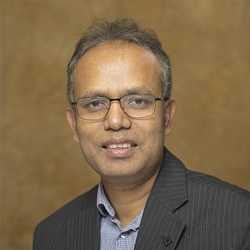
Davood B. Pourkargar is an Assistant Professor in the Tim Taylor Department of Chemical Engineering at Kansas State University (K-State), part of the Carl R. Ice College of Engineering. He is also a graduate faculty member at the Food Science Institute and a faculty researcher at the Johnson Cancer Research Center. His professional experience includes roles at ExxonMobil Research and Engineering, the University of Minnesota, and the University of Delaware. Education: Ph.D. in Chemical Engineering, Pennsylvania State University (2015) M.S. in Chemical Engineering, Sharif University of Technology (2010) B.S. in Chemical Engineering, Sharif University of Technology (2008) Research Interests: Focuses on computational multiscale modeling, artificial intelligence, optimal control, and automation for sustainable energy/chemical production. Key areas include physics-informed machine learning, cyber-physical systems, and smart materials synthesis. His lab integrates process systems engineering with digital twin technology to enhance decision-making in complex systems. Key Research Trends: Recent work emphasizes distributed control architectures, resilient process networks, and applications in renewable energy (e.g., green ammonia, solar cell production). His publications span AI-driven modeling, cybersecurity for manufacturing systems, and data-driven predictive frameworks. Awards: 2024 Carl R. Ice College Outstanding Assistant Professor NSF EPSCoR Fellowship AFOSR Faculty Fellowship Multiple Best Presentation Awards at AIChE/ACC conferences Advising & Grants: Advises over a dozen graduate/undergraduate students. Secured grants including NSF funding for physics-informed machine learning in organ-on-a-chip systems. Active in lab automation and robotic additive manufacturing initiatives. Labs & Teams: Director of the Intelligent Sustainable Process Systems Lab (ISPSL), with computational and experimental facilities in Durland Hall. Collaborates across disciplines including food science, cancer research, and biomedical engineering.
Renata Dividino is an Assistant Professor in the Department of Computer Science at Brock University, Canada. She holds a BSc from the University of Campinas (Brazil), an MSc from Universität des Saarlandes (Germany), and a PhD from Universität Koblenz – Landau (Germany). Her research focuses on graph knowledge representation, machine learning, and their applications in web science, semantic web foundations, and provenance systems. She has worked at institutions like DFKI, Fraunhofer IGD, and the Big Data Analytics Lab at Dalhousie University, bridging academic and industrial sectors. Her industry experience includes roles as an AI Scientist and Director of Data Science in the maritime sector, where she developed patented technologies for AI-driven maritime operations and risk assessment systems. Key research contributions include improving AI system reliability via provenance analysis and advancing knowledge graph applications. Education: BSc in Computer Science, University of Campinas MSc in Computer Science, Universität des Saarlandes PhD in Computer Science, Universität Koblenz – Landau Research Interests: Provenance systems, semantic web foundations, knowledge graphs, graph-based AI, maritime AI applications, and federated learning. Her work emphasizes practical applications in complex networks, web-scale data, and social networks. Awards: No specific awards mentioned, but her contributions include patented technologies and peer-reviewed publications on provenance-driven AI transparency. Advising & Grants: Secured industry grants for R&D projects in maritime AI and data science. Her work on vessel risk assessment and infectious disease prediction demonstrates applied research impact.
Prof. Dr.-Ing. Stefan Schulte is a Full Professor at Hamburg University of Technology, leading the Institute for Data Engineering and the Christian Doppler Laboratory Blockchain Technologies for the Internet of Things (CDL-BOT). He holds a diploma in Economics and a Bachelor's in Computer Science from the University of Oldenburg, followed by a Master's in Information Technology (with Merit) from the University of Newcastle. After completing his PhD at TU Darmstadt in 2010, he held roles as Postdoctoral Researcher at TU Wien, Assistant Professor (tenure-track), and eventually Associate Professor before joining TU Hamburg in 2021. His research focuses on data engineering, blockchain technologies applied to IoT, elastic computing, and quality-of-service (QoS) aspects in smart systems. Notable contributions include work on fog computing, federated learning, and cross-blockchain interoperability. He has published over 140 papers in top-tier venues like IEEE Transactions on Services Computing and ACM Computing Surveys. Key awards include Best Paper Awards at the IEEE International Conference on Blockchain (2020) and the European Conference on Service-Oriented and Cloud Computing (2023). Prof. Schulte chairs major conferences such as the IEEE International Conference on Fog and Edge Computing (ICFEC 2025) and serves on editorial boards for journals like IEEE Transactions on Services Computing. He leads CDL-BOT, a lab exploring blockchain applications in IoT and manufacturing. His industrial collaborations include projects like SIMPLI-CITY (smart mobility) and CREMA (cloud-based manufacturing). Current research emphasizes blockchain interoperability, federated learning frameworks, and edge-AI systems. He actively reviews proposals for the German Research Foundation, EU programs, and industry initiatives.
Dr. HanQin Cai is the Paul N. Somerville Endowed Assistant Professor in the Department of Statistics and Data Science at the University of Central Florida (UCF), also serving as Director of the Data Science Lab. He holds a joint appointment with the Department of Computer Science. His research focuses on theoretical and algorithmic foundations of mathematical optimization, data science, and machine learning, with emphasis on non-convex algorithms, adversarial attacks, signal/image processing, and deep learning integration. He has secured NSF grants totaling over $2.6M, including a $121K single-PI grant and a $2.49M co-PI grant. His work has been recognized with the UCF OSCaR Award (2025) and IEEE Senior Member status (2024). Education: PhD in Applied Mathematical and Computational Sciences from University of Iowa (2018), with M.S. in Mathematics (2014) and M.C.S. in Computer Science (2017). Previously served as a Postdoc at UCLA Mathematics Department under Dr. Wotao Yin. Research highlights include: query-efficient zeroth-order optimization, robust signal processing with corrupted data, adversarial attacks on neural networks, and tensor-based methods for high-dimensional data analysis. His recent publications explore advanced techniques in matrix recovery, tensor decompositions, and explainable AI. Grants & Awards: NSF DMS-2304489 (2022–2025), NSF DUE-2321986 (2024–2029), UCF OSCaR Award, IEEE Senior Membership. Labs & Teams: Directs UCF's Data Science Lab, collaborates across disciplines in statistics, computer science, and engineering.
Nirwan Ansari is a Distinguished Professor in the Department of Electrical and Computer Engineering at New Jersey Institute of Technology (NJIT). His research focuses on cutting-edge advancements in 6G networks , wireless charging , machine learning , and Internet of Things (IoT) . He has contributed extensively to AI-driven network optimization and sustainable energy solutions for next-generation communication systems. Ph.D., Electrical Engineering, Purdue University (1988) M.S., Electrical Engineering, University of Michigan-Ann Arbor (1983) B.S., Electrical Engineering, NJIT (1982) His recent work explores AI-native network slicing , UAV-assisted edge computing , and holographic communication . Publications highlight synergies between terrestrial and non-terrestrial networks , digital twin integration, and energy-efficient IoT systems . He serves as an Honorary Chair and contributes to major conferences like IEEE INFOCOM and IWCMC.
Jun Bai is an Assistant Professor in the Department of Computer Science at the University of Cincinnati's College of Engineering and Applied Science. His research focuses on Machine Learning, Deep Learning, Medical Image Analysis, AI-driven diagnostics for cancer and diseases, and drug discovery. He holds a Ph.D. in Computer Science and Engineering from the University of Connecticut (2023), an M.S. in Computer Science from the University of Dayton (2019), and an M.S. in Interdisciplinary Studies in Education (2015). His work emphasizes applying AI to healthcare challenges, such as robust mammogram classification, 3D biomedical image registration, and peptide generation for drug discovery. Recent studies include hybrid transformer models for medical imaging and weakly-supervised systems for prostate cancer diagnosis. His computational methods span molecular dynamics simulations and graph neural networks. Despite his prolific research output, no specific grants, advising roles, or lab affiliations are explicitly listed in the provided data. Contact: Rhodes Hall 891, Cincinnati, OH | Email: baiju@ucmail.uc.edu
Dr. Chanchal K. Roy is a Professor of Software Engineering/Computer Science at the University of Saskatchewan (USask), Canada, and Director of the NSERC CREATE SOAR program. He leads the Software Research Lab (SRLab) and is renowned for his work on code clone detection (NiCad tool) and software maintenance. His research spans software evolution, big data analytics, and quantum computing applications in software engineering. Dr. Roy holds a Ph.D. from Queen’s University, an M.Sc. from RWTH Aachen University, and a B.Sc. from Khulna University. Research interests include software clone detection, maintenance, and evolution, with emphasis on semantic analysis and cross-language clones. He has published over 240 papers (h-index 52) and attracted $6M+ in funding, including NSERC grants and CFI-JELF support. Awards include the GSA Advising Excellence Award, Outstanding Young Computer Science Researcher Award, and multiple Most Influential Paper awards. Key contributions include developing NiCad, advancing Stack Overflow search techniques, and leading collaborative projects in software analytics. His work has been featured in ACM Tech News, TechRepublic, and Stack Overflow blogs. Dr. Roy actively engages in keynotes at conferences like WCRE, IWSC, and BIM.