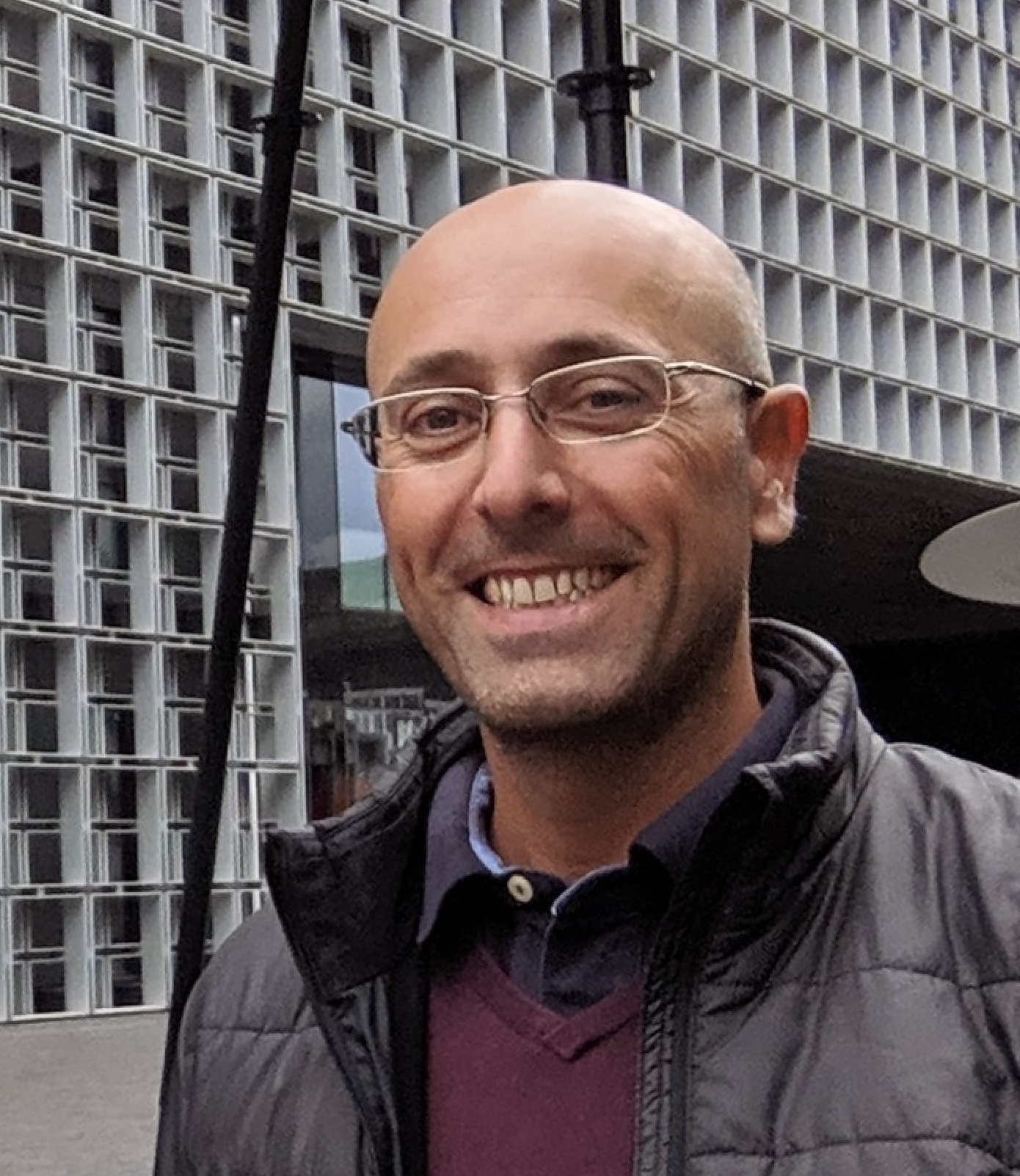
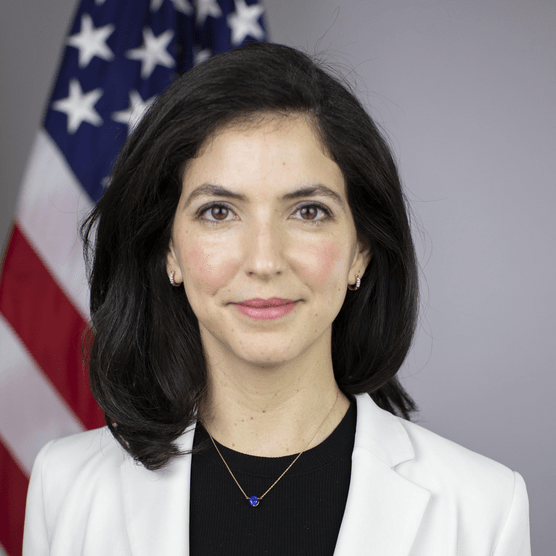
Professor Luke Harding is a faculty member at the Department of Linguistics and English Language , Lancaster University , within the School of Social Sciences . His work bridges applied linguistics, language assessment, and critical discourse studies, with a focus on the ethical and societal implications of testing. Research Interests : Language testing and assessment, World Englishes and English as a Lingua Franca (ELF), second language listening and pronunciation assessment, diagnostic approaches to language evaluation, and language assessment literacy. Recent projects integrate digital technology and corpus linguistics into testing frameworks. Publications : Published extensively in Language Testing , Applied Linguistics , and Language Assessment Quarterly . Co-edited the Routledge Handbook of Language Testing (Second Edition) (2022), a key reference work in the field. Teaching : Leads modules in Language Test Construction and Evaluation , Issues in Language Testing , and Statistical Analysis for Language Testing within the university's distance MA program. Leadership : Convened the Language Testing Research Group with colleagues Tineke Brunfaut and John Pill, advancing interdisciplinary approaches to assessment.
Crytal Lee is an Assistant Professor in Computational Media and Design at MIT, with a joint appointment in the Schwarzman College of Computing and Comparative Media Studies/Writing. She is also a Faculty Associate at Harvard's Berkman Klein Center for Internet & Society, co-leading the Ethical Tech Working Group, and a Senior Fellow at Mozilla's Responsible Computing Challenge. Her research focuses on data visualization, disability studies, and ethical technology, emphasizing the 'life-cycle of data representations.' Education: PhD in History, Anthropology, Science, Technology, and Society from MIT (2022); MA and BA (High Honors) in History of Science from Stanford University (2016 and 2015). Research Interests : Crystal examines how data is curated, visualized, and contested, with a particular lens on disability justice and accessible design. Her work bridges STS, HCI, and critical data studies, addressing issues like misinformation, algorithmic bias, and inclusive technology. Awards & Grants : Honorable Mentions at EuroVis 2022 and CHI 2021; NSF Dissertation Improvement Grant; SSRC Social Data Fellowship. Advising & Mentorship : Advised projects on accessible visualization, participatory AI, and disability inclusion. Current book project: Crip Computation . Labs & Teams : Co-leads Ethical Tech Working Group at Berkman Klein; involved in MIT's Data + Feminism Lab and Accessible Interactions projects.
Louis Hickman is an Assistant Professor of Industrial-Organizational Psychology at Virginia Tech’s Department of Psychology. He also serves as a Visiting Academic at Amazon and holds a Senior Fellow position at Wharton People Analytics, University of Pennsylvania. His research bridges technology and work, focusing on machine learning applications in organizational science, particularly automated interviews and algorithmic fairness. He leads the Workplace Assessment and Social Perceptions (WASP) Lab, exploring how biases influence hiring and using AI to reduce algorithmic bias. Hickman holds a Ph.D. in Industrial-Organizational Psychology from Purdue University (2021), alongside advanced degrees in Computer Science and Creative Writing. His work emphasizes interdisciplinary collaboration, spanning psychology, computer science, and management. Research Interests: Automated personnel assessment via AI Algorithmic bias mitigation in hiring Machine learning applications in HR and education Interpersonal perception dynamics Unproctored testing in the AI era Publications: Recent work examines automated interview validity, LLM impacts on testing, and recruitment algorithm ethics. His 2025 studies highlight risks of unproctored testing and bias in automated systems. Earlier research (2023–2022) explores text mining for personality assessment and fairness in AI-driven selection. Awards: None explicitly mentioned, though his work has been widely cited in organizational psychology and AI ethics domains. Advising & Labs: Currently not accepting graduate students for 2026, but oversees the WASP Lab. Past research collaborations include projects on LLM competencies, bias simulation, and algorithmic fairness frameworks. Grants and funding sources are unspecified in provided text.
Immanuel Trummer is a Professor of Computer Science at Cornell University, specializing in database systems, query optimization, and applications of large language models (LLMs) and quantum computing. He leads research projects such as DB-BERT, UDO, and SkinnerDB, focusing on automated database tuning, adaptive query processing, and leveraging LLMs for code synthesis and system optimization. His research interests span quantum computing for database optimization, cost-efficient LLM utilization, and voice-based data exploration. Key contributions include developing systems like CEDAR for claim verification, CodexDB for LLM-driven code generation, and ThalamusDB for multimodal data querying. Trummer has received prestigious awards, including the NSF CAREER Award (2023-2028) and the Best Demonstration Award at BDA 2020. His work has been funded by NSF, Google, Huawei, and others, supporting projects like quantum-index selection and misinformation detection. He advises graduate students in database systems and teaches advanced courses such as CS 6320 (Advanced Database Systems) and CS 7390 (Seminar in Database Systems). His research lab hosts open-source tools like JoinGym and maintains extensive collaborations in industry and academia.
Alfredo Capozucca is a full permanent Researcher at the Department of Computer Science (DCS) within the Faculty of Science, Technology and Medicine (FSTM) at the University of Luxembourg. He holds a PhD in Computer Science from the University of Luxembourg (2010) and an M.S. from the National University of Rosario, Argentina (2003). His research focuses on modern software engineering methods, dependable systems, and computing education, with an emphasis on formal verification and sustainable computing practices. Capozucca has contributed to the design of courses at undergraduate and master's levels, including serving as Deputy Programme Director for the BSc in Computer Science from 2021-2024. His work bridges theoretical foundations with practical applications in education and industry. Research interests prominently include AI in education (e.g., ChatGPT's role in formal specification writing), formal verification techniques, and the integration of DevOps philosophies into academic curricula. He has authored numerous papers on topics ranging from security policy analysis to energy-efficient transactional models. Capozucca's contributions extend to open-source projects and tool development, such as the Messir UML requirements engineering tool. His teaching spans software engineering fundamentals, dependability, and modern DevOps practices, reflecting a commitment to aligning education with industry needs. Key professional roles include R&D engineer positions (2004-2006) and leadership in educational program design. His research infrastructure is based at the Maison du Nombre facility in Luxembourg. While no specific grants or awards are listed, his extensive publication record and teaching contributions highlight sustained academic engagement.
Rebecca Lissner is a Senior Fellow for U.S. Foreign Policy at the Council on Foreign Relations (CFR) and a former professor at the U.S. Naval War College, where she served in the Strategic and Operational Research Department within the College of Operational and Strategic Studies. She has held senior national security roles in the Biden-Harris administration, including Deputy Assistant to the President and Principal Deputy National Security Advisor to the Vice President, advising on U.S.-China competition, Ukraine, AI, and climate policy. AB in Social Studies, Harvard University MA and PhD in Government, Georgetown University Lissner’s research focuses on American grand strategy, the future of the liberal international order, and U.S. global leadership. She explores how the United States can adapt its foreign policy to maintain influence amid rising powers and domestic political shifts. Her work emphasizes reimagining, rather than restoring, the post-World War II international system through strengthened alliances, democratic coalitions, and strategic innovation. Her recent publications reveal a consistent focus on grand strategy, U.S. foreign policy after Trump, NATO and European security, and the evolving liberal order. These works span journals like Foreign Affairs , Foreign Policy , and Washington Quarterly , highlighting her expertise in strategic planning, crisis management, and alliance politics. Themes include the resilience of international institutions, the need for strategic coherence, and the importance of proactive leadership in shaping global norms. Scientific awards and honors are not explicitly mentioned in the provided texts. Lissner has advised national security leadership and presidential campaigns, including those of Biden, Harris, and Clinton. She has contributed to major policy documents such as the Biden administration’s National Security Strategy and led contingency planning on Russia-Ukraine. Her media engagement includes commentary for CNN, MSNBC, BBC, and writing in The Atlantic and Washington Post , demonstrating broad influence in both policy and public discourse. She has held research affiliations at Georgetown University, Perry World House at the University of Pennsylvania, Yale’s International Security Studies, and Columbia’s Saltzman Institute, reflecting a robust academic network. While no formal lab or team is specified, her collaborative work with Mira Rapp-Hooper and leadership in government strategy teams indicate active participation in high-level research and policy teams.
Andrew Campana is an Assistant Professor of Asian Studies at Cornell University's College of Arts and Sciences, specializing in modern and contemporary Japanese literature and media. His research explores the possibilities and limitations of expression during media transitions, with particular focus on poetry, digital media, and disability studies. His academic journey includes a Ph.D. in East Asian Languages and Civilizations from Harvard University and an Honors B.A. in East Asian Studies from the University of Toronto. Campana's first book, Expanding Verse: Japanese Poetry at the Edge of Media , published by the University of California Press in 2024 as an open access work, examines Japanese poetic practice from the 1920s to the present as poets engaged with evolving media technologies including film, tape recording, television, and the internet. As a researcher, Campana's work bridges literary studies, media studies, game studies, and disability studies, with current projects exploring how poetry became a key site of digital experimentation in Japan. His research methodology combines traditional literary analysis with hands-on creative practice, informed by his experiences at MIT's Trope Tank laboratory. His scholarly interests span Japanese media history, disability representation in literature and gaming, digital poetics, and gender studies. His research has received significant media attention, including features in the Cornell Chronicle ('Poets in Japan Experiment at the Edge of Media' and 'Japanese Poets Open New Ways of Thinking About Media'), The Statesman, and interviews on NPR's Academic Minute and the Curiosity Daily podcast discussing his work on gaming and accessibility. As an educator, Campana teaches courses including 'Introduction to Japan,' 'Japanese Poetry,' and 'The Glitch: Errors, Disability, and the Edges of Digital Media' (ASIAN 4703/6703), guiding students through interdisciplinary explorations of Japanese literature, media, and digital culture. His teaching reflects his commitment to understanding media transitions through both theoretical and practical lenses.
ChanMin Kim is a Professor in the Learning and Performance Systems department at Penn State College of Education. With over 80 publications and 2553 citations, their work focuses on integrating artificial intelligence , robotics , and educational technology into science and computer science education. Research interests: Science writing, AI-human partnerships, robotics in education, equity-focused technology design Key methodologies: Natural Language Processing, learning analytics, scaffolding strategies Recent work explores large language models in education, debugging processes in pre-service teacher training, and automated assessment systems for science explanations. While the provided data doesn't show specific scientific awards or student advisees, their publications in venues like British Journal of Educational Technology and Journal of Science Education and Technology demonstrate significant contributions to learning sciences. Kim collaborates extensively with researchers in AI, educational technology, and equity-focused domains.
Chris Till is a Senior Lecturer in Sociology at Leeds Beckett University, specializing in the intersection of digital technologies, health practices, and social theory. His academic work critically examines how digital health technologies mediate contemporary social relations and subject formations within capitalist structures. Dr. Till's educational background includes studies at Nottingham Trent University and the University of Leeds. His research primarily focuses on self-tracking devices, corporate wellness programs, and the sociological implications of digital health technologies within contemporary capitalism. His scholarly work reveals consistent themes around digital labor, biopolitical control through health technologies, and the transformation of exercise and wellness practices into forms of labor under financialized capitalism. Till's research demonstrates how seemingly personal health tracking practices become integrated into broader systems of capital accumulation and social control. His publications show a clear trajectory examining the sociological dimensions of digital health, with particular attention to how corporate wellness initiatives transform individual health behaviors into productive labor for capital. The recurring themes across his work include the examination of self-tracking as a form of digital labor, the commercialization of bodies through wellness technologies, and the construction of new subjectivities within digital capitalism. As an educator, Till has developed academic writing tools to support student development, demonstrating his commitment to pedagogical innovation alongside his research interests in digital practices.
Dongwook Yoon is an Associate Professor at the Department of Computer Science , University of British Columbia , and serves as Director of the SOCIUS Lab . He actively contributes to research in Human-Computer Interaction, Human-AI Interaction, and Virtual/Augmented Reality as a member of the Designing for People (DFP) and CAIDA research clusters. Education : PhD in Computer Science from Cornell University (2017), MS (2009) and BS (2007) in Computer Science from Seoul National University Research Focus : Designing socio-technical systems that bridge the gap between technology and human social processes, with innovations in AR/VR, multimodal interaction, and inclusive design Article Trends show his work spans: Temporal and bichronous learning environments AI self-clones and ethical implications Income inequality in virtual platforms Enhanced multimodal collaboration in VR Eyes-reduced interfaces for situational impairments Speculative participatory design for gig economy challenges Scientific Awards include: Google Academic Research Award (2024) Best Paper Award at CHI 2024 High Impact Award in Educational Technology (2024) CHCCS/SCDHM Graphics Interface Early Career Award (2023) Multiple Honorable Mentions at CHI, DIS, and CSCW Students & Collaborators range from active PhD candidates (Anika Sayara, Yuri Kim) to notable alumni (Thitaree Tanprasert, Ashish Chopra) across his SOCIUS Lab projects. His research receives funding from NSERC , KIST , Adobe , Microsoft , and Google grants.
Agnes Horvat is an Associate Professor of Communication (with a courtesy appointment in Computer Science) at Northwestern University. She directs the Technology and Social Behavior (TSB) joint doctoral program between the McCormick School of Engineering and the School of Communication, and leads the Lab on Innovation, Networks, and Knowledge (LINK). Her research focuses on human-centered computing, network science, and AI's impact on information production/sharing in digital platforms. She has received NSF CAREER, CRII, and collaborative awards as PI. Her work examines algorithmic bias in online spaces, AI-assisted creativity (e.g., LLMs in biomedical writing and music), and collective intelligence dynamics. Media coverage includes Nature , Washington Post , and Le Monde . Her advisees have won prestigious fellowships like the Northwestern Presidential Fellowship and best paper awards at top conferences. Research interests include: (1) algorithmic bias in social media and crowdfunding, (2) AI-driven creativity expansion, (3) network structures of scientific attention, and (4) opinion dynamics in online discussions. Current projects explore LLMs' role in scientific writing and music composition, while past work analyzed gender disparities in scholarly self-promotion and retraction paper attention patterns. Grants: NSF CAREER Award (202?), NSF CRII (202?), Collaborative Grant (202?) Labs/Teams: LINK Lab (focusing on innovation networks), TSB Program (interdisciplinary engineering/communication PhD)
Hong Huaqing is a Professor and doctoral supervisor at the Corpus Research Institute of Shanghai International Studies University. He holds roles as honorary director of the Chinese Corpus Linguistics Research Association and international expert at Peking University's Education Development Center. Formerly, he worked at Nanyang Technological University (Singapore) in roles such as researcher at the Learning Research and Development Center and director of the e-Learning Center of the Lee Kong Chian School of Medicine. His research spans machine translation, natural language processing, corpus linguistics, and educational technology. He supervises master's and doctoral students, co-supervises postdoctoral researchers, and focuses on smart education driven by big data analysis and innovative learning ecosystems. Research emphasizes corpus-based methods applied to language education, including computational frameworks for student engagement, wearable sensors in learning analytics, and cross-linguistic rhetoric studies. His work bridges technological innovation (e.g., AI-driven tutorial systems) with pedagogical practice, addressing challenges in non-English language education and teacher training.
Freda Shi is an Assistant Professor at the David R. Cheriton School of Computer Science, University of Waterloo, and a Faculty Member at the Vector Institute. She holds a Canada CIFAR AI Chair. Her research focuses on computational linguistics, natural language processing (NLP), and grounded language learning, with emphasis on multilingualism and spatial reasoning in vision-language systems. She earned her Ph.D. in Computer Science from the Toyota Technological Institute at Chicago (2024), advised by Karen Livescu and Kevin Gimpel, supported by a Google Ph.D. Fellowship. Her undergraduate degree is from Peking University (2018), with a minor in Sociology. Her academic career includes affiliations with the CompLING Lab at Waterloo and contributions to major conferences like ACL and NAACL. She has organized tutorials on NLP grounding and is actively involved in research on model robustness and cognitive insights. Awards include the Google Ph.D. Fellowship and Best Paper Nominations at ACL 2024 and EMNLP 2021, alongside her Thesis of Distinction. She teaches courses such as CS 784 (Computational Linguistics) and CS 486/686 (Artificial Intelligence), emphasizing both theoretical and applied aspects of NLP. Research trends in her articles highlight advancements in vision-language spatial reasoning, multilingualism, and model interpretability. Her work bridges cognitive science and computational methods, exploring how human language mechanisms inform the design of more trustworthy AI systems. Scientific Awards: Google Ph.D. Fellowship Best Paper Nominee (ACL 2024) Best Paper Nominee (EMNLP 2021) Thesis of Distinction (2024) Advising and Grants: As an advisor, she encourages prospective students to review her guidelines. Her grants include support from the Canada CIFAR AI Chair program and the Vector Institute. She collaborates in labs such as CompLING at Waterloo and co-organizes events at NAACL and ICLR. Labs/Teams: She leads the CompLING Lab at the University of Waterloo, affiliated with the Vector Institute. Her work integrates interdisciplinary teams focusing on grounded learning and multilingual NLP challenges.
Daniel Collins serves as an Associate Professor in the English department at Guttman Community College, where he has taught for two years across the First-Year Program (Reading and Writing, Composition I) and Liberal Arts and Sciences Program of Study (Introduction to Humanistic and Philosophical Thought, Composition II, Capstone). His research focuses on composition studies and digital writing pedagogy , particularly the integration of generative AI tools in writing instruction. This is exemplified by his course Self-Representation in a Digital Age , which foregrounds AI-assisted writing practices and digital identity exploration. Collins actively contributes to CUNY-wide writing initiatives through membership in the Teaching Courses on the Commons group (264 members) and the CUNY Developmental and ESL Writing Collaboration (C-DEWC), where he collaborates on developmental writing best practices across the university system.
Luke Miratrix serves as Assistant Professor at Harvard Graduate School of Education and affiliate faculty in Harvard Department of Statistics. His methodological expertise centers on causal inference applications in educational research, particularly treatment effect heterogeneity and cluster-randomized trial evaluation. His academic background includes a Doctorate in Statistics from University of California, Berkeley (2012), Master of Science in Computer Science from M.I.T., Bachelor of Science in Computer Science from California Institute of Technology, and Bachelor of Arts in Mathematics from Reed College. Prior to academia, he spent seven years as a high school teacher and tutor. Miratrix's research prioritizes minimal-assumption statistical approaches to validate data-driven arguments. Key interests include developing methods for characterizing variation in treatment impacts, analyzing post-treatment subgroups, and applying high-dimensional techniques to text summarization in legal, journalistic, and educational contexts. His work consistently bridges theoretical statistics with practical implementation challenges in real-world settings. Analysis of his recent publications (2023-2025) reveals three dominant trends: advancement of matching methodologies (e.g., synthetic controls, caliper matching), refinement of heterogeneous treatment effect estimation across multisite trials, and integration of machine learning with human coding for efficient text-based inference in educational assessments. These efforts demonstrate increasing focus on scalable, accessible tools for applied researchers. He contributes to methodological infrastructure through the CARES Lab and software packages like 'matchMulti' and 'textreg', providing practical implementation guides for complex statistical techniques. His work emphasizes translating advanced causal inference methods into usable frameworks for education researchers and policymakers.