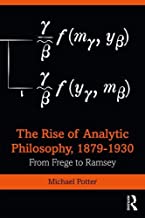
Michael Potter is Professor of Logic at the Faculty of Philosophy , University of Cambridge, and a Life Fellow at Fitzwilliam College. Previously at Balliol College, Oxford (D.Phil. in pure mathematics), he has held research fellowships at St Andrews, Harvard, and Stirling University (AHRC-funded). His work bridges historical and systematic philosophy, focusing on History of analytic philosophy (Frege, Russell, Wittgenstein, Ramsey) Philosophy of mathematics and logic Philosophy of religion Potter's research has produced major works like Set Theory and its Philosophy (OUP 2004) and The Rise of Analytic Philosophy (Routledge 2019), with significant contributions to understanding the Metaphysical underpinn't> of the Tractatus Neo-Fregean logicism Paradoxes in mathematical foundations He has supervised research on topics spanning dialetheism, predicative mathematics, and modal ontological arguments. Scientific awards include the AHRC Senior Research Fellowship (2004-2005). His recent publications analyze Transcendental arguments in Wittgenstein Sortition-based democratic theory Philosophical implications of Ramsey's infinite proofs via peer-reviewed chapters and journal articles.
John MacFarlane is a Professor of Philosophy at the University of California, Berkeley , with affiliations to the Group in Logic and the Methodology of Science and co-organizer roles in the Meaning Sciences Club and Townsend Center Working Group . His research spans philosophy of language, philosophical logic, metaphysics, epistemology, philosophy of mathematics, history of logic , and ancient philosophy , particularly Aristotle . He has held visiting positions at institutions like École des Hautes Études en Sciences Sociales (EHESS), Paris . Education : Ph.D. in Philosophy (2000, University of Pittsburgh), M.A. in Classics (1997) and Philosophy (1994), A.B. summa cum laude in Philosophy (1991, Harvard). Research Interests focus on semantic relativism , particularly assessment sensitivity as explored in his book Assessment Sensitivity: Relative Truth and Its Applications (Oxford, 2014). He investigates how epistemic modals and vagueness interact with truth evaluation. His work in philosophical logic includes a textbook Philosophical Logic: A Contemporary Introduction (Routledge, 2021). Secondary interests include ancient philosophy (Aristotle, Plato), formal logic , and fiddlosophy . Article Trends reveal contributions to relativism , epistemic modals , vagueness , and logicism . His recent work (2025) examines Plato’s Protagoras and belief utility , while 2022–2020 articles address semantic indecision and probabilistic knowledge . Earlier works (2008–2000) include foundational studies on Frege, Kant, and Aristotle . Scientific Awards include a 2023 Residential Fellowship at Wissenschaftskolleg, Berlin (declined), 2016–17 Fellow at IEA Paris , and 2015 American Academy of Arts and Sciences membership . He has received multiple Humanities Research Fellowships at Berkeley (2016, 2008, 2003) and Research Enabling Grants (2000–2009). Advising includes supervising 15+ PhD students in areas like logic, epistemology, and philosophy of language . Notable advisees include Richard Lawrence (2017) and Sophie Dandelet (2021). He also guided honors theses at Berkeley, such as Benjamin Logan’s work on epistemic modals (2018). Labs and Teams involve co-organizing the Townsend Center Working Group in History and Philosophy of Logic, Mathematics, and Science and contributing to the Group in Logic and Methodology of Science . His interdisciplinary approach integrates philosophy, logic, and computational tools , including creating Pandoc for document conversion.
Eric Wilkinson is a Research Fellow in the Department of Philosophy at the University of British Columbia and previously served as a Visiting Assistant Professor at the University of Wisconsin-Milwaukee. He holds a PhD from McGill University and earned MAs in Political Science (York University) and Philosophy (University of Toronto). His research focuses on meta-ethics, normative ethics, political philosophy, and the history of philosophy, with notable work on Indigenous philosophy, multicultural nationhood, and logical rationalism. He is a Vanier Scholar and has contributed to debates on Canadian national identity, public policy, and the intersection of gender and historical philosophy. His teaching interests align with his research, emphasizing ethics, meta-ethics, and political philosophy. Education: PhD in Philosophy, McGill University MA in Political Science, York University MA in Philosophy, University of Toronto BA/BSc, University of Ottawa Research Highlights: Reconstructing Indigenous philosophical thought through oral traditions and European records. Advocating for multicultural nationhood as a cohesive framework for diverse societies. Exploring logical rationalism as a foundational theory in epistemology. Awards: Vanier Scholar (McGill University). Publications: Featured articles include work on Mersenne’s music theory, Anscombe’s philosophy of law, and the pragmatics of art ontology. Wilkinson’s work bridges academic philosophy with public engagement, as seen in his advocacy for accessible philosophy and potential interest in public office.
Hartry Field is a Silver Professor and University Professor of Philosophy at New York University, affiliated with the College of Arts & Science. His research focuses on metaphysics, epistemology, philosophy of logic, and philosophy of mathematics. He has held prestigious fellowships from the NSF, Guggenheim Foundation, and NEH, and won the Lakatos Prize for Science Without Numbers . Education: Ph.D. (1972), M.A. (1968) in Philosophy from Harvard University; B.A. (1967) in Mathematics from University of Wisconsin. His work addresses semantic paradoxes, indeterminacy, and the philosophy of science. Recent publications include Saving Truth from Paradox (2008) and influential papers on naive truth theories and logical validity. Scientific awards include the Lakatos Prize, NSF grants, and the Guggenheim Fellowship. His research spans over four decades, addressing foundational issues in mathematics, logic, and metaphysics.
Thomas Pendlebury is an Assistant Professor of Philosophy at the University of Chicago, joining in July 2023. Previously, he served as Assistant Professor at the University of Pittsburgh (2021-2023). He holds a PhD from Harvard University (2021) and a BA in Philosophy and Linguistics from the University of North Carolina at Chapel Hill (2014). His research focuses on Kant's theoretical and practical philosophy, its connections to early modern European philosophy, and post-Kantian German idealism. Education : PhD (Harvard, 2021); BA (UNC Chapel Hill, 2014) His work investigates Kant's positive projects during the critical period, emphasizing the relationship between cognitive capacities (understanding, sensibility) and their teleological structure. Current research explores the role of practical reason in moral psychology and the metaphysical implications of transcendental idealism. Recent publications include: The Kantian's Desire (2025) - analyzing practical reason's normative role in desire The Will of All in Kant’s Groundwork (2024) - reinterpreting universality in Kantian ethics The Real Problem of Pure Reason (2022) - reconceptualizing synthetic a priori knowledge The Shape of the Kantian Mind (2021) - examining intuition-concept relationship The First Acts of Kantian Cognition (2025) - Aristotelian first acts in Kantian epistemology
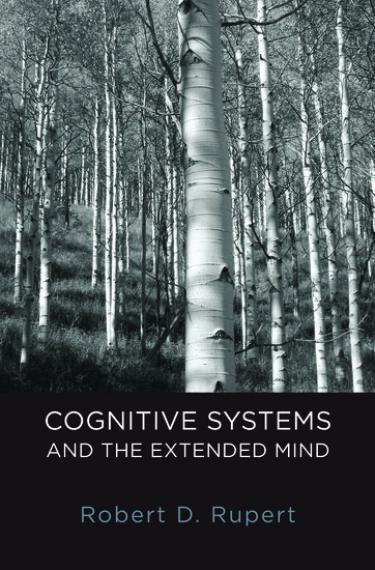
Robert D. Rupert is a Professor in the Department of Philosophy at the University of Colorado Boulder, within the College of Arts and Sciences. He is also Co-Editor-in-Chief of the British Journal for the Philosophy of Science , a Fellow of the Institute of Cognitive Science at CU-Boulder, and a member of the Committee for the History and Philosophy of Science. Ph.D., University of Illinois at Chicago, 1996 Robert Rupert's research lies at the intersection of philosophy of mind, cognitive science, metaphysics, and epistemology. His primary interests include mental representation, cognitive architecture, situated and extended cognition, group cognition, and the philosophical foundations of cognitive science. He critically examines the boundaries of the mind, the nature of concepts, and the role of embodiment and environment in cognition. His work often challenges traditional internalist views by advocating for more integrated, dynamic models of mind. His recent publications reflect a sustained engagement with predictive processing, self-modeling, enactivism, and the epistemic status of subpersonal processes. Themes across his work include the rejection of strict personal/subpersonal divides, the critique of group-level cognition, and the exploration of how cognitive systems extend into the environment. His research combines conceptual rigor with sensitivity to empirical findings in psychology and neuroscience. Robert Rupert has received several prestigious awards and fellowships, including: National Endowment for the Humanities Fellowship for College Teachers NEH Summer Research Stipend CU Provost's Faculty Achievement Award Kayden Book Award Fellow, Institute of Cognitive Science, CU-Boulder He has held visiting research positions at the University of Edinburgh, the Australian National University, and Ruhr-Universität Bochum. While no formal list of advisees or grants is provided, his editorial role and sustained publication record indicate significant influence and mentorship in the field. He has contributed to major debates in philosophy of mind and cognitive science through both original research and critical reviews. Rupert is affiliated with CU-Boulder’s Institute of Cognitive Science and contributes to interdisciplinary research through this institute. His work bridges philosophy and cognitive science, fostering collaboration across departments and institutions.
Dr. Stephan Rave is a Researcher in the Institute for Analysis and Numerics at the University of Münster. He is affiliated with the Applied Mathematics Münster cluster and serves as an Investigator in Mathematics Münster. His work focuses on numerical analysis, scientific computing, and machine learning, with a strong emphasis on model reduction techniques for complex systems. Education : PhD in Mathematics (2012), University of Münster, thesis on finitely summable K-homology. Master's and Bachelor's degrees in Mathematics from the University of Münster. Research Interests : Dr. Rave specializes in model order reduction (MOR) methods, including reduced basis techniques, localized orthogonal decomposition (LOD), and nonlinear approximation strategies. His work addresses challenges in multiscale modeling, domain decomposition, and parametrized partial differential equations. He also develops open-source software tools like pyMOR for MOR and contributes to initiatives like the MaRDI (Mathematical Research Data Initiative) to enhance interoperability in scientific computing. Projects : Key initiatives include the MaRDI project (2021–2026), EXC 2044 Cluster of Excellence (Geometry-based modeling), and MULTIBAT (lithium-ion battery simulation). His research bridges theoretical developments with practical applications in battery modeling, electrochemistry, and computational fluid dynamics. Grants & Awards : Funded by DFG, the German Federal Ministry of Research, and internal university grants, his work addresses strategic areas like sustainable research software and energy storage systems. He leads projects on distributed model reduction and communication-avoiding algorithms. Teaching : Dr. Rave teaches advanced numerical methods courses, including Model Order Reduction, Numerical Methods for PDEs, and Python-based computational labs. He co-organizes seminars and workshops on MOR and scientific software engineering.
Sharon Berry serves as an Assistant Professor in the Department of Philosophy at Indiana University Bloomington within the College of Arts & Sciences. She earned her Ph.D. from Harvard University in 2013 and maintains an active research profile in core philosophical disciplines. Her educational background includes: Ph.D. in Philosophy, Harvard University (2013) Dr. Berry's research primarily investigates epistemological foundations of mathematical knowledge, with specialized focus on the access problem (questioning whether mathematical knowledge requires 'spooky coincidences'), logical coherence in mathematical applications, and set-theoretic potentialism. She extends these analyses to metametaphysical debates about realism and conventional knowledge, while connecting mathematical epistemology to ethical access problems. Her interdisciplinary approach bridges formal logic with traditional philosophical inquiry across metaphysics and metaethics. Recent publications (2018-2023) reveal consistent methodological rigor in applying logical frameworks to philosophical puzzles, particularly in mathematical epistemology and metaethics. Articles demonstrate progression from companions-in-guilt arguments in moral skepticism toward sophisticated analyses of set-theoretic foundations and deflationary metaethical theories, indicating growing specialization in logical structures underlying a priori knowledge claims.
James Andow is a Lecturer in Philosophy at the University of Manchester, joining in 2023. His work focuses on the intersection of value theory, epistemology, and philosophical methodology, with additional interests in environmental ethics and experimental philosophy. He actively explores how intuitions function in philosophical inquiry and advocates for methodological reforms in the discipline. Research interests include conceptual engineering, the role of intuitions as evidence, epistemic deontology, and Kantian frameworks. His work often employs empirical methods to investigate philosophical concepts and their real-world implications, such as climate ethics and moral psychology. He has contributed to debates on the reproducibility of experimental philosophy and the ethical implications of conceptual interventions. His publications span articles in journals like Synthese and Inquiry , as well as book chapters addressing philosophical education and climate-related ethics. While no awards are explicitly listed, his contributions reflect engagement with cutting-edge methodological and ethical questions in contemporary philosophy. Andow accepts PhD students and is involved in collaborative research networks exploring topics such as geoengineering ethics and epistemic norms. His work bridges traditional philosophical analysis with empirical rigor, offering novel approaches to longstanding debates.
Hilary Kornblith is a Distinguished Professor in the Department of Philosophy at the University of Massachusetts Amherst. He has been a faculty member at UMass since 2003, after teaching for 24 years at the University of Vermont. He has also held visiting roles at the University of Michigan, University of Cologne, and Zhejiang University. Education: BA, State University of New York at Buffalo (1975) PhD, Cornell University (1980) Research Focus: Kornblith’s research integrates cognitive science with traditional epistemological problems. He explores how scientific understanding of the mind can reshape philosophical theories of knowledge, justification, and rationality. His work spans inductive inference, animal cognition, the role of reflection, and philosophical methodology. Publications and Themes: His recent publications emphasize naturalistic epistemology, the limits of reflective endorsement, the epistemic role of disagreement, and the continuity between human and animal cognition. He critiques traditional reliance on intuition and armchair theorizing, advocating instead for empirically informed philosophy. Scientific Awards: While no specific awards are listed, his extensive publication record and international recognition reflect significant scholarly impact. Advising and Grants: Kornblith has directed over 20 PhD dissertations, many in epistemology and philosophy of mind. His students have gone on to contribute to debates in self-knowledge, memory, testimony, and moral epistemology. Labs and Teams: While no lab is explicitly mentioned, his work aligns with interdisciplinary research in cognitive science and philosophy, often collaborating with scholars in psychology and neuroscience.
Ulrich Schmid is a Full Professor and Head of the Research Unit for Embedded Computing Systems at TU Wien. He holds a position in the Faculty of Informatics and leads the department of Embedded Computing Systems (E191-02). His roles include Curriculum Coordinator for the Bachelor and Master programs in Computer Engineering, as well as the Excellence Program Bachelor with Honors. He is also the Chair of the Curriculum Commission for Computer Engineering and a Substitute Member of the Informatics Commission. His research focuses on fault-tolerant distributed algorithms, digital integrated circuits, and topology-based approaches to distributed systems. He coordinates major projects such as the FWF-funded DMAC (2019–2024) and ByzDEL (2020–2025), which integrate topological semantics and hybrid delay models for robust hardware design and distributed system analysis. Schmid has contributed to groundbreaking work in Byzantine fault tolerance, epistemic logic for system recovery, and real-time scheduling through collaborations with researchers like Chatterjee, Függer, and Rajsbaum. Notable awards include the 2018 Edsger W. Dijkstra Prize and the 2021 Principles of Distributed Computing Doctoral Dissertation Award. His research also bridges formal verification techniques with physical hardware implementations, exemplified by projects like HEX (a Byzantine-tolerant clock distribution system) and the Involution tool for timing analysis. Schmid actively contributes to academic governance, advancing rigorous education and research standards in computer engineering. His advising and grant work involve mentoring on fault-tolerant architectures and securing funding from agencies like FWF and the European Commission. Labs and teams under his leadership include the Embedded Computing Systems group, specializing in hardware-software co-design for dependable systems-on-chip, and collaborations with institutions like GSI Helmholtzzentrum and the University of Amsterdam.
Hans-Peter Großhans is a Professor of Systematic Theology (with Philosophy of Religion and Ecumenical Theology) at the University of Münster's Faculty for Protestant Theology. He has served as Dean (2016–2020) and Vice Dean (2014–2016) of the faculty. His academic journey includes a Habilitation (2002) and Promotion (1995) from the University of Tübingen, alongside studies at Oxford. He holds honorary professorships at Zhejiang University and lectures internationally. Research focuses on Systematic Theology, Philosophy of Religion, Ecumenical Theology, and Global Protestantism. Key projects include leading the Cluster of Excellence's 'Religion and Politics' and initiatives on Orthodox Christianity in Southeast Europe and religious pluralism in Indonesia. He edits Theologische Rundschau and serves on international boards like the European Academy of Religion (Vice-President) and the International Academy of the Philosophy of Science. Teaching spans Dogmatics, Ecumenical Theology, and Philosophy of Religion, with recent courses on Ekklesiologie, Soteriology, and Jüngel's theology. His publications include monographs on theology and science, edited volumes on religious diversity, and over 60 articles in theology and philosophy. Advising includes 13 doctoral students focusing on topics like ecumenical theology, Bonhoeffer studies, and religious pluralism. Grants and collaborations involve the German Research Foundation and international institutions.
Kiyoshi Chiba is a Professor at Waseda University's School of Social Sciences, specializing in Kantian philosophy and epistemology. Previously, he served as Associate Professor at Waseda University (2016-2018) and Yamagata University (2012-2016). His academic background includes a PhD from the University of Bonn (2012) and an MA from Kyoto University (1999). Chiba's research focuses on Kant's Critique of Pure Reason, with particular emphasis on transcendental idealism, metaphysics, and epistemology. He has developed a distinctive anti-realist interpretation of Kant's philosophy, challenging prevailing realist views through concepts derived from Michael Dummett and Crispin Wright. His work explores the relationship between transcendental idealism and response-dependence theories, examining how Kant's framework can accommodate mind-dependent aspects while maintaining philosophical rigor. His publications reveal a consistent focus on resolving traditional Kantian debates, particularly regarding the nature of space, time, things in themselves, and transcendental arguments. Recent work shows increasing engagement with contemporary analytic philosophy, especially response-dependence theories and their implications for Kantian realism. His scholarship demonstrates methodological sophistication, often bridging historical Kant scholarship with current philosophical debates. WASEDA RESEARCH AWARD (High-Impact Publication), 2017 Kant Prize for the Academic Year 2009/2010, University of Bonn Prize for best doctoral thesis at University of Bonn (3000 Euro) Chiba leads multiple major research projects funded by the Japan Society for the Promotion of Science, including 'Development of the Anti-Realistic Interpretation of Kant's Critique of Pure Reason' (2023-2028) and 'Development of a Kantian Realism by Means of Response-Dependence Theories' (2020-2024). He teaches graduate courses in metaphysics, epistemology, and Kantian philosophy at Waseda University, maintaining active participation in international philosophical discourse through numerous conference presentations.
Dr. Michael Hoffmann is the H. Bruce McEver Professor in Engineering and the Liberal Arts and a Professor of Philosophy at Georgia Tech's Jimmy and Rosalynn Carter School of Public Policy. He directs the Reflect! Lab, co-leads ETHICx (Ethics, Technology, and Human Interaction Center), and oversees the VIP Digital Deliberation initiative. His research spans political philosophy (designing democratic institutions), AI ethics (user-centric design for human well-being), and interdisciplinary methods for deliberation/consensus-building. He holds a Dr. phil. habil. from TU Dresden (2003) and a PhD from LMU Munich. Key contributions include developing collaborative software tools like AGORA-net for argument visualization, analyzing framing in conflicts, and applying semiotic theory to interdisciplinary collaboration. Awards include the 2024 McEver Professorship and 2011 Gold Star Award for Research Excellence. His work emphasizes wicked problem-solving, reflective reasoning, and digital tools for public deliberation. Education: Dr. phil. habil., Philosophy (TU Dresden, 2003); PhD, Philosophy (LMU Munich) Labs/Initiatives: Reflect! Lab, ETHICx, VIP Digital Deliberation Tools Developed: Argument mapping software, Navicons collaboration system His publications explore topics like climate ethics, logical argument mapping, and cognitive conditions for diagrammatic reasoning. He bridges philosophy, engineering, and liberal arts through innovative interdisciplinary frameworks.
Robert Weston Siscoe is an Assistant Professor of Philosophy at Bowling Green State University and will join Ohio State University’s newly established Salmon P. Chase Center for Civics, Culture, and Society in Fall 2024. He serves as Editor-in-Chief and founder of The Philosophy Teaching Library . His research bridges epistemology, moral philosophy, and political theory, with over $125,000 in grant funding. He has held postdoctoral roles at the University of Notre Dame, University of Cologne, and Florida State University, and earned his PhD in Philosophy from the University of Arizona. Education: PhD in Philosophy, University of Arizona Visiting Researcher stints at Brown University, Notre Dame, and Rutgers University Research Interests: Siscoe’s work focuses on epistemic virtues, democratic epistemology, virtue ethics, and Stoic philosophy. Key themes include rationality standards, epistemic democracy, moral perception, and civic virtues. His pedagogical contributions include mentoring programs and curriculum design for public philosophy initiatives. Teaching & Outreach: He contributes to pedagogy platforms like the Blog of the APA , PEA Soup , and Philosopher’s Cocoon . Recent teaching articles address civic dialogue, Socratic methodology, and Aristotelian ethics. Labs/Teams: Leads the Philosophy as a Way of Life Project’s course design initiatives and co-founded the Virtues & Vocations Project. Active in collaborative research networks linking epistemology to civic engagement.