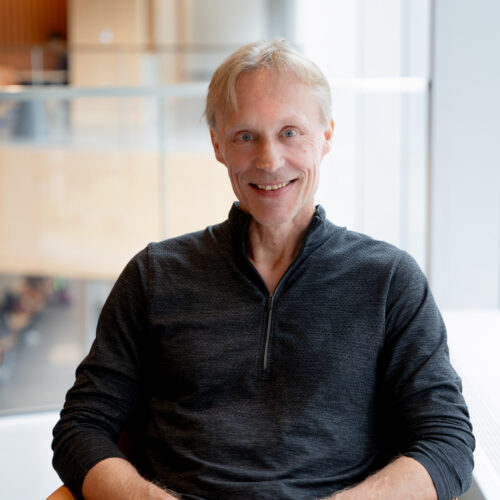
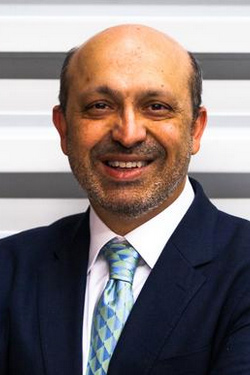
Yingyan (Celine) Lin is an Associate Professor in the School of Computer Science at Georgia Institute of Technology, leading the Efficient and Intelligent Computing (EIC) Lab. Her work focuses on cross-layer innovations in machine learning systems, from algorithms to chip design, aiming to advance green AI and ubiquitous machine learning. She holds a Ph.D. in Electrical and Computer Engineering from the University of Illinois at Urbana-Champaign (2017). Research interests include efficient machine learning, neural rendering (e.g., NeRF), hardware-software co-design for AI acceleration, and graph neural networks. Her lab has pioneered projects like RTML and 3DML, funded by NSF, NIH, DARPA, and industry partners (Qualcomm, Intel, Meta). Awards: NSF CAREER Award (2021), ACM SIGDA Outstanding Young Faculty (2022), Meta Faculty Research Award (2022) Grants: Multi-university projects funded by NSF, NIH, DARPA, SRC, ONR, and industry Recognition: First-place wins at DAC 2022 and TinyML Design Contest 2022, IEEE Micro Top Pick 2023 Her research bridges algorithmic innovation with hardware implementation, emphasizing energy efficiency and real-time performance for applications in AR/VR, computer vision, and neuro-symbolic AI systems.
Polina Golland is a Professor in the Department of Electrical Engineering and Computer Science (EECS) at MIT and a Principal Investigator in the Computer Science and Artificial Intelligence Laboratory (CSAIL). Her research focuses on developing novel techniques for biomedical image analysis and understanding, particularly in medical vision, AI/ML, and health care applications. She leads the Medical Vision Group and collaborates with the Vision Group at CSAIL. Her work emphasizes statistical modeling of medical images, shape modeling, and predictive analytics for biological processes. Current projects include fetal MRI analysis, cardiac MRI segmentation, and quantitative assessment of pulmonary edema in chest X-rays. She has secured grants from NIH, MIT-IBM Watson AI Lab, and other institutions to support her research. Dr. Golland teaches courses on inference, probability, and probabilistic systems. She advises graduate students in MIT's EECS program and has mentored numerous postdocs and researchers. Her lab focuses on translating advanced imaging techniques into clinical workflows, with applications in neuroimaging, fetal health monitoring, and cardiovascular disease analysis. Notable collaborations include work with Harvard Medical School affiliates, Brigham and Women's Hospital, and the MIT Jameel Clinic. Her research aims to bridge computational methods with clinical needs, improving diagnostic tools and treatment planning through machine learning and medical imaging innovation.
Hao Su is an Associate Professor in the Department of Computer Science and Engineering at University of California, San Diego . He serves as Chairman & CTO of Hillbot Inc , and leads the SU Lab which focuses on building autonomous systems that learn actively in physical environments. His affiliations include the Institute for Learning-enabled Optimization at Scale , Artificial Intelligence Group , Contextual Robotics Institute , Halicioğlu Data Science Institute , and Center for Visual Computing . As a researcher in Computer Vision, Robotics, and Neural Geometry , he has made significant contributions to 3D foundation models, reward-free world models, diffusion policy frameworks, and GPU-accelerated simulation environments. His 2024-2025 publications include advancements in hand-eye calibration, dynamic mesh reconstruction, and multi-stage robotic manipulation. His scientific awards include: Frontiers of Science Award (2025) TPAMI Young Research Award (2025) NSF CAREER Award (2023) ACM SIGGRAPH Best Doctorate Thesis Honorable Mention (2019) He has served as Program Chair for CVPR 2025 and Area Chair for ICLR 2022 and NeurIPS 2023 , while previously serving as Publication Chair for 3DV 2016 and Program Committee for SIGGRAPH Asia Workshops .
Luca Carlone is the Boeing Career Development Associate Professor in the Department of Aeronautics and Astronautics at MIT and a Principal Investigator at the Laboratory for Information & Decision Systems (LIDS) . He leads the SPARK Lab , focusing on developing certifiable perception algorithms for autonomous systems. PhD in Mechatronics (Polytechnic University of Turin, 2012) Research spans robotics, computer vision, and optimization Research Interests : Certifiable Perception algorithms for high-integrity systems High-level Perception (geometric, semantic, physical understanding) Efficient Perception methods for resource-constrained robots Scientific Contributions include: 2024 Outstanding Systems Paper Award (RSS) 2023 IEEE Transactions on Robotics King-Sun Fu Award 2021 NSF CAREER Award 2020 AIAA Advising Award 2019 Amazon Research Award Advising : Teaches graduate courses like Visual Navigation for Autonomous Vehicles and Robotics: Science and Systems . Collaborates with institutions including JPL, Caltech, and KAIST through the DARPA SubT Challenge.
Michael Kaess is an Associate Professor at the Robotics Institute, Carnegie Mellon University (CMU), within the School of Computer Science. He leads the Robot Perception Lab (RPL) and contributes to the Field Robotics Center (FRC) and Computer Vision Group (CV). His research focuses on efficient perception algorithms for mobile robots, particularly in 3D mapping, SLAM, and sensor fusion using vision, LiDAR, inertial, and sonar data. Kaess holds a PhD in Computer Science from Georgia Tech and was a postdoc at MIT's Marine Robotics Lab. Education: Georgia Institute of Technology, PhD in Computer Science (2008) MIT, Postdoctoral Associate (2008–2010) Research Interests: Kaess develops algorithms for robust and efficient inference in robotics, emphasizing factor graphs and linear algebra. His work spans underwater robotics, aerial systems, tactile SLAM, and multi-sensor integration. Key areas include SLAM with planes/lines, imaging sonar reconstruction, and neural field methods for LiDAR-visual fusion. Publications: Over 145 papers, including work on EDPLVO (visual odometry), HoloOcean (underwater simulation), and neural radiance fields with LiDAR. Recent trends focus on robust incremental smoothing, acoustic-optical fusion, and real-time volumetric mapping. Awards: Recognized with the RSS Test of Time Award (2020), Outstanding Associate Editor (2022), and paper awards at ICRA/ICRA. Active in conference organization (IROS/ICRA program committees). Advising & Grants: Supervises 10+ current PhD/MSc students, with past advisees contributing to CoRL/ICRA work. Manages grants in perception, autonomy, and marine robotics. Teaches courses like Robot Localization and Mapping (16-833). Labs/Teams: Directs RPL, collaborates with FRC on field robotics. Develops open-source tools like GTSAM (GNU Toolkit for Smoothing and Mapping).
Shoudong Huang is a Professor at the School of Mechanical and Mechatronic Engineering , University of Technology Sydney, and Deputy Director of the UTS Robotics Institute. His research focuses on mobile robot navigation , SLAM , nonlinear state estimation , and surgical robotics . He has published over 200 papers and is recognized as one of the 100 Most Influential Scholars in Robotics (Aminer, 2018). PhD in Automatic Control, Northeastern University (China) Postdoctoral Research Fellow, University of Hong Kong (1998-2000) Research Fellow, Australian National University (2001-2003) Full-time academic roles at UTS since 2004 His work addresses challenges in robot localization across extreme environments (underwater, underground mining, surgical settings) and develops globally optimal SLAM algorithms with guaranteed performance. He has secured over $4 million AUD in external funding, including ARC Discovery grants and industry partnerships. Recent publications emphasize cross-modal calibration (camera-LiDAR), interval analysis for bounded noise , and template-based deformable surface reconstruction . These span applications in autonomous driving, surgical navigation, and UAV guidance. Chancellor’s Medal for Research Excellence (2020) Supervisor of the Year (2023) Best Paper Award (2016 ICARCV) Huang serves as Associate Editor for IEEE Transactions on Robotics and International Journal of Robotics Research , and has held leadership roles in top robotics conferences like IROS and RSS. His collaborations span MIT, USC, Zhejiang University, and industry partners including PMSW Research Pty Ltd and Multiplex Constructions Pty Ltd.
Professor Andrew Davison holds the position of Professor of Robot Vision at Imperial College London's Department of Computing. He leads the Dyson Robotics Laboratory and the Robot Vision Research Group, focusing on advancing SLAM (Simultaneous Localization and Mapping) and Spatial AI. His groundbreaking work includes the MonoSLAM algorithm (2003), enabling real-time 3D vision for robotics and AR/VR. Current research emphasizes scalable, semantic-rich Spatial AI systems, as outlined in his FutureMapping papers (2018–2019). Education: BA in Physics (Oxford, 1994), D.Phil. (Oxford, 1998). Postdoctoral work at AIST, Japan (1998–2000), followed by a lectureship at Imperial (2002–present). Industrial collaborations include SLAMcore, a Spatial AI startup, and Dyson Robotics Lab. Over 18 PhD students supervised, many now leading roles at Meta, NVIDIA, SLAMcore, and academia. Notable contributions include DTAM, KinectFusion, and Event Camera SLAM. Recognized for software tools like SceneLib and contributions to robotics benchmarks (SLAMBench). Active on Twitter (@AjdDavison) for research updates.
Kyros Kutulakos is a Professor in the Department of Computer Science at the University of Toronto, where he leads research in computational imaging and 3D sensing. His affiliations include the Toronto Computational Imaging Group, Computer Vision Group, Dynamic Graphics Project (DGP), and Vector Institute Group. He teaches graduate and undergraduate courses such as CSC320 (Introduction to Visual Computing) and CSC2530 (Computational Imaging & 3D Sensing). His research interests span computational imaging, non-line-of-sight imaging, single-photon detectors, 3D sensing, and neural rendering. Notable contributions include advancements in structured-light imaging, time-of-flight systems, and super-oscillatory microscopy. He has advised numerous PhD and MSc students, fostering cutting-edge research in imaging technologies. Kutulakos has received prestigious awards, including the Dean’s Research Excellence Award (2023) and multiple best paper prizes (e.g., Marr Prize at ICCV 2023). He has served as program chair for ICCV 2013, ICCP 2010, and CVPR 2003, contributing to academic leadership in computer vision. His work bridges optics, photonics, and computation, with applications in autonomous systems, medical imaging, and astronomy. Current research focuses on extreme imaging scenarios, such as imaging in pitch-black environments and around corners, leveraging novel sensor designs and computational techniques.
Pascal Frossard is a Full Professor at the Department of Electrical Engineering in the School of Engineering (STI) at EPFL, with a courtesy appointment in the School of Computer and Communication Sciences. He founded and directs the LTS4 laboratory since 2003, co-leads the EPFL AI Center and Swiss Data Science Center, and serves as Associate Dean for Research at STI. Research Focus: Machine Learning, Graph Signal Processing, AI Applications in Healthcare, Computer Vision Academic Leadership: IEEE Fellow, ELLIS Fellow, Conference Chair roles Key Projects: Digital Pathology for Oncology, Cardiac Digital Twins, Robust Machine Learning Research Interests: His work bridges signal processing, machine learning, and applied mathematics, emphasizing biomedical applications. Recent research includes adversarial robustness in classifiers, network representation learning, and 360-degree video analysis. Scientific Awards: IEEE Fellow ELLIS Fellow Leadership in IEEE technical committees Advising & Grants: Supervised 20+ PhD students and postdocs. Secured major grants from PHRT, Hasler Foundation, FNS-Sinergia, Armasuisse, Google, and Cisco.
Eric Eaton is a Research Associate Professor of Computer and Information Science at the University of Pennsylvania , and a core member of the GRASP (General Robotics, Automation, Sensing, and Perception) Laboratory . His expertise centers on lifelong machine learning , transfer learning , and interactive AI , with impactful applications to robotics, precision medicine, and computational sustainability. Education & Affiliations Ph.D. in Computer Science, University of Maryland, Baltimore County (UMBC) – dissertation on selective knowledge transfer advised by Marie desJardins Former Visiting Assistant Professor, Bryn Mawr College Former part-time faculty, Swarthmore College and UMBC Two years as Senior Research Scientist at Lockheed Martin Advanced Technology Laboratories Research Interests Eaton’s research advances versatile AI systems that can learn multiple tasks over long lifetimes, transfer knowledge across domains, and interact effectively with humans and other agents. Core themes include: Lifelong & continual learning – continual acquisition and refinement of knowledge across tasks Knowledge transfer – selective, cross-domain, and zero-shot transfer techniques Interactive AI – human-in-the-loop learning and interpretable models Applications – autonomous service robotics, precision medicine, sustainability, and search & rescue Selected Scientific Awards IJCAI-16 Distinguished Student Paper Award for zero-shot transfer research IJCAI-15 Best Paper Nomination for autonomous cross-domain transfer ICML 2020 Workshop Best Paper Award for lifelong policy gradient learning Grants & Funding Current and past research is supported by the Office of Naval Research (ONR), the National Science Foundation (NSF), and Lockheed Martin, enabling large-scale projects in lifelong robotics and medical AI. Students & Postdocs Eaton has advised a diverse cohort of scholars including current PhD students David Isele, Seungwon Lee, Jorge Mendez, and Mohammad Rostami, as well as postdocs Boyu Wang and numerous alumni now in faculty positions or leading industry research teams. Labs & Teams He leads the Autonomous Service Robot Fleet within GRASP, creating low-cost robots that learn lifelong skills in university and office settings. His group also collaborates with clinicians for AI-driven precision medicine, and partners with defense and sustainability initiatives.
Xingxing Zuo is an Assistant Professor (tenure-track) in the Robotics Department at MBZUAI. He holds a PhD from Zhejiang University (2021) and a Bachelor’s from UESTC (2016). Previously, he was a Postdoctoral Scholar at Caltech (2024–2025), a Postdoc at ETH Zurich (2019–2021), and held visiting roles at TU Munich, University of Delaware, and University of Technology Sydney. His research focuses on robotics, 3D computer vision, and embodied AI, with emphasis on robot-human collaboration, state estimation, and sensor fusion. Educations: PhD in Robotics, Zhejiang University (2021, with honors) Bachelor’s in Computer Science, University of Electronic Science and Technology of China (2016, with honors) Research Highlights: Develops novel methods for LiDAR-camera-inertial fusion, neural radiance fields, and radar-cameras systems Pioneered techniques like Flying Co-Stereo (long-range aerial mapping) and FMGS (vision-language embedded 3D splatting) Focuses on real-time SLAM, robust depth estimation, and photorealistic scene reconstruction Awards & Recognition: Best Paper Finalist at ICRA 2021 (CodeVIO) Oral Presentation at ICCV 2021 (MBA-VO) Recipient of Google Visiting Faculty Researcher (2023) Grants & Labs: Organized Thermal Infrared in Robotics workshop at ICRA 2025 Leads research on embodied AI and multi-sensor SLAM systems Develops open-source tools like LIC-Fusion and Coco-LIC frameworks
Adriana Kovashka is an Associate Professor at the University of Pittsburgh , affiliated with the School of Computing and Information and serving as Department Chair . Her academic journey began with BA degrees in Computer Science and Media Studies from Pomona College (2008) and a PhD in Computer Science from The University of Texas at Austin (2014). Joined Pitt’s faculty in January 2015 NSF CAREER awardee (2021) Google Faculty Research Award recipient Dr. Kovashka’s research spans Computer Vision , Machine Learning , and Natural Language Processing , focusing on visual rhetoric, weak multimodal supervision, and domain adaptation. She pioneered techniques for analyzing political imagery, developing robust object detection frameworks, and exploring the intersection of visual and textual persuasion through large-scale annotated datasets. Her recent work emphasizes geographic diversity in vision-language systems, audio-visual fusion for domain generalization, and shape-texture bias mitigation in CNNs. Key publications include groundbreaking studies on symbolic reasoning, multimodal dialogue systems, and ethical AI applications in education. Scientific honors include: NSF CRII Award (2016) NSF CAREER Award (2021) Pitt CRDF Award (2016, 2018) Best Paper at ECV Workshop (2021) Google Faculty Research Award (2016, 2018) Dr. Kovashka actively mentors students in multimodal learning projects and collaborates with interdisciplinary teams on NSF-funded initiatives. She co-organizes workshops like the first CVPR workshop on advertisement understanding and leads research groups exploring human-AI co-learning systems.
Katerina Fragkiadaki is the JPMorgan Chase Associate Professor of Computer Science in the Machine Learning Department at Carnegie Mellon University. She works at the intersection of Artificial Intelligence, Computer Vision, Machine Learning, Language Understanding, and Robotics. PhD from GRASP Lab, University of Pennsylvania Postdoctoral researcher at UC Berkeley (with Jitendra Malik) and Google Research Recipient of NSF CAREER, DARPA Young Investigator, Amazon, Google, Sony, UPMC, and AFOSR awards Organizer of CoRL 2023 Workshop on Generalist Robots ICLR 2024 Program Chair, multiple area chair roles Her research group focuses on developing machines that autonomously improve world models through human-environment interactions, with specific emphasis on: Representation learning and video understanding 2D/3D unified vision-language models Generative simulation and reinforcement learning Real2Sim/Sim2Real robot learning Continual learning and spatial common sense 3D scene reconstruction and dynamics Recent publications highlight advancements in: 3D mesh generation with compositional transformers Unified 2D/3D perception frameworks Physics-aware generative models Diffusion-based robotic manipulation policies Embodied agents with memory prompting Awards include: 2024: DARPA Young Investigator Award 2023: Amazon Faculty Award 2022: Sony Faculty Research Award 2021: UPMC Faculty Research Award 2020: NSF CAREER Award 2019: Google Faculty Award Key collaborations span institutions including UC Berkeley, Google Research, Stanford, MIT, and University of Tsukuba. Her work bridges theoretical innovation with practical applications in: Autonomous robot manipulation 4D world modeling Language-grounded perception Visual dynamics prediction Embodied program synthesis Physics-based simulation engines
Tommi Jaakkola is the Thomas Siebel Professor of Electrical Engineering and Computer Science and the Institute for Data, Systems, and Society at the Massachusetts Institute of Technology. He received his MSc in theoretical physics from Helsinki University of Technology in 1992 and his PhD from MIT in computational neuroscience in 1997. After completing a postdoctoral position in computational molecular biology as a DOE/Sloan fellow at UCSC, he joined the MIT EECS faculty in 1998. His research advances how machines can learn, predict or control, and do so at scale in an efficient, principled, and interpretable manner. His work in machine learning extends from foundational theory to modern applications, focusing especially on statistical inference and estimation tasks that lie at the heart of complex learning problems. He designs new methods, theory and algorithms to automate the use and generation of semi-structured data such as natural language text, images, molecules, or strategies. Jaakkola applies and develops algorithms to solve multi-faceted recommender, retrieval, or inferential tasks (particularly in biomedical contexts), design and optimize molecules or reactions for drug design, and model strategic, game theoretic interactions. His recent work heavily focuses on diffusion models, protein structure prediction, molecular design, and generative AI, with significant publications in top conferences including ICML, NeurIPS, and ICLR. His scientific contributions span multiple disciplines with significant impact in both theoretical machine learning and practical applications in computational biology and chemistry, including notable work on antibiotic discovery published in Cell. Current advisees: Julia Balla, Bowen Jing, Hannes Stärk, Peter Holderrieth, Chenyu Wang Recent graduates: Gabriele Corso (Boltz PBC), Ezra Erives (DE Shaw), Jason Yim (Xaira) Jaakkola maintains an active research program through MIT's Computer Science and Artificial Intelligence Laboratory (CSAIL) and the Institute for Data, Systems, and Society (IDSS), with his office located in the Stata Center (32-G470). His work bridges theoretical machine learning with practical applications, making significant contributions to both the academic field and potential real-world impact in healthcare and drug discovery.
Sanjiv Singh is a Research Professor at the Robotics Institute within Carnegie Mellon University's School of Computer Science. His academic journey at CMU spans from Systems Scientist (1995-2001), to Senior Research Scientist (2001-2003), Associate Research Professor (2003-2007), and finally Research Professor since 2007. He also holds an adjunct faculty position in Mechanical Engineering since 2009. Singh serves as Editor-in-Chief of the Journal of Field Robotics, demonstrating his leadership in the robotics community. His educational background includes a Ph.D. and M.S. in Robotics from Carnegie Mellon University (1995, 1992), an M.S. in Electrical Engineering from Lehigh University (1985), and a B.S. in Computer Science from the University of Denver (1983). Dr. Singh's research focuses on three primary themes: Autonomous Navigation (developing motion planning and control for ground and air vehicles with applications in agriculture, exploration, and low-flying aircraft), Coordinated Multi-Robots (examining team-based tasks like structure assembly and search/rescue operations), and Forceful Interaction with the world (using physical models to enable robots to handle complex, high-force interactions). His work spans aerial robotics, agricultural and forestry robotics, mining robotics, 3D vision, sensing and perception, visual servoing, motion planning, and field service robotics. Analysis of his recent publications (2016-2020) reveals a strong focus on collision avoidance algorithms, sensor fusion techniques, and real-time navigation systems. His research demonstrates consistent advancement in SLAM (Simultaneous Localization and Mapping) technologies, particularly in GPS-denied environments, with increasing sophistication in handling complex aerial maneuvers and multi-robot coordination. Editor-in-Chief of Journal of Field Robotics Dr. Singh has advised numerous graduate students throughout his career, with current advisees including Matt Aasted (Ph.D), Andrew Chambers (M.S), Hugh Cover (M.S), Michael Dille (Ph.D), and Justin Haines (M.S). His past students include prominent researchers like Sebastian Scherer, Joe Djugash, Fred Heger, Geoff Hollinger, and Ji Zhang who have gone on to make significant contributions in robotics. His research has been supported through various projects including CASC (agricultural applications), Riverine, Transformer, Trestle, and Ember. His laboratory work focuses on developing practical robotic systems capable of operating in challenging real-world environments, with particular emphasis on agricultural applications, search and rescue operations, and coordinated multi-robot teams that can work effectively alongside humans.