معرفی
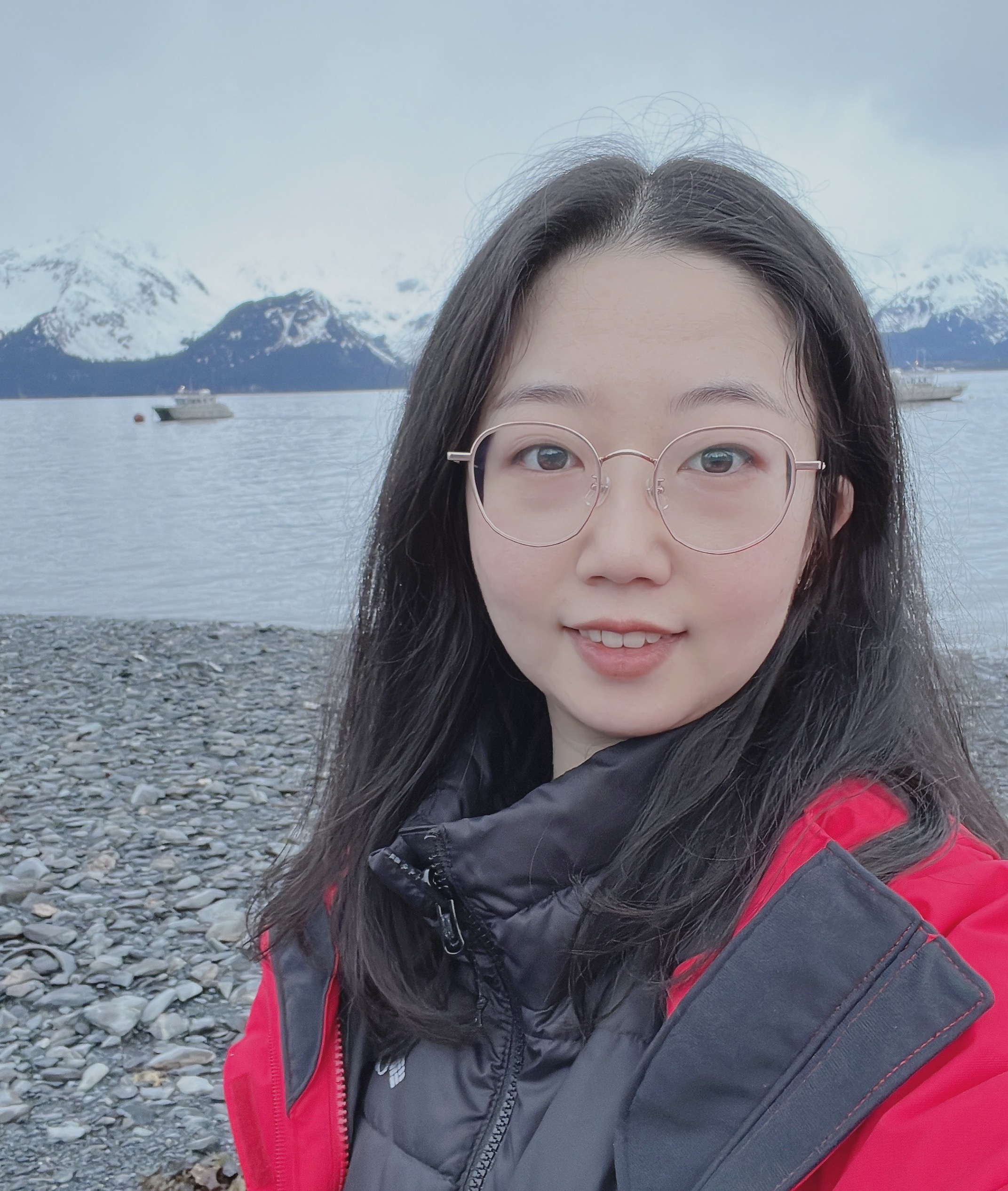
Yuqi Song is an Assistant Professor in the Department of Computer Science at the University of Southern Maine (USM), where she joined in August 2023 after completing her Ph.D. at the University of South Carolina. Her interdisciplinary research bridges machine learning with materials science, tourism, and recommender systems.
Her educational background includes:
- Ph.D. in Computer Science, University of South Carolina (2023), supervised by Dr. Jianjun Hu
- M.S. and B.S. in Computer Science, Chongqing University, supervised by Dr. Ming Gao
Dr. Song's research focuses on applying state-of-the-art deep learning techniques—including generative adversarial networks, graph neural networks, and transformer models—to solve real-world problems. She develops AI-driven solutions for materials discovery (predicting crystal structures and properties) and tourism applications (employee turnover prediction systems). Her work uniquely combines computational methods with domain-specific challenges, emphasizing practical implementation through user-friendly tools like her materials informatics web platform MaterialsAtlas.org.
Analysis of her recent publications (2023-2025) reveals three dominant research thrusts: (1) materials informatics using transformer-based generative models for crystal structure prediction, (2) robust recommender systems security against data hybrid attacks, and (3) computer vision innovations in depth estimation and medical image analysis. Her work consistently leverages attention mechanisms and cross-disciplinary data integration.
Dr. Song actively mentors graduate students, currently advising Reihaneh Maarefdoust (Complex Learning and Machine Learning) and Zahra JahediBashiz (NLP, Generative AI). She teaches core courses including Software Engineering (COS 430) and Artificial Intelligence (COS 470), emphasizing practical programming skills. Her lab seeks motivated students for projects in materials discovery and tourism analytics.
She leads a research group focused on interdisciplinary AI applications, collaborating with materials scientists and hospitality industry partners to develop deployable solutions. Current initiatives include deep learning models for predicting piezoelectric properties and generative design of 2D materials, alongside tools for tourism workforce analytics.