معرفی
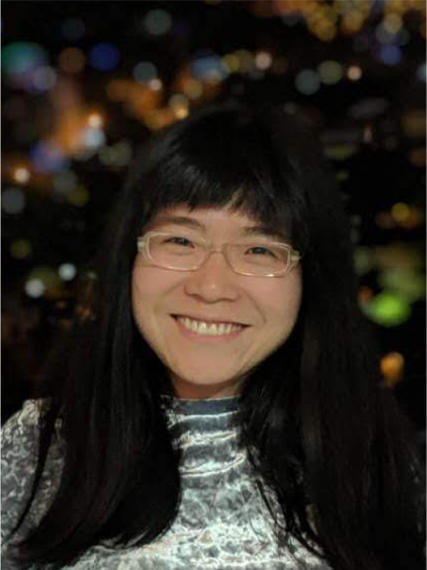
Y. Mindy Huang is an Assistant Professor in the Department of Physics and Astronomy at Wayne State University's College of Liberal Arts and Sciences, leading the YM Huang Lab focused on computational biophysics and biomedical physics research.
Education:
- B.S. in Chemistry & Physics from National Taiwan University (2008)
- Ph.D. in Computational Chemistry from University of California, Riverside (2014)
- Postdoctoral training in Chemistry & Pharmacology at University of California, San Diego (2015-2019)
Research Interests: Dr. Huang develops molecular dynamics and Brownian dynamics simulations to investigate biomolecular diffusion, recognition, and function across systems including protein domains, kinases, DNA/RNA, membrane proteins, and viruses. Her work bridges physics, biology, chemistry, pharmacology, and computer science to advance computer-aided drug discovery, with demonstrated applications in HIV protease inhibitor development as showcased in her lab's research on small molecule binding mechanisms.
Scientific Awards:
- 2019 Wiley Computers in Chemistry Outstanding Postdoc Award at ACS 2019 Fall Meeting
- 2019 Best Paper Award from Protein Science publications in 2018
- 2014 Dr. Janet M. Boyce Memorial Endowed Fund for Women Majoring in the Sciences
- 2013 NVIDIA GPU Poster Competition Award at ACS 2013 Fall Meeting
- 2013 James Merrill and Adeline Wallace Annual Prize
- 2008 Excellent Poster for Undergraduate Poster Section at NTU Chemistry
Advising and Grants: Dr. Huang actively mentors students through courses like PHY3750 (Introduction to Computational Methods) and PHY6750 (Applied Computational Methods), and recruits graduate students and postdocs for her lab. Her research has been supported by competitive awards including Dissertation Research Grants and travel funding during her doctoral studies, with continued emphasis on securing computational resources for ongoing projects.
Lab: The YM Huang Lab maintains a collaborative interdisciplinary environment focused on theoretical modeling of biomolecular processes, with current projects centered on viral protein interactions and therapeutic development.