معرفی
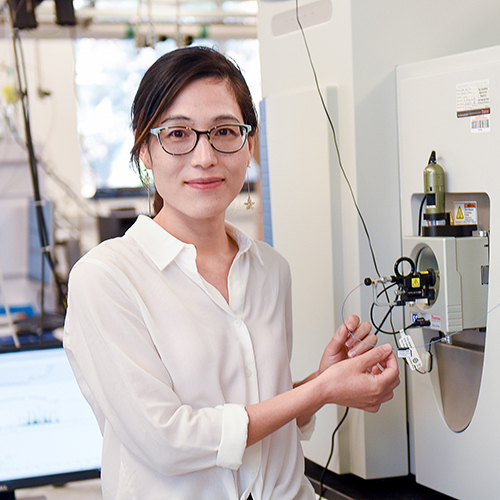
Xiaojing Liu is an Associate Professor and Goodnight Early Career Innovator at North Carolina State University, specializing in metabolomics and translational biomedical research. Her work bridges nutritional biochemistry, cancer metabolism, and metabolic disease mechanisms through advanced analytical techniques.
Her educational foundation includes:
- B.S. in Chemistry from University of Science and Technology of China (2007)
- Ph.D. in Chemistry from University of Pennsylvania (2012)
- Postdoctoral training in Pharmacology and Cancer Biology at Duke University
Dr. Liu's research program focuses on two interconnected domains: (1) Quantitative analysis of nutritional and metabolic regulation in cancer therapy response, exemplified by her discovery that low glucose and high ROS enhance metformin efficacy in ovarian cancer; and (2) Investigation of endogenous metabolic toxins arising from dietary and lifestyle factors, including her identification of aldehyde toxins from metabolic imbalances. Her lab employs high-resolution mass spectrometry-based metabolomics integrated with biochemistry, molecular biology, mouse models, and bioinformatics to establish a complete translational pipeline from in silico to human studies.
Analysis of her recent publications reveals dominant themes in cancer metabolism (particularly ovarian cancer and glioblastoma), immunometabolism (Kupffer cells, T-cell activation), and technical advances in isotope tracing and lipidomics. Her work consistently targets metabolic vulnerabilities for therapeutic intervention, with strong emphasis on diet-drug interactions and tissue-specific metabolic effects.
Her scientific recognition includes:
- Goodnight Early Career Innovator award
Dr. Liu leads a highly collaborative research program within the Metabolism and Disease Molecular and Systems Biology group, leveraging diverse expertise for complex biomedical questions. While specific grants aren't detailed, her position as a Goodnight Early Career Innovator indicates substantial institutional support for high-impact translational research. Her lab actively develops quantitative metabolomics methodologies to address critical gaps in understanding metabolic regulation across disease contexts.
The Liu Lab maintains a translational focus on precision metabolic interventions, with current efforts expanding into vitamin/lipid profiling for patient stratification and quantitative analysis of diet-regulated metabolic toxins using animal models. This work positions her research at the forefront of personalized nutrition and metabolic therapy development.