معرفی
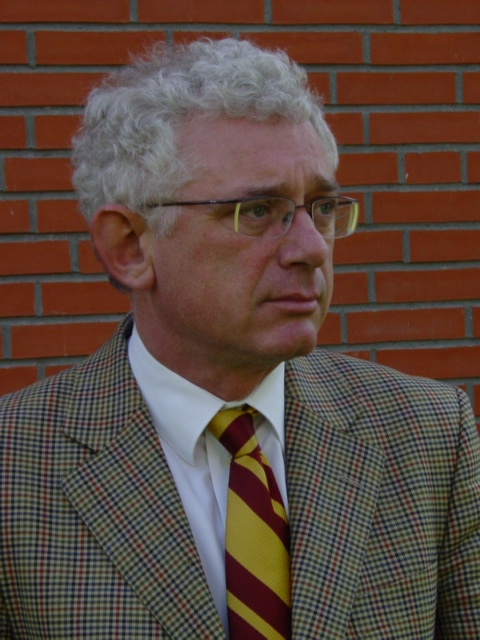
Dr. Willem Marinus Jongman is a Reader in Ancient History and Economic and Social History at the University of Groningen's Faculty of Arts, Department of History. He has held this position since 2006 for ancient history and expanded to economic and social history in 2013. His academic career spans multiple prestigious institutions including Leiden University, King's College Cambridge, and the University of Rotterdam.
Dr. Jongman earned his BA (1975) and MA (1976) in History from Leiden University, where he also received his PhD cum laude in 1988. His doctoral research formed the basis for his acclaimed book The Economy and Society of Pompeii, which was named one of the most important works on the ancient economy in the last two centuries.
His research focuses on Roman Social and Economic History, with particular expertise in Roman economic structures, Mediterranean archaeology, and the integration of archaeological field survey data. His work examines the Roman economy through multiple lenses including urban-rural dynamics, biological standards of living, and comparative survey archaeology across the Mediterranean world.
Dr. Jongman's publications reveal a consistent focus on integrating archaeological evidence with economic theory to understand Roman economic performance. His recent work emphasizes comparative survey archaeology, Roman hinterland studies, and the biological implications of economic structures in the Roman Empire, demonstrating how interdisciplinary approaches can illuminate ancient economic systems.
His scientific recognition includes numerous prestigious awards:
- Praemium Erasmianum dissertation prize (1988)
- Choice Magazine Outstanding Academic Book Award (1989)
- International Economic History Association prize (1990)
- Multiple fellowships at Cambridge, Princeton, and the Collège de France
Dr. Jongman actively supervises students at all levels, currently co-supervising four PhD candidates. His former students have gone on to prestigious academic positions at institutions including Northwestern University, Ghent, and Nijmegen. He has secured significant research funding including NWO fellowships and DFG Mercator funding, and currently serves on the Executive Board of the international consortium for the integration of archaeological field survey datasets (comparativesurveyarchaeology.org).
He leads the Roman Hinterland Project, which integrates archaeological field surveys around Rome and beyond, and collaborates with international teams across Europe to develop standardized methodologies for Mediterranean surface survey projects.