معرفی
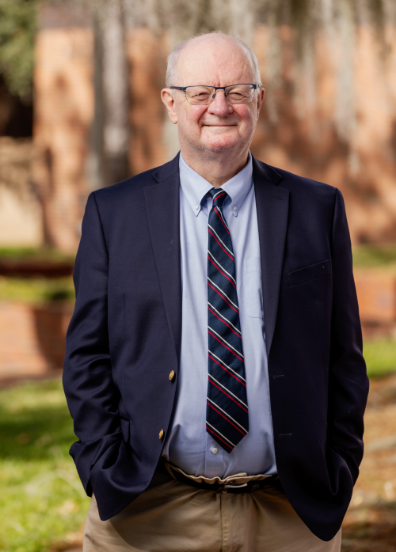
Waller R. Newell is Professor of Political Science and Philosophy at Carleton University in Ottawa, Canada. He co-founded and teaches at Carleton's College of the Humanities, Canada's only 4-year baccalaureate in the Great Books. His academic appointments include positions in both the Department of Political Science and the Philosophy department.
- BA in Arts and Sciences and MA in Political Economy (University of Toronto)
- MPhil and PhD (Yale University)
Newell's research focuses on political philosophy with special emphasis on classical, modern and postmodern concepts of political community, justice and legitimacy. His scholarly work spans classical political philosophy (Plato, Aristotle, Xenophon), Renaissance political thought (Machiavelli), and German Idealism with ramifications for contemporary phenomenology, critical theory and post-modernism (Hegel, Nietzsche, Heidegger). His publications demonstrate a consistent trajectory examining tyranny, leadership, and political philosophy from ancient to contemporary perspectives.
Newell's scholarly contributions have been recognized through numerous prestigious fellowships including appointments at the Woodrow Wilson International Center for Scholars, the National Humanities Center, and the Black Mountain Institute. His work has been featured in leading journals such as The American Political Science Review, Political Theory, and History of European Ideas. He has delivered keynote addresses at Harvard University, Yale University, Cornell University, the University of Cambridge, and other major academic institutions.
- Visiting Fellow at Black Mountain Institute (2014-15)
- John Adams Fellow at University of London (1997)
- Eccles Centre Fellow at British Library (1997)
- Woodrow Wilson International Center Fellow (1990-91)
- National Humanities Center Fellow (1985-86)
As an educator, Newell has significantly shaped Carleton University's academic landscape through his co-founding of the College of the Humanities. His teaching integrates historical political thought with contemporary political challenges, emphasizing the enduring relevance of classical texts for understanding modern political issues. His work bridges the gap between theoretical political philosophy and practical statesmanship, making significant contributions to both academic discourse and public understanding of political leadership.