معرفی
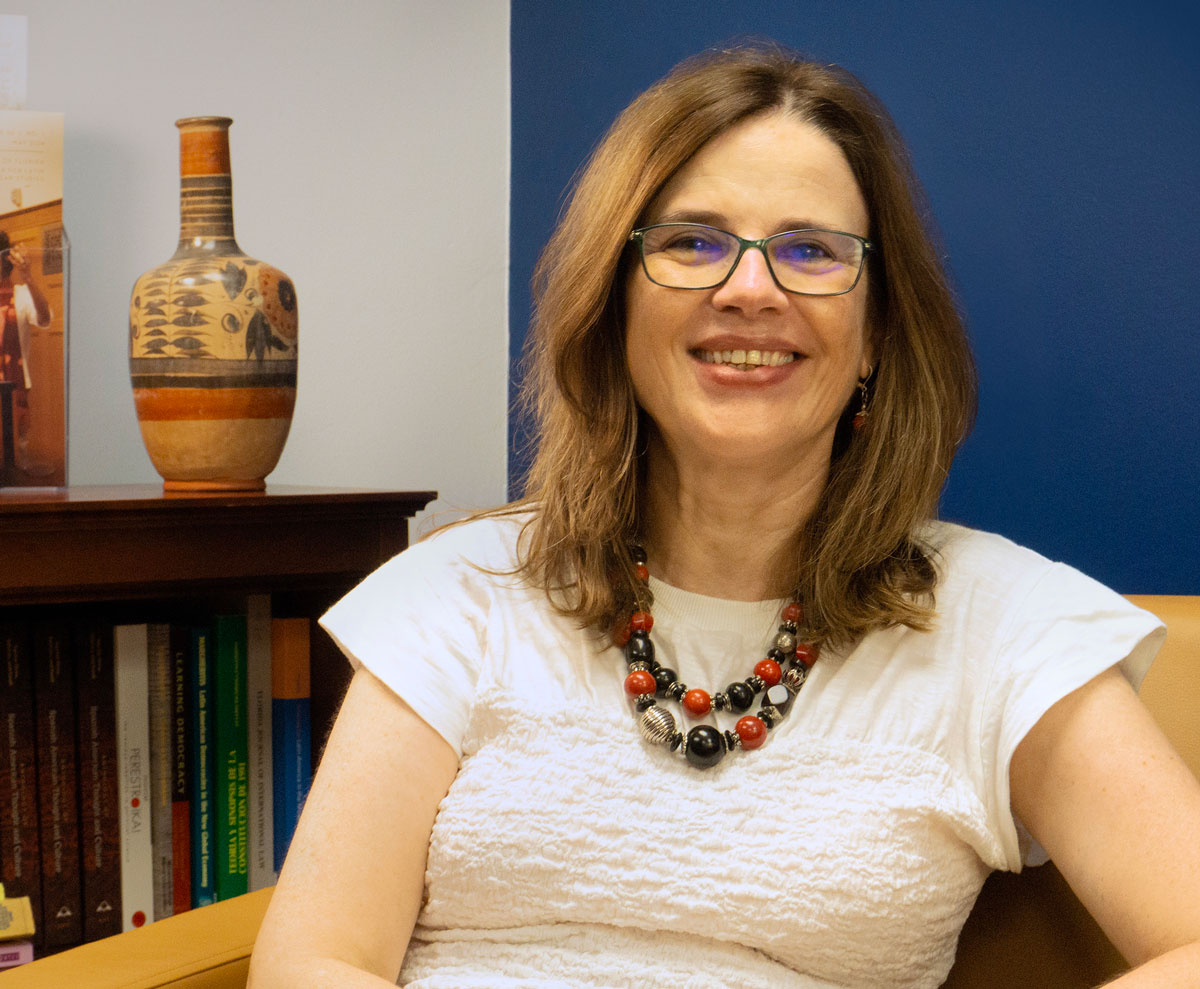
Veronica Davidov is a Professor and Director of the Graduate Program in Anthropology at Monmouth University, where she is affiliated with the Department of History and Anthropology. She maintains her office in James and Marlene Howard Hall 343 and can be reached at vdavidov@monmouth.edu or 732-571-7502.
Dr. Davidov is an accomplished environmental and visual anthropologist whose research focuses on human-nature relations and the cultural, political, and economic processes involved in their formation. She has conducted extensive fieldwork in the Ecuadorian Amazon studying indigenous ecotourism in lowland Kichwa communities, which formed the basis of her first book. She has also conducted Fulbright-funded research among the Veps indigenous community in North Karelia, Russia, which became the foundation for her second book. Her scholarly interests span environmental anthropology, visual methodologies, resource politics, and indigenous studies.
Her publication record reveals significant contributions to understanding the complex relationships between ecotourism and resource extraction, particularly in regions where these seemingly contradictory activities coexist. Her work spans political ecology, environmental anthropology, and visual studies, with a strong emphasis on how natural resources are constructed, contested, and commodified in both global and local contexts. She frequently examines the moral ecologies and economies that emerge when nature becomes a commodity.
- Fulbright Fellowship for research among the Veps community in North Karelia, Russia
- Co-editor of Laboratorium: Russian Review of Social Research
- Senior editor for Conservation & Society
Dr. Davidov teaches a range of graduate and undergraduate courses including Anthropological Theory (at both undergraduate and graduate levels), Visual Anthropology, The Amazon, Magic Witchcraft and Religion, Cultural Anthropology, and Tourism Around the World. Her teaching reflects her diverse research interests and commitment to both theoretical and applied anthropology. Her work with students extends to research seminars where she guides advanced students in anthropological methodology and research design.
Her research program maintains a strong international focus, with field sites in both Latin America and Northern Europe, examining how indigenous communities navigate the challenges of resource extraction, ecotourism, and cultural preservation in an increasingly globalized world.