معرفی
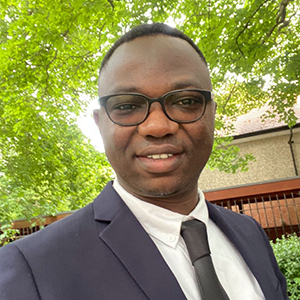
Tochukwu Nweze, Ph.D., serves as Assistant Professor in the Department of Psychology at the University of Utah, specializing in Developmental Psychology. His research examines how adverse childhood experiences—including socioeconomic inequality, abuse, violence exposure, and family dysfunction—shape cognitive development and mental health trajectories through complex statistical modeling of longitudinal data.
Education:
- Ph.D. in Cognitive Neuroscience, University of Cambridge (2022)
- M.Sc. in Neuroimaging, King's College London (2017)
- B.Sc. in Psychology, Nnamdi Azikiwe University, Awka (2014)
Dr. Nweze investigates ACEs' impact on executive functions and neurobiological processes using structural equation modeling, growth mixture modeling, and latent class analysis. His multidisciplinary work bridges clinical and neuroscience perspectives to identify resilience pathways following adversity, with particular emphasis on cross-cultural comparisons between Western and Global South contexts. Current projects integrate ALSPAC, MCS, IMAGEN, and ABCD cohort data with primary data collection in Salt Lake City schools and Nigeria to examine cultural-ecological moderators of adversity effects.
Analysis of his 15 most recent publications reveals consistent focus on longitudinal mediation of mental health outcomes, stress-adapted cognitive skills in adversity-exposed populations, and sophisticated modeling of developmental trajectories. Key patterns include Nigerian sample studies demonstrating enhanced working memory in deprived children, neuroimaging investigations of stress-related cortical changes, and mediation analyses showing mental health as pathway between early adversity and later cognitive deficits.
Awards:
No scientific awards were documented in the source materials.
Dr. Nweze actively mentors graduate students in adversity-cognition research and recruits undergraduate assistants (3-6 hours/week) for Salt Lake City data collection. His research utilizes major cohort studies and primary data grants, though specific funding sources aren't detailed. He collaborates with the IMAGEN Consortium and Nigerian institutions for international data collection, focusing on non-WEIRD populations to uncover cultural variations in adversity impacts.
His laboratory integrates behavioral testing, statistical modeling, and cross-cultural fieldwork, with emerging emphasis on ecological factors shaping adversity outcomes in low-income countries. Future directions include expanding ABCD data analysis and investigating stress-adapted cognitive skills across diverse developmental contexts.