معرفی
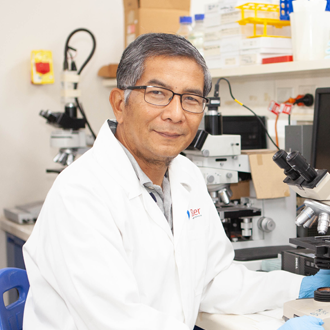
Dr Tin Kyaw serves as Head of the Inflammation and Cardiovascular Disease Laboratory at the Baker Heart and Diabetes Institute, where he leads pioneering research in cardiovascular immunology since joining in 2007. His work fundamentally reshaped understanding of immune mechanisms in atherosclerosis.
His educational background includes:
- MBBS: University of Medicine 1, Yangon, Myanmar
- PhD: Department of Physiology, National University of Singapore
Dr Kyaw's research focuses on the dual roles of immune cells in cardiovascular disease, with landmark discoveries showing follicular B cells drive atherosclerosis while B1a B cells are protective. His investigations extend to CD8+ T cells, NKT cells, NK cells, and γδ-T cells in plaque formation and cardiac fibrosis. Current projects target biomarker development for myocardial infarction risk stratification and novel anti-inflammatory therapies leveraging immune cell-specific mechanisms.
His publication record demonstrates consistent focus on immune-mediated vascular pathology, with recent work emphasizing translational applications of immunology in cardiovascular medicine. Key trends include elucidating plasma cell-immunoglobulin pathways post-MI and developing cell-targeted immunomodulatory strategies.
Major recognitions include:
- Irvine H. Page Finalist, ATVB|AHA Conference, Canada (2014)
- AMREP basic science Research Award (2013)
- Early Career Scientist Award, Australia Vascular Biology Society (2009)
Dr Kyaw actively mentors junior researchers and secures competitive funding for his laboratory's work. He maintains extensive collaborations across the Baker Institute and with Monash University and University of Melbourne researchers, integrating basic science with clinical applications. His laboratory operates as a multidisciplinary hub combining immunology, vascular biology, and translational medicine approaches to tackle inflammation-driven cardiovascular pathologies.
The Inflammation and Cardiovascular Disease Laboratory employs advanced murine models and cellular techniques to dissect immune contributions to atherosclerosis, with current emphasis on identifying high-risk patients and developing precision immunotherapies to prevent plaque rupture.