معرفی
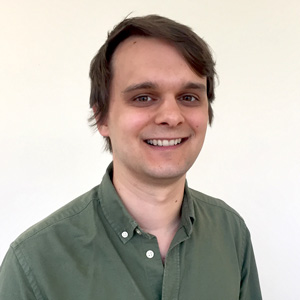
Timothy Yenter is an Associate Professor of Philosophy and Associate Dean for Capstone at the Sally McDonnell Barksdale Honors College, University of Mississippi. He is affiliated with the Department of Philosophy & Religion in the College of Liberal Arts. His academic work bridges early modern philosophy and philosophy of film.
His educational background includes a PhD in Philosophy from Yale University (2012), as well as MA (2003) and MPH (2008) degrees from the same institution. He earned his BA in Philosophy and History from Bethel University (MN).
Yenter's research focuses on 17th and 18th-century British philosophy, especially metaphysics, methodology, and neglected figures such as Mary Astell, Anne Conway, and Samuel Clarke. He also explores the intersection of philosophy and media, particularly in film, aesthetics, and cinematic self-understanding. He describes himself as a 'shiny object' philosopher, drawn to intellectually stimulating topics across disciplines.
His recent publications reflect a strong trend in early modern metaphysics and ethics, with increasing attention to feminist and interdisciplinary perspectives. Articles on Anne Conway, Mary Astell, and divine causation demonstrate deep engagement with historical and theological contexts. His work on film, including analyses of Whit Stillman and Buster Keaton, reveals a unique approach to philosophical inquiry through cinema.
While no formal scientific awards are listed, his publications in respected journals such as the Southern Journal of Philosophy, British Journal for the History of Philosophy, and Film and Philosophy reflect scholarly recognition.
As Associate Dean, he oversees honors capstones and the Honors Scholars program, advising numerous students. He teaches core philosophy courses including Introduction to Philosophy, History of Philosophy II, Aesthetics, and Philosophy of Film. He does not list formal PhD or Master's advisees, but his role involves significant mentorship.
He maintains an active research profile with interdisciplinary reach, contributing to both historical philosophy and contemporary media studies. His ongoing work suggests continued exploration of early modern thinkers and their relevance to modern ethical and cinematic questions.