معرفی
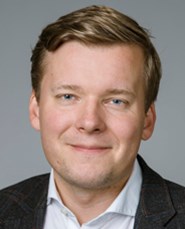
Dr. Thorsten Wojczewski serves as a Lecturer in International Relations at the School of Social Sciences & Humanities. With an h-index of 7 and 244 citations across 17 publications spanning 2010-2024, he is an active researcher specializing in the intersection of populism and international relations. He is currently accepting PhD students and willing to engage with media on his areas of expertise.
Dr. Wojczewski's research focuses on:
- Foreign Policy Analysis through populist lenses
- Discourse Theory applications to international politics
- Critical Security Studies perspectives
- Comparative analysis of Far-Right and Left-Wing populism
- World Order Theories and international political theory
His scholarly work demonstrates a methodological commitment to discursive and poststructuralist approaches, particularly adapting Laclauian theories of populism to international relations contexts. Recent research (2022-2024) has concentrated on how populist movements construct foreign policy positions across national contexts, with particular attention to Germany's Alternative for Germany party, Bernie Sanders' foreign policy approach, and transnational connections between populist movements.
Analysis of his 15 most recent publications reveals consistent thematic focus on how populist ideology translates into foreign policy actions, with strong comparative elements spanning the United States, Germany, India, and European nations. His work frequently examines the construction of 'the people,' 'the elite,' and 'the other' in international discourse, while addressing theoretical gaps regarding populism's role in international relations scholarship.
Dr. Wojczewski's scholarly impact extends beyond traditional academic metrics, with his work referenced across multiple Wikipedia pages and actively discussed on social media platforms including X (Twitter) and Bluesky, demonstrating relevance to contemporary political debates. His 2022 article on conspiracy theories and right-wing populism in German foreign policy has been particularly influential with 24 Scopus citations and 457 repository downloads.