معرفی
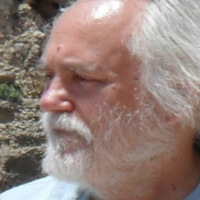
Tadeusz Wibig is a faculty member in the Department of Experimental Physics at the Faculty of Physics, University of Lodz, Poland. His academic career focuses on particle physics and cosmic ray research, with particular emphasis on ultra-high energy cosmic rays and their interactions.
Dr. Wibig's primary research interests include:
- Ultra-High Energy Cosmic Rays (UHECR) physics
- Cosmic ray ensembles and the Gerasimova-Zatsepin effect
- Particle interactions and shower development
- Cosmic Microwave Background foreground analysis
- Citizen science projects in physics education
- Instrumentation for cosmic ray detection
Analysis of Dr. Wibig's publication record shows a consistent focus on cosmic ray physics spanning nearly two decades. His work demonstrates particular expertise in ultra-high energy cosmic ray phenomena, including the GZK cutoff, cosmic ray spectrum features, and cosmic ray ensembles. In recent years, he has increasingly focused on citizen science applications, developing educational projects like "Nuclear E-Cology" and CREDO-Maze that engage students in authentic research. His technical work spans theoretical modeling, simulation studies, and instrumentation development for cosmic ray detection.
Dr. Wibig has been actively involved in several major collaborative projects:
- CREDO (Cosmic-Ray Extremely Distributed Observatory) - developing citizen science approaches to cosmic ray research
- JEM-EUSO (Extreme Universe Space Observatory on the Japanese Experiment Module) - space-based cosmic ray detection
- The Roland Maze Project - engaging high school students in cosmic ray detection
- Nuclear E-Cology project - integrating nuclear physics into high school curricula
His educational initiatives have established networks with high schools in Łódź and international collaborations involving Polish, Thai, and Russian students. These projects combine authentic scientific research with educational goals, creating opportunities for students to participate in real physics investigations while developing scientific literacy.