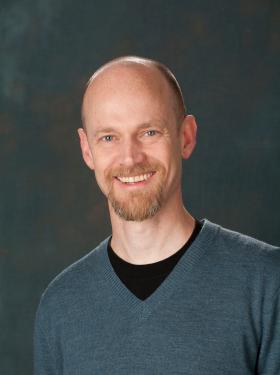
John F. Beacom is a Distinguished Professor of Physics and Astronomy at The Ohio State University and Director of the Center for Cosmology and AstroParticle Physics (CCAPP). His academic roles include leadership in astroparticle physics research and education. He holds joint appointments in both the Department of Physics and the Department of Astronomy within the College of Arts and Sciences. Beacom earned his Ph.D. in Physics from the University of Wisconsin (1997) and dual B.S. degrees in Physics and Mathematics from the University of Kansas (1991). He has held postdoctoral positions at Fermilab and Caltech before joining Ohio State in 2004. His research focuses on neutrinos, dark matter, and multi-messenger astrophysics, with emphasis on neutrino detection techniques, supernova physics, and cosmological implications. He leads major projects like the All-Sky Automated Survey for Supernovae (ASAS-SN) and contributes to the Deep Underground Neutrino Experiment (DUNE). Awards: APS Fellow (2014), NSF CAREER Award (2005–2010), multiple teaching awards for distinguished instruction. Grants: Extensive funding from NSF, DOE, and collaborative international initiatives. Labs/Teams: CCAPP, DUNE Collaboration, ASAS-SN project. His articles span neutrino physics, detector development, and observational astrophysics, reflecting interdisciplinary expertise in theoretical and experimental particle astrophysics.
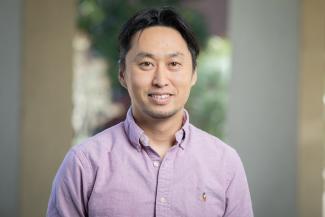
Kohsaku Tobioka is an Associate Professor in the Department of Physics at Florida State University. He joined the faculty in 2018 after postdoctoral appointments at Stony Brook University (2017-2018), High Energy Accelerator Research Organization (KEK) in Japan (2014), and a joint position at Tel Aviv University and Weizmann Institute of Science in Israel (2014-2017). Education: Ph.D. in Physics from the University of Tokyo (2014) His research focuses on theoretical particle physics, particularly exploring physics beyond the Standard Model through phenomena like supersymmetry, extra dimensions, dark matter, and axions. He integrates cosmology and astroparticle physics with experimental approaches at high-intensity facilities such as B/K meson factories. Scientific Recognition: JSPS Research Fellow for Young Scientists (2014-2016) Tobioka actively engages in outreach through programs like Saturday Morning Physics at Florida State University and is open to speaking engagements at local schools.
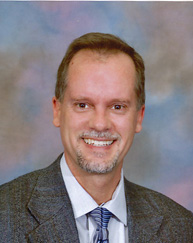
Steven L. Manly is a Professor of Physics at the University of Rochester within the College of Arts, Sciences and Engineering. He has been affiliated with the University of Rochester since 1998, following a decade at Yale University as both a postdoc and faculty member. Professor Manly received his BA in chemistry, mathematics, and physics from Pfeiffer College in 1982 and his PhD in experimental high-energy physics from Columbia University in 1989 under Charles Baltay. His research spans high energy, nuclear, and gravitational physics, with a current focus on neutrino physics across multiple major experiments. His primary research interests include neutrino interactions and oscillations, with significant contributions to the T2K experiment (for which he shared the 2016 Breakthrough Prize in Fundamental Physics), the MINERvA experiment at Fermilab, and the Deep Underground Neutrino Experiment (DUNE). His work aims to understand neutrino properties, measure oscillation parameters, and investigate potential connections to matter-antimatter asymmetry in the universe. The recent publications reflect a strong focus on neutrino cross-section measurements, detector calibration techniques, and data analysis methods for the T2K and DUNE experiments. His research group contributes significantly to advancing our understanding of neutrino properties and interactions through precision measurements. NY State Professor of the Year (2003) Mercer Brugler Distinguished Teaching Professor (2002-2005) American Association of Physics Teachers (AAPT) Award for Excellence in Undergraduate Teaching (2007) Breakthrough Prize in Fundamental Physics (2016, shared as member of T2K) Professor Manly has authored or co-authored numerous publications in leading physics journals, with recent work focusing on neutrino interaction measurements, detector development, and data analysis techniques. His research has involved collaborations with major international facilities including Fermilab, J-PARC in Japan, and Brookhaven National Laboratory. While specific grant information isn't detailed in the provided text, his participation in large-scale international collaborations suggests significant research funding support.
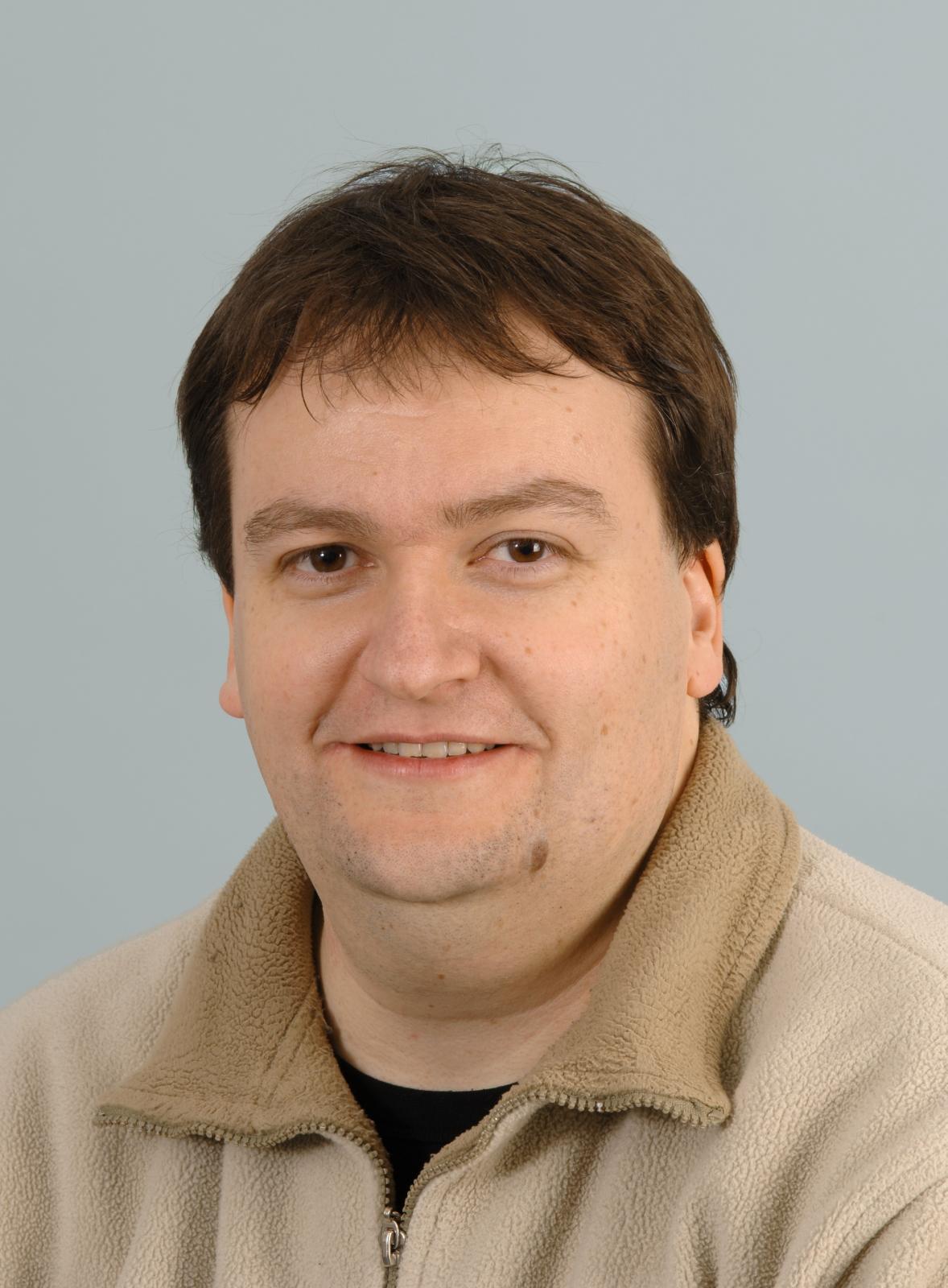
Prof. Dr. André Rubbia is a Full Professor of Experimental Physics at ETH Zurich's Department of Physics, holding this position since December 2003 after serving as Associate Professor from 1998. His research spans neutrino physics, astro-particle physics, and dark matter detection through major international collaborations including CERN, Gran Sasso National Laboratory, and Fermilab. He currently serves as Co-Spokesperson for the billion-dollar DUNE neutrino project at Fermilab, managing over 900 scientists. His educational background includes: Diploma in Physics from the University of Geneva (1990), with thesis work on the L3 experiment at CERN's LEP accelerator Ph.D. in Physics from MIT (1993) under Nobel Laureate S.C.C. Ting, focusing on high-energy electron-positron collisions Rubbia's research centers on fundamental particle interactions, particularly neutrino oscillations and physics beyond the Standard Model. He pioneered liquid Argon Time Projection Chamber (LAr TPC) technology and dual-phase detection systems, enabling breakthroughs in neutrino mass measurements and dark matter searches. His work spans underground laboratories (Gran Sasso, Canfranc), the LHC's CMS detector, and neutrino beam experiments like T2K. Recent explorations include antimatter gravity tests, electron-positron bound states, and dark hidden sector searches. His 2025 publications reveal intense focus on neutrino oscillation parameter precision (T2K, Hyper-Kamiokande), FASER's LHC neutrino program, and DarkSide-20k dark matter detector development. Key themes include cross-section measurements, advanced detector technologies (SiPMs, emulsion tracking), and statistical methods for oscillation analysis, reflecting integration of theoretical modeling with cutting-edge instrumentation. Scientific recognition includes: Breakthrough Prize for Fundamental Physics (2016) awarded to the international team for discovering matter-anti-matter asymmetry in neutrino oscillations APS Viewpoint selection for editing the paper announcing first electron neutrino appearance at accelerators Rubbia has supervised over fifty PhD and Master's theses while securing substantial research funding as Principal Investigator for 20+ Swiss National Science Foundation projects and Coordinator of two EU FP7 Design Studies. His DUNE leadership involves complex international grant management across 30+ countries. He leads ETH Zurich's experimental particle physics group across multiple facilities: the ICARUS neutrino detector at Gran Sasso, CMS at CERN, DUNE at Fermilab, and DarkSide-20k for direct dark matter detection. His team developed the first underground ton-scale liquid argon detector and maintains collaborations with Japanese (Super-Kamiokande) and American (Fermilab) institutions.
Emil Bjerrum-Bohr is an Associate Professor at the Niels Bohr Institute, University of Copenhagen, where he holds a position in the Theoretical high energy, astroparticle and gravitational physics department within the Faculty of Science. He is also affiliated with the Niels Bohr International Academy and leads the Computations of Amplitudes Group as a Lundbeck Foundation Junior Group Leader. Dr. Bjerrum-Bohr's research focuses on theoretical particle physics with particular emphasis on amplitude analysis and computations. His primary fields of research include amplitude analysis and computations, amplitudes and string theory, and quantum gravity. His current research explores relations between amplitudes from string theory and computation of amplitudes in Quantum Chromodynamics (QCD) for use at the Large Hadron Collider (LHC) at CERN. He has made significant contributions to understanding scattering equations and effective field theory in the context of gravitational physics. His recent publication record demonstrates a strong focus on gravitational scattering amplitudes, quantum gravity, and connections between string theory and particle physics. A notable trend in his research is the application of amplitude techniques to gravitational physics, particularly in the post-Minkowskian expansion framework which has implications for gravitational wave astronomy and black hole physics. His work bridges theoretical concepts with practical applications for collider physics. Scientific awards: Lundbeck Foundation Junior Group Leader As a Lundbeck Foundation Junior Group Leader, Dr. Bjerrum-Bohr oversees the Computations of Amplitudes Group, where he mentors junior researchers and collaborates with international colleagues on cutting-edge theoretical physics problems. His research has involved organizing academic meetings including the "Current Themes in High-Energy Physics and Cosmology" series (2013-2015) and Nordic Winter Schools on Cosmology and Particle Physics (2013, 2015). His work is conducted within the vibrant theoretical physics environment of the Niels Bohr Institute, which provides access to computational resources and collaborative opportunities with both experimental and theoretical physicists across multiple disciplines.
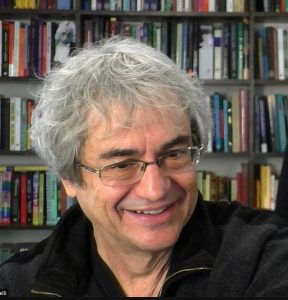
Carlo Rovelli is a Professeur de classe exceptionnelle in the Department of Physics at Aix-Marseille University, holding adjunct roles at Western University's Department of Philosophy and a Distinguished Visiting Research Chair at the Perimeter Institute. He founded the quantum gravity group at the Centre de Physique Théorique (CPT) and is an associate member of the Rotman Institute of Philosophy. His research focuses on loop quantum gravity, relational quantum mechanics, and the history/philosophy of science. He authored influential popular science books including Seven Brief Lessons on Physics (41 languages, 1M+ copies sold) and Helgoland: Making Sense of the Quantum Revolution . Rovelli's work bridges theoretical physics with philosophical inquiry, exploring foundational questions in quantum mechanics, spacetime structure, and the interpretation of physical theories. His recent publications address topics like quantum information theory, gauge symmetries, black hole evaporation, and cosmological implications of quantum gravity.
Mark Trodden is the Dean of the School of Arts & Sciences and Thomas S. Gates Jr. Professor of Physics and Astronomy at the University of Pennsylvania. He previously served as the Fay R. and Eugene L. Langberg Professor of Physics, Department Chair, and Co-Director of the Center for Particle Cosmology. His career includes faculty roles at Syracuse University (2000–2009) and visiting positions at Case Western Reserve University and Cornell University. Ph.D. and M.Sc. in Physics, Brown University (1992–1995) Advanced Study in Mathematics, University of Cambridge (1990–1991) M.A. in Mathematics, University of Cambridge (1987–1990) Trodden’s research focuses on the intersection of cosmology and particle physics, addressing fundamental questions such as the nature of dark energy, dark matter, the baryon asymmetry of the universe, inflation, and modified gravity theories. His work explores how cosmological data can constrain physics beyond the Standard Model and general relativity. His publications span topics like dark energy models , inflationary spacetimes , topological defects , and BPS states in supersymmetric theories , reflecting his expertise in connecting high-energy physics to cosmological observations. At Penn, Trodden has held editorial roles for journals like Physics Letters B and Journal of Cosmology and Astroparticle Physics , and has contributed to collaborative workshops advancing cosmology and particle physics.
Prof. Dr. Michael Klasen is a leading theoretical physicist at the Institute of Theoretical Physics at the University of Münster, where he heads his eponymous research group. His work bridges nuclear and particle physics, with significant contributions to quantum chromodynamics and physics beyond the Standard Model. His research focuses on Particle Physics , Quantum Chromodynamics , and Physics beyond the Standard Model , with particular emphasis on understanding the quark-gluon structure of atomic nuclei and dark matter phenomena. His innovative approach connects microscopic quark-gluon dynamics with nuclear binding phenomena, creating a crucial bridge between nuclear and particle physics. Prof. Klasen's recent work analyzing nucleon binding at the quark-gluon level was recognized as a "Breakthrough of the Year 2024" by Physics World. His research group's publication in Physical Review Letters demonstrated how quarks and gluons behave differently in nucleon pairs than in free nucleons, fundamentally advancing our understanding of nuclear binding. Breakthrough of the Year 2024 from Physics World Leadership of Research Training Group 2149 "Strong and weak interactions - from hadrons to dark matter" Supervision of award-winning doctoral research including the Infineon Dissertation Prize 2025 Prof. Klasen has successfully mentored numerous PhD students, with 20 of his group's graduates continuing their academic careers at prestigious institutions including CERN and Stanford University. His research has been supported by major funding bodies including the German Research Foundation (DFG), the Helmholtz Alliance for Astroparticle Physics, and BMBF collaborative research programs. The Klasen working group maintains active collaborations with international research networks including CTEQ, DM@NLO, and RESUMMINO.
Antonio Vairo is a full Professor at the Department of Physics, TUM School of Natural Sciences, Technical University of Munich, where he holds the Chair of Theoretical Physics - Applied Quantum Field Theory (T39) at the James-Franck-Str. 1/I campus in Garching bei München. His research focuses on the theoretical foundations of quantum chromodynamics with emphasis on heavy quark systems and non-perturbative phenomena. Professor Vairo's primary research interests include Quantum Chromodynamics (QCD), Heavy Quark Physics, Lattice Gauge Theory, Effective Field Theories, and Exotic Hadron Spectroscopy. His work bridges computational approaches with analytical frameworks to investigate quarkonium dynamics in extreme environments like the quark-gluon plasma, while developing novel applications of Born-Oppenheimer effective theory to multi-quark systems. Recent investigations extend into dark matter bound state formation in the early universe, demonstrating interdisciplinary reach across particle physics and cosmology. Analysis of his 2024-2025 publications reveals three dominant research thrusts: (1) quarkonium suppression mechanisms in heavy-ion collisions using open quantum systems approaches, (2) high-precision lattice QCD computations of static forces and chromoelectric correlators, and (3) systematic development of effective field theories for exotic hadrons and dark matter pairs. His work on pNRQCD (potential non-relativistic QCD) provides critical connections between lattice results and experimental observables in heavy-ion physics. Professor Vairo maintains active research leadership through collaborations with international groups including the Belle II experiment, as evidenced by his contributions to 'The Belle II Physics Book'. His methodological innovations in applying quantum trajectory methods to quarkonium evolution and developing FeynOnium computational tools for effective field theories demonstrate significant technical contributions to the field. Current research directions emphasize next-to-leading order corrections in heavy quark dynamics and Debye mass effects in dark matter bound state formation.
Wolfgang Lorenzon is a Professor of Physics at the University of Michigan, specializing in experimental particle physics, nuclear physics, and astrophysics. His research spans three major experimental programs: the LUX-ZEPLIN (LZ) dark matter experiment at SURF, the MUSE experiment at PSI for proton radius measurements, and the SpinQuest collaboration at Fermilab studying hadronic physics. He has held significant roles in major collaborations including SeaQuest and HERMES, where he served as Deputy Spokesman from 1997-1998. His educational background includes a Ph.D. (1988) and Diploma (1984), both from the University of Basel. Lorenzon has built a distinguished research career focusing on precision measurements in particle and nuclear physics, with particular expertise in detector development and experimental techniques. Lorenzon's research interests center on fundamental questions in particle physics. His work on the LZ experiment involves developing the in-line radon removal system for the central time-projection chamber, crucial for enhancing the detector's sensitivity to WIMPs. At PSI, he leads the development of liquid hydrogen targets for the MUSE experiment, which aims to resolve discrepancies in proton charge radius measurements. His hadronic physics work with SeaQuest and SpinQuest focuses on understanding nucleon structure through antiquark distributions and polarized Drell-Yan processes. His research bridges theoretical questions with cutting-edge experimental techniques, often requiring innovative detector solutions. Analysis of his recent publications (2023-2025) reveals a strong focus on dark matter detection using liquid xenon technology, precision measurements of nucleon structure, and development of next-generation detectors. His work spans theoretical interpretation of experimental results, detector development, and analysis of fundamental particle interactions. The research shows increasing collaboration across international boundaries, with significant contributions to multiple major experiments simultaneously. Scientific Awards: Fellow of the American Physical Society Lorenzon has mentored numerous graduate students through completion of their Ph.D. degrees, with recent graduates including Haley Reid (2024), Noah Wuerfel and Chami Amarasinghe (2023), Maris Arthurs (2022), Marshall Scott (2020), and Daniel Morton (2019). His current research group includes postdocs, graduate students, and undergraduate researchers. His research is supported by multiple grants from the National Science Foundation (Grant 2110229) and the Department of Energy (Grant SC0019193 and Subcontract 734299), as well as University of Michigan funding. Lorenzon leads a research group with active laboratories at both the Homer A. Neal Laboratory (3265 HANL) and West Hall (357 WH) at the University of Michigan. His team collaborates with international groups at Fermilab, SURF in South Dakota, and the Paul Scherrer Institute in Switzerland. The group maintains strong connections with the LZ collaboration, MUSE experiment, and SpinQuest collaboration, contributing both technical expertise and physics analysis capabilities to these major international efforts.
Norwegian University of Science And TechnologyNorway
Foteini Oikonomou is an Associate Professor at the Department of Physics, Faculty of Natural Sciences, Norwegian University of Science and Technology (NTNU). She specializes in theoretical astroparticle physics, focusing on extreme astrophysical environments that accelerate particles to energies exceeding 10 20 eV. Current research includes multimessenger emission modeling of active galactic nuclei Expertise in cosmic ray acceleration and high-energy neutrino origin Active in teaching advanced astrophysics and particle physics Her work bridges astrophysics, particle physics, and cosmology, with particular attention to blazars, tidal disruption events, and ultra-high-energy cosmic rays. She contributes to major collaborations like GRAND and GCOS, developing future instrumentation for astroparticle detection. Recent publications explore cosmic ray propagation in diverse source populations, neutrino emission from transient astrophysical phenomena, and magnetic field line effects on particle acceleration. Her research has been featured in journals such as Nature Reviews Physics , Physical Review D , and The Astrophysical Journal . She teaches AST-3451 Astrophysics II and has previously taught particle physics (FY3403/FY8913) and general astrophysics (FY2450). Her outreach includes public explanations of ultra-high-energy cosmic ray research through popular science articles.
Professor Suguru Torii is a distinguished faculty member at Waseda University's School of Sport Sciences, specializing in Sports Orthopedics and Sports Medicine. With a PhD in Sports Science, he serves as Director of the Waseda Institute of Human Growth and Development (2021-2026) and maintains affiliations with the Global Education Center. His research interests focus on the intricate relationship between growth, development, and sports injuries in children and adolescents. Torii has made significant contributions to understanding musculoskeletal development patterns , bone health in young athletes , and biomechanical factors contributing to sports injuries. His work bridges clinical practice with scientific research, emphasizing evidence-based approaches to injury prevention and treatment in pediatric populations. Analysis of his recent publications reveals a consistent focus on growth-related changes in musculoskeletal tissues , with particular attention to the timing of peak velocity in height, lean mass, and bone mass. His research employs advanced methodologies including DXA, ultrasound, and 3D motion analysis to investigate biomechanical and physiological adaptations during growth and sports participation. Japanese Orthopaedic Society of Sports Medicine Best Paper Award 2006 (awarded June 2007) 4th Japanese Society of Clinical Sports Medicine Award (awarded November 2005) Torii has led numerous significant research projects including The effectiveness of eating an appropriate breakfast in building the body of athletes (2019-2022) and Development of the appropriate evaluation of energy availability for Japanese female athletes (2016-2019). His work on energy availability, bone health in young athletes, and injury prevention has received funding from the Japan Society for the Promotion of Science. He serves on the professional boards of multiple societies including the Japanese Society of Sports Psychiatry, Running Society, Japan Growth Society, and Japanese Orthopaedic Society of Sports Medicine. Professor Torii directs the Waseda Institute of Human Growth and Development, where his team conducts cutting-edge research on growth patterns, musculoskeletal development, and sports-related injuries in children and adolescents. The institute collaborates with clinical and research partners to translate scientific findings into practical applications for coaches, athletic trainers, and healthcare providers working with young athletes.
Jesse Liu is an Assistant Professor of Physics at the New York University College of Arts & Science , joining in Spring 2025. He collaborates with the ATLAS Experiment at CERN and leads the NYU Experimental Particle Physics group. Research Interests: Liu's work bridges fundamental particle physics and detector innovation. He investigates Tau-lepton electromagnetic dipoles via photon collisions at the LHC High-luminosity LHC silicon tracker upgrades Dark matter searches through collider experiments and the BREAD axion detection project Cosmic ray physics using ATLAS data Recent Publications focus on tau magnetic moment measurements, detector thermal stress mitigation, and cosmic ray signature analysis. His work has been featured in Phys. Rev. D , Phys. Rev. Lett. , and JINST . Outreach & Mentorship: Liu actively engages in public science communication through Pint of Science talks The Conversation articles School visits to CERN First-gen student mentorship at NYU CU*iP Contact: Office at 726 Broadway, Room 852, New York City. Email: jesse.liu2@nyu.edu
James Unwin is an Associate Professor in the Department of Physics at the University of Illinois Chicago (UIC), affiliated with the College of Liberal Arts and Sciences. He holds a DPhil in Physics from the University of Oxford (2013) and has held postdoctoral positions at the University of Notre Dame. His research focuses on theoretical particle physics, astrophysics, and cosmology, particularly exploring physics beyond the Standard Model, dark matter models, and interdisciplinary applied mathematics. Current interests include dark matter interactions, primordial black holes, and novel experimental approaches like Coulomb explosion imaging. Research Interests: Dark Matter Models: Including freeze-in mechanisms, annihilation signatures, and cosmological constraints Particle Astrophysics: Supersymmetry, LHC searches, and Grand Unified Theories Interdisciplinary Work: Applications of mathematics to epidemiology (e.g., COVID-19 forecasts via stock market indicators) and social dynamics Recent publications emphasize ultrafast molecular dynamics, XUV spectroscopy, and cosmological impacts of primordial black holes. He has advised PhD students Prolay Chanda and Qingyun Wang, both advanced to candidacy in 2021. Professional activities include visiting roles at UC Berkeley (2022–2023) and a Distinguished Academic Visitor appointment at Queen’s College, Oxford (2023). Affiliations: UIC Department of Physics Adjunct roles at UC Berkeley and University of Oxford Collaborations with institutions like Fermilab and CERN
Olga Mena is a Research Professor at the Spanish National Research Council (CSIC), affiliated with the Institute of Particle Physics (IFIC) in Valencia, Spain. She leads research in cosmology and astroparticle physics, focusing on neutrinos' role in shaping the universe. Mena holds prestigious awards, including the Excellence PhD Prize, and has accumulated 4 Sexenios and 5 Quinquenios for research excellence. Education : PhD in Theoretical Physics (2002), Universidad Autónoma de Madrid Research Interests : Her work spans cosmology, astroparticle physics, and neutrino physics. She investigates neutrino mass hierarchy, CP violation, and large-scale structure formation. Mena collaborates on major experiments like SKA, DUNE, and BOSS, contributing to dark matter and cosmic microwave background studies. Awards & Honors : Excellence PhD Prize 4 Sexenios de Investigación 5 Quinquenios de Investigación Advising & Grants : Supervised 3 PhD and 2 Master’s theses (current) and 12+ past students Co-Principal Investigator (co-IP) of projects: GRAMOLA (ASFAE/2022/020), SOM (PID2020-113644GB-I00), and others PI of CSIC’s participation in InvisiblesPlus Labs & Collaborations : Member of SKA (world’s largest radio telescope), DUNE (neutrino experiments), and BOSS (SDSS III galaxy survey). Leads IFIC’s research team in InvisiblesPlus.