معرفی
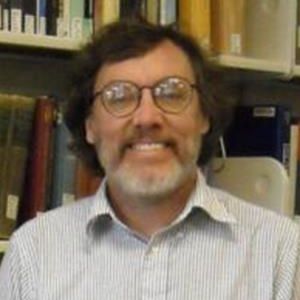
John Matthews is a Research Professor in the Department of Physics & Astronomy at the University of Utah, where he has held academic positions since 2000, progressing from Research Assistant Professor to his current role as Research Professor since 2011. He serves as Program Manager for the Cosmic Ray physics group and is currently Co-Spokesperson for the Telescope Array project, a major cosmic ray observatory located in central Utah.
Dr. Matthews earned his PhD in Physics from Rutgers University with a focus on Elementary Particle Physics, an MS in Particle Physics from the University of Wisconsin-Madison, and dual BS degrees in Physics and Math from the University of Chicago, along with an AB in Economics from the same institution.
His research primarily focuses on ultra high energy cosmic rays, with significant contributions to understanding their origin, nature, and detection. Matthews leads multiple international collaborations including the Telescope Array, which consists of 60 fluorescence telescopes and nearly 900 scintillator detectors spread across 2000 sq km in Utah. His work spans astroparticle physics, high energy astrophysics, and cosmic ray detection technologies.
Matthews' recent publications (2023-2025) reveal a strong emphasis on ultra high energy cosmic ray detection, terrestrial gamma-ray flashes, and space-based observation techniques. His research demonstrates an interdisciplinary approach connecting atmospheric physics, particle physics, and astrophysics, with particular focus on the relationship between cosmic rays and atmospheric phenomena like lightning.
- Telescope Array: Cosmic ray observatory with international collaboration from US, Japan, S. Korea, Russia, Belgium, Czech Republic, Slovenia, and Poland
- JEM-EUSO: Space-based cosmic ray observation program
- POEMMA: Future space mission for cosmic ray studies
- INSPIRE/HiSPARC: Educational project teaching cosmic ray research to high school students
Dr. Matthews has secured multiple NASA-funded grants including JPL-CRABS (2021), JPL-SFLASH (2019), and SFLASH (2016), demonstrating sustained research funding. His educational efforts include mentoring through small student groups focused on cosmic rays and detectors, and his involvement in the INSPIRE/HiSPARC project extends his impact to high school STEM education.