معرفی
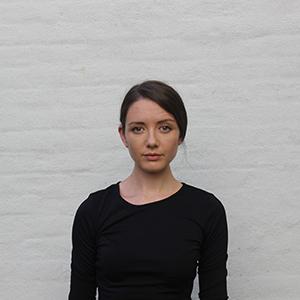
Suzanne Lettieri is an Assistant Professor in the Department of Architecture at Cornell University's College of Architecture, Art, and Planning (AAP). She is a designer and educator, and co-principal of Jefferson Lettieri Office, where her work spans multiple scales and integrates aesthetic rigor with socially conscious design principles.
Her educational background includes an M.Arch. from Cornell University (2011), where she received the Richmond Harold Shreve Award and Eschweiler Prize, and a B.F.A. in Interior Design from the Fashion Institute of Technology (2007). She previously served as an Assistant Professor at the Fashion Institute of Technology and as a Visiting Critic in the Department of Architecture from 2014 to 2016. She was also a Michigan-Mellon Design Fellow in Egalitarianism and the Metropolis at the University of Michigan’s Taubman College.
Her research and practice focus on bridging architectural design with social equity, inclusive pedagogy, and urban resilience. Key themes include egalitarian urbanism, inclusive recruitment in design education, and speculative urban frameworks such as African Water Cities, developed through studios at leading institutions including Cornell AAP, Harvard GSD, Princeton, and Columbia University.
Suzanne Lettieri has been recognized with prestigious awards including the Graham Foundation Grant and a residency fellowship at MacDowell. Her work has been exhibited in New York, Detroit, and Boston, and published in Project, The Cornell Journal of Architecture, The Plan Journal, and Plat.
- Richmond Harold Shreve Award
- Eschweiler Prize
- Graham Foundation Grant
- MacDowell Residency Fellowship
She has led pedagogical initiatives such as ArcPrep, an immersive pre-college program in Detroit, and initiated the pilot program Inclusive Recruitment Strategies at FIT. Her professional experience includes roles at the Office for Metropolitan Architecture, CODA, and Biber Architects, grounding her academic work in real-world design practice.
Her collaborative research on African Water Cities, supported by a Graham grant with Kunlé Adeyemi, reflects a trans-institutional, interdisciplinary approach to future urban challenges. She continues to contribute to architectural discourse through design, teaching, and public engagement.