معرفی
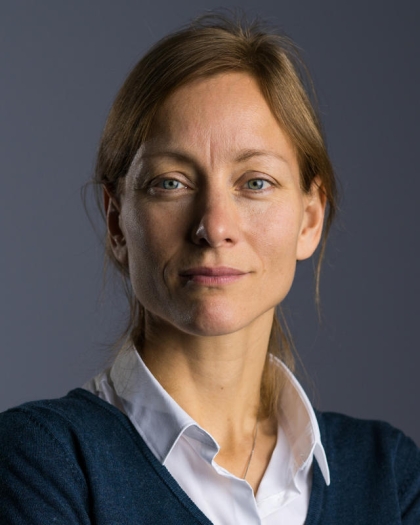
Susanna Radovic is a Senior Lecturer at the Department of Philosophy, Linguistics, Theory of Science at the University of Gothenburg. She serves as head of the Philosophy and Logic unit and is the director of the Centre for Ethics, Law and Mental Health (CELAM). Her work bridges philosophy, law, and mental health, with a particular focus on forensic psychiatry and ethical considerations in legal contexts.
Radovic's research primarily focuses on philosophical issues in forensic psychiatry, examining concepts such as accountability, delusions, and criminal responsibility. She has conducted extensive interdisciplinary work, collaborating with researchers from psychiatry, psychology, and law. Her approach combines conceptual analysis with empirical studies, including interview research with mentally disordered criminal offenders and analyses of forensic psychiatric assessments. A significant portion of her work addresses how philosophical concepts translate into practical legal applications, particularly regarding mental health law and criminal responsibility.
Her publication record shows a consistent focus on the intersection of philosophy, law, and mental health. Recent work examines criminal insanity standards, delusions in legal contexts, forensic decision-making processes, and the ethical dimensions of mental health care. Her research demonstrates a transdisciplinary approach that brings philosophical rigor to practical legal and clinical challenges.
- Swedish Research Council (VR) project on delusions (2010-2014)
- VR project on expertise, evidence and ethics in compulsory psychiatric care (2014-2018)
- Norwegian Research Council project on psychosis and criminal insanity (2021-present)
As director of CELAM, Radovic maintains ongoing collaborations with the National Board of Forensic Medicine and the Forensic Psychiatric Clinic at Sahlgrenska University Hospital. She regularly provides lectures on ethics in compulsory care to professionals working in forensic psychiatric settings. Her work extends to practical applications through commissioned reports and expert consultations for Swedish public agencies, as well as membership on the Västra Götaland County Government ethics council.
Her teaching responsibilities focus on thesis supervision, examination, and seminar moderation, contributing to the education of future philosophers and interdisciplinary scholars. Radovic is also an active participant in public discourse, as evidenced by her co-authorship of opinion pieces on philosophy education in Swedish media.