معرفی
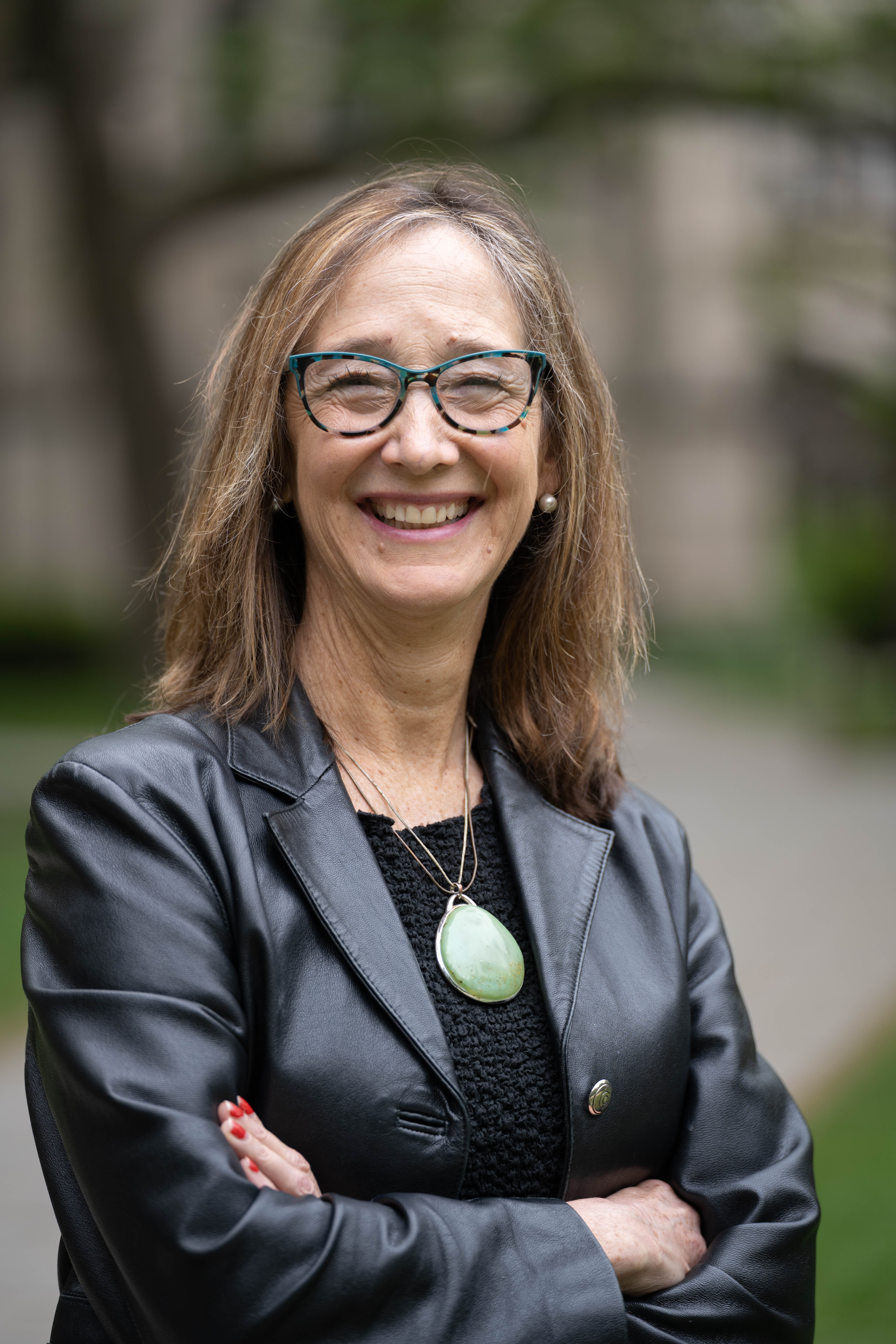
Susan Carol Stokes is the Tiffany and Margaret Blake Distinguished Service Professor of Political Science at the University of Chicago and Director of the Chicago Center on Democracy. She serves as President-elect of the American Political Science Association (APSA) and holds dual membership in the National Academy of Sciences and the American Academy of Arts and Sciences. Her institutional leadership extends to founding Bright Line Watch, a nonpartisan collective monitoring U.S. democratic health.
Stokes' research pioneers critical intersections of democratic theory, distributive politics, and political behavior, with profound focus on Latin America. She examines how economic conditions shape democratic resilience, exposing mechanisms of clientelism in Brokers, Voters, and Clientelism (2013) and participation paradoxes in Why Bother? (2019). Her current work confronts democratic backsliding through empirical analysis of rhetoric, inequality, and institutional erosion across Global South and Western contexts.
Recent publications reveal three dominant trajectories: (1) Systemic analysis of income inequality's corrosive impact on democratic institutions (2024-2025), (2) Granular studies of participation mechanics in referendums and elections across Latin America (2022-2025), and (3) Theoretical frameworks for understanding backsliding leaders' self-sabotage in The Backsliders (2025). Methodologically, she blends comparative case studies with cutting-edge quantitative approaches.
Her scientific recognition includes:
- National Academy of Sciences membership
- American Academy of Arts and Sciences fellowship
- APSA's Luebbert Prize for comparative politics
- Heinz Eulau Award for best journal article
- Comparative Democratization Section's Best Book Award
As Director of the Chicago Center on Democracy, Stokes orchestrates cross-disciplinary research initiatives examining democratic fragility and renewal. Her mentorship extends through APSA leadership roles and co-authorship frameworks that cultivate junior scholars, while Bright Line Watch operationalizes her commitment to actionable democratic defense beyond academia.
The Chicago Center on Democracy functions as her primary research ecosystem, convening political scientists, economists, and practitioners to develop evidence-based responses to autocratization. Current projects analyze electoral integrity safeguards, civil society resistance tactics, and institutional redesign for eroded democracies, with fieldwork spanning Mexico, Brazil, and Eastern Europe.