معرفی
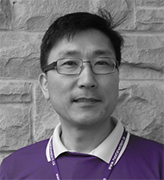
Sung Kim is an Associate Professor at The University of Western Ontario, where he leads the Kim Lab (http://www.kimlab-uwo.com/). He holds a PhD from the University of British Columbia and completed his postdoctoral training at The Scripps Research Institute in San Diego. His research focuses on understanding epigenetic and signaling mechanisms governing macrophage responses to microbes, tissue injury, and cancer.
His work investigates how macrophages adapt to environmental cues through epigenetic reprogramming, particularly in contexts of immune tolerance (e.g., to commensal bacteria) and immune dysregulation (e.g., in tumors). Key areas include histone acetylation-mediated tolerance to bacterial components like lipopolysaccharides, and transcription factor roles in tumor-associated macrophage behavior.
Publications highlight contributions to understanding anthrax toxin pathogenesis, probiotic immunomodulation (via Lactobacillus rhamnosus), and mechanisms of cytokine regulation (e.g., IL-1β, G-CSF). His lab employs genetic, biochemical, and cellular approaches to dissect signaling pathways in macrophage plasticity.
Notable research tools include quasi-haploid RAW 264.7 cell mutagenesis systems and in vivo models of colitis and probiotic efficacy. Current projects aim to translate epigenetic insights into therapeutic strategies for inflammatory diseases and cancer immunotherapy.