معرفی
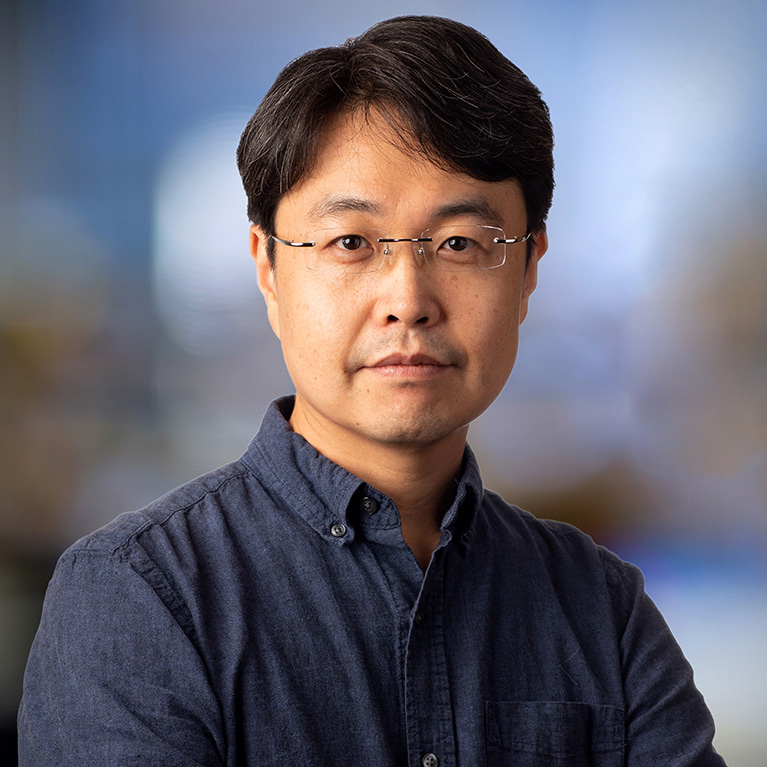
Sung Han, PhD, is an Associate Professor at the Salk Institute for Biological Studies, where he leads research in the Clayton Foundation Laboratories for Peptide Biology. He holds the Pioneer Fund Developmental Chair and focuses on understanding the brain’s alarm system—how it detects aversive sensory stimuli and mediates emotional, behavioral, and physiological responses. His work has significant implications for neuropsychiatric disorders such as autism, PTSD, panic disorders, and chronic pain.
Education:
- BS in Genetic Engineering, Kyungpook National University, Korea
- MS in Neuroscience, Pohang University of Science and Technology, Korea
- PhD in Neurobiology & Behavior, University of Washington, Seattle
Dr. Han’s research interests lie at the intersection of neural circuitry, neuropeptide signaling, and affective neuroscience. He investigates how specific brain circuits—particularly in the brainstem—process threat signals using tools such as optogenetics, chemogenetics, and in vivo imaging. His work emphasizes the role of neuropeptides like CGRP and PACAP in encoding pain, panic, and emotional valence. He aims to uncover fundamental mechanisms that can be targeted for therapeutic interventions in sensory-processing disorders.
His recent publications (2021–2025) reveal a strong trend in dissecting neural pathways involved in affective pain, respiratory control, panic-like behavior, and neuropeptide transmission. These studies frequently employ genetically encoded tools and animal models to map and manipulate specific circuits, highlighting a focus on precision neuroscience and translational relevance.
Scientific Awards:
- NIMH Biobehavioral Research Award for Innovative New Scientist (BRAINS), 2018
- SFARI Bridge to Independence Award, 2016
- Life Sciences Research Foundation Postdoctoral Fellowship, 2015–2018
- KBRI Postdoctoral Research Award, Association of Korean Neuroscientists, 2012
- Korea Research Foundation Research Grant, 2005
Dr. Han actively mentors students and postdoctoral researchers, though specific names are not listed. His lab benefits from significant grant support, including awards from NIMH and SFARI. He is involved in developing novel tools for monitoring and silencing neuropeptide release, reflecting a strong emphasis on innovation. His work is closely tied to key discoveries at Salk, such as the identification of CGRP by Ron Evans, and he collaborates within a vibrant neuroscience community, including inspiration from Ed Callaway’s work on neural circuit mapping.
He is part of a dedicated team studying brainstem circuits and their role in integrating sensory, emotional, and autonomic functions. His lab is at the forefront of using modern neuroscience techniques to decode how the brain responds to threats, with the ultimate goal of developing therapies for neurological and psychiatric conditions.